
Photos from current listings. Actual item, color, and included accessories may vary.
Large Bird Cage With Stand Buying Guide
A large bird cage with stand is a floor-standing enclosure pairing a roomy wire habitat with a wheeled base, so the key trade-offs are bar spacing versus species size and stand stability versus mobility. The decisive rule is to match bar spacing and cage height to your bird's body dimensions and climbing needs, then choose a stand with locking casters and a load-rated frame rather than thin tubular legs.
Median $110.99
Key takeaways
- Bar spacing, not cage height, is the safety metric: 1/2 inch suits budgies and canaries, 5/8 inch suits cockatiels and lovebirds, 3/4 inch and up is required for conures and small parrots.
- Powder-coated welded steel wire resists rust and beak wear far better than PVC-coated or zinc-only mesh, which flakes and chips under sustained chewing.
- Caster quality decides longevity: locking polyurethane or rubber wheels with metal hubs roll on carpet and hard floors without flat-spotting; plastic casters crack under load.
At a glance
- Category
- Bird & Small Animal Supplies
- Last updated
- Nov 27, 2026
Current offers
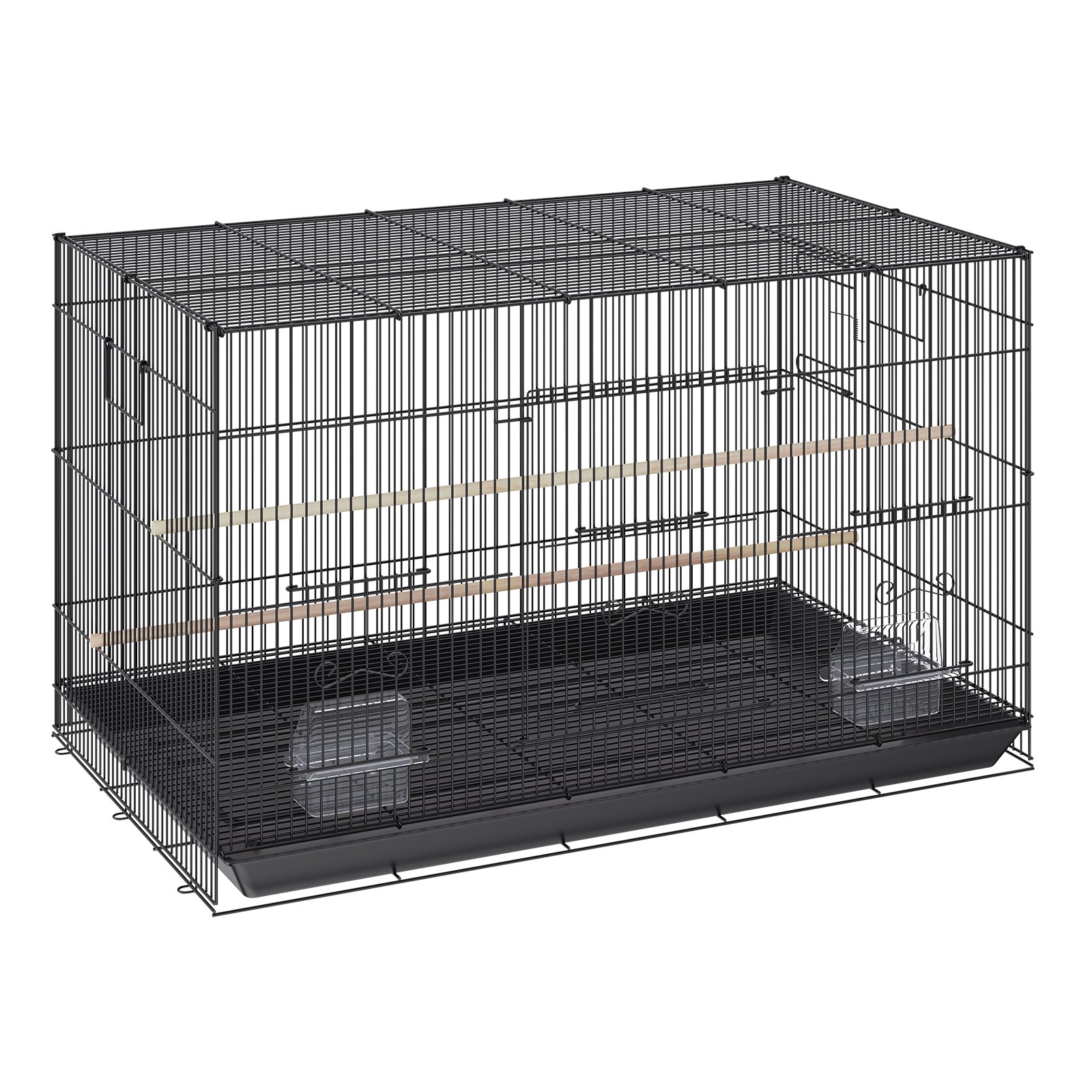 30 Inch Bird Cage, Metal Large Parakeet Cages For Cockatiels Small Parrot Budgies Lovebirds Canaries, Pet With Rolling Stand And Tray$51.99View on Mallflare
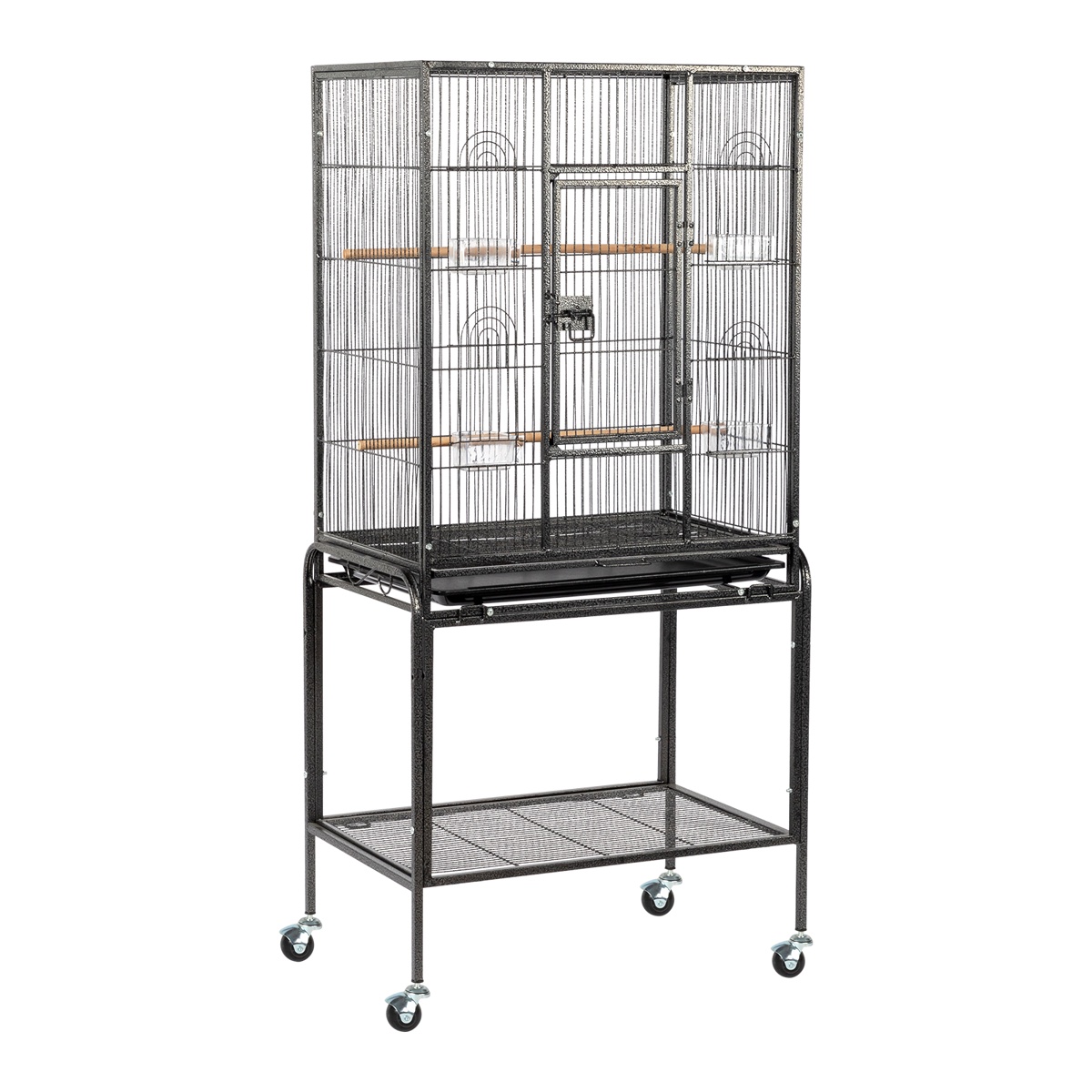 53" Large Flight Bird Cage with Rolling Stand & Storage Shelf for Parrots Lovebird Cockatiel Parakeets, Black$110.99View on Mallflare
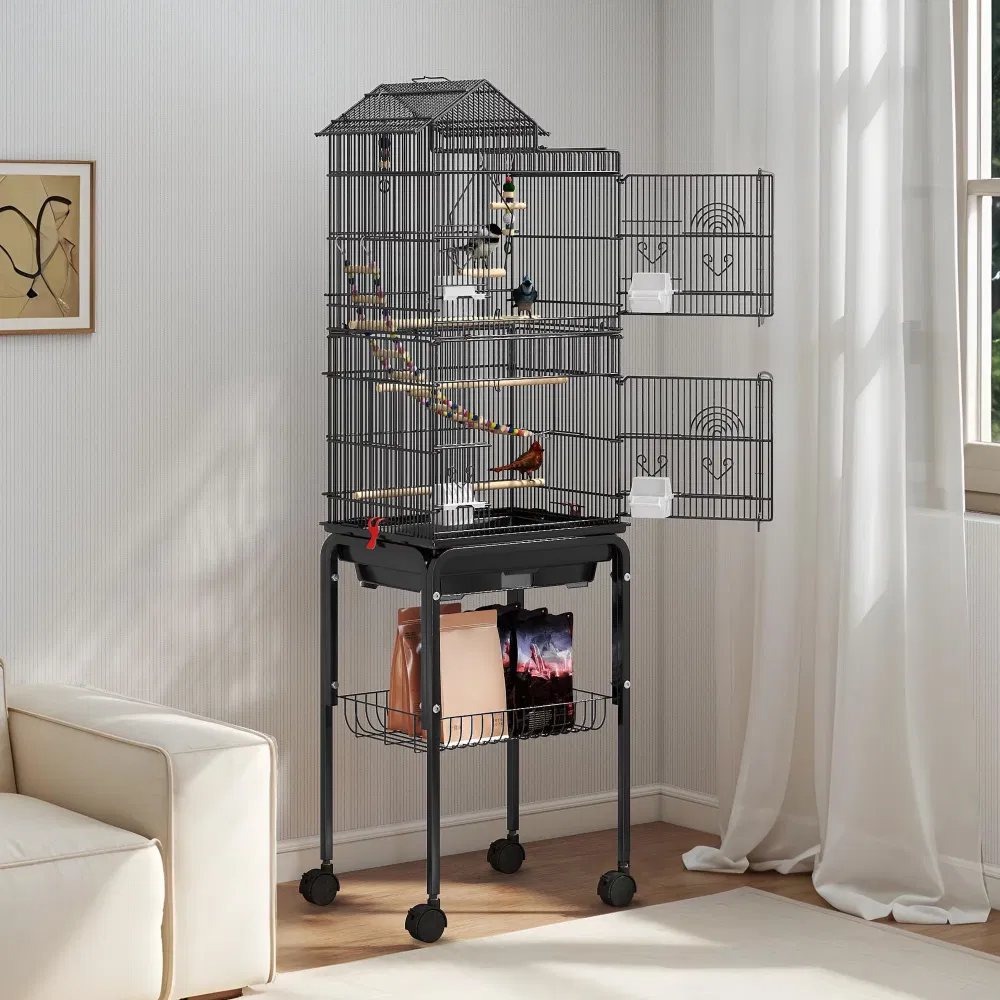 62" Large Metal Bird cage with Rolling Stand, Slide-Out Tray,3 Perches and 4 Feeders, Black$123.99View on Mallflare
Highlights
- Bar spacing, not cage height, is the safety metric: 1/2 inch suits budgies and canaries, 5/8 inch suits cockatiels and lovebirds, 3/4 inch and up is required for conures and small parrots.
- Powder-coated welded steel wire resists rust and beak wear far better than PVC-coated or zinc-only mesh, which flakes and chips under sustained chewing.
- Caster quality decides longevity: locking polyurethane or rubber wheels with metal hubs roll on carpet and hard floors without flat-spotting; plastic casters crack under load.
- Slide-out trays and grates separate waste from birds, and removable feeder doors and top toy hooks determine daily cleaning effort and enrichment capacity.
Best use cases
- Best fit: budgies, canaries, and finches get a 30-inch-wide cage with 1/2-inch bar spacing on a compact rolling stand for apartments and small rooms.
- Best fit: cockatiels and lovebirds need a 53-55 inch tall flight cage with 5/8-inch spacing, multiple perches, and a storage shelf for seed and cleaning supplies.
- Best fit: conures and small parrots require a 62-inch model with 3/4-inch spacing, four feeders, and a reinforced stand rated for a heavier bird and toys.
- Wrong fit: skip tall narrow parrot cages with only one perch and no top play area; they limit climbing and force birds to sit in waste.
Buying tips
- Measure your bird nose-to-tail: cage width should be at least 1.5 times its length, and height should allow two full wing-spread perches at different levels.
- Confirm bar spacing against species: 1/2 inch for small finches and budgies, 5/8 inch for cockatiels and lovebirds, 3/4 inch or more for conures and small parrots.
- Choose a stand with a footprint at least as wide as the cage base and locking casters rated for the loaded weight; narrow stands tip when birds climb the sides.
- Prefer cages with two or more slide-out trays and a bottom grate; single-tray designs force full disassembly for weekly deep cleaning.
Specs
| Bar Spacing | 1/2 in to 3/4 in by species |
|---|---|
| Cage Height | 30 in to 62 in with stand |
| Wire Build | Powder-coated welded steel |
| Stand Type | Locking caster rolling base |
Related searches
What to check before buying
- Measure doorway width and room clearance first: a 30-inch cage fits most doors, but 53-62 inch models need a clear path and ceiling clearance for the stand plus cage.
- Check floor type: locking casters roll on carpet and hardwood, but soft plastic wheels flat-spot on tile and can scratch wood floors without rubber treads.
- Confirm the cage comes with perches and feeders included; many tall models ship with only one perch and require separate food and water cup purchases.
- Verify bar spacing and gauge before buying: thinner 2 mm wire bends under parrot beaks, so choose 3 mm or heavier welded wire for medium birds.
FAQ
Data sources: eBay / Amazon listings and product attribute feeds. Updated Nov 27, 2026.
Some links on this page are affiliate links. If you buy after clicking one, we may earn a commission at no extra cost to you. This does not change which products appear here or their order. Affiliate disclosure.