
Photos from current listings. Actual item, color, and included accessories may vary.
Indoor Rabbit Cage Buying Guide
An indoor rabbit cage is a primary habitat, not a carrier—its floor area, bar spacing, and material construction directly determine rabbit welfare and longevity. The core trade-off is between wooden hutches with integrated runs (more floor space, less chew-resistant) and metal wire cages with pull-out trays (easier cleaning, smaller footprint). Buy a minimum 12 sq ft of continuous floor area with 1-inch bar spacing for a single rabbit; anything smaller is a temporary enclosure, not a home.
Median $166.99
Key takeaways
- Wooden hutches dominate indoor listings but softwood (fir/pine) is chewable; rabbits can gnaw exit holes within months—metal wire cages resist destruction but offer less insulation.
- Bar spacing of 1 inch (2.5 cm) is the maximum safe gap for adult rabbits; wider spacing allows head entrapment, while 1/2-inch spacing suits guinea pigs and baby rabbits.
- Pull-out trays are typically galvanized steel or plastic; plastic trays crack under UV and heavy chewing, while galvanized steel trays resist urine corrosion for years.
At a glance
- Category
- Bird & Small Animal Supplies
- Last updated
- Nov 27, 2026
Current offers
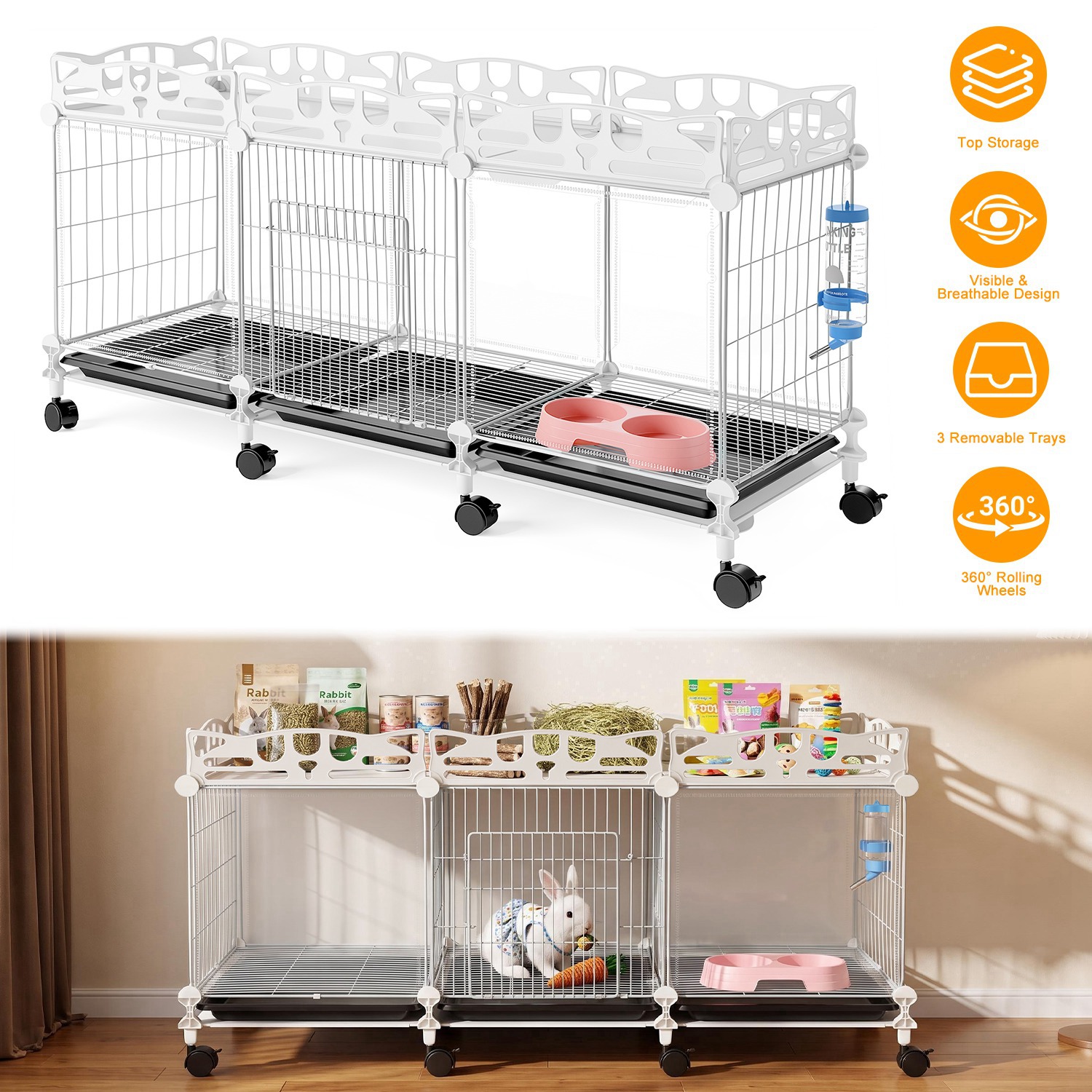 Rolling Rabbit Cage With Clear Panels Wire Mesh 3 Removable Trays Food Bowl & Water Bottle Top Storage Front Door Indoor Small Animal Habitat Lockable Wheels And Space$71.99View on Mallflare
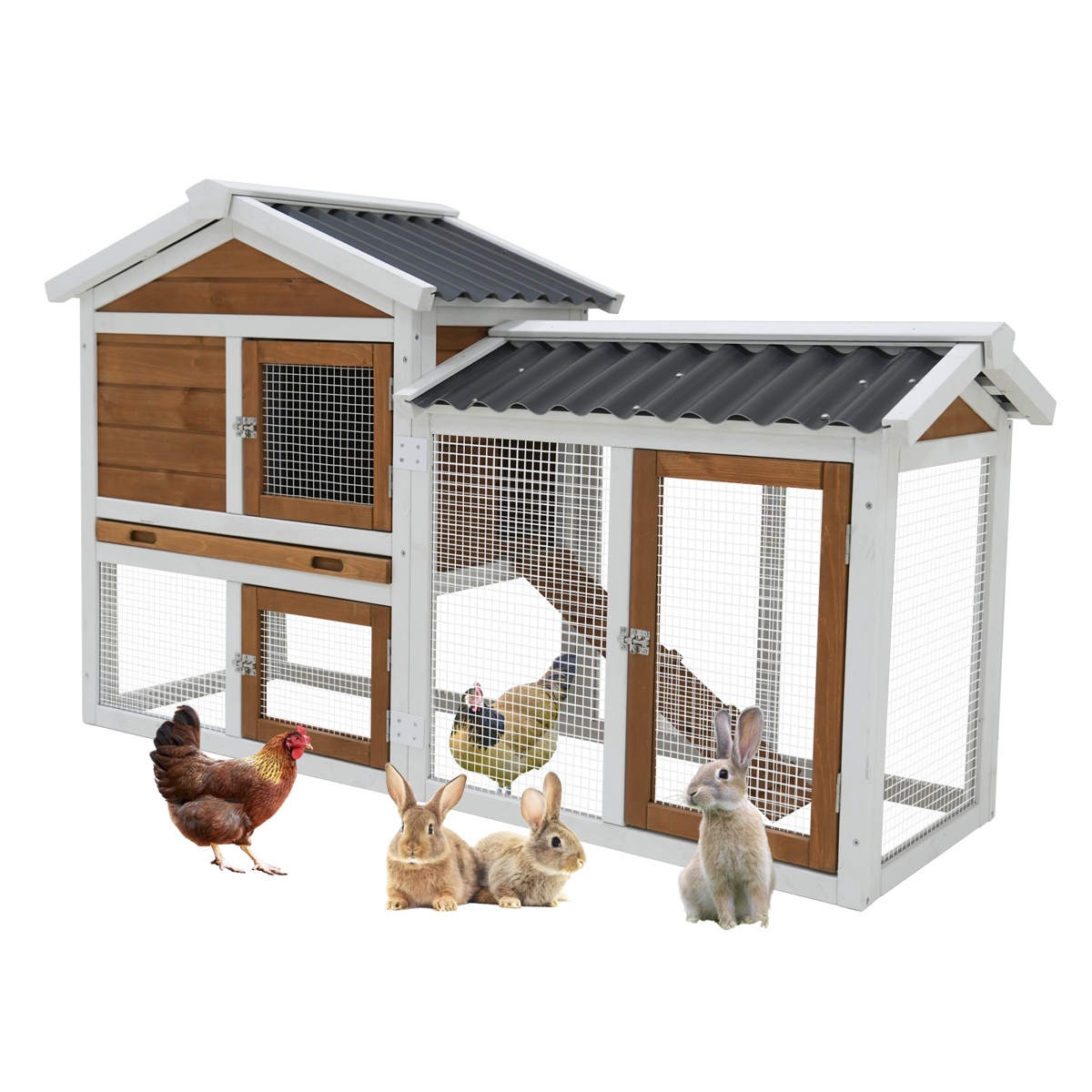 58 Wooden Outdoor Indoor Roof Waterproof Bunny Hutch Rabbit Cage Guinea Pig Coop PET House For Small To Medium Animals With Stairs And Cleaning Tray$160.99View on Mallflare
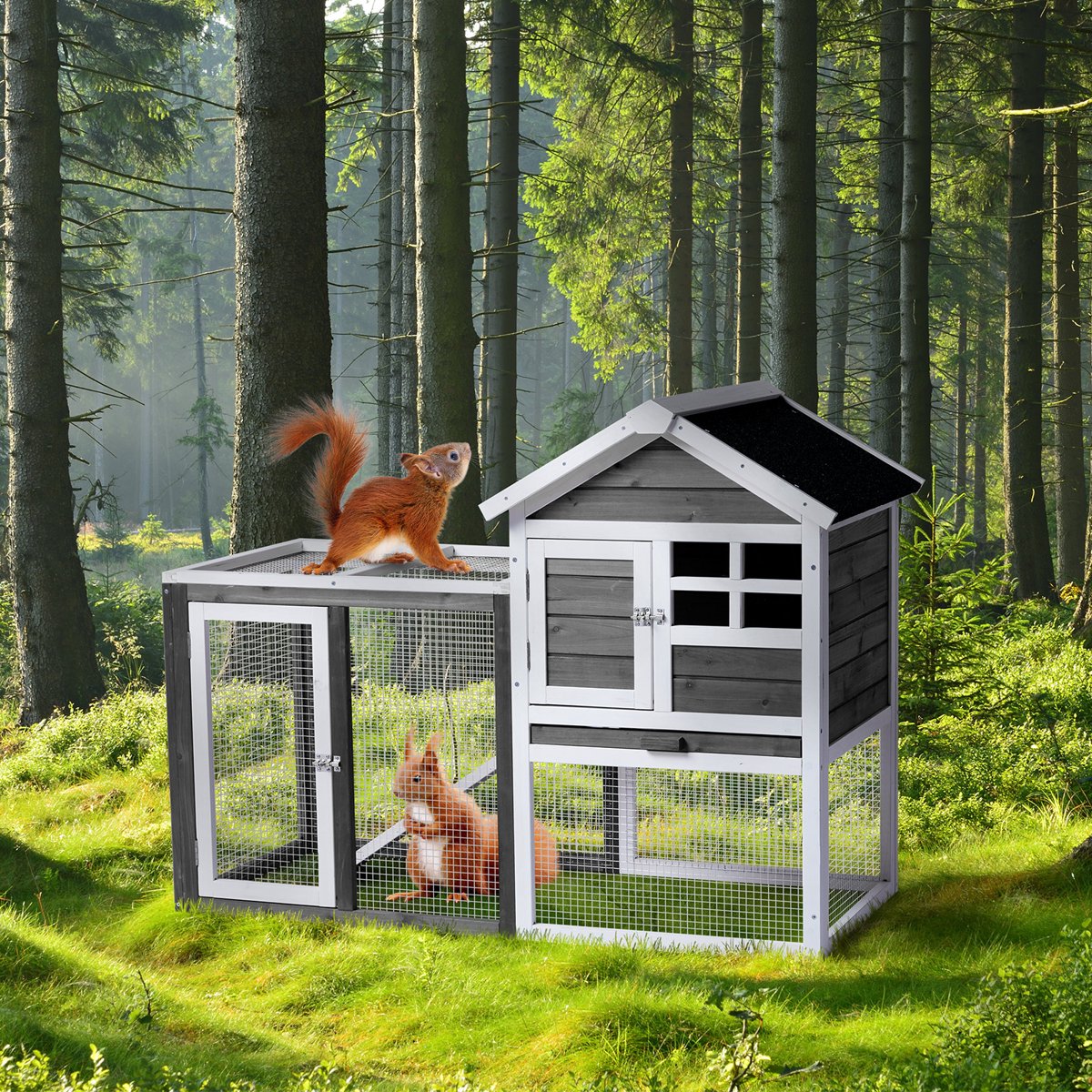 Wooden Rabbit Hutch Outdoor Chicken Coop Indoor Bunny Cage with Run, Guinea Pig House Pet Pull Out Upper Tray, Grey$172.99View on Mallflare
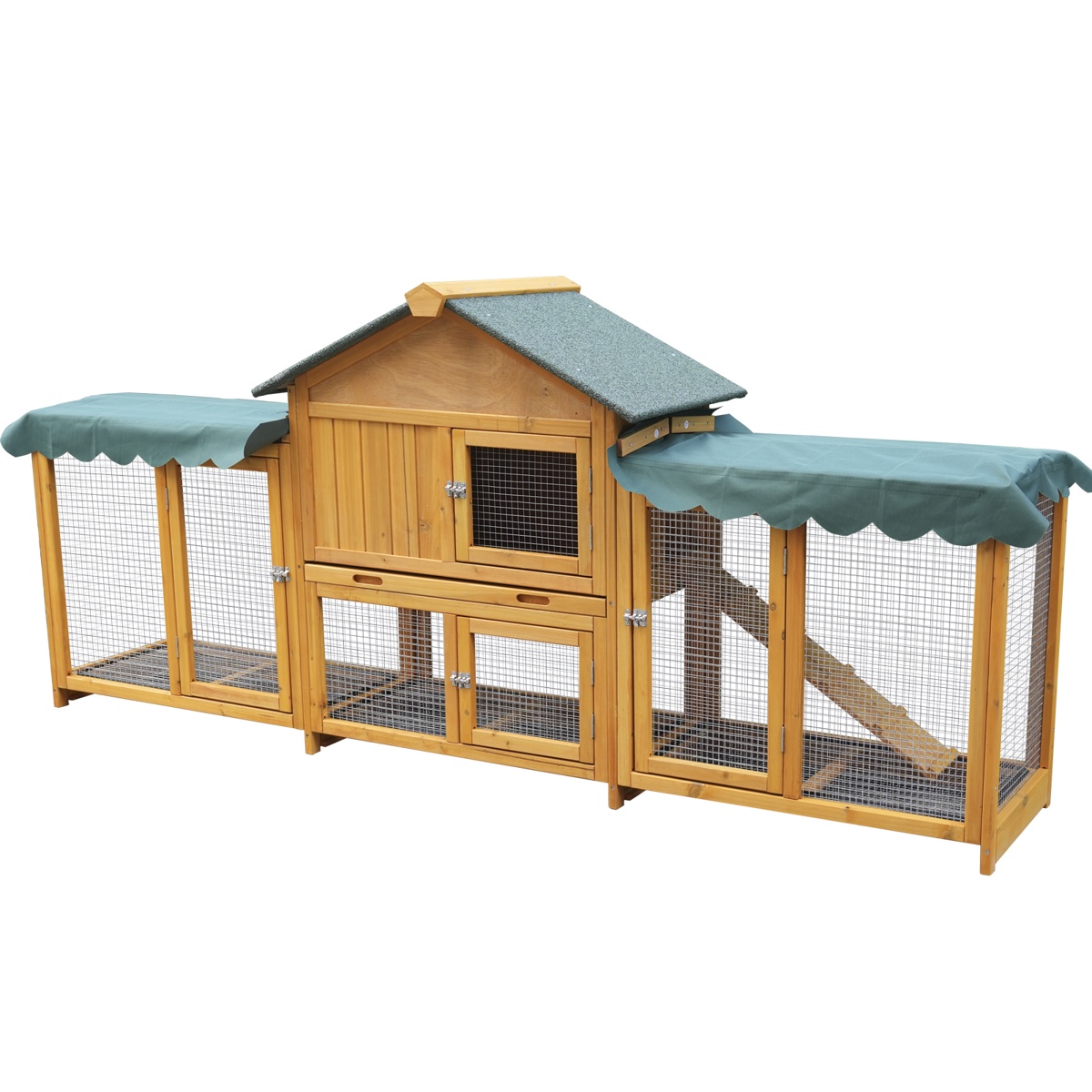 82inches Extra Large Wood Rabbit Hutch Outdoor Easy To Assemble And Stable Bunny Cage Indoor With Cleaning Tray & Waterproof Roof For Small And Medium Bun,Removable And Sun Protection Cover$204.99View on Mallflare
Highlights
- Wooden hutches dominate indoor listings but softwood (fir/pine) is chewable; rabbits can gnaw exit holes within months—metal wire cages resist destruction but offer less insulation.
- Bar spacing of 1 inch (2.5 cm) is the maximum safe gap for adult rabbits; wider spacing allows head entrapment, while 1/2-inch spacing suits guinea pigs and baby rabbits.
- Pull-out trays are typically galvanized steel or plastic; plastic trays crack under UV and heavy chewing, while galvanized steel trays resist urine corrosion for years.
- Two-story hutches add vertical exercise but do not substitute for horizontal floor area—ramps must be no steeper than 30 degrees and have side rails to prevent falls.
Best use cases
- Best for free-roaming indoor rabbits: a metal wire cage with 1-inch bar spacing and a pull-out tray serves as a litter/food station while the rabbit exercises in a pen—skip wooden hutches if your rabbit chews baseboards.
- Best for a single bonded pair needing a full-time enclosure: choose a wooden hutch with an attached run totaling at least 24 sq ft; skip two-story hutches under 48 inches wide because the ramp eats floor space.
- Wrong fit for guinea pigs: rabbit cages with 1-inch bar spacing allow guinea pigs to squeeze through—use a cage with 1/2-inch spacing and a solid floor, not wire mesh.
- Wrong fit for outdoor or garage use: indoor wooden hutches lack weatherproof joinery and asphalt roof coverage—choose a dedicated outdoor hutch with waterproof roof and raised feet instead.
Buying tips
- Calculate floor area: length × width in inches ÷ 144 = square feet. A single rabbit needs 12 sq ft minimum; a bonded pair needs 24 sq ft—ignore height claims unless the ramp is safely angled.
- Check bar spacing before purchase: 1 inch maximum for rabbits over 6 months; 1/2 inch for guinea pigs, baby rabbits, and hedgehogs. Wire floors cause sore hocks—cover with corrugated plastic or fleece.
- Demand galvanized or powder-coated steel for trays and mesh; untreated wood absorbs urine and harbors ammonia. Asphalt roof felt is water-resistant but not chew-proof—metal flashing edges last longer.
- For wooden hutches, confirm the wood is kiln-dried pine or fir at least 1/2 inch thick; thinner panels warp and rabbits chew through corners. Lockable doors need metal hinges and a barrel bolt, not plastic latches.
Specs
| Bar Spacing | 1 in max rabbits; 1/2 in small pets |
|---|---|
| Floor Area | 12 sq ft single; 24 sq ft pair |
| Frame Material | Galvanized steel vs kiln-dried pine |
| Tray Type | Galvanized steel vs plastic pull-out |
Related searches
What to check before buying
- Measure your floor space and doorways: a 48-inch-wide cage will not fit through a standard 30-inch interior door—confirm assembled dimensions and whether the cage ships flat or pre-built.
- Verify the cage floor type: solid floor with bedding is safest for rabbit hocks; wire mesh floors require fleece or mat covers to prevent pododermatitis.
- Check companion accessories: a removable litter pan, hay rack, and water bottle mount must fit inside the cage without blocking the ramp or door swing.
- Confirm the tray removal clearance: pull-out trays need 6–12 inches of side clearance; if the cage sits against a wall, the tray cannot slide out—plan a 12-inch buffer on the tray side.
FAQ
Data sources: eBay / Amazon listings and product attribute feeds. Updated Nov 27, 2026.
Some links on this page are affiliate links. If you buy after clicking one, we may earn a commission at no extra cost to you. This does not change which products appear here or their order. Affiliate disclosure.