
Photos from current listings. Actual item, color, and included accessories may vary.
Indoor Bunny Cage Buying Guide
An indoor bunny cage is a primary enclosure that balances chew-resistant construction, ventilation, and cleanability for a rabbit living inside the home. The core trade-off is between open wire-grid pens that maximize airflow and social contact versus enclosed wooden hutches that offer draft protection but harbor urine odor and are harder to sanitize. Durable indoor cages use thick galvanized wire or kiln-dried hardwood with metal-reinforced edges and slide-out trays; compromises use thin mesh, softwood that warps, and trays that leak at seams.
Median $169.99
Key takeaways
- Wooden indoor hutches typically use fir or pine with asphalt-paper roofs; metal wire pens use 12- to 14-gauge galvanized steel mesh that resists chewing better than 16-gauge craft wire.
- Two-story hutches add a ramp and upper platform but reduce usable floor area per level; a single-level pen of equal footprint gives more continuous hopping space.
- Slide-out trays must be rigid plastic or galvanized metal with raised edges; no-leak tray designs use a lip and corner welds instead of butt seams that separate with urine exposure.
At a glance
- Category
- Bird & Small Animal Supplies
- Last updated
- Nov 27, 2026
Current offers
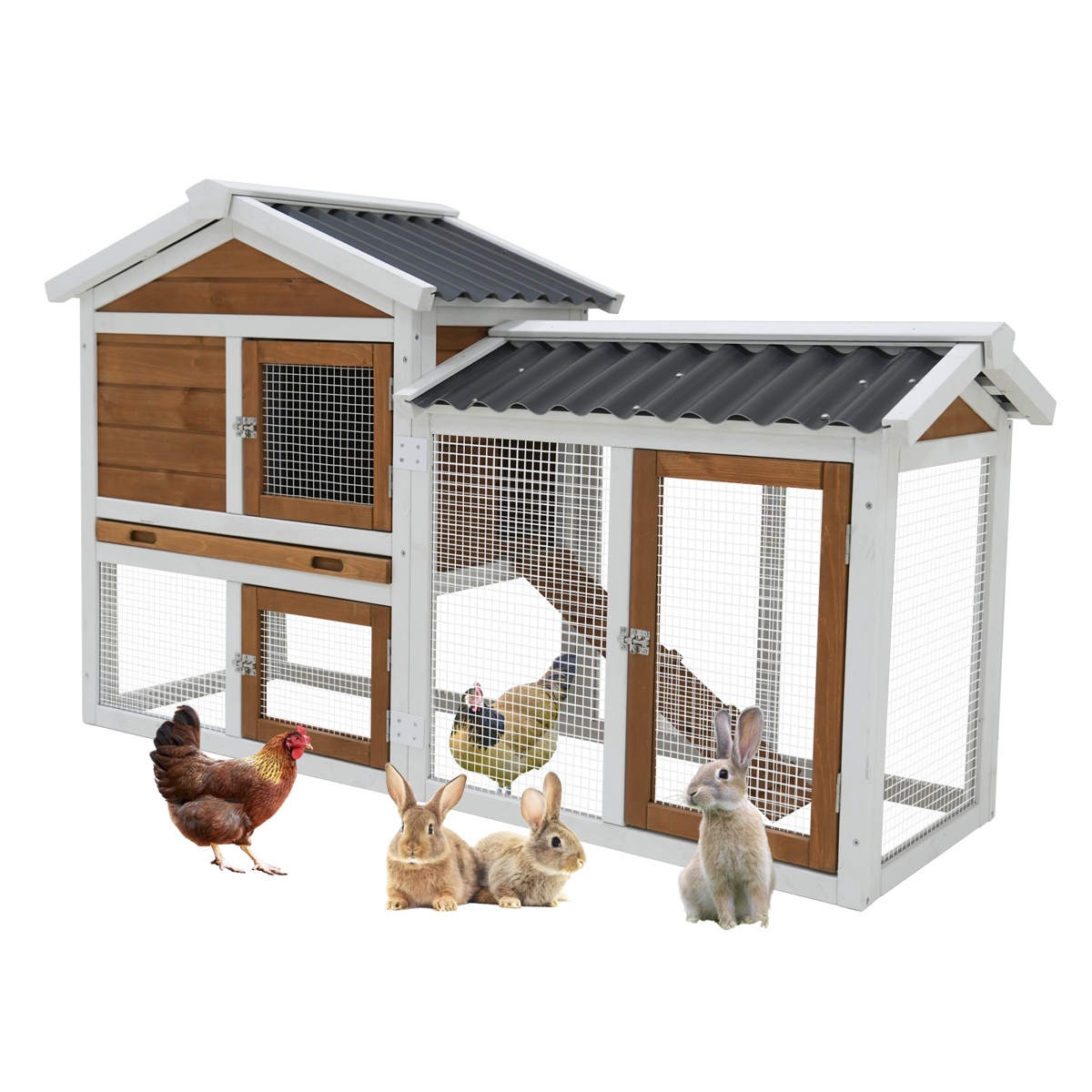 58 Wooden Outdoor Indoor Roof Waterproof Bunny Hutch Rabbit Cage Guinea Pig Coop PET House For Small To Medium Animals With Stairs And Cleaning Tray$160.99View on Mallflare
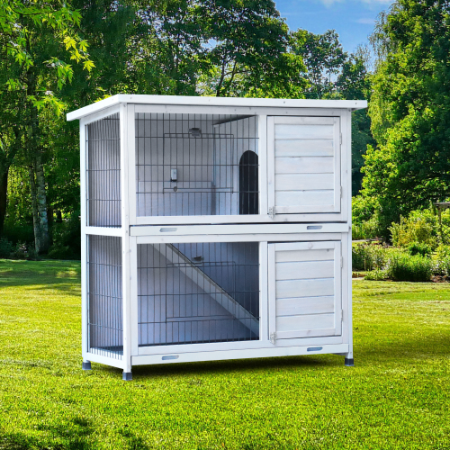 Rabbit Hutch Outdoor, 2-Story Cage Indoor With Run, Bunny 2 Removable No-Leak Trays, Pet Cages Non-Slip Ramp, Waterproof Roof, Fence, For Small Animals$166.99View on Mallflare
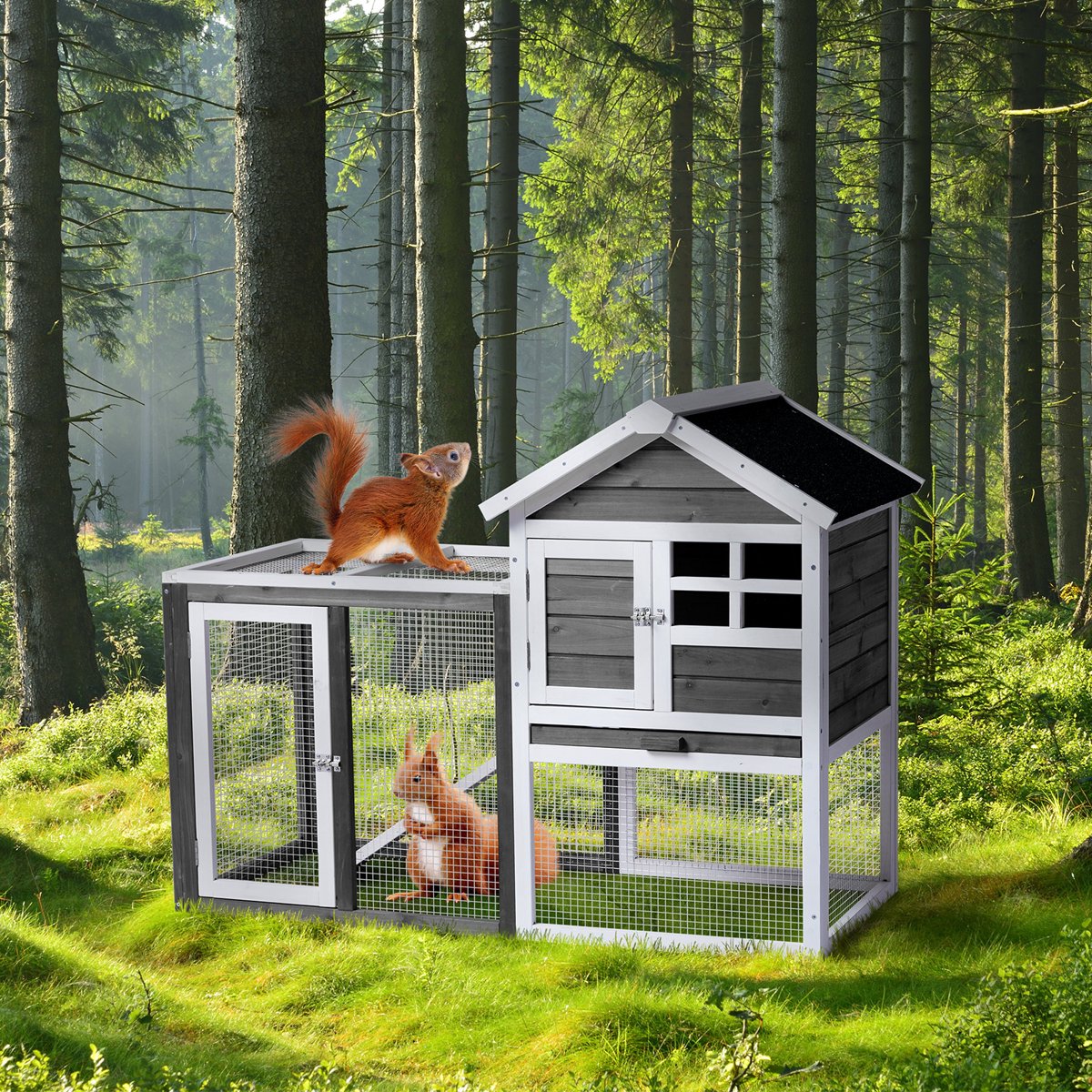 Wooden Rabbit Hutch Outdoor Chicken Coop Indoor Bunny Cage with Run, Guinea Pig House Pet Pull Out Upper Tray, Grey$172.99View on Mallflare
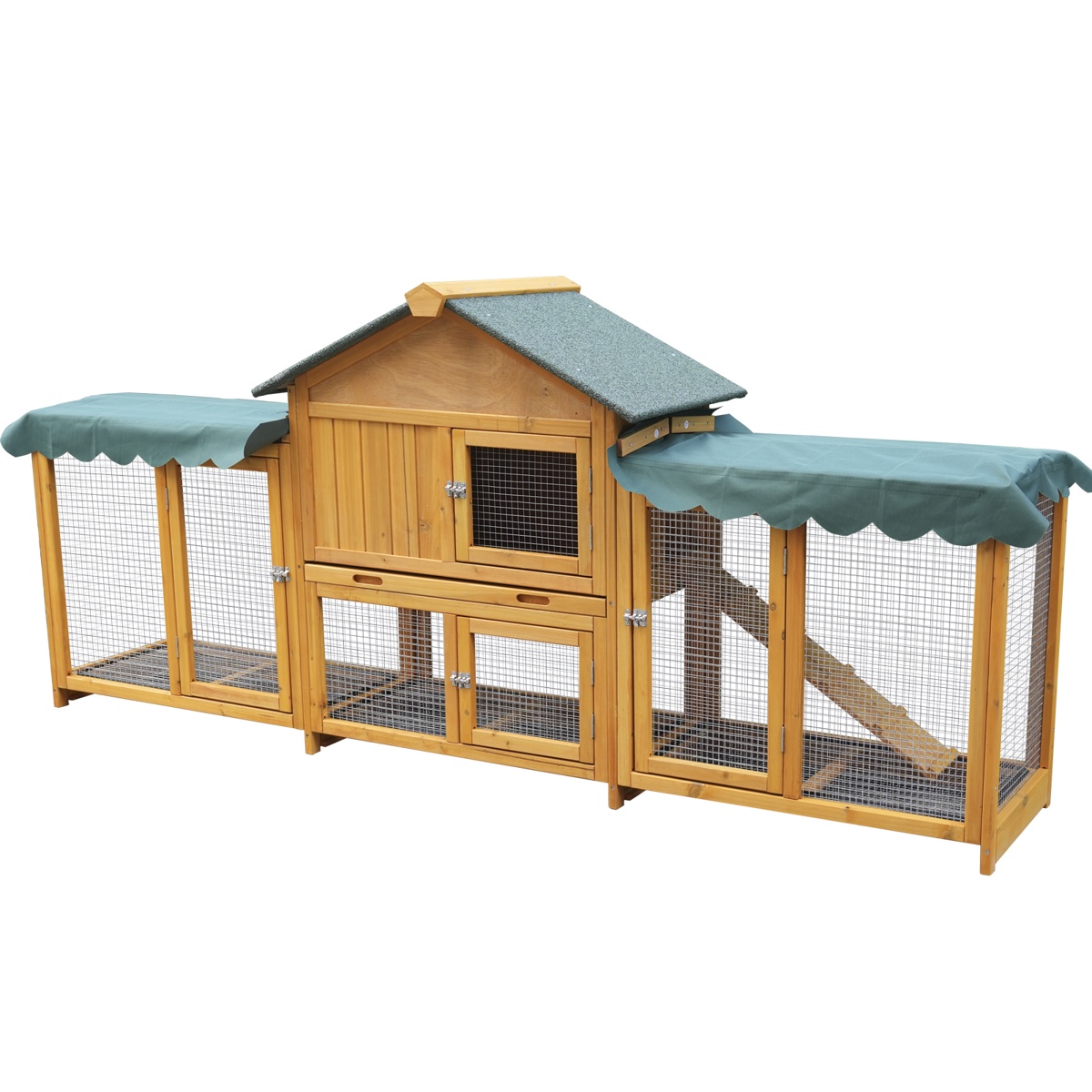 82inches Extra Large Wood Rabbit Hutch Outdoor Easy To Assemble And Stable Bunny Cage Indoor With Cleaning Tray & Waterproof Roof For Small And Medium Bun,Removable And Sun Protection Cover$204.99View on Mallflare
Highlights
- Wooden indoor hutches typically use fir or pine with asphalt-paper roofs; metal wire pens use 12- to 14-gauge galvanized steel mesh that resists chewing better than 16-gauge craft wire.
- Two-story hutches add a ramp and upper platform but reduce usable floor area per level; a single-level pen of equal footprint gives more continuous hopping space.
- Slide-out trays must be rigid plastic or galvanized metal with raised edges; no-leak tray designs use a lip and corner welds instead of butt seams that separate with urine exposure.
- Wheels or casters on wooden hutches simplify repositioning for cleaning but add height and require locking brakes on hard floors to prevent sliding.
Best use cases
- Best fit: a single-level wire-grid pen with a solid resting mat for a bonded pair in an apartment — maximum floor area, easy daily spot-cleaning, and full visibility.
- Best fit: a wooden two-story hutch with a pull-out tray for a single rabbit in a cool, low-humidity room — the enclosed upper level gives draft protection and a dark retreat.
- Wrong fit: an outdoor-style wooden hutch with asphalt roof placed in a humid bathroom or laundry room — absorbed urine swells and warps softwood within months.
- Wrong fit: a tall multi-level cage with a steep ramp for a senior or overweight rabbit — ramps steeper than 30 degrees and narrow platforms cause falls and skip the lower level.
Buying tips
- Size the cage to at least 12 square feet of floor area for one rabbit and 16+ square feet for a bonded pair; multi-level cages only count continuous ramp-accessible floor, not stacked platforms.
- Choose 14-gauge or thicker galvanized wire for the pen walls; 16-gauge and lighter mesh bends and can be chewed through at corners by determined rabbits.
- For wooden hutches, require kiln-dried pine or fir with a non-toxic water-based finish; avoid unsealed softwood that absorbs urine and cannot be wiped down.
- Verify tray clearance: a slide-out tray needs at least 2 inches of vertical clearance below the cage floor, and the tray must have a raised lip on all four sides to contain liquid.
Specs
| Enclosure Type | Wire pen vs wood hutch vs hybrid |
|---|---|
| Wire Gauge | 14-ga galvanized vs 16-ga light mesh |
| Floor Area (single) | 12+ sq ft rabbit / 16+ sq ft pair |
| Tray Design | Raised-lip slide-out vs flat pan |
Related searches
What to check before buying
- Measure the room footprint and doorway width; an 82-inch hutch will not pass through a standard 30-inch interior door without disassembly.
- Place the cage on a hard, level floor or use a waterproof mat underneath wooden hutches — carpet wicks urine and permanently retains odor.
- Confirm the cage door opening is at least 12 inches wide and 12 inches tall so you can reach the far corner for cleaning and lift the rabbit out safely.
- Check room temperature and humidity: wooden hutches need below 60% relative humidity and steady temperatures; wire pens tolerate humid rooms better.
FAQ
Data sources: eBay / Amazon listings and product attribute feeds. Updated Nov 27, 2026.
Some links on this page are affiliate links. If you buy after clicking one, we may earn a commission at no extra cost to you. This does not change which products appear here or their order. Affiliate disclosure.