
Photos from current listings. Actual item, color, and included accessories may vary.
Heavy Duty Parrot Cage Buying Guide
A heavy duty parrot cage is a welded or reinforced powder-coated steel enclosure built to withstand a large bird's beak and climbing load without deforming, chipping, or failing at the weld joints. The core trade-off is bar gauge and weld quality versus bar spacing and coating thickness: thin 2-3 mm wire and spot welds fail under macaw and cockatoo pressure, while 4-5 mm wire with full-penetration welds and a zinc-rich powder coat last years. The decision rule: buy by bar gauge and weld type for the species' beak strength, and never accept a cage whose bar spacing exceeds 2.5 cm for conures or 3.8 cm for African greys and macaws.
Median $92.49
Key takeaways
- Bar gauge is the primary durability metric: 2-3 mm wire suits budgies and cockatiels, 3.5-4 mm suits African greys and amazons, and 4.5-5 mm welded wire is required for macaws and cockatoos.
- Weld architecture matters more than wire thickness alone: full-penetration MIG/TIG welds at every bar intersection resist beak leverage, while spot-welded panels pop apart under repeated chewing.
- Powder coat thickness of at least 50-70 microns over a zinc phosphate or galvanized base prevents rust at weld points; bare or thin-coated welds are the first failure point in humid rooms.
At a glance
- Category
- Bird & Small Animal Supplies
- Last updated
- Nov 27, 2026
Current offers
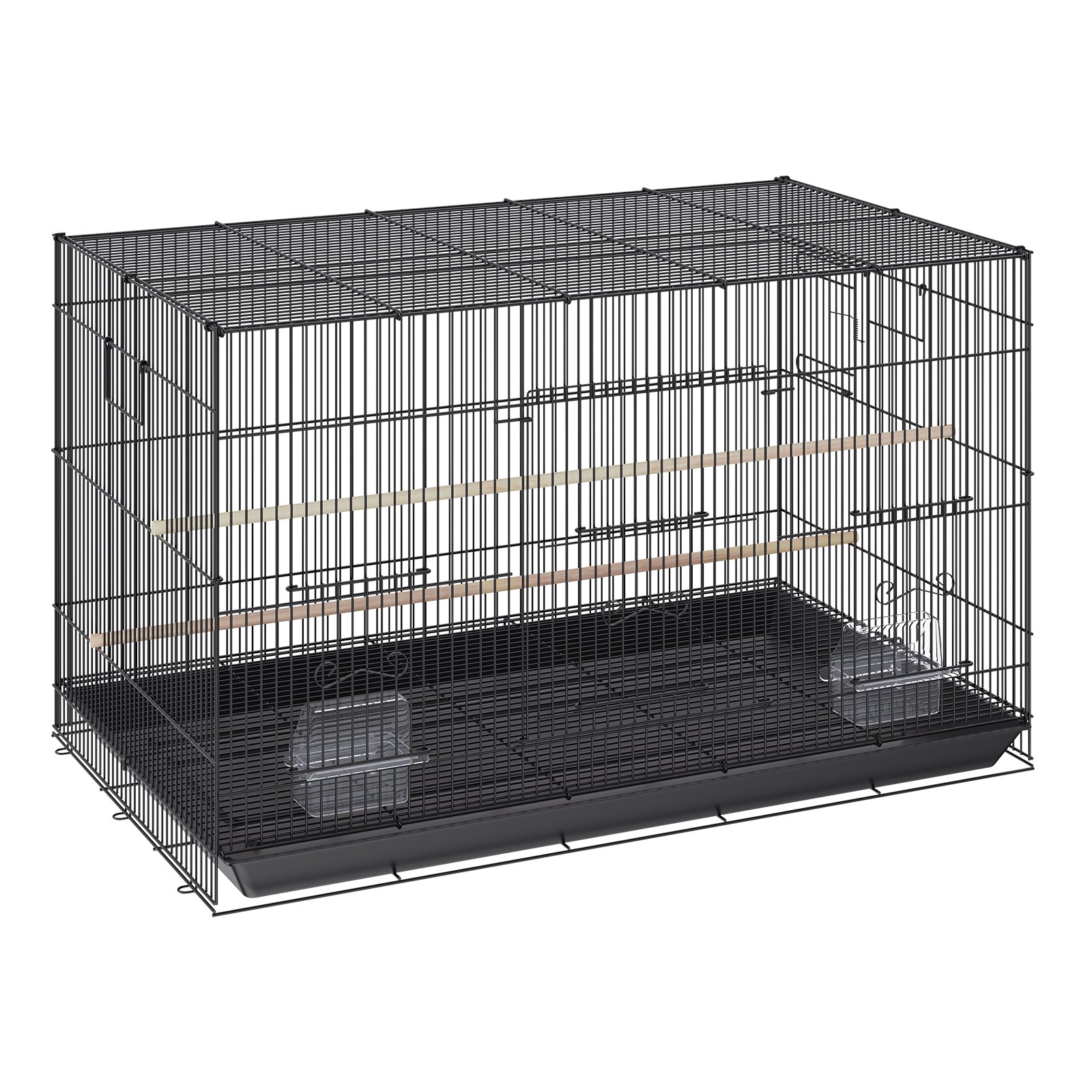 30 Inch Bird Cage, Metal Large Parakeet Cages For Cockatiels Small Parrot Budgies Lovebirds Canaries, Pet With Rolling Stand And Tray$51.99View on Mallflare
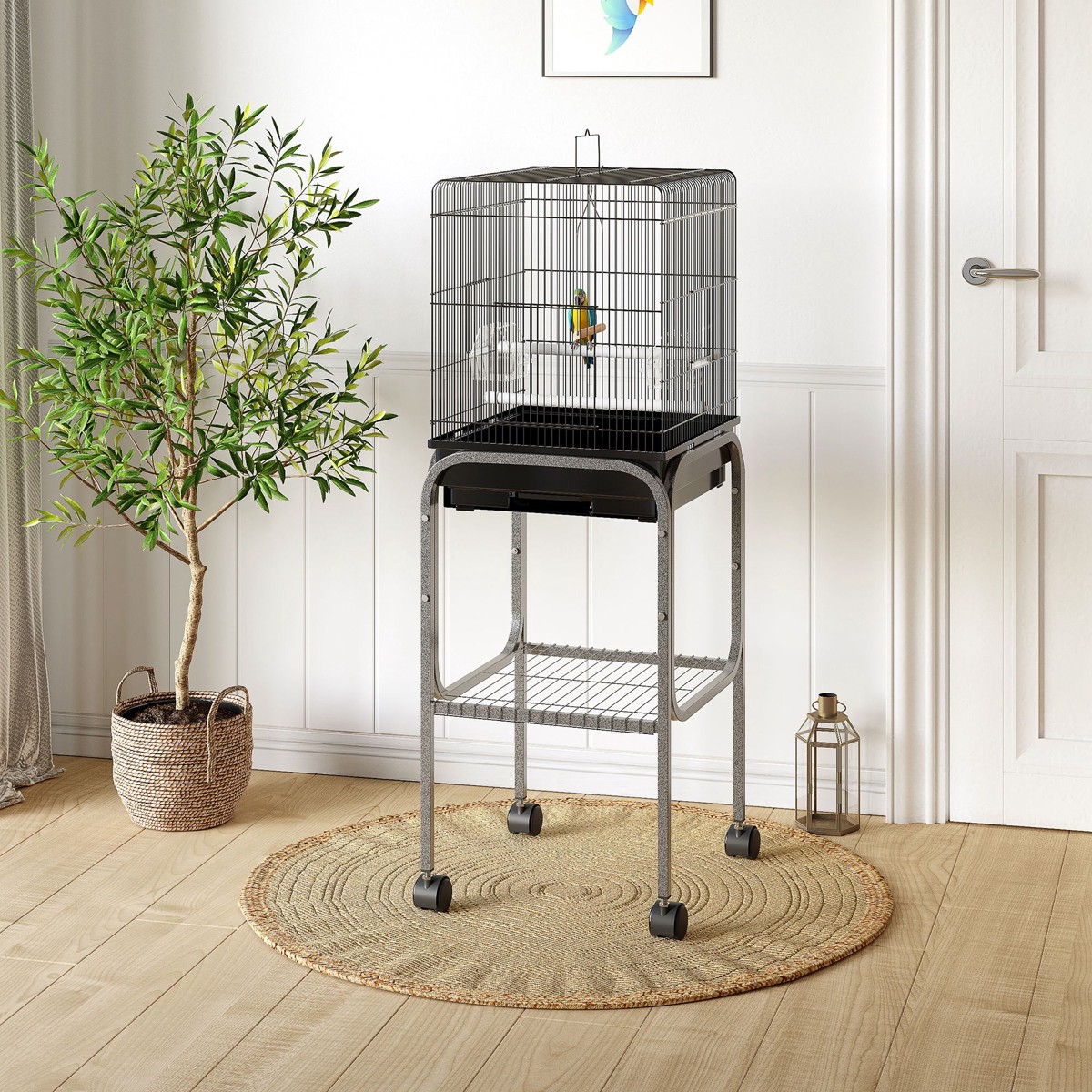 45-inch Metal Indoor Bird Cage, Parrot Aviary with Detachable Rolling Stand, Storage Basket, and Accessories - Black$78.99View on Mallflare
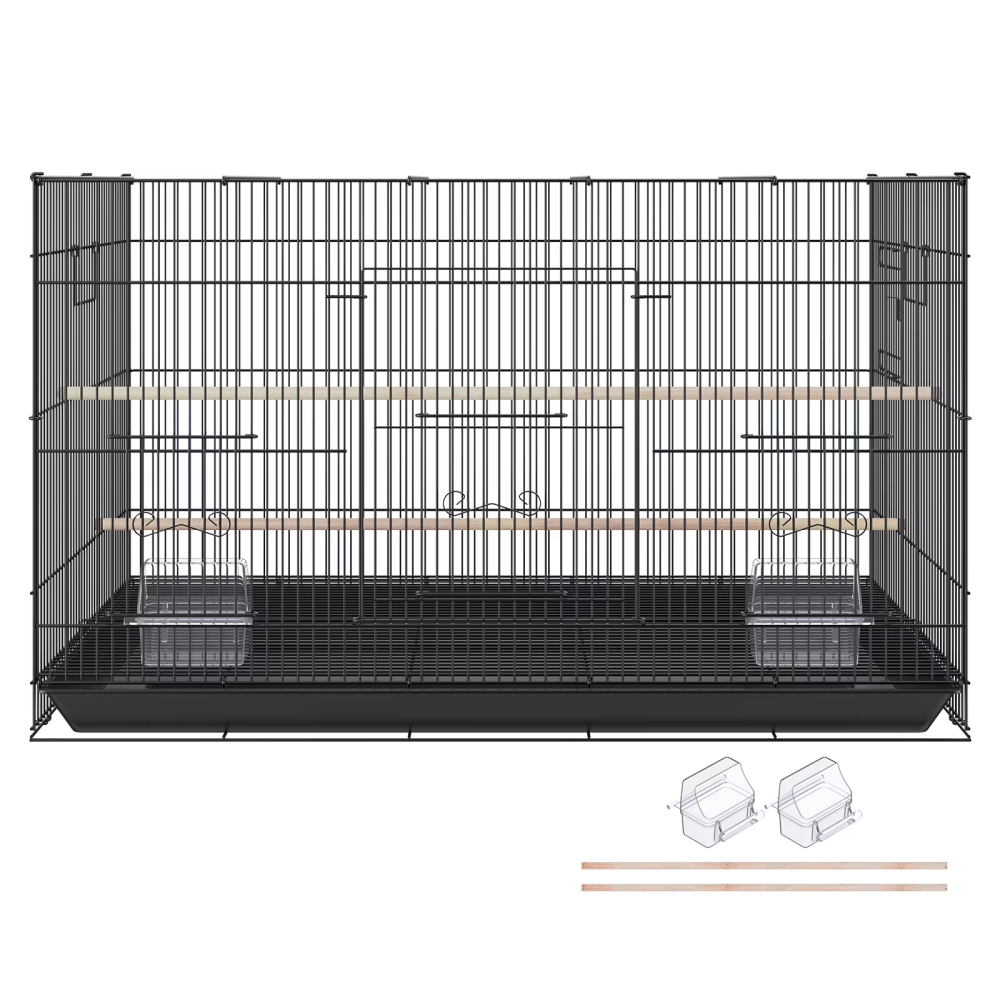 30" Bird Enclosure, Durable Metal Cage for Small Parrots, Budgies, Lovebirds, and Canaries, Includes Mobile Stand and Tray$105.99View on Mallflare
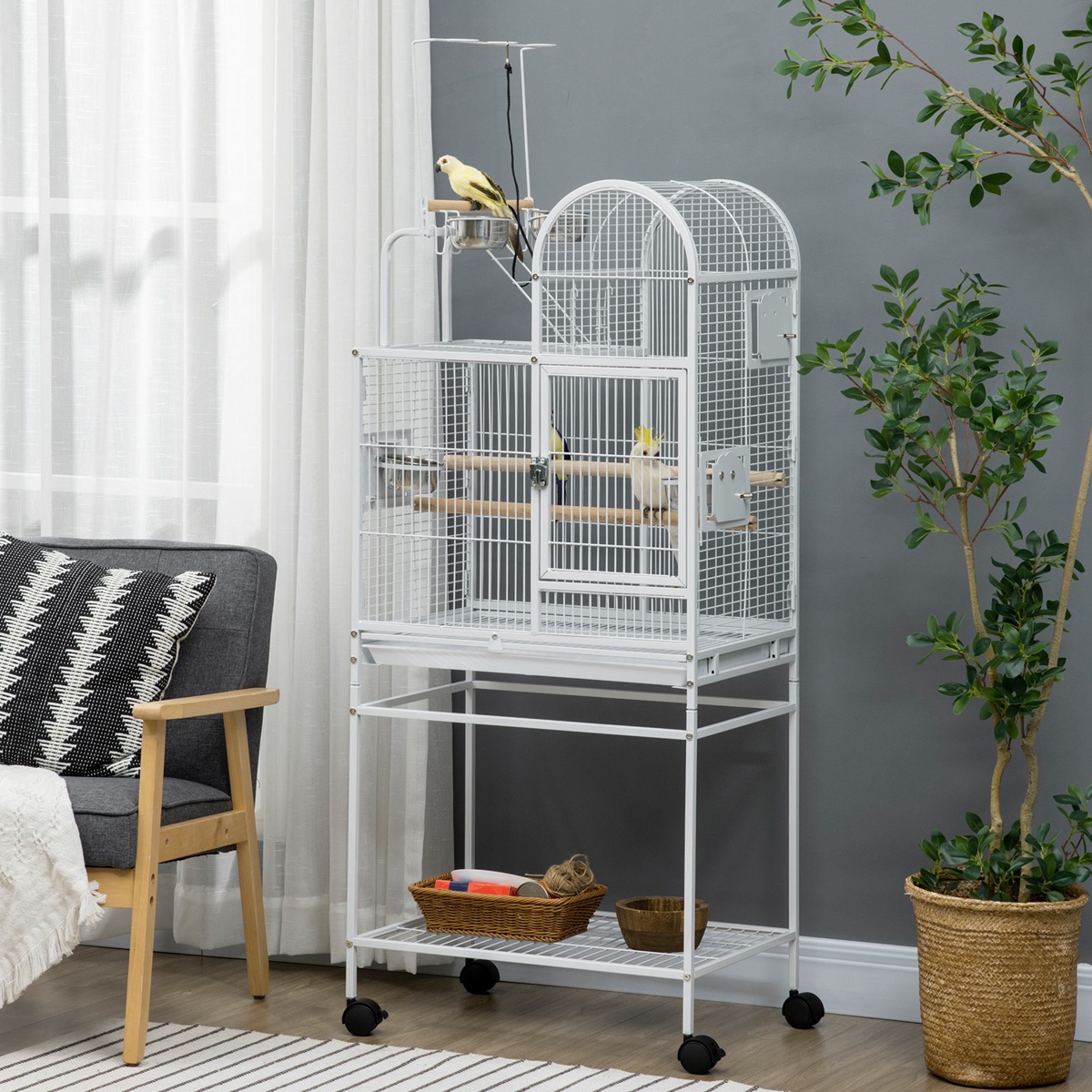 55" Large Parrot Cage with Toy Hooks Above Top Bird Perch, Tray, Food Cups, Rolling Stand, for Cockatiels, Parakeets, Lovebirds$119.99View on Mallflare
Highlights
- Bar gauge is the primary durability metric: 2-3 mm wire suits budgies and cockatiels, 3.5-4 mm suits African greys and amazons, and 4.5-5 mm welded wire is required for macaws and cockatoos.
- Weld architecture matters more than wire thickness alone: full-penetration MIG/TIG welds at every bar intersection resist beak leverage, while spot-welded panels pop apart under repeated chewing.
- Powder coat thickness of at least 50-70 microns over a zinc phosphate or galvanized base prevents rust at weld points; bare or thin-coated welds are the first failure point in humid rooms.
- Bar spacing is a safety threshold, not a preference: 1.2-1.9 cm for small birds, 2.0-2.5 cm for medium parrots, and 3.0-3.8 cm for large macaws and cockatoos to prevent head entrapment.
Best use cases
- Best fit: macaw, cockatoo, or African grey owners needing a 4-5 mm welded-bar cage with 3.0-3.8 cm spacing and a 2-3 cm thick powder coat — skip any 2 mm spot-welded cage regardless of advertised 'heavy duty' labeling.
- Best fit: conure, amazon, or eclectus households choosing a 3.5-4 mm wire cage with 2.0-2.5 cm spacing and lockable feeder doors — skip open-top play-top cages for birds that test latch strength daily.
- Wrong fit: budgie, cockatiel, or lovebird owners buying a macaw-grade cage — 4.5-5 mm bars and 3.8 cm spacing create head-entrapment and foot-slip risk for small species; use 1.2-1.9 cm spacing instead.
- Best fit: multi-bird or aviary setups using modular welded panels with bolt-through frame connectors rather than clip-together panels, which separate under a large bird's weight and rocking.
Buying tips
- Measure your bird's beak-to-nape length and pick bar spacing that is smaller than the head width — 2.5 cm maximum for medium parrots, 3.8 cm maximum for large macaws.
- Choose cage height so the interior clearance from the top perch to the roof is at least 1.5 times the bird's body length; large macaws need 90-120 cm of interior height.
- Require lockable food and water doors with stainless or brass barrel latches; parrots learn to open simple slide bolts and hook latches within days.
- Select cages with a removable bottom grille and a pull-out tray at least 5 cm deep; heavy-duty models use a 1.0-1.2 mm galvanized tray rather than a 0.5 mm painted tray that rusts through.
Specs
| Bar Gauge | 2-5 mm wire by species size |
|---|---|
| Bar Spacing | 1.2-3.8 cm (head-width limit) |
| Weld Type | Full-penetration MIG/TIG vs spot |
| Coating | 50-70 micron zinc-rich powder coat |
Related searches
What to check before buying
- Confirm the cage's exterior footprint fits your room with 15-20 cm clearance on all sides for door swing and cleaning access; large macaw cages commonly exceed 90 cm width and 120 cm height.
- Verify the cage ships with caster wheels rated for the loaded cage weight — a 4-5 mm wire macaw cage with toys and perches can exceed 60-80 kg, and small 5 cm casters fail on carpet transitions.
- Check that feeder and water bowl openings accept stainless steel bowls of at least 500-700 ml for large birds; plastic bowls in thin wire rings tip and spill.
- Confirm the cage's bar coating is non-toxic and lead/zinc-free at the weld level; galvanized wire with exposed zinc at chew points is a poisoning risk for parrots.
FAQ
Data sources: eBay / Amazon listings and product attribute feeds. Updated Nov 27, 2026.
Some links on this page are affiliate links. If you buy after clicking one, we may earn a commission at no extra cost to you. This does not change which products appear here or their order. Affiliate disclosure.