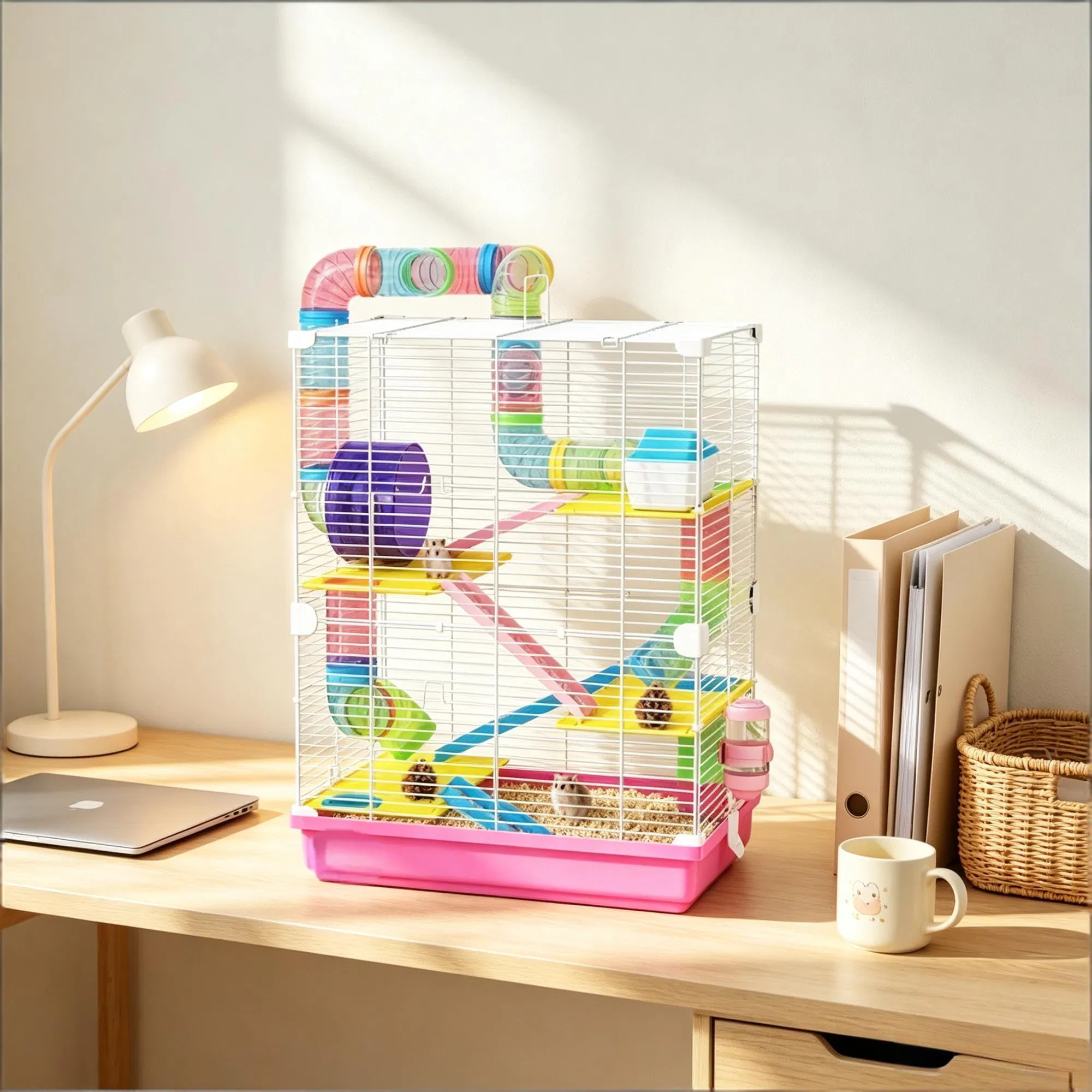

Photos from current listings. Actual item, color, and included accessories may vary.
Hamster Travel Cage Buying Guide
A hamster travel cage is a temporary, portable enclosure used for vet visits, relocation, or short trips, distinct from a permanent habitat. The core trade-off is between compact portability and adequate ventilation, escape-proofing, and stress reduction for the animal. Choose a rigid, well-ventilated carrier with a secure latch for planned travel; skip multi-tier tube cages that prioritize play features over safe transport.
Key takeaways
- Multi-tier tube cages with exercise wheels are play habitats, not secure travel carriers—tubes can detach and wheels take up transport space.
- Solid-wall carriers with wire mesh ventilation panels on at least two sides prevent overheating and allow airflow during travel.
- Escape-proofing requires a locking latch or screw-tightened door; hamsters can push open friction-fit or slide latches.
At a glance
- Category
- Bird & Small Animal Supplies
- Last updated
- Nov 27, 2026
Current offers
Highlights
- Multi-tier tube cages with exercise wheels are play habitats, not secure travel carriers—tubes can detach and wheels take up transport space.
- Solid-wall carriers with wire mesh ventilation panels on at least two sides prevent overheating and allow airflow during travel.
- Escape-proofing requires a locking latch or screw-tightened door; hamsters can push open friction-fit or slide latches.
- Carrier floor space should be at least 15 x 10 inches for dwarf hamsters and 20 x 12 inches for Syrian hamsters for short trips.
Best use cases
- Best fit: vet visits and short car trips—pick a rigid plastic carrier with top and side mesh, a secure latch, and room for a small hide.
- Best fit: relocation or multi-day travel—choose a carrier with a water bottle mount and space for a shallow bedding layer.
- Wrong fit: using a 5-tier tube cage as a travel carrier—tubes detach, wheels consume space, and the open structure offers no stress protection.
- Wrong fit: using a wire bare cage for travel—no draft protection and hamsters feel exposed, increasing stress.
Buying tips
- Match carrier size to hamster species: dwarf hamsters need at least 15 x 10 inches floor space; Syrians need 20 x 12 inches.
- Prioritize metal or thick ABS plastic latches over friction-fit lids—hamsters are escape artists and will test weak closures.
- Look for ventilation mesh on at least two opposing sides; single-side ventilation causes dead air and heat buildup.
- For car travel, choose a carrier with a flat base and seatbelt pass-through or place it on the floor behind a seat—never on an elevated seat.
Specs
| Carrier Type | Rigid plastic / wire mesh / soft-sided |
|---|---|
| Floor Space (Dwarf) | Min 15 x 10 in |
| Floor Space (Syrian) | Min 20 x 12 in |
| Latch Type | Screw-down / metal spring vs friction |
Related searches
What to check before buying
- Measure your hamster's adult length and width; carrier floor should be at least 1.5 times the hamster's body length in each dimension.
- Check car seat or floor space where the carrier will sit; ensure the carrier fits securely without sliding.
- Confirm the carrier has a water bottle attachment point if travel exceeds 2 hours.
- Verify the latch type—screw-down or metal spring latches are escape-proof; friction lids are not.
FAQ
Data sources: eBay / Amazon listings and product attribute feeds. Updated Nov 27, 2026.
Some links on this page are affiliate links. If you buy after clicking one, we may earn a commission at no extra cost to you. This does not change which products appear here or their order. Affiliate disclosure.