
Photos from current listings. Actual item, color, and included accessories may vary.
Glass Hummingbird Feeder Buying Guide
Glass hummingbird feeders use a transparent reservoir and flower-shaped ports to attract hummingbirds, with the main trade-off being hand-blown or molded glass durability and cleaning access versus lightweight plastic alternatives. The key decision is choosing a feeder with a wide-mouth opening for scrubbing, rust-proof port materials, and a built-in ant moat; skip any glass feeder with narrow necks or painted interiors that harbor mold.
Median $43.49
Key takeaways
- Hand-blown glass feeders typically hold 20–33 oz and use 4–6 flower ports; molded glass versions are thicker-walled and more chip-resistant than thin hand-blown reservoirs.
- Port diameter of 2–3 mm prevents bee access while accommodating hummingbird tongues; metal ports (brass or stainless) resist wear better than plastic inserts that crack.
- Ant moats integrated above the feeder hold 1–2 oz of water and are the most effective non-toxic ant barrier; separate moats must match the hanger gauge.
At a glance
- Category
- Bird & Small Animal Supplies
- Last updated
- Nov 27, 2026
Current offers
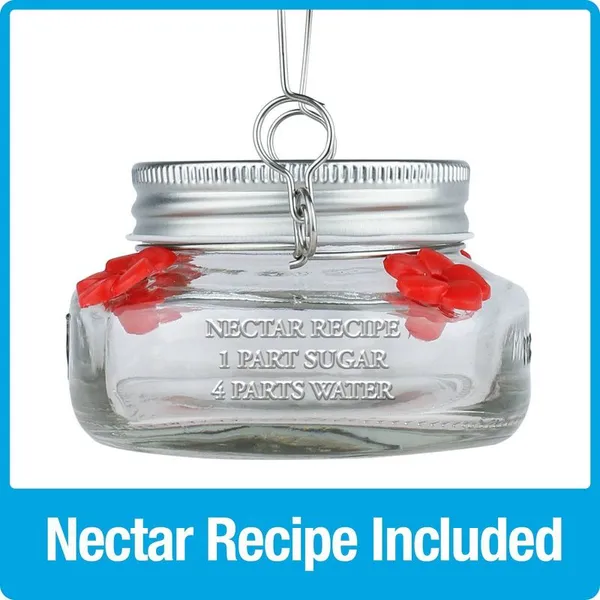 6oz Mason Jar Hummingbird Glass Feeder 2.5"$19.99View on Mallflare
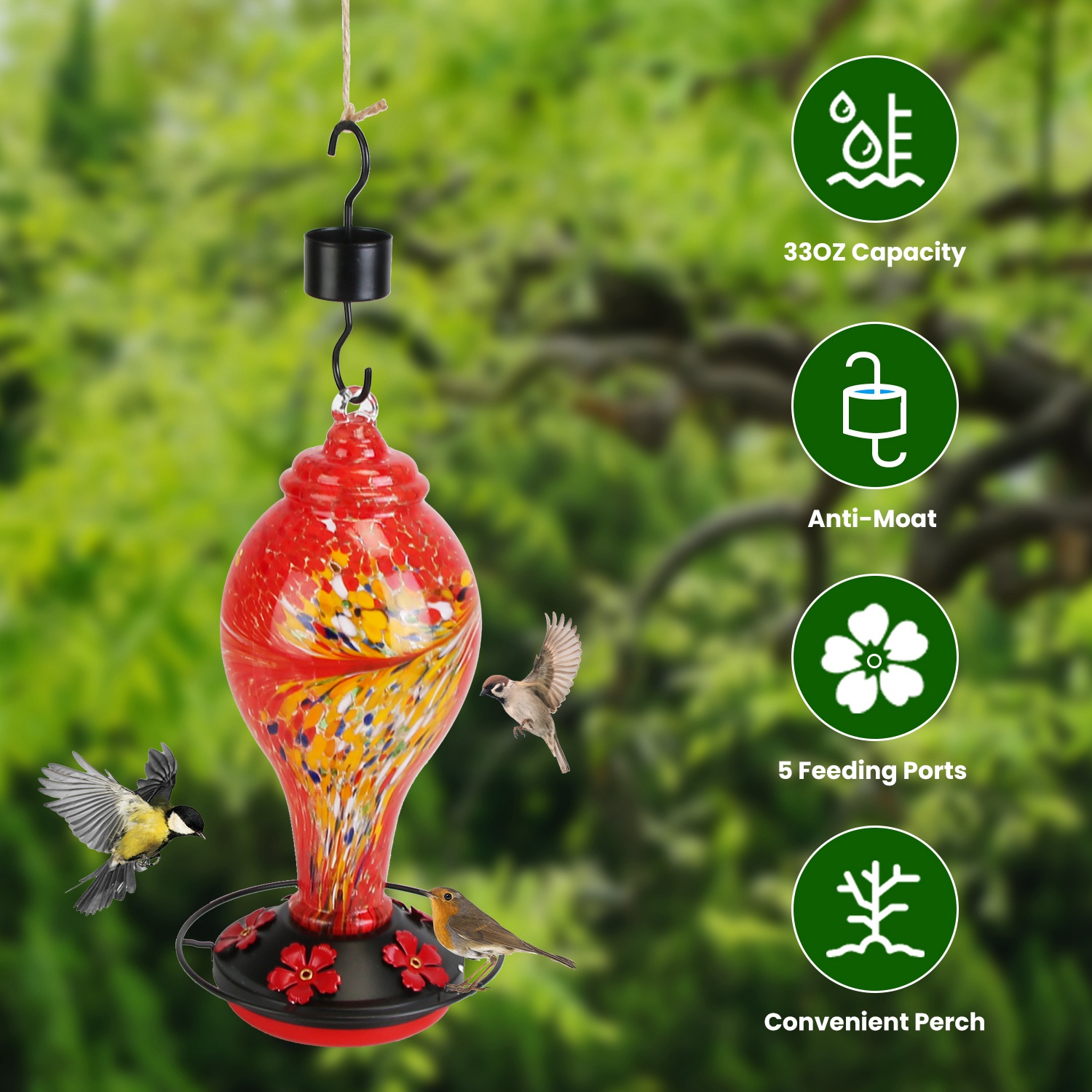 1Pc Glass Hummingbird Feeder 33OZ Hand Blown With 5 Flower Feeding Port Perch Ant Moat Hanging Hook S Hemp Rope Cleaning Brush For Garden Decor$36.99View on Mallflare
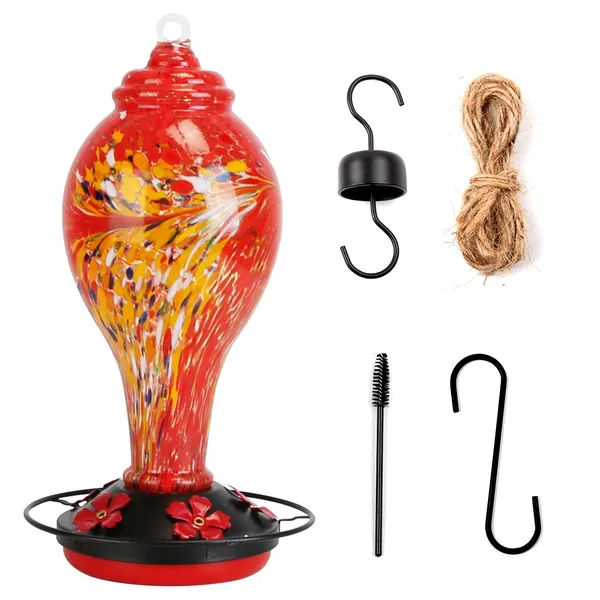 Glass Hummingbird Feeder 33OZ Hand Blown With 5 Flower Feeding Port Perch Ant Moat Hanging Hook S Hemp Rope Cleaning Brush For Garden Backyard Decor$49.99View on Mallflare
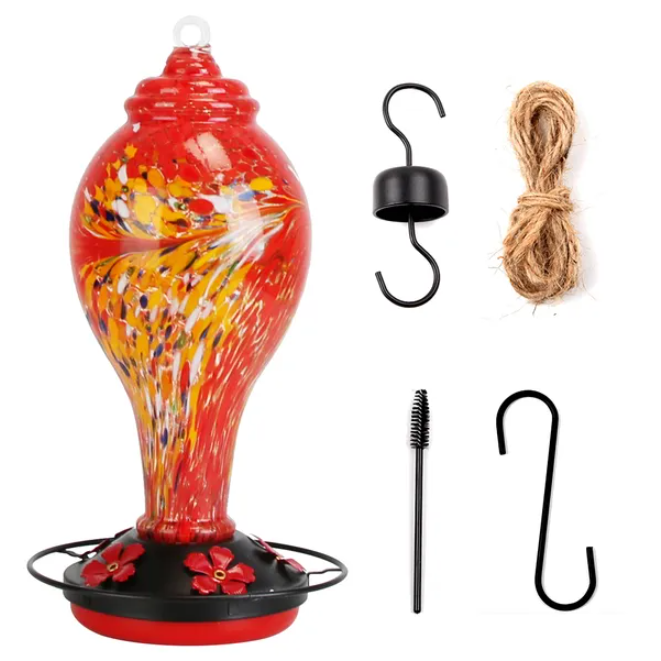 Glass Hummingbird Feeder With 5 Flower Feeding$49.99View on Mallflare
Highlights
- Hand-blown glass feeders typically hold 20–33 oz and use 4–6 flower ports; molded glass versions are thicker-walled and more chip-resistant than thin hand-blown reservoirs.
- Port diameter of 2–3 mm prevents bee access while accommodating hummingbird tongues; metal ports (brass or stainless) resist wear better than plastic inserts that crack.
- Ant moats integrated above the feeder hold 1–2 oz of water and are the most effective non-toxic ant barrier; separate moats must match the hanger gauge.
- Wide-mouth openings of at least 1.5 inches allow a bottle brush to reach interior corners; narrow-neck mason-jar styles require soaking and are harder to sanitize.
Best use cases
- Best for backyard gardens with high hummingbird traffic: pick a 30–33 oz hand-blown feeder with 5–6 ports and a built-in ant moat to reduce refill frequency.
- Best for small patios or window viewing: choose a 6–8 oz mason-jar feeder with 2–3 ports and a perch so birds linger within sight.
- Wrong fit for windy or exposed locations: skip tall hand-blown glass reservoirs with narrow bases; they swing and chip against poles—use a molded glass or plastic feeder with a wide base.
- Wrong fit for households with curious pets or children: avoid thin hand-blown glass; select molded glass with a protective metal cage or hang above 6 feet.
Buying tips
- Match capacity to climate: 30+ oz feeders suit mild weather and multiple birds; in hot climates above 90°F, use 8–16 oz feeders so nectar stays fresh under 3–4 days.
- Demand a wide-mouth opening (1.5 in or larger) and included cleaning brush; narrow-neck mason jars without a brush are a sanitation liability.
- Choose feeders with metal flower ports and perches; plastic ports degrade in UV within one season and perches increase feeding visits by giving birds a resting spot.
- Verify the ant moat is integrated or included; a moat that holds at least 1 oz of water blocks ants for several days between refills.
Specs
| Reservoir Material | Hand-blown vs molded glass |
|---|---|
| Capacity Range | 6–33 oz (small to large) |
| Port Count | 2–6 flower ports |
| Ant Moat | Integrated or included / none |
Related searches
What to check before buying
- Measure your hanging spot: allow 12 inches of clearance below the feeder for bird approach and 8 inches above for the hanger hook.
- Confirm your climate: in freezing winters, glass feeders crack unless emptied; plan to bring them indoors or switch to plastic.
- Check that the port count and perch style match your local species—territorial species prefer 2–3 ports, while communal species use 5–6.
- Ensure you have a bottle brush that fits the mouth opening and a plan to clean and refill every 2–4 days in warm weather.
FAQ
Data sources: eBay / Amazon listings and product attribute feeds. Updated Nov 27, 2026.
Some links on this page are affiliate links. If you buy after clicking one, we may earn a commission at no extra cost to you. This does not change which products appear here or their order. Affiliate disclosure.