
Photos from current listings. Actual item, color, and included accessories may vary.
Bird Stand Cage Buying Guide
Bird stand cages combine a mobile rolling base with a wire enclosure or open play perch, and the core trade-off is between thin, lightweight wire that bends and rusts versus heavier gauge, powder-coated steel that holds shape and resists corrosion. Buy the stand and cage as one integrated unit only when the locking mechanism and wheel load rating match the cage size; otherwise match a sturdy separate stand to a cage with a solid bottom frame.
Median $137.49
Key takeaways
- Wire gauge is the main durability metric: 2–3 mm powder-coated steel wire resists cockatiel and conure beaking, while 1–1.5 mm wire deforms under parakeet pressure and rusts at weld points.
- Bar spacing must match species head width: 1/2 inch (12–13 mm) for budgies, lovebirds, and canaries; 5/8 to 3/4 inch (16–19 mm) for cockatiels; 3/4 to 1 inch (19–25 mm) for conures and small parrots.
- Rolling stands use either 2 locking casters on a 4-wheel base or a full 4-wheel locking set; cages 45 inches and taller need at least two locking casters and a wheel load rating of 25 lb per caster to roll safely on carpet.
At a glance
- Category
- Bird & Small Animal Supplies
- Last updated
- Nov 27, 2026
Current offers
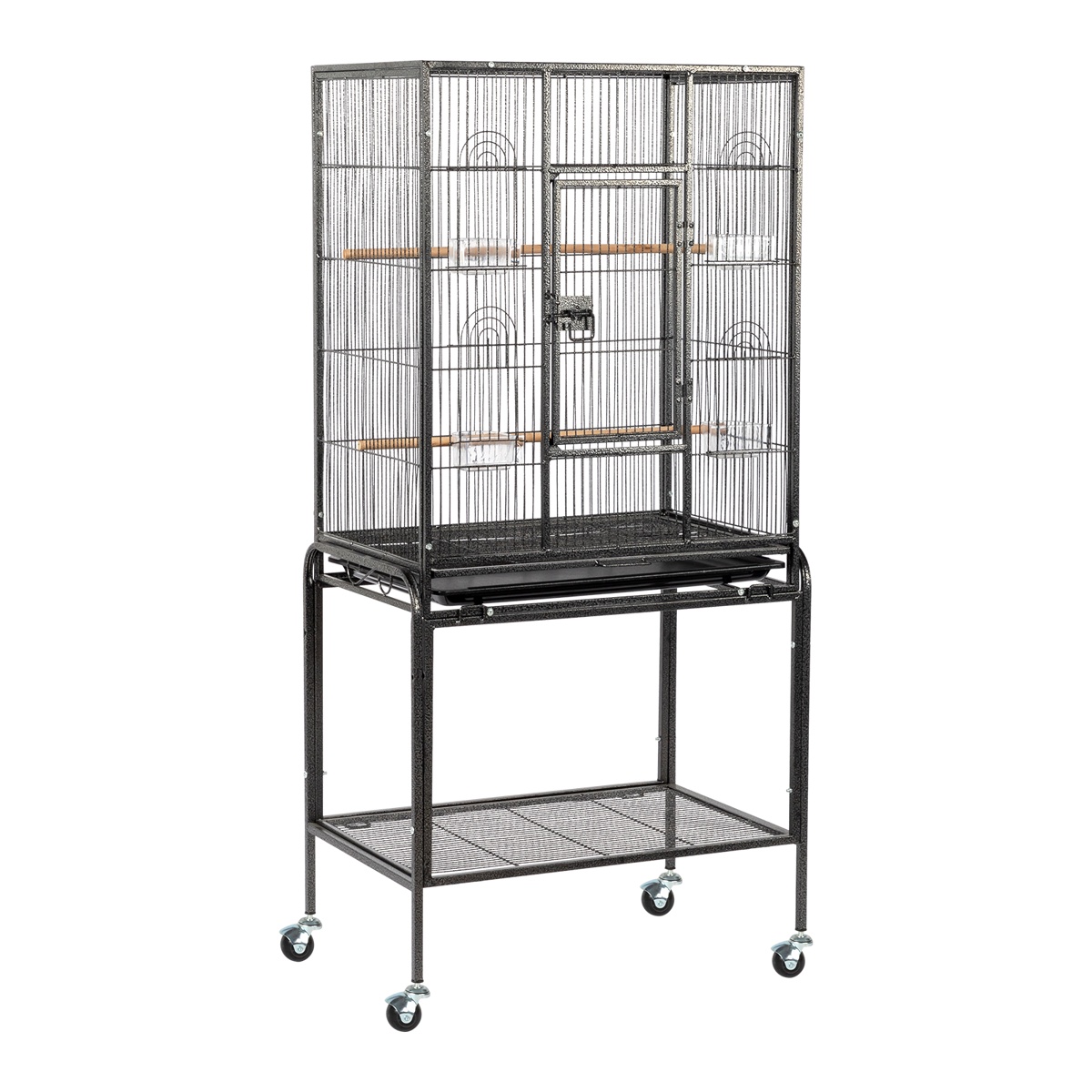 53" Large Flight Bird Cage with Rolling Stand & Storage Shelf for Parrots Lovebird Cockatiel Parakeets, Black$110.99View on Mallflare
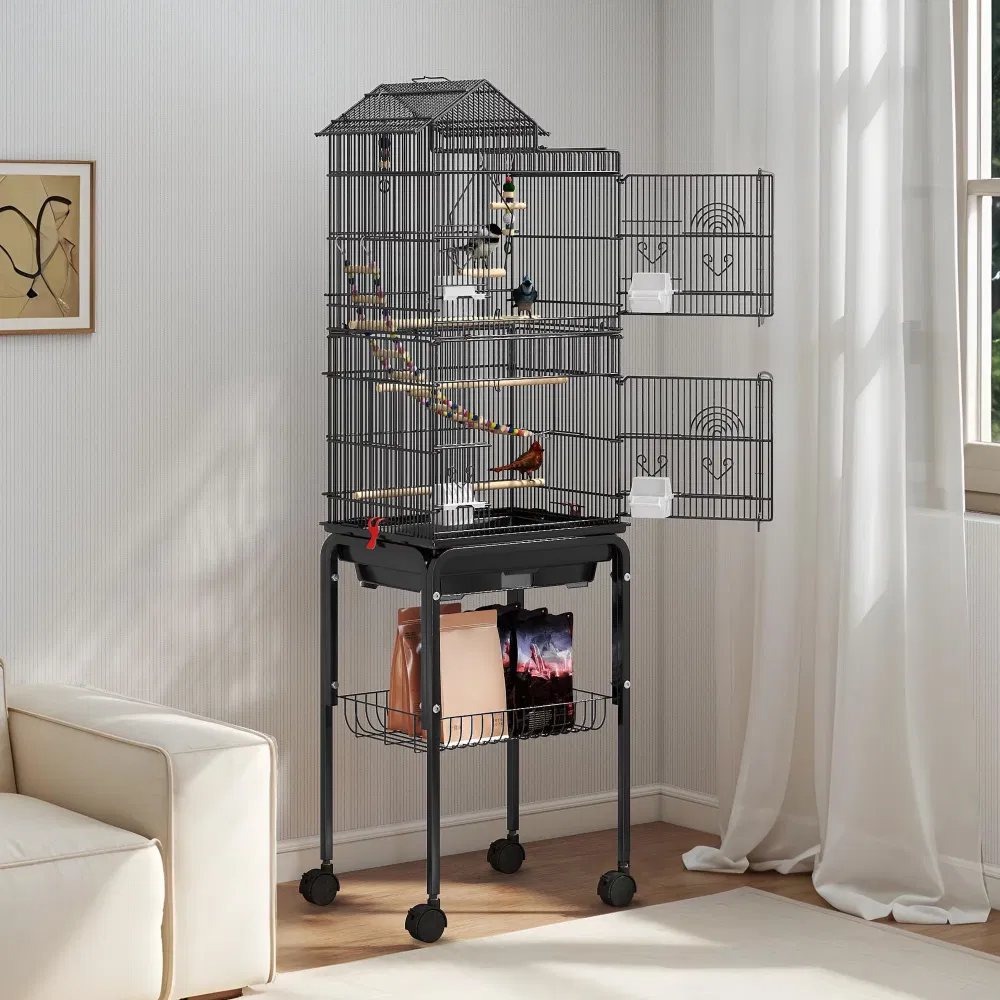 62" Large Metal Bird cage with Rolling Stand, Slide-Out Tray,3 Perches and 4 Feeders, Black$123.99View on Mallflare
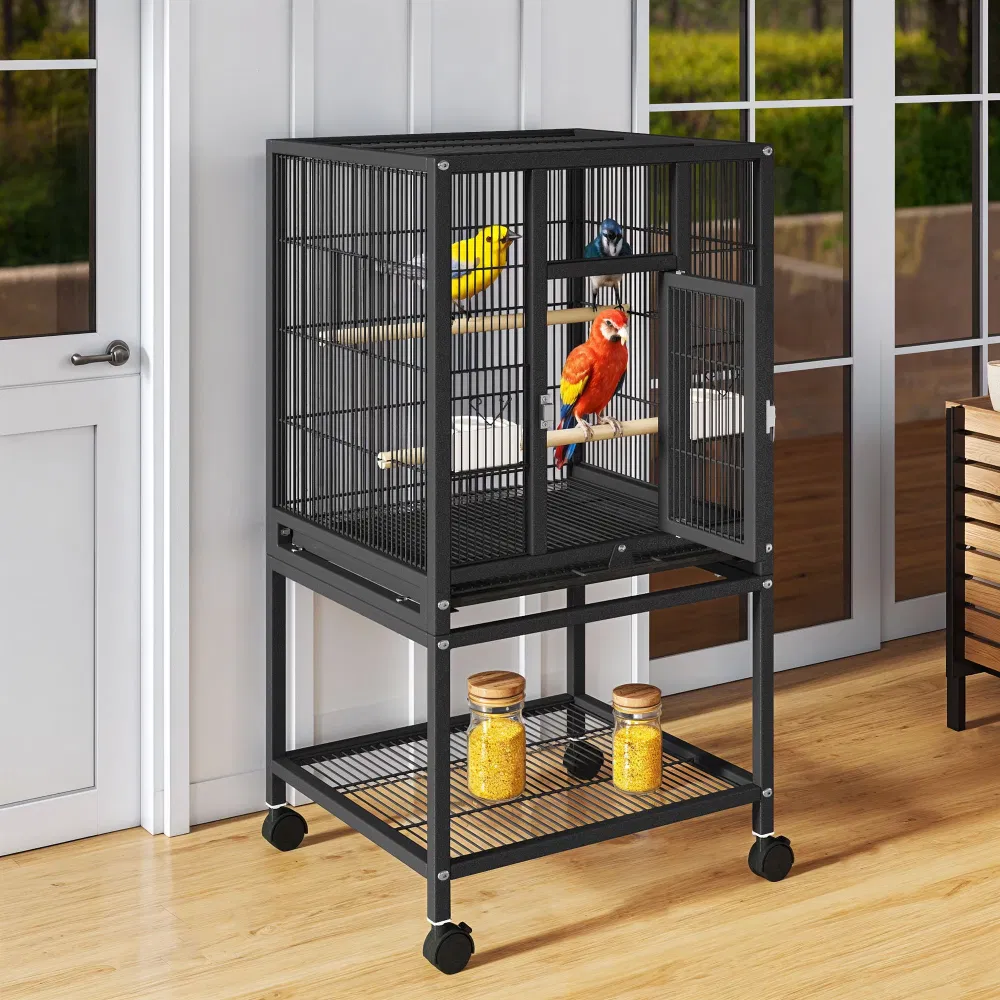 41" Metal Bird cage with Rolling Stand, Tray, 2 Perches and 2 Feeders, Black$150.99View on Mallflare
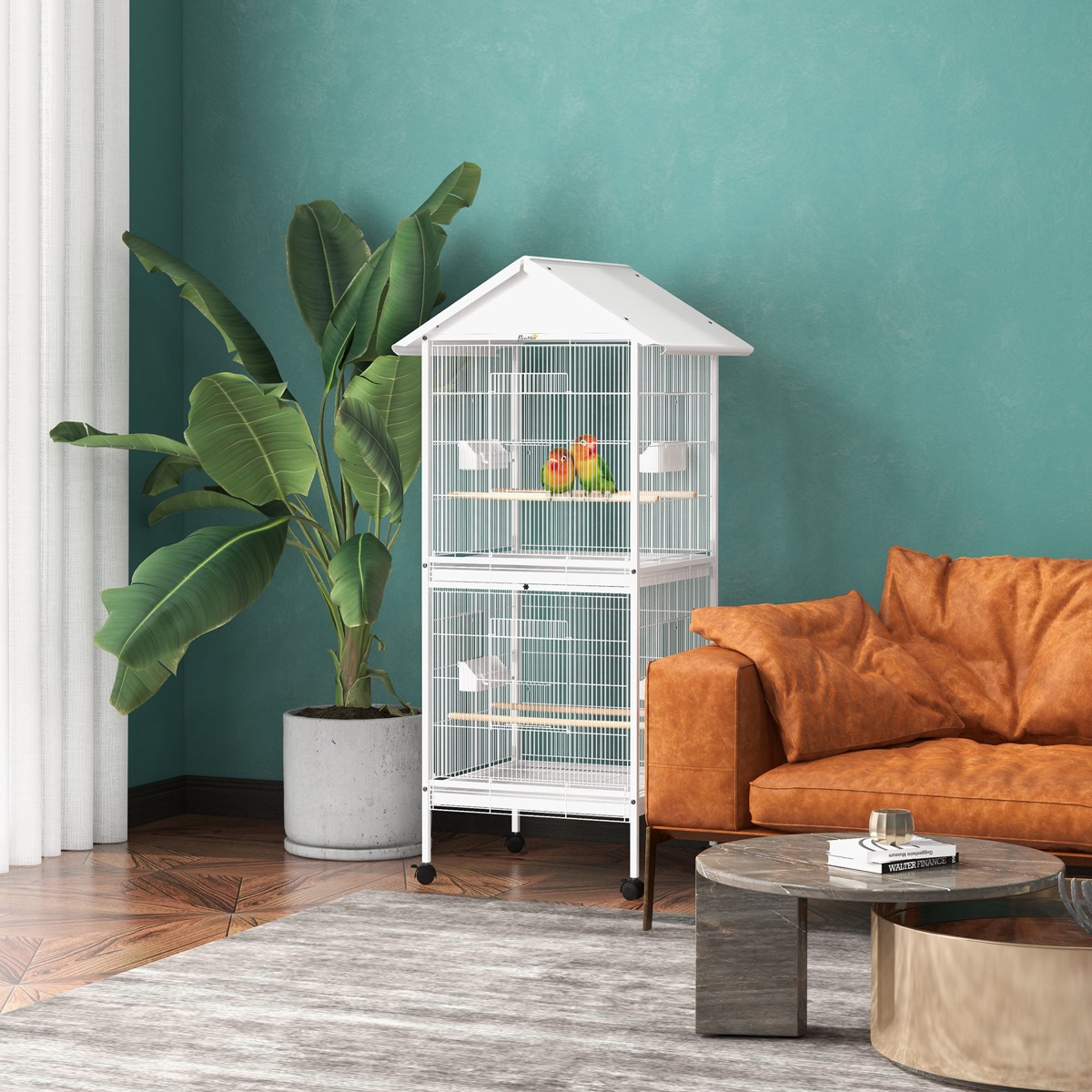 Wrought Metal Bird Cage Feeder with Rolling Stand Perches Food Containers Doors Wheels 67" H, White$171.99View on Mallflare
Highlights
- Wire gauge is the main durability metric: 2–3 mm powder-coated steel wire resists cockatiel and conure beaking, while 1–1.5 mm wire deforms under parakeet pressure and rusts at weld points.
- Bar spacing must match species head width: 1/2 inch (12–13 mm) for budgies, lovebirds, and canaries; 5/8 to 3/4 inch (16–19 mm) for cockatiels; 3/4 to 1 inch (19–25 mm) for conures and small parrots.
- Rolling stands use either 2 locking casters on a 4-wheel base or a full 4-wheel locking set; cages 45 inches and taller need at least two locking casters and a wheel load rating of 25 lb per caster to roll safely on carpet.
- Open play stands (T-stands, ladder playgrounds) carry no enclosure—they rely on a weighted base and perch diameter of 3/4 to 1 inch for foot health, and are training stations, not containment.
Best use cases
- Best fit: a 30-inch rolling cage with 1/2-inch bar spacing and a tray for budgies, lovebirds, or canaries in a bedroom—skip 45-inch flight cages, which are overkill for one small bird and harder to move through doorways.
- Best fit: a 45–55-inch rolling cage with 5/8 to 3/4-inch bar spacing, top perch, and food cups for a cockatiel or pair of parakeets—choose this tier over a 30-inch cage if the bird is out of cage more than 4 hours daily.
- Best fit: an open T-stand or ladder playground with a weighted base for supervised training and out-of-cage time—do not buy an open stand as the bird's primary housing; it provides no containment or sleep enclosure.
- Wrong fit: a double stackable cage on wheels for a single bird—stacked units are for breeders or multi-bird households and double the cleaning and noise footprint in one room.
Buying tips
- Measure the cage's bottom frame width and depth and match the stand's tray or platform within 1 inch; a cage overhanging the stand by more than 2 inches creates a tip risk when the bird moves to one side.
- Check caster type before buying: polyurethane or rubber wheels roll quietly on hardwood and tile, while hard plastic wheels skid and mark floors—locking casters on at least two wheels are mandatory for cages above 40 inches.
- Choose powder-coated steel over painted or galvanized wire; powder coating resists chipping and zinc ingestion risk, and welded wire junctions should be smooth with no sharp burrs at tray edges or door latches.
- For open play stands, confirm the base weight is at least 8–10 lb or fillable with sand/water; a lightweight base tips when a parrot lands off-center, and perch diameter should be 3/4 to 1 inch for cockatiel-to-conure foot grip.
Specs
| Bar Spacing | 1/2 in small birds; 5/8–3/4 in cockatiels |
|---|---|
| Wire Gauge | 2–3 mm powder-coated steel |
| Caster Rating | 25 lb/wheel; 2+ locking casters |
| Stand Type | Enclosed cage vs open play stand |
Related searches
What to check before buying
- Measure doorway and hallway clearance: a 45-inch cage on a rolling stand typically needs 24–30 inches of width and 50+ inches of height clearance to roll through a standard door.
- Confirm floor type and caster compatibility: carpet needs larger 2-inch wheels and locking brakes; hardwood needs soft rubber treads to avoid scratches.
- Verify bar spacing against your bird's head width—1/2 inch for small birds, 5/8–3/4 inch for cockatiels—and check that feeder doors have secure latches a bird cannot slide open.
- Plan for tray and grate removal space: the stand must allow the tray to slide out without lifting the cage, and replacement trays/grates should be available in the same width.
FAQ
Data sources: eBay / Amazon listings and product attribute feeds. Updated Nov 27, 2026.
Some links on this page are affiliate links. If you buy after clicking one, we may earn a commission at no extra cost to you. This does not change which products appear here or their order. Affiliate disclosure.