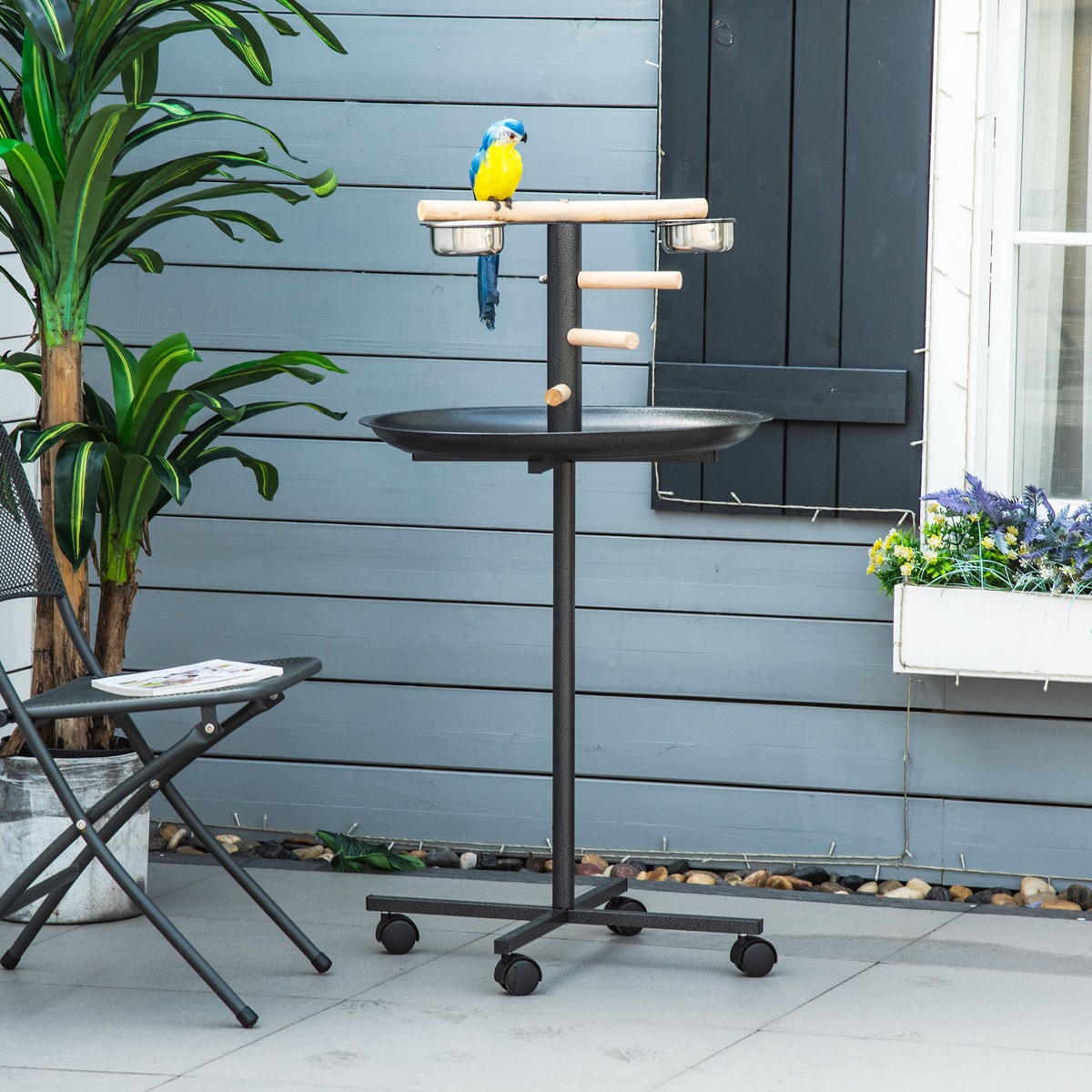

Photos from current listings. Actual item, color, and included accessories may vary.
Bird Perch Stand Buying Guide
A bird perch stand is a freestanding play gym or wheeled cage stand that gives parrots and small birds out-of-cage exercise, foraging, and training space. The core trade-off is between lightweight portable play stands with thin perches and heavy-duty powder-coated steel stands built to resist chewing and tipping. Buy a welded or bolt-reinforced metal frame with species-appropriate perch diameters if you want durability; skip flimsy plastic joints and dowel perches for medium-to-large parrots.
Key takeaways
- Powder-coated wrought or stainless steel frames resist beak damage far better than painted plastic or softwood dowels.
- Perch diameter should match foot grip: 1/2–3/4 in for parakeets and cockatiels, 1–1.5 in for conures and African greys, 1.5–2 in for macaws.
- Caster size determines stability: 2 in or larger locking wheels roll over carpet and lock safely; small hard casters skid and tip.
At a glance
- Category
- Bird & Small Animal Supplies
- Last updated
- Nov 27, 2026
Current offers
Highlights
- Powder-coated wrought or stainless steel frames resist beak damage far better than painted plastic or softwood dowels.
- Perch diameter should match foot grip: 1/2–3/4 in for parakeets and cockatiels, 1–1.5 in for conures and African greys, 1.5–2 in for macaws.
- Caster size determines stability: 2 in or larger locking wheels roll over carpet and lock safely; small hard casters skid and tip.
- Detachable drop trays and stainless feed bowls simplify cleaning and prevent rust compared with painted or plastic cups.
Best use cases
- Best fit: a rolling T-stand or play gym with multiple perch heights for daily out-of-cage time and step-up training with cockatiels, conures, and parakeets.
- Best fit: a caged stand combo with slide-out tray and storage shelf when the bird sleeps in the cage and uses the top perch as its daytime station.
- Wrong fit: a lightweight plastic-jointed tabletop stand for a macaw or cockatoo—chewing and weight will destroy it; choose a welded steel stand rated for large birds.
- Wrong fit: a tall narrow cage stand in a busy hallway—top-heavy frames tip when birds flap; pick a wide-base stand with locking casters for active birds.
Buying tips
- Match perch diameter to foot size: too-thin dowels cause pressure sores, so choose 1–1.5 in natural wood or rope-wrapped perches for medium parrots.
- Confirm bar spacing for cage combos: 1/2–5/8 in suits parakeets and lovebirds, 3/4–1 in suits cockatiels and conures, over 1 in only for large macaws.
- Choose stainless steel bowls and powder-coated steel over painted or plastic feeders; these resist rust, chewing, and repeated dishwashing.
- Pick a base wider than the cage footprint by at least several inches and locking casters for stability on carpet or uneven floors.
Specs
| Frame Material | Powder-coated steel vs wood/plastic |
|---|---|
| Perch Diameter | 1/2–2 in by species |
| Mobility | Locking casters vs fixed base |
| Bar Spacing | 1/2–1 in (small/medium birds) |
Related searches
What to check before buying
- Measure ceiling height and doorway width before buying a tall rolling stand; assembled heights range from roughly 30 in tabletop to 67 in cage-stand combos.
- Check floor type: locking casters are essential on hardwood and tile, while larger wheels roll better on carpet and rugs.
- Verify the perch material and diameter suit your species; natural wood and rope are safer than smooth plastic dowels for grip and beak wear.
- Confirm the stand includes a seed-catching tray or mat and removable feed bowls if it will be used as a feeding station.
FAQ
Data sources: eBay / Amazon listings and product attribute feeds. Updated Nov 27, 2026.
Some links on this page are affiliate links. If you buy after clicking one, we may earn a commission at no extra cost to you. This does not change which products appear here or their order. Affiliate disclosure.