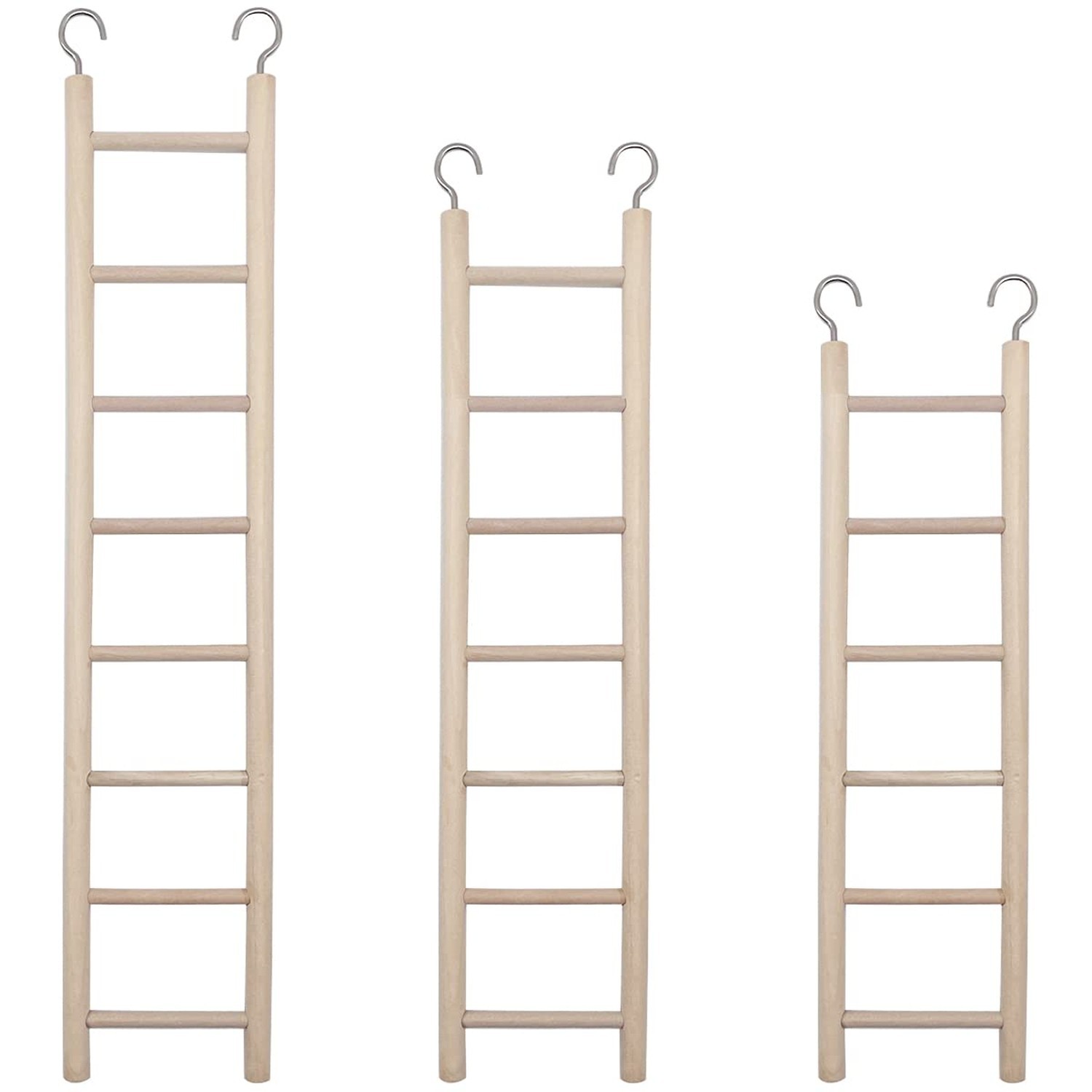

Photos from current listings. Actual item, color, and included accessories may vary.
Bird Cage Perch Wood Buying Guide
Wood bird perches are natural or doweled branches that give cage birds a secure grip, wear-managed toenails, and beak-conditioning surfaces. The core trade-off is between soft, sappy woods that are cheap but harbor mites and splinter, versus dense hardwood (or kiln-dried fruitwood) that resists chewing yet costs more and needs correct diameter match. The decision rule: buy only untreated, kiln-dried hardwood or natural branch perches whose diameter matches your bird's foot span at 50–75% closure, and skip dyed, sandpaper-covered, or soft-pine dowels.
Median $21.81
Key takeaways
- Hardwood density separates durable perches from chew-through dowels: maple, manzanita, and kiln-dried fruitwood resist beak wear, while soft pine and balsa fail within weeks.
- Diameter drives foot health: a perch should let toes wrap 50–75% around it, so budgies need 3/8–1/2 in, cockatiels 1/2–3/4 in, and macaws 1–1.5 in.
- Untreated, kiln-dried wood is the safety baseline—heat-treated branches kill mites and mold; dyed, varnished, or sandpaper-wrapped perches hide splinters and irritants.
At a glance
- Category
- Bird & Small Animal Supplies
- Last updated
- Nov 27, 2026
Current offers
Highlights
- Hardwood density separates durable perches from chew-through dowels: maple, manzanita, and kiln-dried fruitwood resist beak wear, while soft pine and balsa fail within weeks.
- Diameter drives foot health: a perch should let toes wrap 50–75% around it, so budgies need 3/8–1/2 in, cockatiels 1/2–3/4 in, and macaws 1–1.5 in.
- Untreated, kiln-dried wood is the safety baseline—heat-treated branches kill mites and mold; dyed, varnished, or sandpaper-wrapped perches hide splinters and irritants.
- Mounting hardware must match bar spacing: 1/2–5/8 in cage bars need a bolt/wing-nut or clamp that seats flush, and natural branch perches usually require a washer to stop rotation.
Best use cases
- Best fit: a budgie or lovebird in a 1/2 in bar-spacing cage—choose a 3/8–1/2 in kiln-dried manzanita or fruitwood branch perch with a wing-nut clamp; skip thick 1 in dowels that force an open, unstable grip.
- Best fit: a cockatiel or conure that chews constantly—buy a 1/2–3/4 in natural hardwood branch (apple, willow) with bark intact for beak conditioning; skip soft pine dowels and sandpaper covers that mask splintering.
- Best fit: a macaw or cockatoo in a large flight cage—use a 1–1.5 in thick manzanita or dragonwood perch with heavy-duty 1/4 in bolt hardware; skip thin 1/2 in perches that flex under weight.
- Wrong fit: a cage with 3/4 in or wider bar spacing paired with a small clamp perch—the mount will not seat and the perch rotates; choose a bolt-through or platform-style wood perch instead.
Buying tips
- Match perch diameter to foot span, not bird length: measure the closed-foot width, then pick a diameter that yields 50–75% toe wrap (budgie 3/8–1/2 in, cockatiel 1/2–3/4 in, macaw 1–1.5 in).
- Buy kiln-dried or heat-treated natural branch wood (manzanita, apple, willow, dragonwood); avoid green, sappy, or kiln-unknown branches that crack, mold, or carry mites.
- Choose untreated, dye-free, sandpaper-free surfaces—bark is fine and useful for chewing, but varnish, glitter, and glued-on grit hide splinters and are not removable.
- Confirm mounting hardware for your bar spacing: a wing-nut bolt needs a flat washer wider than the bar gap; for 3/4 in+ gaps, use a bolt-through or platform perch to prevent rotation.
Specs
| Wood Type | Kiln-dried hardwood vs soft pine |
|---|---|
| Perch Diameter | 3/8–1.5 in by bird size |
| Surface Finish | Untreated bark vs dyed/sandpaper |
| Mount Style | Wing-nut clamp vs bolt-through |
Related searches
What to check before buying
- Measure cage bar spacing before ordering: 1/2–5/8 in bars accept standard clamp/wing-nut perches; 3/4 in+ bars need bolt-through or platform mounts.
- Measure your bird's closed-foot span with a ruler or caliper to pick the perch diameter range (3/8–1/2 in small, 1/2–3/4 in medium, 1–1.5 in large).
- Check the wood is kiln-dried/heat-treated, untreated, and dye-free—bark-on natural branch is acceptable, but sap, mold, or chemical odor means reject.
- Plan for at least two perch diameters and one natural branch per cage so birds can shift grip and wear toenails evenly.
FAQ
Data sources: eBay / Amazon listings and product attribute feeds. Updated Nov 27, 2026.
Some links on this page are affiliate links. If you buy after clicking one, we may earn a commission at no extra cost to you. This does not change which products appear here or their order. Affiliate disclosure.