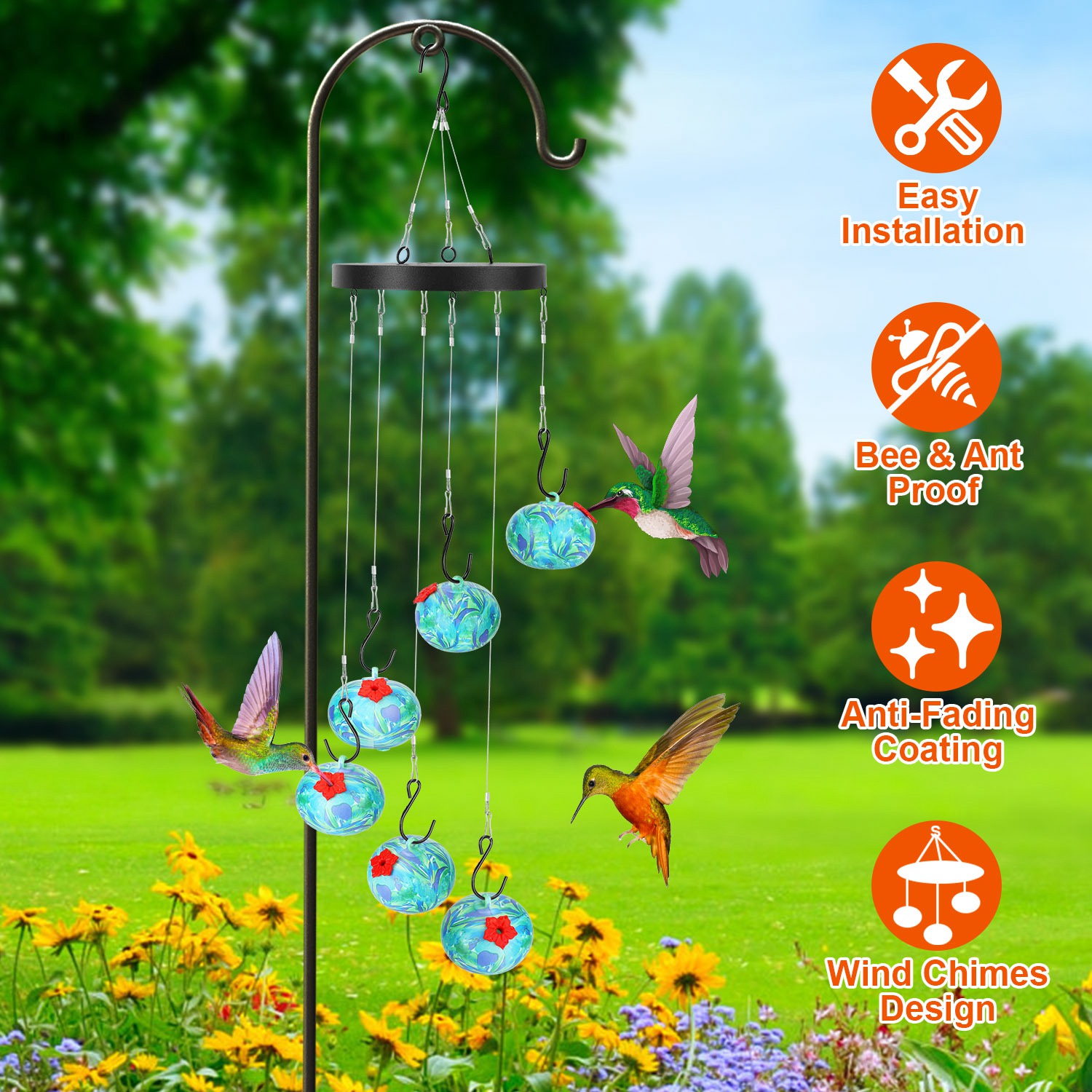

Photos from current listings. Actual item, color, and included accessories may vary.
Bee Proof Hummingbird Feeder Buying Guide
Bee-proof hummingbird feeders use physical barriers (bee guards, long flower ports, or saucer-style enclosed nectar) to keep bees and wasps out while allowing hummingbirds to feed. The core trade-off is between open-port designs that are easy for hummingbirds but attract bees, and guard-based or saucer designs that deter bees but require stricter cleaning and proper port depth. The decision rule is simple: choose a feeder with recessed or screened ports and fewer, deeper feeding stations; skip wide-open perch feeders if bees are your main problem.
Key takeaways
- Bee guards work by blocking bee access with mesh or slotted screens that hummingbird tongues and beaks can pass through but bee mouthparts cannot.
- Saucer-style feeders with recessed ports keep nectar enclosed and reduce bee access more reliably than open bottle-and-base feeders.
- Port depth and diameter matter: deeper, narrower ports (typically 2-3 mm openings) favor hummingbirds and deter bees with larger body diameters.
At a glance
- Category
- Bird & Small Animal Supplies
- Last updated
- Nov 27, 2026
Current offers
Highlights
- Bee guards work by blocking bee access with mesh or slotted screens that hummingbird tongues and beaks can pass through but bee mouthparts cannot.
- Saucer-style feeders with recessed ports keep nectar enclosed and reduce bee access more reliably than open bottle-and-base feeders.
- Port depth and diameter matter: deeper, narrower ports (typically 2-3 mm openings) favor hummingbirds and deter bees with larger body diameters.
- Fewer feeding ports (2-4) reduce bee-attracting surface area and spillage compared with 8-12 port feeders; fewer ports also mean less nectar exposure.
Best use cases
- Best fit: a backyard with high bee activity — choose a saucer-style feeder with recessed ports or a bottle feeder with removable bee guards; skip open-perch bottle feeders.
- Best fit: a patio or balcony with occasional bees — a 4-port bottle feeder with screw-on bee guards balances hummingbird access and bee deterrence; skip large 12-port feeders.
- Wrong fit: a hummingbird viewing area where wasps are aggressive — skip plastic mesh guards that wasps can chew; use a saucer feeder with enclosed nectar instead.
Buying tips
- Choose feeders with ports 2-3 mm in diameter and recessed at least 5 mm into the base; wider or flush ports let bees reach nectar.
- Prefer saucer-style feeders with a nectar moat or sealed base over bottle-and-base designs, which leak and attract bees at seams.
- Select feeders with removable, dishwasher-safe parts (top-rack) and no narrow bottle necks; bee guards trap residue and need frequent cleaning.
- Pick UV-resistant plastic (polycarbonate or AS resin) over thin styrene; UV degradation causes cracking and leaks that attract bees.
Specs
| Guard Type | Mesh screen / slotted port / recessed saucer |
|---|---|
| Port Count | 2-4 ports (bee-prone) / 6-12 (low bee) |
| Port Opening | 2-3 mm diameter, recessed 5+ mm |
| Body Material | UV-stable polycarbonate or AS resin |
Related searches
What to check before buying
- Measure your hanging location: feeder plus nectar can weigh 1-2 kg; ensure the hook or branch supports that and the feeder hangs 1.5-2 m off the ground.
- Check local climate: in freezing weather, plastic feeders crack; choose a feeder with thick walls or bring it indoors below 0°C.
- Confirm port guard compatibility: if buying a bottle feeder, ensure replacement bee guards match the port thread and diameter.
- Plan cleaning access: feeder must disassemble fully without tools; narrow bottlenecks and glued seams harbor mold that bees and hummingbirds avoid.
FAQ
Data sources: eBay / Amazon listings and product attribute feeds. Updated Nov 27, 2026.
Some links on this page are affiliate links. If you buy after clicking one, we may earn a commission at no extra cost to you. This does not change which products appear here or their order. Affiliate disclosure.