
Photos from current listings. Actual item, color, and included accessories may vary.
1 Hummingbird Feeder Buying Guide
A hummingbird feeder is a nectar dispenser designed to attract and sustain hummingbirds, with the primary trade-off being between easy-to-clean, bee-resistant designs and decorative, high-capacity models that can be harder to maintain. The clear decision rule is to prioritize cleaning accessibility and nectar protection over ornamentation, because a feeder that cannot be fully disassembled and scrubbed every 2–3 days will harbor mold and bacteria that harm birds.
Median $36.99
Key takeaways
- Feeder capacity ranges from 4–8 oz for single-territory pairs up to 32–48 oz for multi-bird stations; smaller is safer because nectar spoils within 2–3 days in heat.
- Bee guards and Nectar Guard tips create a physical barrier at the feeding port, while saucer-style feeders with submerged ports prevent bees from reaching nectar entirely.
- UV-resistant polycarbonate and glass are the durable body materials; cheap acrylic cracks under thermal cycling and thin plastic ports wear oval, leaking nectar.
At a glance
- Category
- Bird & Small Animal Supplies
- Last updated
- Nov 27, 2026
Current offers
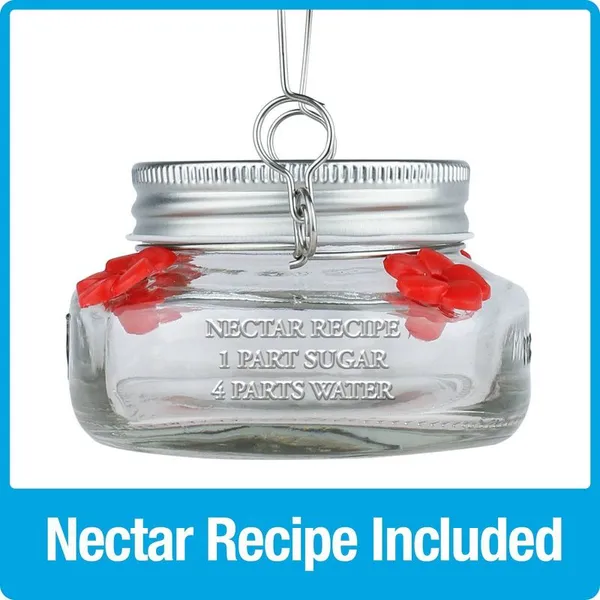 6oz Mason Jar Hummingbird Glass Feeder 2.5"$19.99View on Mallflare
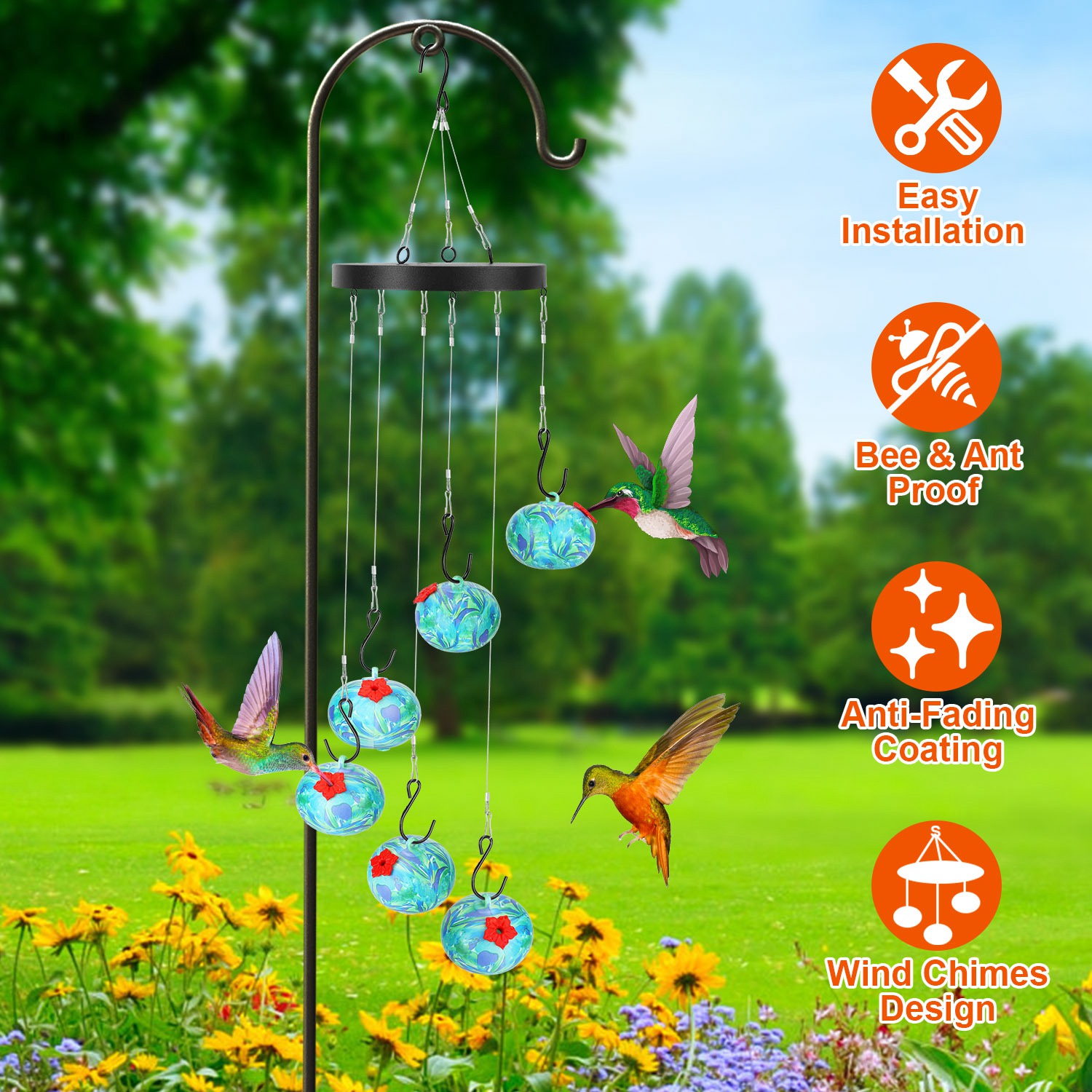 1Pc Wind Chimes Humming Bird Feeder Ant And Bee Proof Outdoor Hanging Hummingbird For Viewing Decoration For Garden Patio Yard Balcony$30.99View on Mallflare
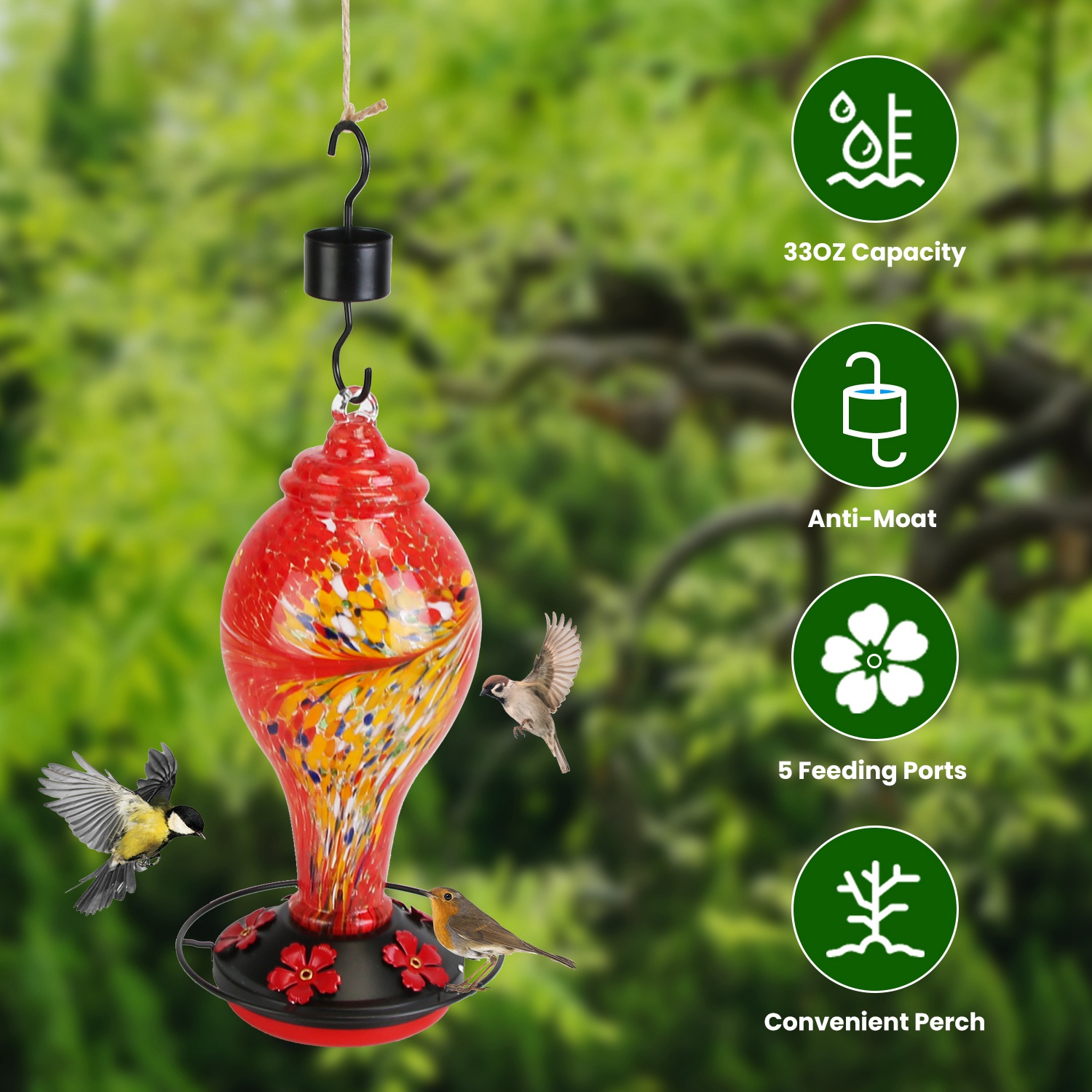 1Pc Glass Hummingbird Feeder 33OZ Hand Blown With 5 Flower Feeding Port Perch Ant Moat Hanging Hook S Hemp Rope Cleaning Brush For Garden Decor$36.99View on Mallflare
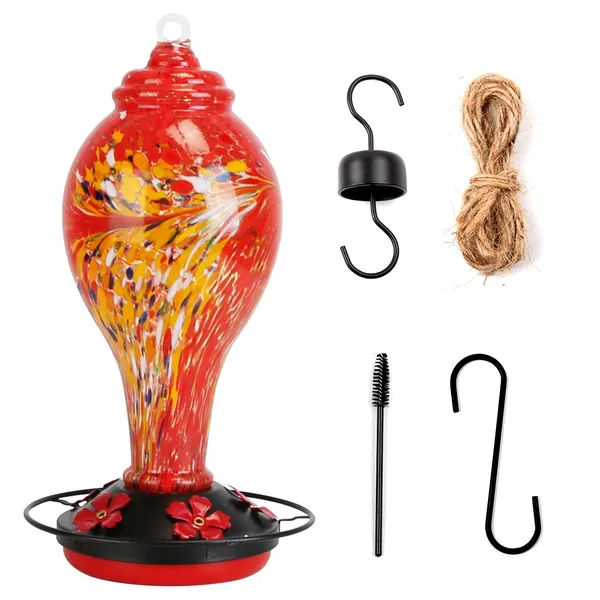 Glass Hummingbird Feeder 33OZ Hand Blown With 5 Flower Feeding Port Perch Ant Moat Hanging Hook S Hemp Rope Cleaning Brush For Garden Backyard Decor$49.99View on Mallflare
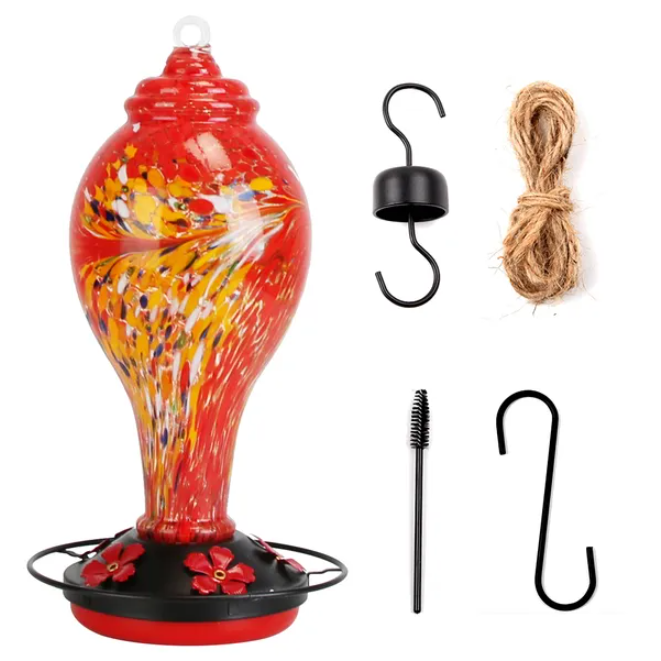 Glass Hummingbird Feeder With 5 Flower Feeding$49.99View on Mallflare
Highlights
- Feeder capacity ranges from 4–8 oz for single-territory pairs up to 32–48 oz for multi-bird stations; smaller is safer because nectar spoils within 2–3 days in heat.
- Bee guards and Nectar Guard tips create a physical barrier at the feeding port, while saucer-style feeders with submerged ports prevent bees from reaching nectar entirely.
- UV-resistant polycarbonate and glass are the durable body materials; cheap acrylic cracks under thermal cycling and thin plastic ports wear oval, leaking nectar.
- Port count and spacing matter: 4–6 ports with 2–3 inch spacing reduce territorial fighting; wide 1.5–2 inch port openings accommodate hummingbird bills but also wasps.
Best use cases
- Best fit: a backyard with 1–2 resident hummingbirds—choose a 6–8 oz saucer feeder with 4 ports and a built-in ant moat; skip 32 oz reservoir styles that leave nectar stale.
- Best fit: a shaded patio or porch where bees are a nuisance—pick a saucer feeder with Nectar Guard tips or a mesh-covered port design; skip open-port bottle feeders.
- Wrong fit: an exposed full-sun location—avoid clear glass reservoirs and small 4 oz feeders that overheat; instead use a double-walled plastic or shaded 16 oz feeder and refill every 2 days.
- Wrong fit: a household that travels or checks infrequently—skip any feeder over 16 oz; a small 8 oz feeder that gets cleaned weekly is safer than a large one left to ferment.
Buying tips
- Match capacity to bird count: 4–8 oz per 1–2 birds, 16 oz for 3–5 birds, 32 oz+ only for heated or shaded multi-station setups with daily monitoring.
- Choose feeders where the base fully separates from the reservoir and the port assembly pops out—if a bottle brush cannot reach every interior corner, mold will persist.
- Verify ant protection: a built-in moat holds 1–2 oz of water and must be refillable without disassembling the feeder; separate ant moats hang above the feeder and work with any style.
- Prefer feeders with red on the body or port ring rather than added red dye; dye is unnecessary and can be avoided by mixing 1 part white sugar to 4 parts water.
Specs
| Feeder Style | Saucer vs Bottle vs Window-mount |
|---|---|
| Capacity Range | 4–48 oz (match to bird count) |
| Port Count | 4–6 ports with bee guards |
| Body Material | UV polycarbonate or glass |
Related searches
What to check before buying
- Measure your hanging point: a full 32 oz feeder weighs about 2.5 lb, so a shepherd's hook must be rated for that load and anchored in stable ground or a stud.
- Check local climate: in temperatures above 90°F, nectar ferments in 1–2 days, so pick a feeder you can clean that often—smaller capacity is an advantage.
- Confirm pole or hanger compatibility: most feeders hang from a built-in loop or hook; if using a pole system, match the feeder's hanging height to 5–6 feet for easy refilling.
- Plan for cleaning supplies: a dedicated bottle brush and pipe cleaner for ports are mandatory; feeders with narrow necks or glued-on bases cannot be properly sanitized.
FAQ
Data sources: eBay / Amazon listings and product attribute feeds. Updated Nov 27, 2026.
Some links on this page are affiliate links. If you buy after clicking one, we may earn a commission at no extra cost to you. This does not change which products appear here or their order. Affiliate disclosure.