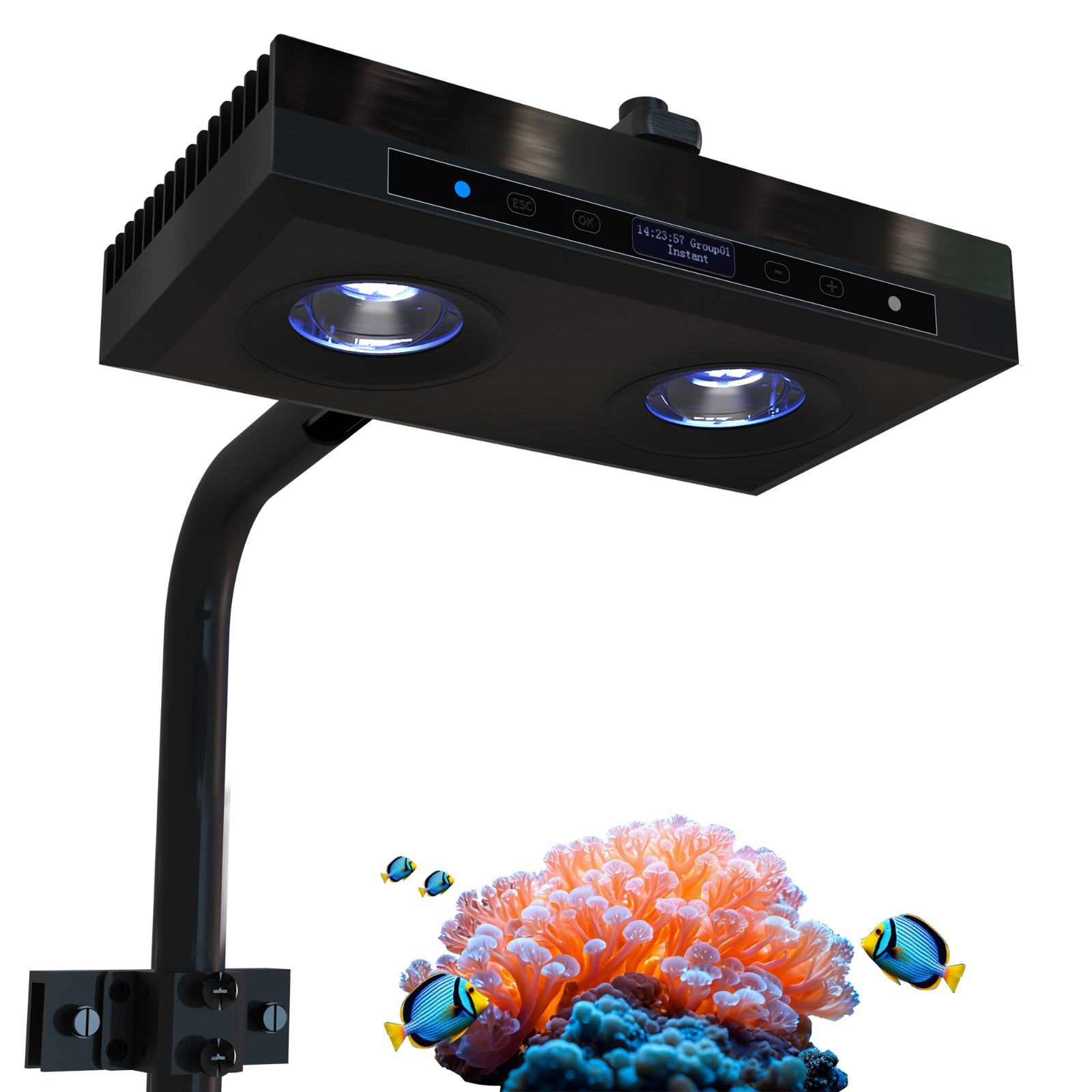

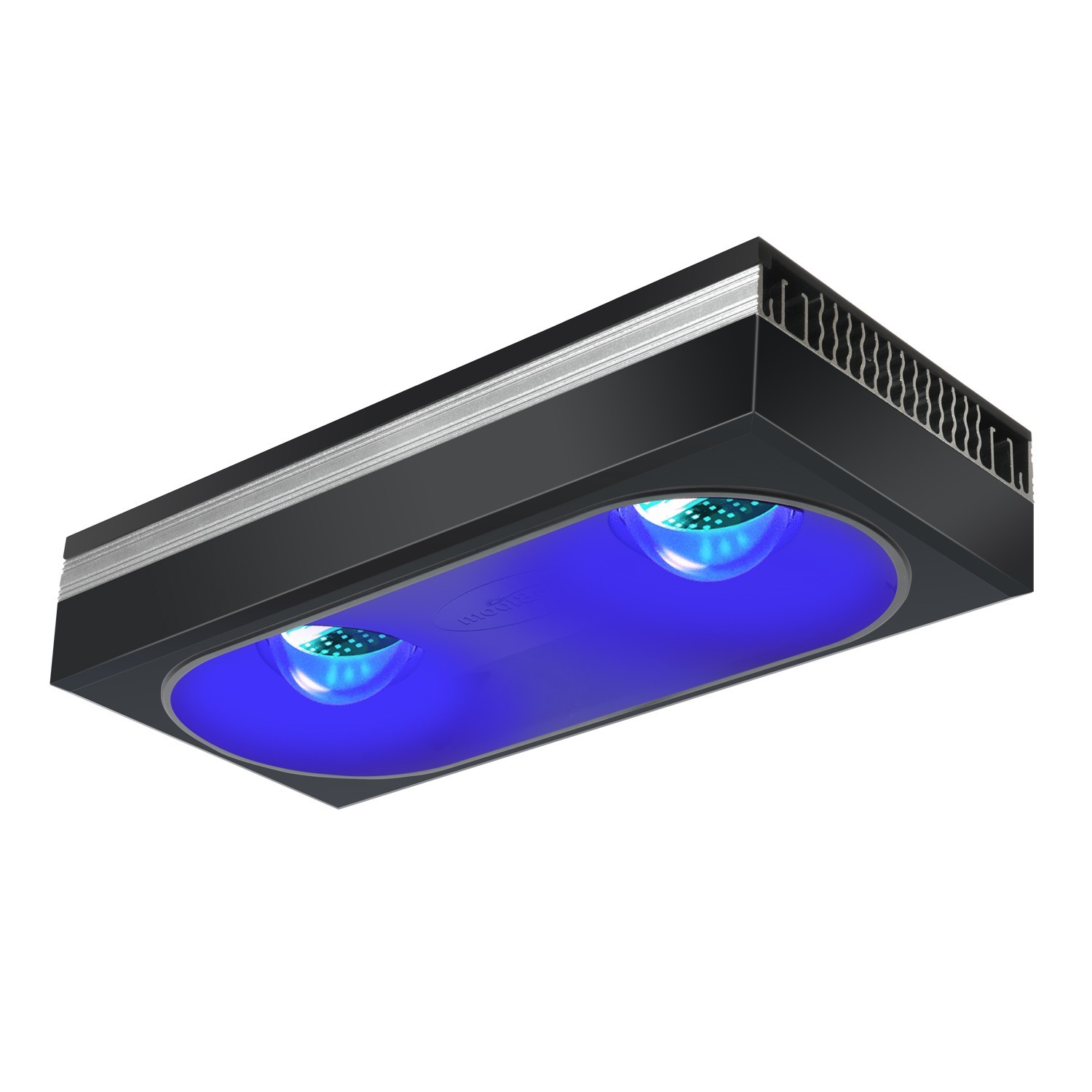
Photos from current listings. Actual item, color, and included accessories may vary.
Reef Tank Light Buying Guide
Reef tank lights are high-output LED fixtures engineered to deliver the blue-heavy PAR and PUR spectrum that zooxanthellae and coral fluorescent proteins require, with the core trade-off being true wattage and diode quality versus inflated marketing claims. Durable options use name-brand LEDs driven at conservative currents with active cooling, while compromises push cheap diodes to their limit and lack real spectrum control. The decision rule: pick a fixture with measured PAR at your tank depth, independent channel control, and a proven driver—skip anything that only advertises 'full spectrum' without spectral or PAR data.
Median $146.02
Key takeaways
- Real reef fixtures run 90–180W of LED per 24–36 inch span; 165W class units like VIPARSPECTRA use 55×3W diodes but true draw is lower—demand actual wattage, not diode count.
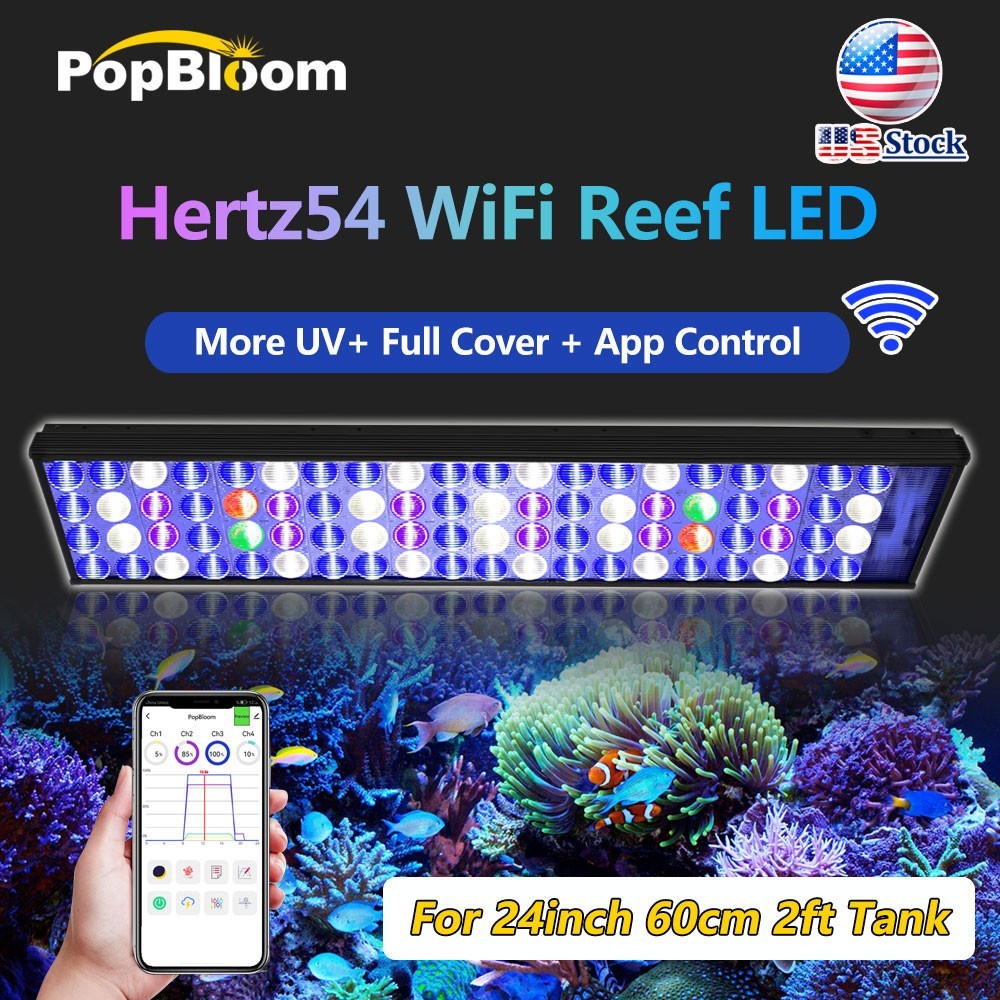
- Programmability separates tiers: WiFi app control with sunrise/sunset ramps (PopBloom, Reef LED RL90) versus simple timer/remote units (VIPARSPECTRA)—ramping reduces coral stress and algae swings.
- Spectrum channels matter more than color: separate blue (420–460nm), royal blue, and white channels with independent dimming let you tune PUR for SPS versus LPS and soft corals.
At a glance
- Category
- Aquarium Lights & CO2 Systems
- Last updated
- Nov 25, 2026
Current offers
Highlights
- Real reef fixtures run 90–180W of LED per 24–36 inch span; 165W class units like VIPARSPECTRA use 55×3W diodes but true draw is lower—demand actual wattage, not diode count.
- Programmability separates tiers: WiFi app control with sunrise/sunset ramps (PopBloom, Reef LED RL90) versus simple timer/remote units (VIPARSPECTRA)—ramping reduces coral stress and algae swings.
- Spectrum channels matter more than color: separate blue (420–460nm), royal blue, and white channels with independent dimming let you tune PUR for SPS versus LPS and soft corals.
- Cooling and driver quality determine lifespan: active fan cooling and quality constant-current drivers prevent diode degradation, which silently drops PAR 20–30% within a year on uncooled budget units.
Best use cases
- Best for mixed LPS/soft coral tanks 24–36 inches deep: a 90–165W programmable LED with blue/white channels and timer or WiFi control—skip high-wattage SPS-focused units for low-light corals.
- Best for SPS-dominant or deeper tanks (24+ inches): 180W+ fixtures with tight 90° or 120° optics and measured PAR above 200 at the sandbed—skip 95W budget units for acropora.
- Best for nano and rimless tanks under 20 gallons: a single 30–90W compact WiFi fixture mounted centrally—skip dual 165W panels that bleach narrow tanks.
- Wrong fit: buying a 'full spectrum' white/blue bar light with no independent channel control for a reef—it cannot tune the blue-dominant spectrum corals need and fuels algae.
Buying tips
- Match wattage to depth: roughly 3–5W per gallon for mixed reefs and 5–8W per gallon for SPS, but always verify PAR at your actual mounting height rather than trusting gallon rules.
- Insist on independent blue and white channel dimming plus a ramp timer; fixed-spectrum units force you to choose between coral growth and algae control.
- Check LED bin and driver brand—name-brand diodes (Cree, Osram, Bridgelux) at conservative current outlast anonymous 3W diodes driven near max.
- For tanks over 48 inches, use two smaller fixtures rather than one long unit to eliminate center hotspots and shadowing under braces.
Specs
| Wattage Class | 90–180W LED per 24–36 in span |
|---|---|
| Spectrum Control | Independent blue/white channels + ramp |
| Control Type | WiFi app / timer / remote |
| Optics & Cooling | 90–120° lenses, active fan cooling |
Related searches
What to check before buying
- Measure tank length, width, and water depth; a fixture's spread (typically 24×24in for 90–165W units) must cover the sandbed without dark corners.
- Confirm mounting method: rimless tanks need tank-mount brackets or hanging kits, while canopied tanks need slim profiles under 2 inches tall.
- Check control ecosystem: WiFi app units need 2.4GHz network compatibility; timer/remote units need accessible outlets and no smart-home integration.
- Verify the fixture includes or accepts a standard 120V plug for your region and that cooling fans are user-replaceable or serviceable.
FAQ
Data sources: eBay / Amazon listings and product attribute feeds. Updated Nov 25, 2026.
Some links on this page are affiliate links. If you buy after clicking one, we may earn a commission at no extra cost to you. This does not change which products appear here or their order. Affiliate disclosure.