Choosing aquarium lights & CO2 systems gets tricky when two LED fixtures promise similar control but one costs more and uses different naming. The practical question is whether the higher price buys a meaningful advantage or simply a clearer title. For these two hygger models, the deciding factors are the listed price and what each name foregrounds-not a proven performance gap.
Quick verdict
Choose hygger Aquarium Light Full Spectrum Sunrise/Daylight/Moonlight if the lower listed price is the priority. Choose hygger Aquarium Light Fish Tank LED w/ Timer Full Spectrum Plant if seeing timer and planted-tank language directly in the product name is more useful. The compared controls align, so neither earns a feature-based win from the shared specifications alone.
At a glance
| Model | Listed price | Product-name emphasis | Shared listed controls |
|---|---|---|---|
| Fish Tank LED w/ Timer Full Spectrum Plant | USD 65.99 | Timer and plant wording | 10 brightness levels; 6 night colors; 8-stage timer |
| Full Spectrum Sunrise/Daylight/Moonlight | USD 42.99 | Sunrise, daylight, and moonlight wording | 10 brightness levels; 6 night colors; 8-stage timer |
Where each product wins
- hygger Aquarium Light Fish Tank LED w/ Timer Full Spectrum Plant wins on name clarity for shoppers searching specifically for a timer-equipped planted-tank light. "w/ Timer" and "Full Spectrum Plant" make that intended use immediately visible.
- hygger Aquarium Light Full Spectrum Sunrise/Daylight/Moonlight wins on price, with a $23 lower listed price, and on naming clarity for shoppers focused on sunrise, daylight, and moonlight modes.
- Shared ground: Both are described for freshwater planted tanks and reef tanks, and both include adjustable brightness, timer control, and full-spectrum LED lighting. Those shared points do not separate the models.
Product notes
hygger Aquarium Light Fish Tank LED w/ Timer Full Spectrum Plant
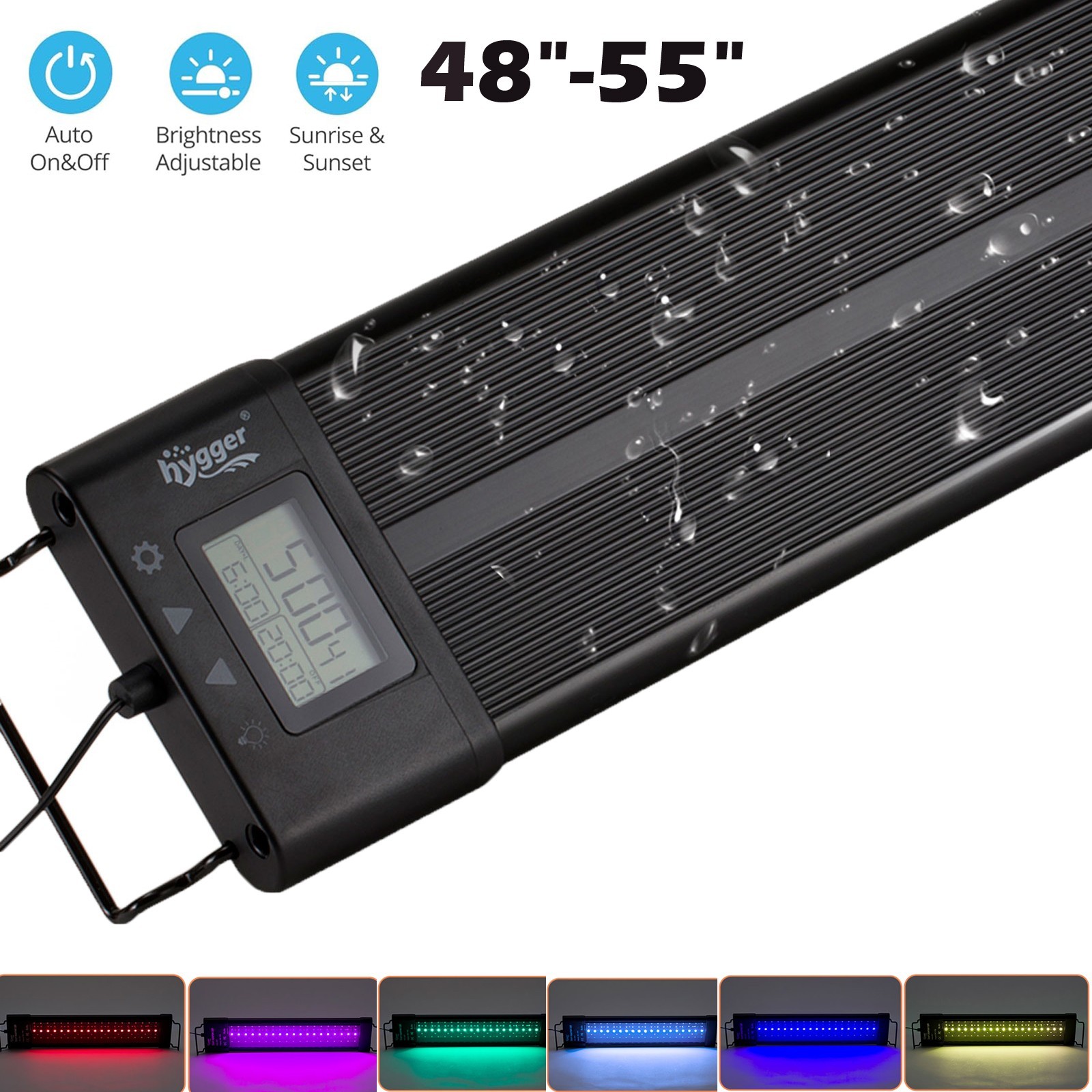
At USD 65.99, the clearest reason to choose this model is its product-name clarity. "w/ Timer" and "Full Spectrum Plant" put timer-led scheduling and planted-tank intent right in the name, which helps when those are the first shopping criteria. Its listed controls include adjustable brightness, a 24/7 lighting cycle, sunrise/sunset mode, auto on/off, and an eight-stage timer. The limitation is the higher listed price: the two models share the compared control set, so the additional $23 does not establish an additional function. Choose it when the wording around timer and plant use is worth prioritizing, rather than because the comparison shows stronger lighting control.
hygger Aquarium Light Full Spectrum Sunrise/Daylight/Moonlight
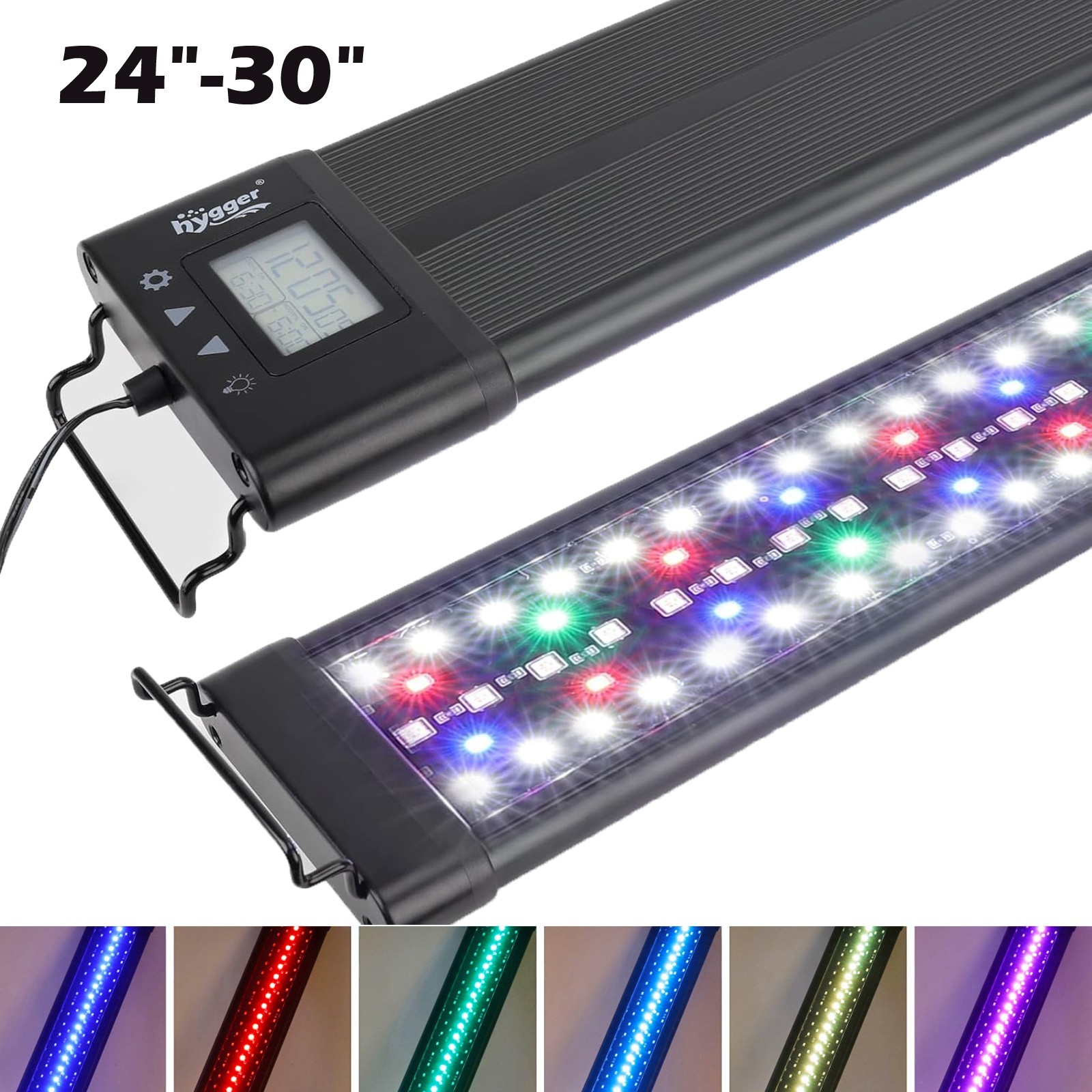
At USD 42.99, the Full Spectrum Sunrise/Daylight/Moonlight model gives price-sensitive shoppers the clearest path into this comparison. Its title directly highlights sunrise, daylight, and moonlight, making those mode labels easy to identify before considering the rest of the controls. The model also carries the same adjustable brightness, timer, full-spectrum LED, freshwater planted-tank, and reef-tank positioning as the competing light, so its reason to choose is the lower price rather than a demonstrated control advantage. Its limitation is naming clarity for timer-first searches: "w/ Timer" does not appear in the title, even though adjustable timer control is listed. Pick it when the lighting-mode wording and lower outlay matter most.
Final choice by use case
- Choose the Full Spectrum Sunrise/Daylight/Moonlight model for the lower listed outlay. The $23 price gap is the strongest concrete distinction.
- Choose the Fish Tank LED w/ Timer Full Spectrum Plant model when the title's timer and plant wording better matches how you shop.
- For freshwater planted or reef-tank positioning, call it a tie: both descriptions cover those applications.
- For control features, call it a tie again: both list 10 brightness levels, 6 night colors, and an 8-stage timer.
The final decision is therefore straightforward: pay more for the clearer timer-and-plant naming, or choose the Sunrise/Daylight/Moonlight model for the lower listed price without giving up a documented control difference.