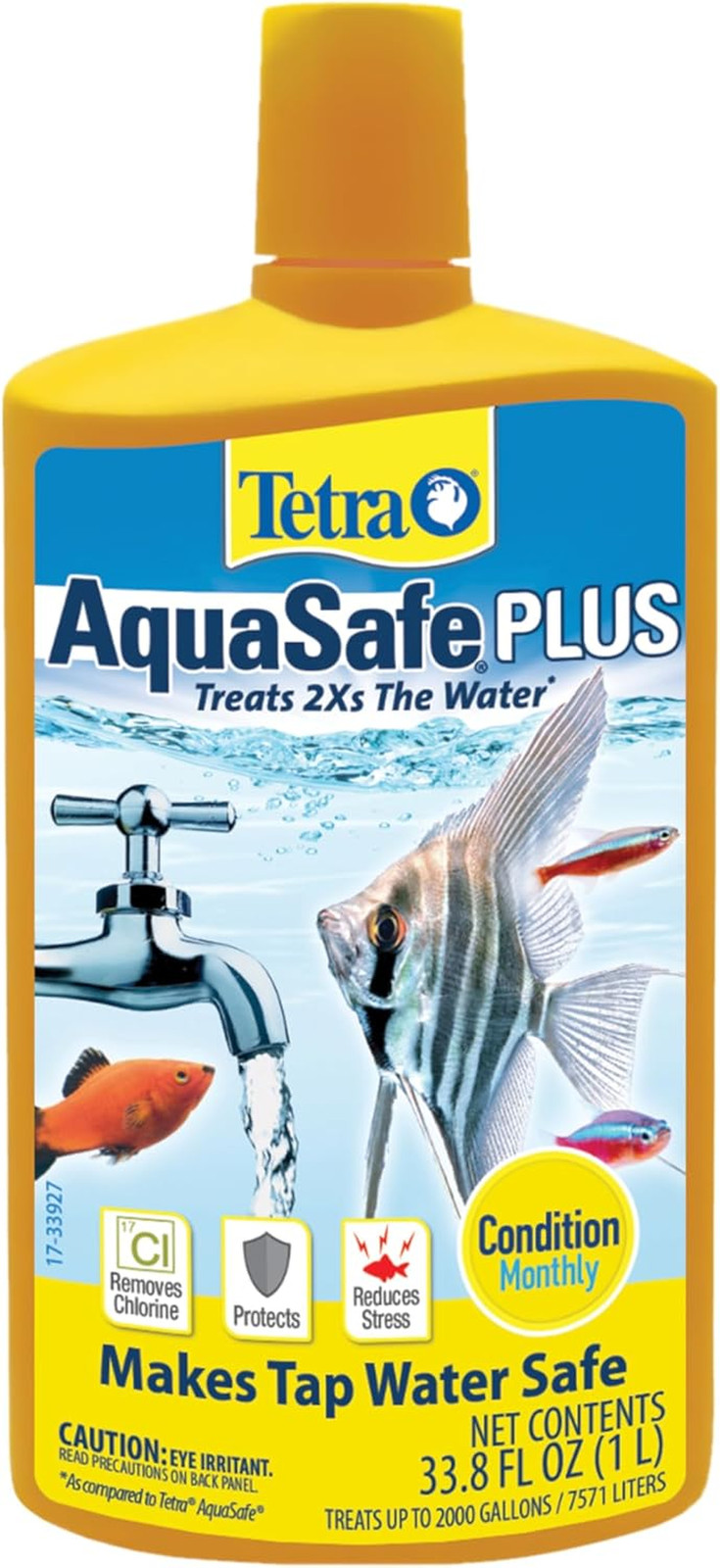

Photos from current listings. Actual item, color, and included accessories may vary.
Tetra Aquasafe Plus Buying Guide
Tetra Aquasafe Plus is a liquid water conditioner that neutralizes chlorine and chloramine and binds heavy metals in tap water, making it safe for aquarium fish and invertebrates. The primary trade-off is concentration versus dosing convenience: concentrated formulas treat more gallons per bottle but require precise measurement, while ready-to-use dilutions are forgiving but cost more per gallon treated. Choose a conditioner whose label explicitly states chloramine neutralization and heavy-metal chelation; skip products that only claim chlorine removal or are marketed without dosing instructions.
Key takeaways
- Neutralizes both chlorine and chloramine; chloramine requires a different reducing agent than chlorine alone, so verify the label lists both.
- Binds heavy metals (copper, lead, zinc) via chelation, protecting invertebrates and sensitive plants from tap-water toxicity.
- Adds a protective colloid (aloe vera derivative) that supports slime coat; this is a cosmetic/adjunct benefit, not a substitute for proper cycling.
At a glance
- Category
- Aquarium Water Testing & Treatment
- Status
- Listings available
- Last updated
- Nov 27, 2026
Current offers
Highlights
- Neutralizes both chlorine and chloramine; chloramine requires a different reducing agent than chlorine alone, so verify the label lists both.
- Binds heavy metals (copper, lead, zinc) via chelation, protecting invertebrates and sensitive plants from tap-water toxicity.
- Adds a protective colloid (aloe vera derivative) that supports slime coat; this is a cosmetic/adjunct benefit, not a substitute for proper cycling.
- Dosing is 5 mL per 10 US gallons for new water; concentrated formulas treat up to 2,000 gallons per 33.8 oz bottle, while diluted versions treat far fewer.
Best use cases
- Best fit: weekly partial water changes in freshwater community tanks—dose the replacement water volume, not the tank volume, to avoid over/under-dosing.
- Best fit: tap water with known chloramine (many municipal supplies)—choose a conditioner explicitly labeled for chloramine, not just chlorine.
- Wrong fit: marine/reef systems needing precise alkalinity and calcium control—use a reef-specific conditioner; Aquasafe Plus does not manage salinity or mineral balance.
- Wrong fit: tanks with active bacterial blooms or disease treatment—conditioner does not replace antibiotics, and slime-coat additives can interfere with some medications.
Buying tips
- Match bottle size to water-change volume: a 33.8 oz (1 L) bottle at 5 mL/10 gal treats roughly 2,000 gallons, enough for months of 10–20% weekly changes on a 55-gallon tank.
- Confirm the label states 'removes chloramine'—chlorine-only products leave ammonia behind when chloramine breaks down, poisoning fish.
- Prefer conditioners that chelate heavy metals if your tap water has copper plumbing or you keep shrimp/snails, which are intolerant of trace metals.
- Avoid products that combine conditioner with 'cycle' bacteria in one bottle unless the label guarantees live nitrifying bacteria; dead bacteria add ammonia load.
Specs
| Chlorine/Chloramine | Neutralizes both (label-verified) |
|---|---|
| Heavy Metal Action | Chelates copper/lead/zinc |
| Dose Rate | 5 mL per 10 US gallons |
| Bottle Yield (33.8 oz) | ~2,000 gal at standard dose |
Alternatives to compare
Related searches
What to check before buying
- Measure your replacement water volume (not tank volume) per change; dose 5 mL per 10 US gallons and never exceed 5× the standard dose without a specific ammonia emergency protocol.
- Test tap water for chloramine with a total chlorine test kit—if total chlorine equals free chlorine, you have chloramine and need a chloramine-labeled conditioner.
- Confirm tank inhabitants: invertebrates (shrimp, snails, crayfish) are more sensitive to heavy metals; choose a chelating conditioner and avoid copper-based medications.
- Check bottle cap markings for mL graduations; a 5 mL dosing cap or syringe is required for accurate small-tank dosing, since household teaspoons are imprecise.
FAQ
Data sources: eBay / Amazon listings and product attribute feeds. Updated Nov 27, 2026.
Some links on this page are affiliate links. If you buy after clicking one, we may earn a commission at no extra cost to you. This does not change which products appear here or their order. Affiliate disclosure.