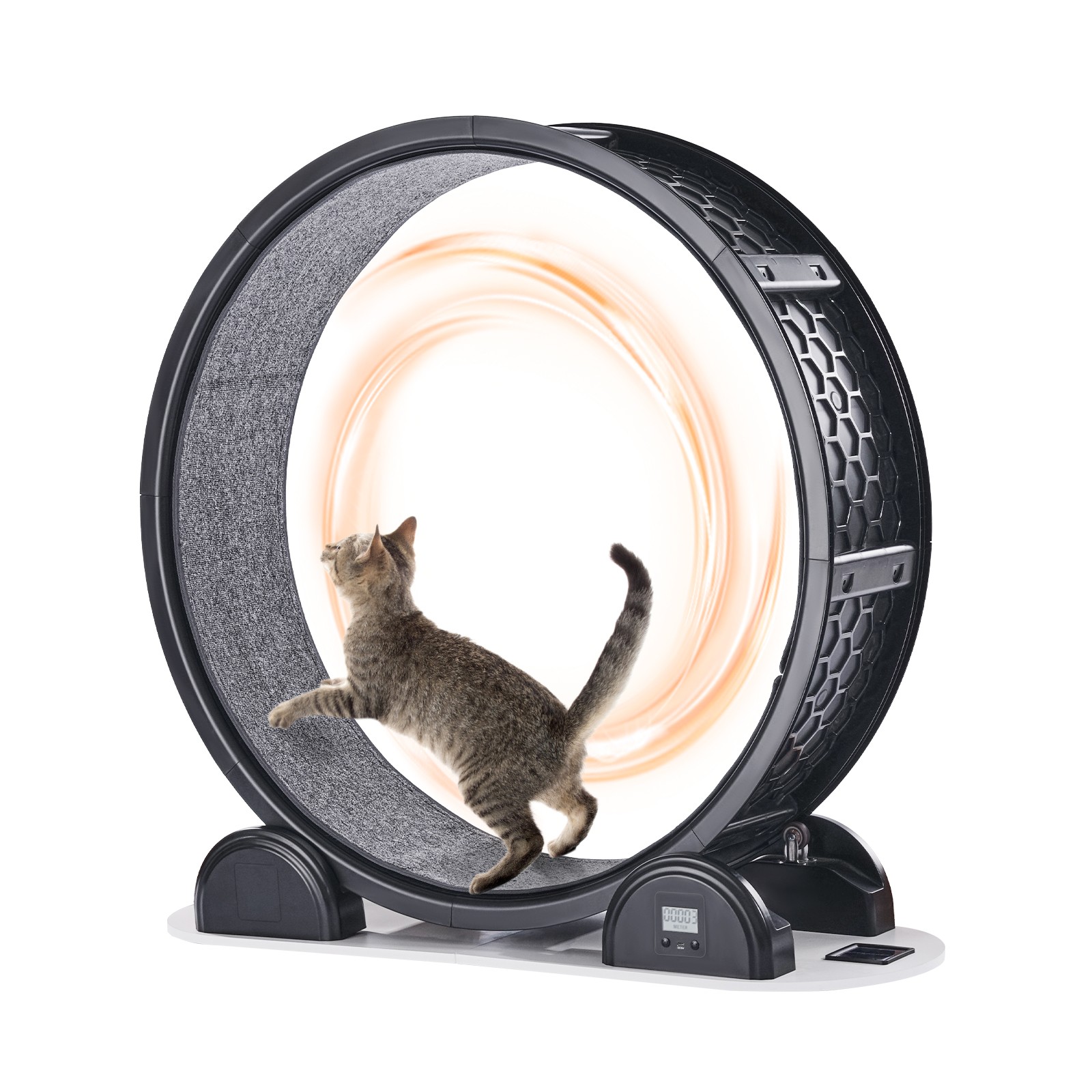

Photos from current listings. Actual item, color, and included accessories may vary.
VEVOR Cat Exercise Wheel Buying Guide
A cat exercise wheel is a large-diameter running track that lets indoor cats burn energy safely, and the decisive trade-off is between a rigid, properly balanced drum that spins smoothly and a flimsy shell that wobbles or traps paws. The VEVOR wheel is a budget-tier ABS-and-MDF build with a built-in pedometer, so the decision rule is simple: buy it only if you have the floor space and a cat that will actually run, and step up to a heavier plywood or dual-bearing design if you need quiet operation or multi-cat durability.
Key takeaways
- ABS running surface over MDF frame: lighter and cheaper than solid-wood drums but more prone to resonance and flex under heavy or fast cats.
- 40.8-inch outer diameter gives roughly a 34-inch running track—adequate stride length for most adult cats but tight for very large breeds.
- Built-in pedometer tracks distance and session counts, a genuine differentiator versus plain wheels that offer no activity feedback.
At a glance
- Category
- Pet Toys
- Status
- Listings available
- Last updated
- Nov 27, 2026
Current offers
Highlights
- ABS running surface over MDF frame: lighter and cheaper than solid-wood drums but more prone to resonance and flex under heavy or fast cats.
- 40.8-inch outer diameter gives roughly a 34-inch running track—adequate stride length for most adult cats but tight for very large breeds.
- Built-in pedometer tracks distance and session counts, a genuine differentiator versus plain wheels that offer no activity feedback.
- Single-axle budget bearing design means spin smoothness and noise depend on assembly torque; a wobble at the hub is the main failure mode.
Best use cases
- Best fit: single active indoor cat in a home with a clear 4x4-foot floor footprint and owners who want distance tracking—pick the pedometer version.
- Skip if: you have multiple heavy cats or hard floors above a downstairs neighbor—the ABS/MDF shell transmits more noise than a weighted plywood drum.
- Right for: budget-conscious first-time wheel buyers testing whether their cat will use one at all before investing in a premium wooden model.
Buying tips
- Measure your cat from nose to tail base: under 18 inches fits the 40.8-inch wheel; over 20 inches needs a 48-inch or larger drum to avoid spine curvature.
- Confirm the running surface is continuous and seam-free—ABS panels joined with exposed screws or gaps can catch claws and cause injury.
- Check the base width relative to drum diameter: a base narrower than about 70% of the wheel diameter tips during fast sprinting.
- Prefer wheels with a locking pin or brake for safe entry and exit; budget models often omit this and rely on friction alone.
Specs
| Wheel Diameter | 40.8 in (budget) vs 48 in+ (large) |
|---|---|
| Running Surface | ABS panel vs sealed plywood |
| Frame Material | MDF/ABS vs solid plywood |
| Activity Tracking | Pedometer vs none |
Related searches
What to check before buying
- Floor space: reserve at least 4x4 feet of flat, level floor with 6 inches clearance behind the wheel for rotation.
- Cat fit: weigh your cat—most budget ABS wheels are rated for roughly 15-20 lb; heavier cats need reinforced plywood builds.
- Assembly tools: verify the box includes the hex keys and wrench needed; VEVOR-class wheels are flat-pack and require full assembly.
- Noise environment: place on carpet or a foam mat if the wheel sits on hardwood or tile, since ABS drums amplify rolling vibration.
FAQ
Data sources: eBay / Amazon listings and product attribute feeds. Updated Nov 27, 2026.
Some links on this page are affiliate links. If you buy after clicking one, we may earn a commission at no extra cost to you. This does not change which products appear here or their order. Affiliate disclosure.