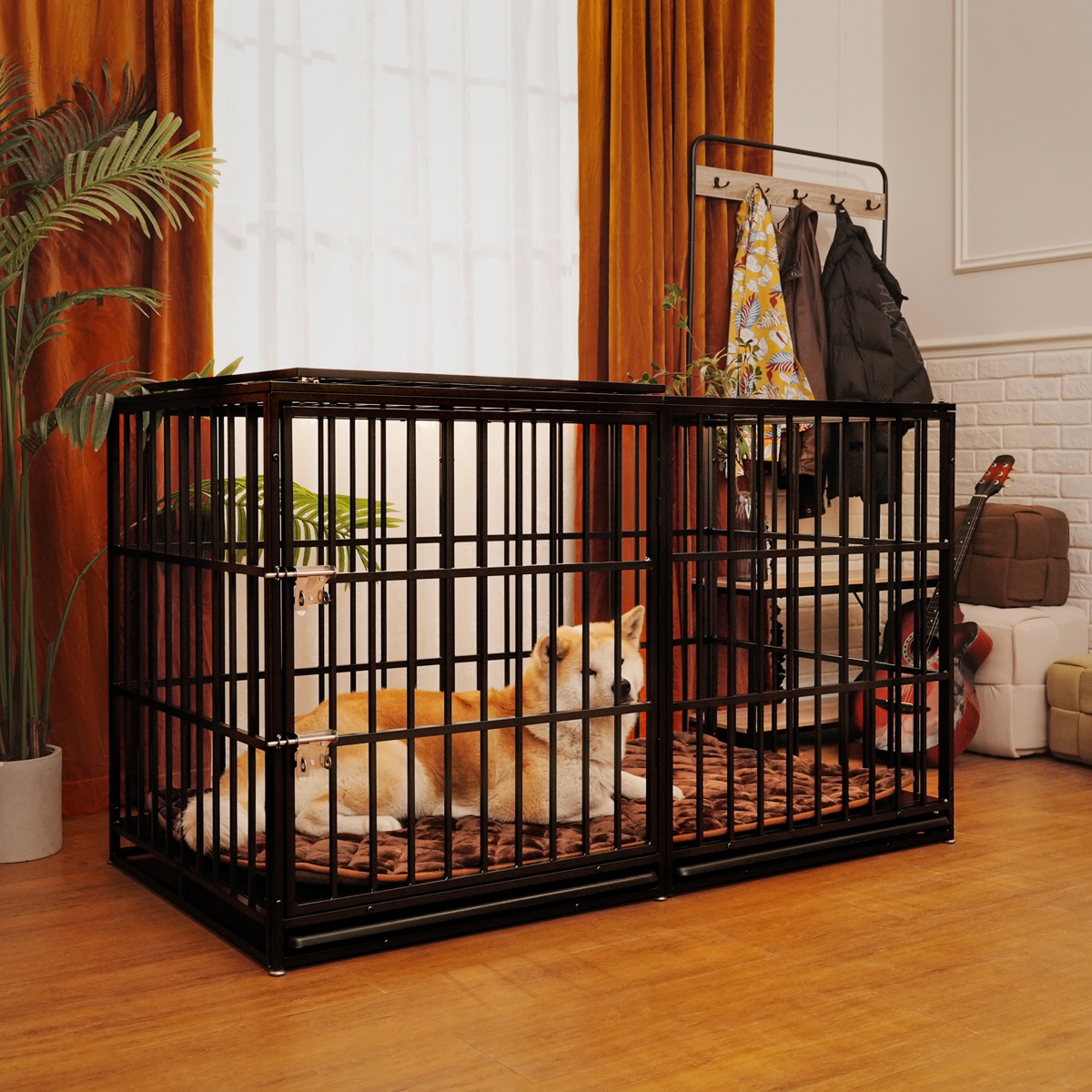

Photos from current listings. Actual item, color, and included accessories may vary.
Strong Large Dog Crate Buying Guide
A strong large dog crate must resist bending, panel separation, and latch failure under a determined dog's weight and pawing. Most buyers underestimate how much thicker wire gauge, welded vs. crimped joints, and a reinforced frame door matter once a dog exceeds roughly 50 lb. Focus on steel gauge, weld quality, and door-latch design rather than cosmetic coatings or bundled mats.
Key takeaways
- Wire gauge is the primary strength lever: 8-10 gauge steel resists deformation far better than the common 12-14 gauge found on budget crates.
- Welded frame joints hold under load much better than crimped or clip-together panels, which can separate when a dog pushes against the sides.
- A reinforced double-bolt or spring-loaded latch prevents door pop-open; single slide latches are the most common failure point on large crates.
At a glance
- Category
- Pet Crates, Kennels & Playpens
- Last updated
- Nov 28, 2026
Current offers
Highlights
- Wire gauge is the primary strength lever: 8-10 gauge steel resists deformation far better than the common 12-14 gauge found on budget crates.
- Welded frame joints hold under load much better than crimped or clip-together panels, which can separate when a dog pushes against the sides.
- A reinforced double-bolt or spring-loaded latch prevents door pop-open; single slide latches are the most common failure point on large crates.
- Heavy-duty large crates typically use a full metal pan floor or reinforced plastic tray rated for dogs roughly 70-110 lb, not thin vacuum-formed trays.
Best use cases
- Best fit: a 70-100 lb strong chewer or escape artist needs a welded 8-10 gauge wire crate with a reinforced latch and metal pan floor.
- Best fit: crate-trained large dogs that stay calm can use a 12-gauge welded crate with a plastic tray, saving weight and cost.
- Wrong fit: dogs over 110 lb or known fence-climbers should skip wire crates entirely and use a heavy-duty aluminum or steel kennel with solid panels.
- Wrong fit: a 36-inch crate for a 90-lb dog is undersized; choose the 48-inch class so the dog can stand, turn, and lie flat.
Buying tips
- Check the wire gauge and weld type before anything else; 8-10 gauge welded steel is the durability floor for strong large dogs.
- Prioritize a reinforced latch system with a secondary locking pin, since door failure is more common than frame failure on large crates.
- Avoid clip-together or crimped panel crates for dogs that paw or push; these joints loosen over time and create escape gaps.
- Size by interior height and floor area: the dog must stand without ducking and turn around fully, which typically means the 48-inch class for 70-110 lb dogs.
Specs
| Wire Gauge | 8-10 ga heavy-duty / 12-14 ga standard |
|---|---|
| Joint Type | Welded frame vs crimped/clip panels |
| Latch System | Reinforced double-bolt vs single slide |
| Size Class | 48 in XL for 70-110 lb dogs |
Related searches
What to check before buying
- Measure your dog standing height and nose-to-tail length, then add 2-4 inches of clearance to pick the crate class.
- Confirm door clearance and swing direction fit your room layout, since large crates need roughly 1.5x their width in free space.
- Check floor type compatibility for the pan material; metal pans suit diggers, plastic trays suit calmer dogs and are lighter to clean.
- Verify the crate ships with the correct pan, divider, and latch hardware included, since some heavy-duty models sell these separately.
FAQ
Data sources: eBay / Amazon listings and product attribute feeds. Updated Nov 28, 2026.
Some links on this page are affiliate links. If you buy after clicking one, we may earn a commission at no extra cost to you. This does not change which products appear here or their order. Affiliate disclosure.