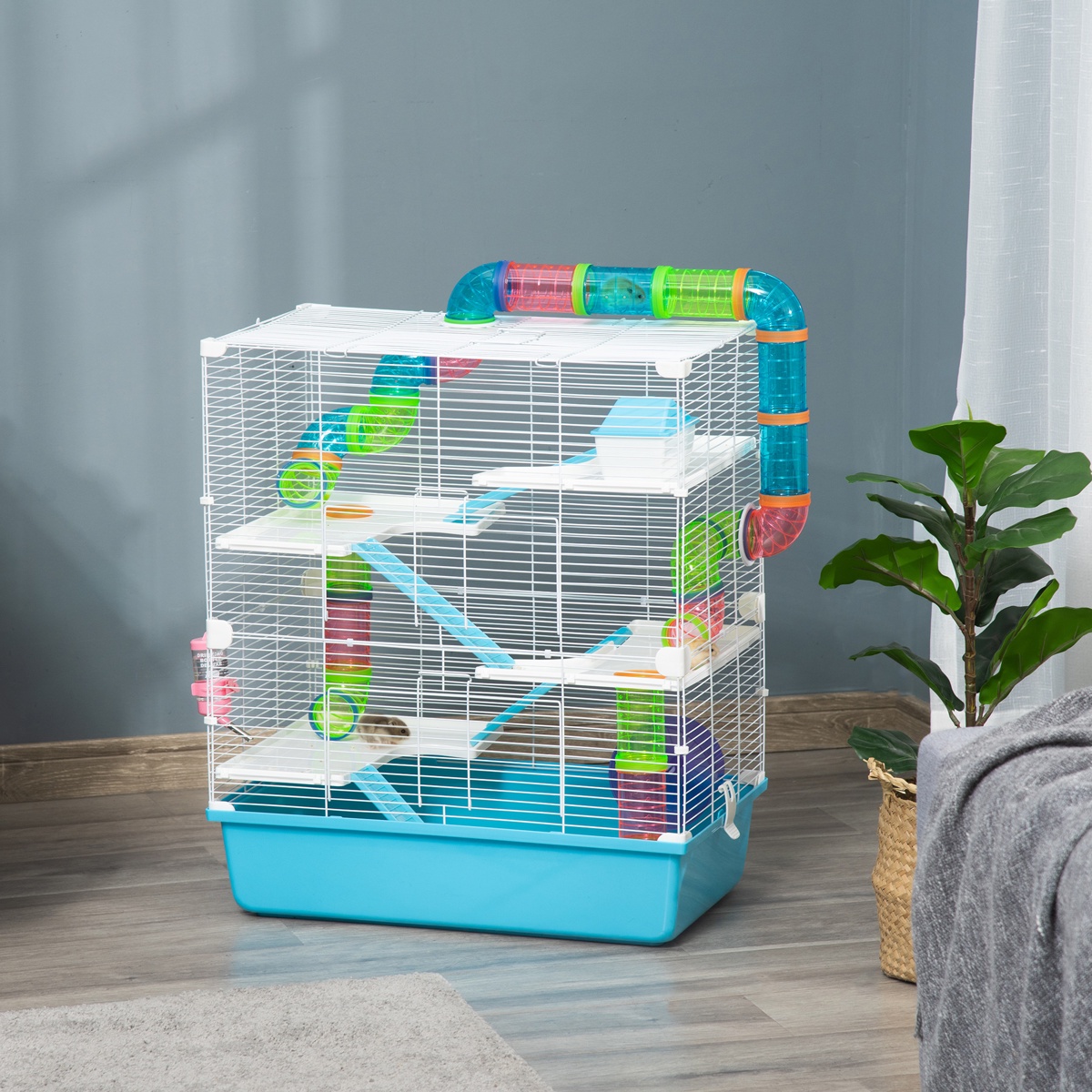

Photos from current listings. Actual item, color, and included accessories may vary.
Rat Cage Buying Guide
Rat cages are escape-proof enclosures built around wire-bar spacing, chew-resistant materials, and multi-level enrichment, not just a tank with a wheel. The core trade-off is between budget tubular plastic hamster-style cages (fragile, hard to clean, too small for adult rats) and proper wire or hybrid cages with 1/2-inch bar spacing and solid floors. The decision rule: if the cage cannot hold two adult rats with a 12-inch wheel and 1/2-inch bar spacing, it is a temporary carrier, not a habitat.
Key takeaways
- Bar spacing is the primary escape defense: 1/2 inch (12.7 mm) stops juvenile and adult rats; 3/4 inch or wider lets small females and kittens slip through.
- Floor area per rat should be at least 2 cubic feet of usable volume and 30 inches of continuous climbing height; multi-tier plastic tube cages rarely exceed 1.5 cubic feet.
- Chew resistance hinges on wire gauge and base material: powder-coated 12-14 gauge steel wire and solid plastic or metal pans outlast thin ABS tubes and snap-fit connectors.
At a glance
- Category
- Pet Crates, Kennels & Playpens
- Last updated
- Nov 28, 2026
Current offers
Highlights
- Bar spacing is the primary escape defense: 1/2 inch (12.7 mm) stops juvenile and adult rats; 3/4 inch or wider lets small females and kittens slip through.
- Floor area per rat should be at least 2 cubic feet of usable volume and 30 inches of continuous climbing height; multi-tier plastic tube cages rarely exceed 1.5 cubic feet.
- Chew resistance hinges on wire gauge and base material: powder-coated 12-14 gauge steel wire and solid plastic or metal pans outlast thin ABS tubes and snap-fit connectors.
- Ventilation and cleaning access separate real cages from display tanks: full front-opening doors and drop pans beat top-only tube ports for ammonia control and weekly cleaning.
Best use cases
- Best fit: two or more adult rats in a wire multi-level cage with 1/2-inch spacing, solid shelves, and a 12-inch wheel — skip any 18.5-inch tube-and-tunnel hamster cage.
- Good fit: a single elderly or ill rat needing a low-climb hospital setup — choose a single-level cage with shallow bedding and no long ramps.
- Wrong fit: using a 5-tier plastic tube cage as a permanent rat home — the tubes trap ammonia, connectors crack under chewing, and adult rats outgrow the 18-inch footprint within months.
- Best fit for travel or quarantine: a hard-sided carrier with 1/2-inch ventilation slots, not a glass aquarium or soft bag that rats can chew through.
Buying tips
- Measure floor footprint first: two adult rats need at least 30 x 18 inches of base, and each additional rat adds roughly 2 cubic feet of volume.
- Choose 1/2-inch bar spacing for any rat under 6 months; 1-inch spacing is only safe for large adult males and still risks leg trapping.
- Pick a cage with a deep base (minimum 4-6 inches) to hold 2-3 inches of bedding and prevent litter spill; shallow 2-inch trays force daily full changes.
- Prefer powder-coated wire and metal or thick rigid plastic pans over thin ABS tube modules, which crack at connector joints and harbor urine in seams.
Specs
| Bar Spacing | 1/2 in (12.7 mm) for all rats |
|---|---|
| Minimum Floor Area | 30 x 18 in for 2-3 adult rats |
| Wheel Size | 12 in solid surface, min 14 in clearance |
| Wire & Pan Material | Powder-coated steel wire + metal/rigid plastic pan |
Related searches
What to check before buying
- Room fit: confirm the assembled cage clears doorways and fits your table or stand with 12 inches of clearance above for opening the top.
- Bar spacing check: verify 1/2-inch spacing on all sides and doors, including any add-on playpen panels.
- Wheel clearance: measure interior height at the wheel location — a 12-inch wheel needs at least 14 inches of vertical space to spin freely.
- Companion parts: budget for a 12-inch solid-surface wheel, two water bottles, a hide box per rat, and safe bedding (paper or aspen, never pine or cedar).
FAQ
Data sources: eBay / Amazon listings and product attribute feeds. Updated Nov 28, 2026.
Some links on this page are affiliate links. If you buy after clicking one, we may earn a commission at no extra cost to you. This does not change which products appear here or their order. Affiliate disclosure.