
Photos from current listings. Actual item, color, and included accessories may vary.
Large Catio Enclosure Buying Guide
A large catio enclosure is an outdoor cat run that connects to a window or door, giving indoor cats safe, ventilated outdoor access without free-roaming risk. Buyers most often misjudge three things: walk-in headroom versus platform space, whether the frame is wood or metal, and whether the window-connection kit is included or a separate purchase. Size the footprint to your wall and window first — the enclosure's exterior dimensions must clear the opening swing and overhang.
Median $450.99
Key takeaways
- Framing material decides lifespan: powder-coated galvanized steel or aluminum resists rust and chewing; untreated or thin wood needs annual sealing and can warp in wet climates.
- Walk-in models typically run roughly 71-74 inches tall with human doors, while platform catios trade headroom for stacked condos and jump levels.
- Mesh gauge and wire spacing are the real escape barrier — 1-inch or smaller openings with reinforced wire stop determined climbers; flimsy chicken wire is a chew-through risk.
At a glance
- Category
- Pet Crates, Kennels & Playpens
- Last updated
- Nov 28, 2026
Current offers
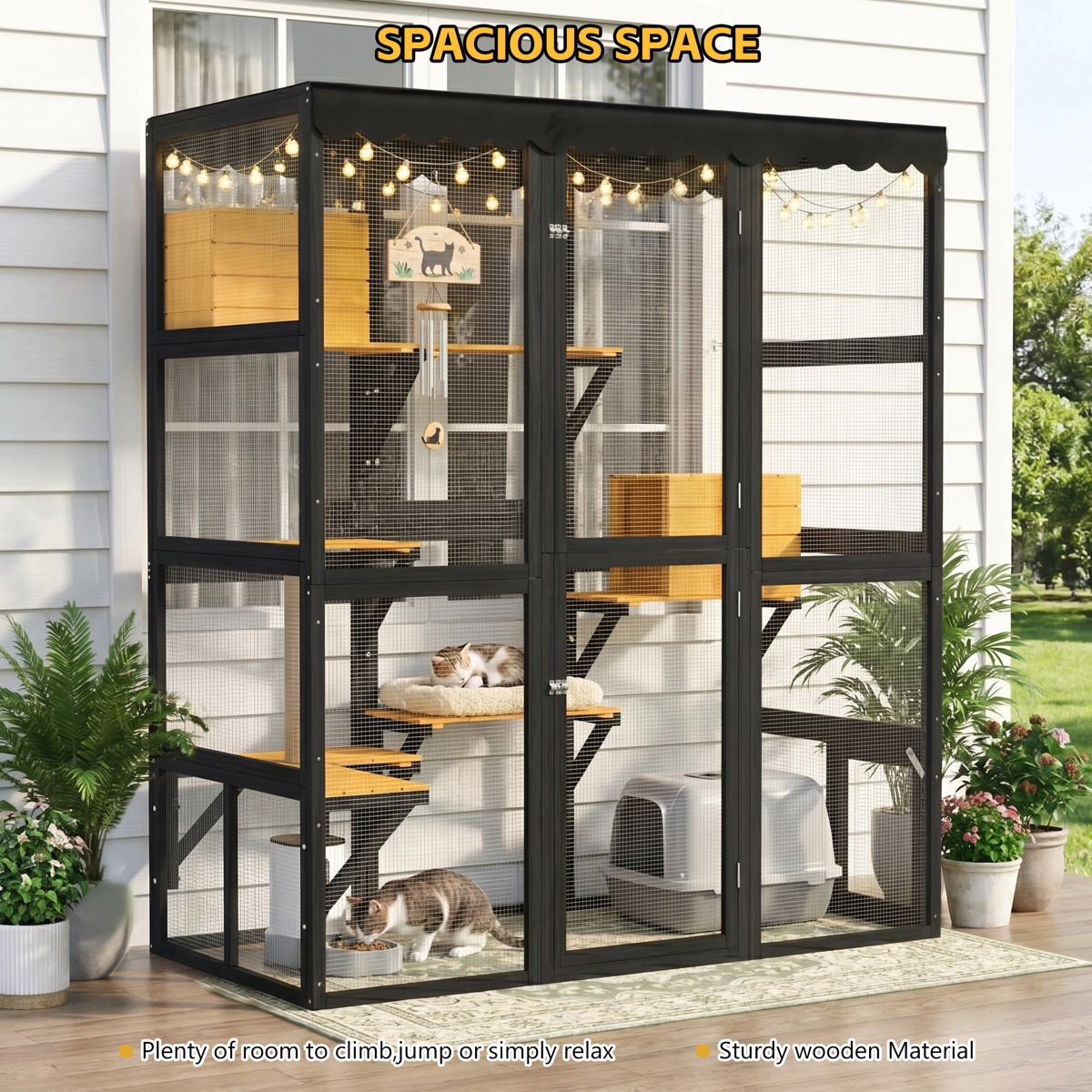 Cat Catio Outdoor Cat Enclosure for Multiple Indoor Cats, Large Wooden Walk-in Cat House with Window Connection , 2 Condos, 5 Platforms, 4 Doors, and Weatherproof Roof Cover$337.99View on Mallflare
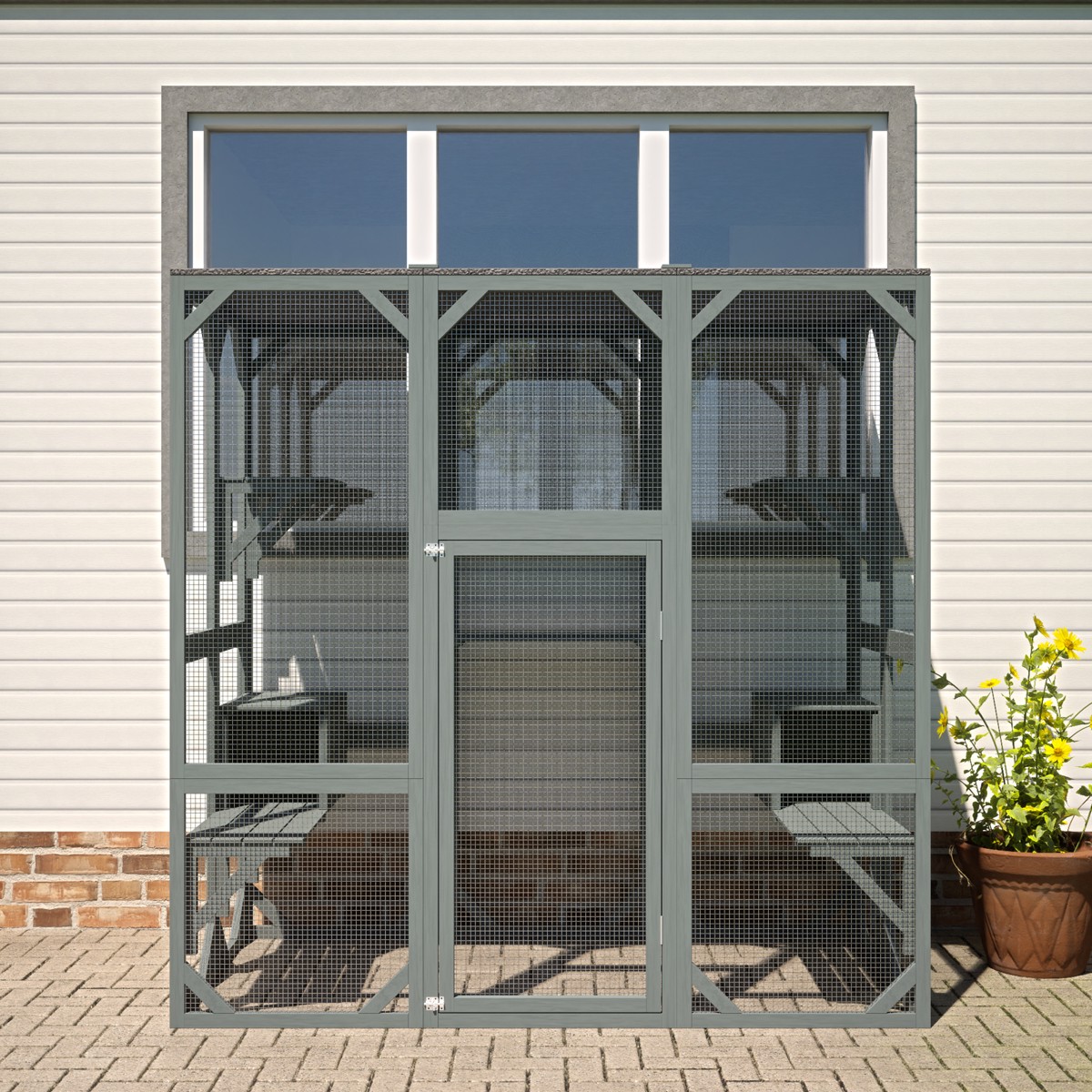 Outdoor Cat House Wooden Catio Enclosure w/Cover- Large Cat Cage with Jump Platforms and Condos, Weatherproof, Grey, 71(L)*37(W)*71(H)$450.99View on Mallflare
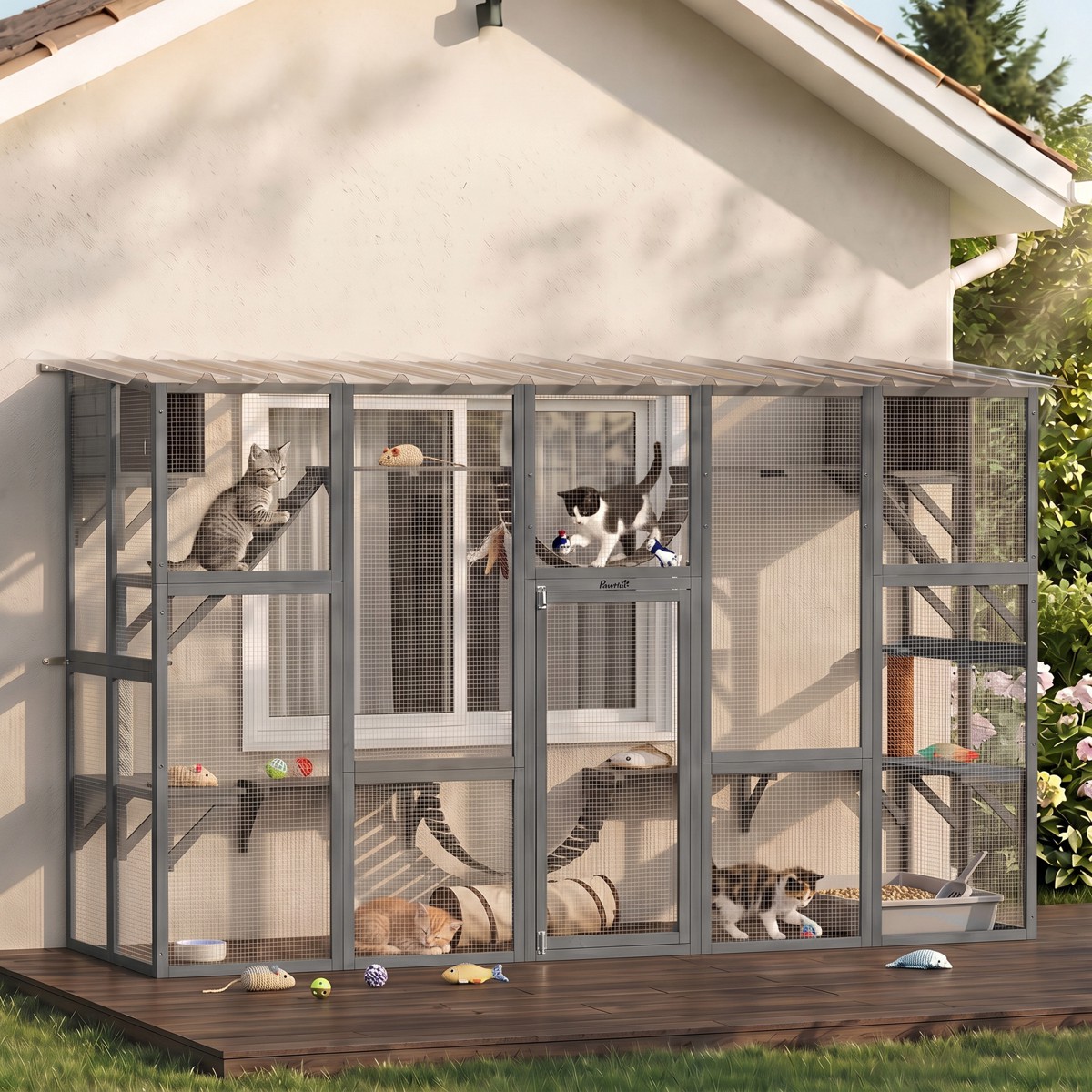 Catio Outdoor Cat Enclosure Window, 74"H Large Cat House Patio with Weatherproof Roof, 2 Condos, 6 Platforms$545.99View on Mallflare
Highlights
- Framing material decides lifespan: powder-coated galvanized steel or aluminum resists rust and chewing; untreated or thin wood needs annual sealing and can warp in wet climates.
- Walk-in models typically run roughly 71-74 inches tall with human doors, while platform catios trade headroom for stacked condos and jump levels.
- Mesh gauge and wire spacing are the real escape barrier — 1-inch or smaller openings with reinforced wire stop determined climbers; flimsy chicken wire is a chew-through risk.
- Window-connection catios anchor to a sash or wall opening with a bridge panel; standalone models instead need a door or ground-level entry and a level patio base.
Best use cases
- Best fit for a window-adjacent patio wall: a window-connection walk-in catio with a weatherproof roof, so cats exit through the sash without a door cutout.
- Choose a standalone walk-in wooden catio with multiple condos and platforms when you have yard space and want human access for cleaning, feeding, and litter.
- Skip tall platform-only towers for multi-cat homes unless the footprint is wide enough for separate vertical zones; narrow towers force conflict and urine marking.
- Avoid untreated wood catios in humid or rainy climates unless you will seal yearly — powder-coated metal is the lower-maintenance choice for coastal and wet regions.
Buying tips
- Measure the window or door opening, then add clearance for the connection bridge and roof overhang before committing to an exterior footprint.
- Prioritize welded or bolted steel/aluminum frames over stapled wood joints for large spans; wide catios flex under wind load if the frame is flimsy.
- Check mesh specification: 1-inch-or-smaller wire spacing and rust-resistant coating determine whether a cat can slip a paw or head through.
- Confirm what ships in the box — window bridge kit, roof cover, ground anchors, and shelf hardware are frequently sold separately on large catios.
Specs
| Frame Material | Powder-coated steel / aluminum / wood |
|---|---|
| Entry Type | Walk-in door vs window-bridge |
| Typical Height | 71-74 in walk-in; lower for platforms |
| Mesh Spacing | 1 in or smaller, coated wire |
Related searches
What to check before buying
- Window or door opening width and height, plus the swing clearance needed for a human door.
- Exterior footprint against your patio or yard boundary, including roof overhang and drainage slope.
- Ground surface: level concrete or pavers suit anchored frames; soft soil requires ground stakes or a base frame.
- Climate exposure — wind, rain, and snow load — matched to roof cover and frame anchoring hardware.
FAQ
Data sources: eBay / Amazon listings and product attribute feeds. Updated Nov 28, 2026.
Some links on this page are affiliate links. If you buy after clicking one, we may earn a commission at no extra cost to you. This does not change which products appear here or their order. Affiliate disclosure.