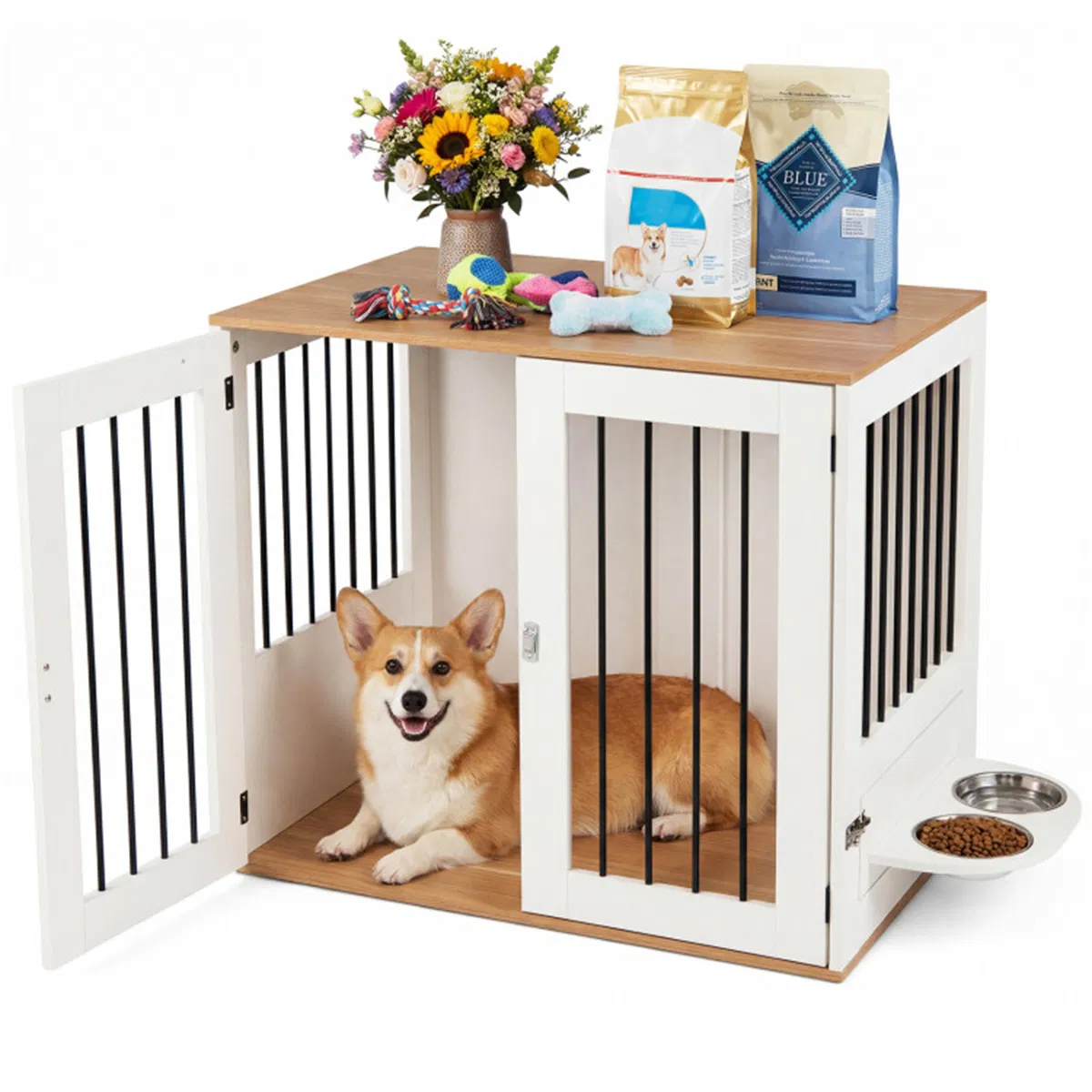

Photos from current listings. Actual item, color, and included accessories may vary.
Heavy Duty Steel Dog Crate Buying Guide
Heavy-duty steel dog crates are escape-resistant enclosures built from welded square-tube or wire-bar steel, not the thin stamped mesh used in budget training crates. The core trade-off is gauge versus weight: thicker 12–14 gauge bars and reinforced weld points stop power chewers, but add significant crate weight and require direct-to-floor load planning. Buyers should choose a true heavy-duty tier only for dogs that have bent or escaped standard wire crates; otherwise a mid-gauge (16–18 gauge) crate with a secure latch is sufficient.
Median $439.99
Key takeaways
- Bar gauge determines bite resistance: 12–14 gauge welded steel resists deformation, while 18–20 gauge wire bows under sustained chewing and must be skipped for power chewers.
- Latch architecture separates escape-proof from decorative: two-point or three-point locking steel slides with spring-loaded pins outperform single swivel latches that dogs can nose open.
- Welded square-tube frames with corner gussets hold shape under body-slamming; crimped or spot-welded wire panels are the first failure point on heavy-duty models.
At a glance
- Category
- Pet Crates, Kennels & Playpens
- Last updated
- Nov 28, 2026
Current offers
Highlights
- Bar gauge determines bite resistance: 12–14 gauge welded steel resists deformation, while 18–20 gauge wire bows under sustained chewing and must be skipped for power chewers.
- Latch architecture separates escape-proof from decorative: two-point or three-point locking steel slides with spring-loaded pins outperform single swivel latches that dogs can nose open.
- Welded square-tube frames with corner gussets hold shape under body-slamming; crimped or spot-welded wire panels are the first failure point on heavy-duty models.
- Powder-coated finishes over galvanized steel resist urine corrosion; bare or painted mild steel rusts at weld joints within months in indoor-humidity environments.
Best use cases
- Best fit: a 60–90 lb power chewer that has bent standard wire bars needs a 12–14 gauge welded steel crate with dual slide latches and floor-level corner braces.
- Best fit: separation-anxiety dogs that nose-push latches require a crate with a secondary carabiner or lock point on every door, not just the main latch.
- Wrong fit: a puppy or calm adult dog in a 16–18 gauge wire crate with a single latch — heavy-duty steel adds weight and cost without a durability payoff.
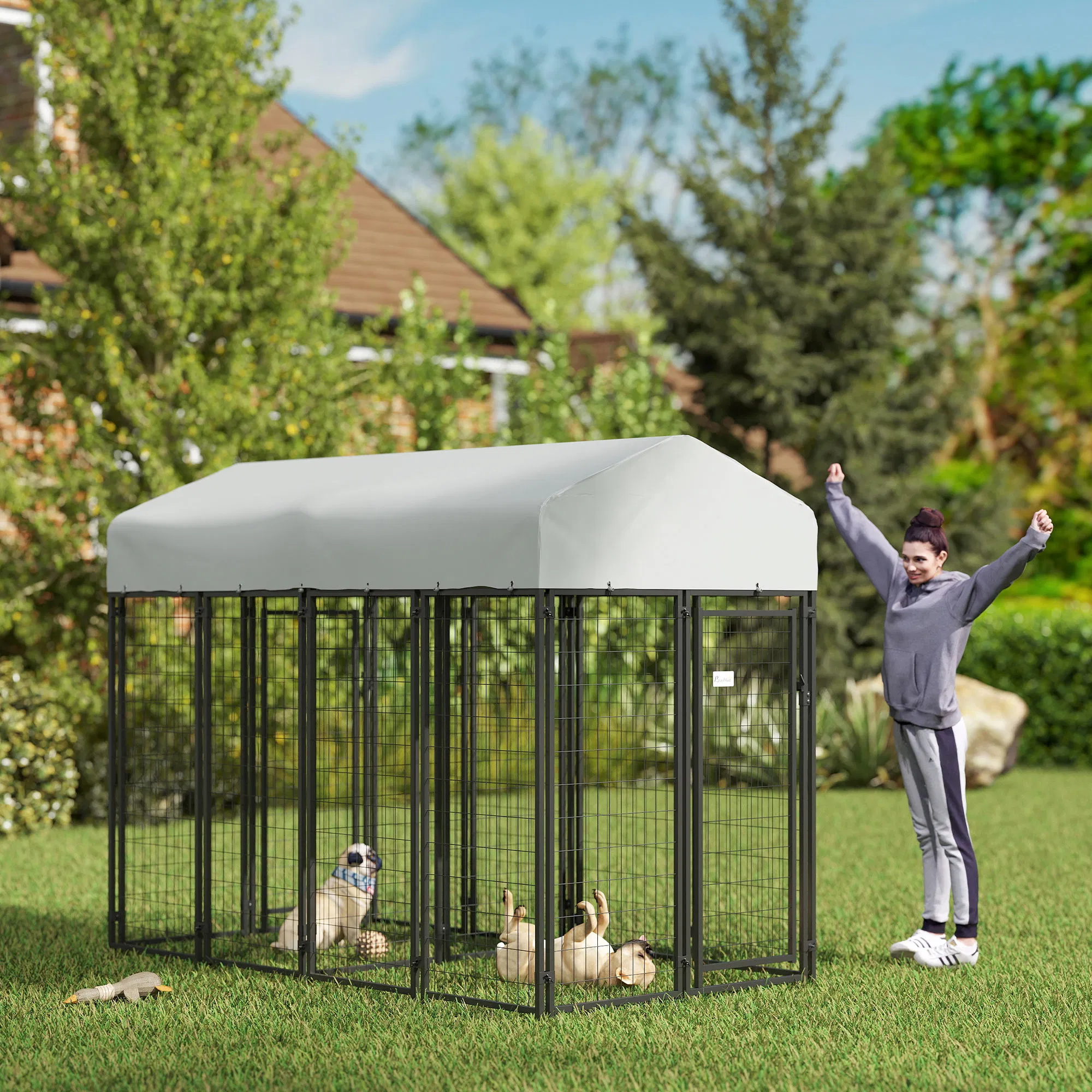
- Wrong fit: outdoor or patio use of an indoor powder-coated steel crate — moisture and UV degrade coatings; use a purpose-built galvanized outdoor kennel run instead.
Buying tips
- Size by interior height and length, not exterior footprint: dog must stand without head contact and turn around fully; add 4 in to standing height and 6 in to body length for the interior minimum.
- Match bar spacing to jaw size: 1.5 in spacing is standard for medium and large dogs; under 1 in spacing is required for toy breeds and puppies to prevent head entrapment.
- Check door latch count and type: heavy-duty tiers should list two or more steel slide latches per door; a single swivel latch is a downgrade regardless of bar gauge.
- Verify frame construction: welded square-tube frames with corner gussets outlast crimped wire panels; ask for weld type and tube wall thickness, not just 'steel'.
Specs
| Bar Gauge | 12–14 ga heavy / 16–18 ga mid / 20+ ga budget |
|---|---|
| Latch Type | Dual slide latch vs single swivel |
| Frame Construction | Welded square-tube vs crimped wire |
| Bar Spacing | 1.5 in large / under 1 in small breeds |
Related searches
What to check before buying
- Measure the dog standing height and nose-to-tail length, then add 4 in height and 6 in length to set the minimum interior crate dimensions before selecting a gauge tier.
- Confirm floor load capacity and footprint for the crate's assembled weight — heavy-duty steel crates can exceed 60–80 lb and require a level, non-carpeted surface for stability.
- Check that the crate ships with a removable steel floor pan or grate; bare-bar floors cause paw injury and are not standard on heavy-duty tiers.
- Verify door clearance and swing radius against room layout — heavy-duty doors are thicker and need more forward clearance than wire-crate doors.
FAQ
Data sources: eBay / Amazon listings and product attribute feeds. Updated Nov 28, 2026.
Some links on this page are affiliate links. If you buy after clicking one, we may earn a commission at no extra cost to you. This does not change which products appear here or their order. Affiliate disclosure.