
Photos from current listings. Actual item, color, and included accessories may vary.
Heavy Duty Metal Dog Crate Buying Guide
Heavy-duty metal dog crates are welded or reinforced wire kennels built for escape artists, large breeds, and anxious dogs that bend or break standard crates. The core trade-off is wire gauge and weld quality versus weight and portability—cheap crates use thin 8–10 gauge wire and spot welds, while heavy-duty models use 6–8 gauge wire, full welds, and reinforced door latches. The decision rule: if your dog has ever bent a crate door or escaped, buy a fully welded 6–8 gauge crate with a rotary or paddle latch; standard stamped-wire crates are only for calm, non-destructive dogs.
Median $165.49
Key takeaways
- Wire gauge determines durability: heavy-duty crates use 6–8 gauge (4–4.8 mm) wire versus 8–10 gauge (3.2–4 mm) on standard crates—thicker wire resists bending under 80+ lb dogs.
- Weld type separates tiers: full perimeter welds at every wire intersection outperform spot-welded crates that pop apart at stress points near latches and corners.
- Latch mechanism is the escape point: rotary twist-latches or dual paddle latches with lock holes are escape-resistant, while single slide-bolt latches on thin wire fail under pawing and chewing.
At a glance
- Category
- Pet Crates, Kennels & Playpens
- Last updated
- Nov 28, 2026
Current offers
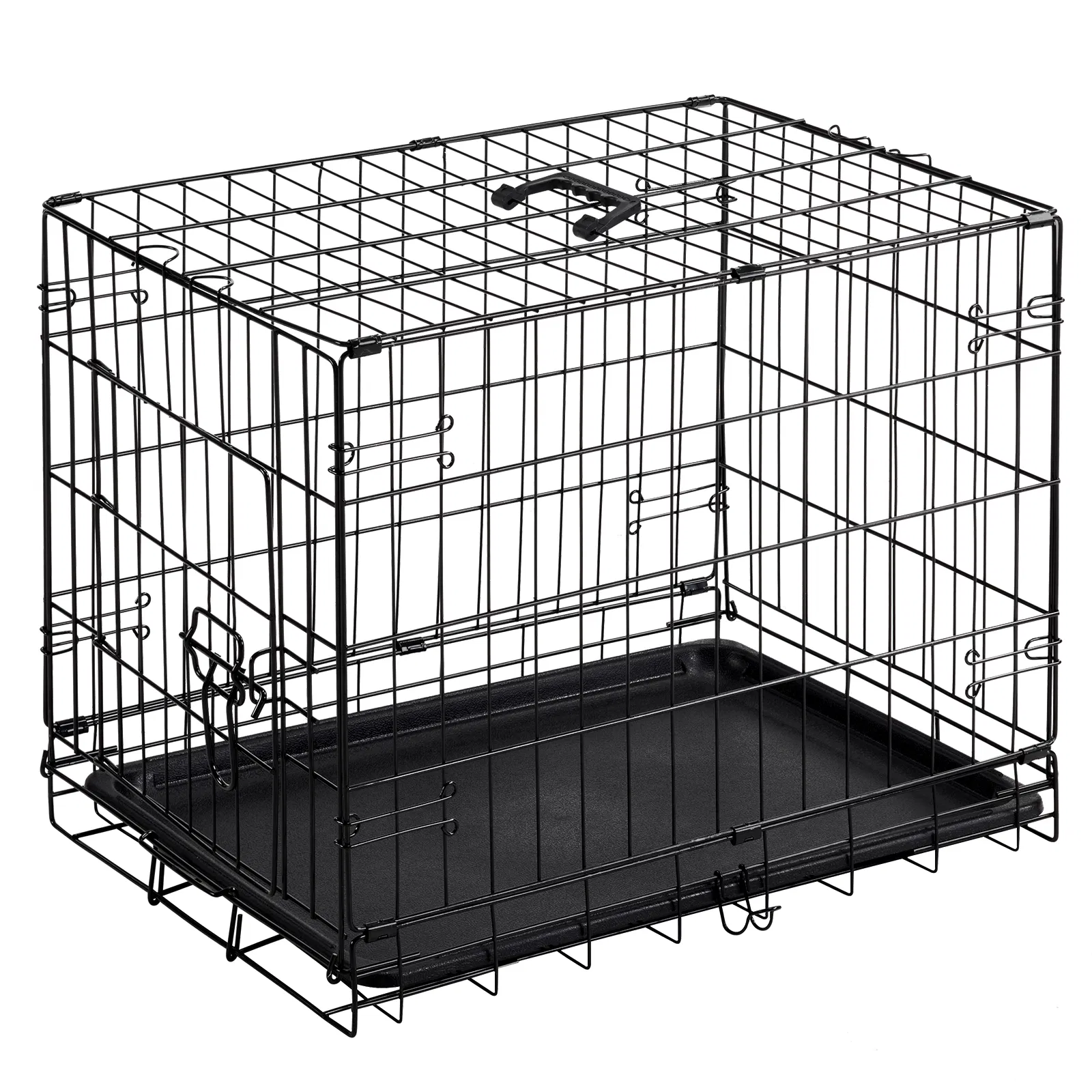 24 inch Single door Dog Cage - durable metal pet kennel, secure lock, collapsible design, removable tray for easy cleaning, portable puppy$45.99View on Mallflare
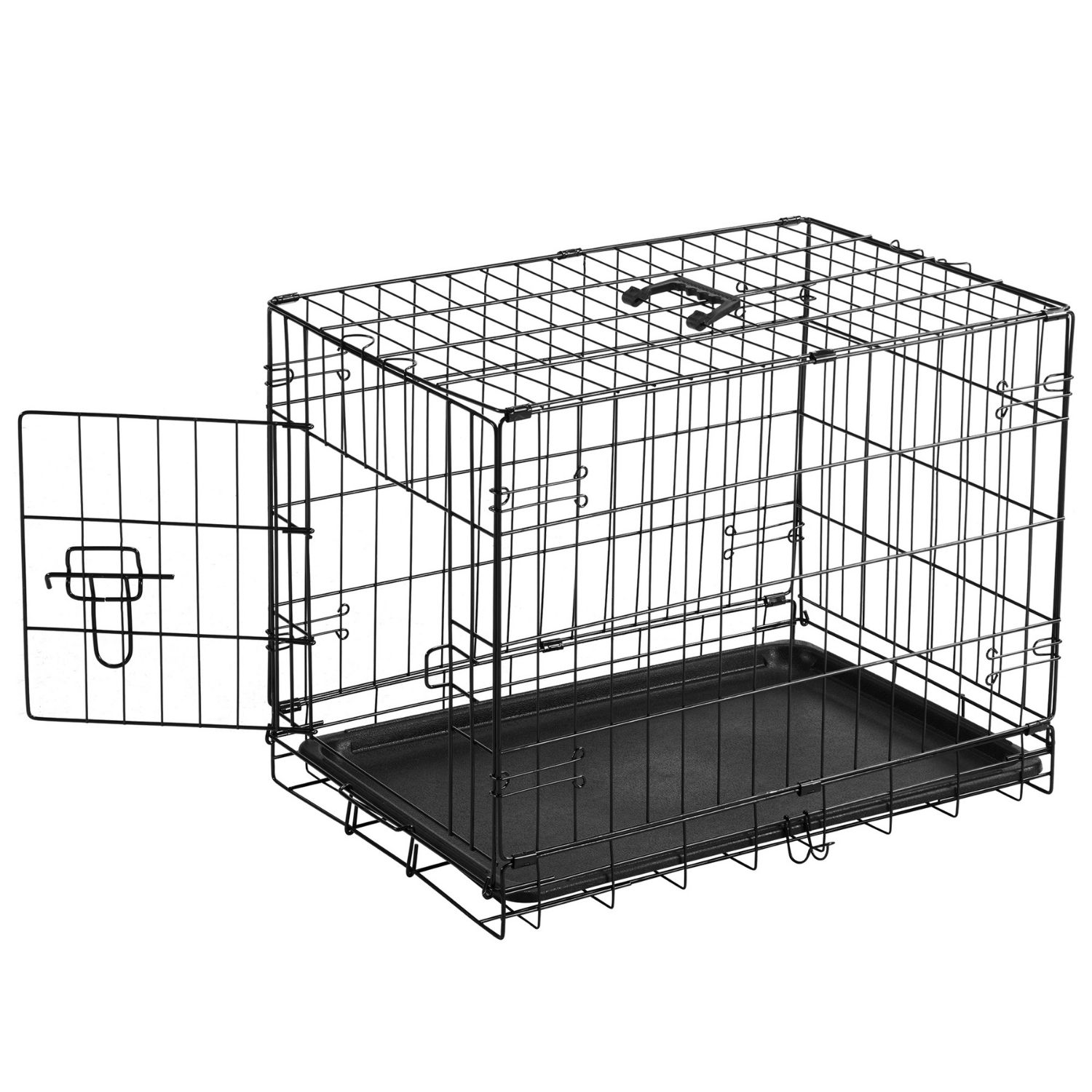 Single Door Dog Cage - Durable Metal Pet Kennel, Secure Lock, Collapsible Design, Removable Tray For Easy Cleaning, Portable Puppy$51.99View on Mallflare
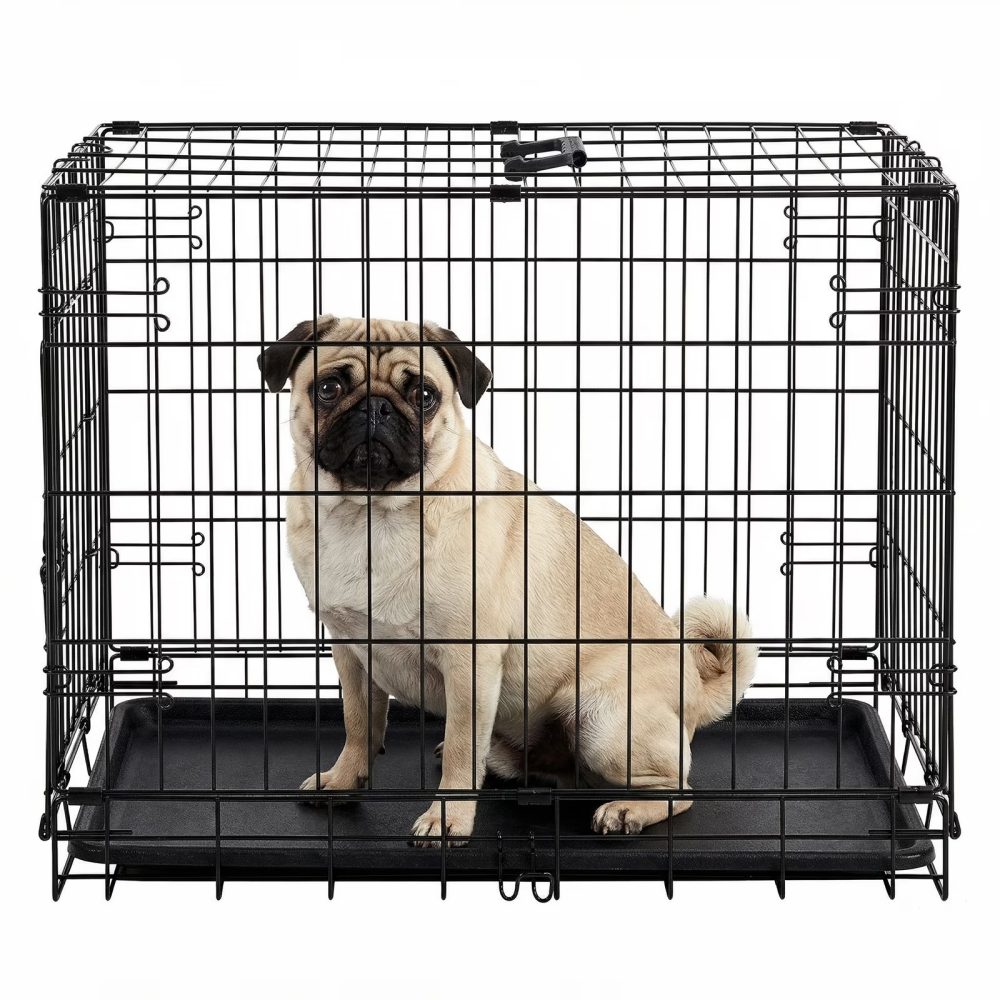 24/30 Inch Dog Crate, Black - Durable Metal Puppy Cage with Removable Tray, Collapsible Kennel for Small Medium Dogs, Easy Clean$79.99View on Mallflare
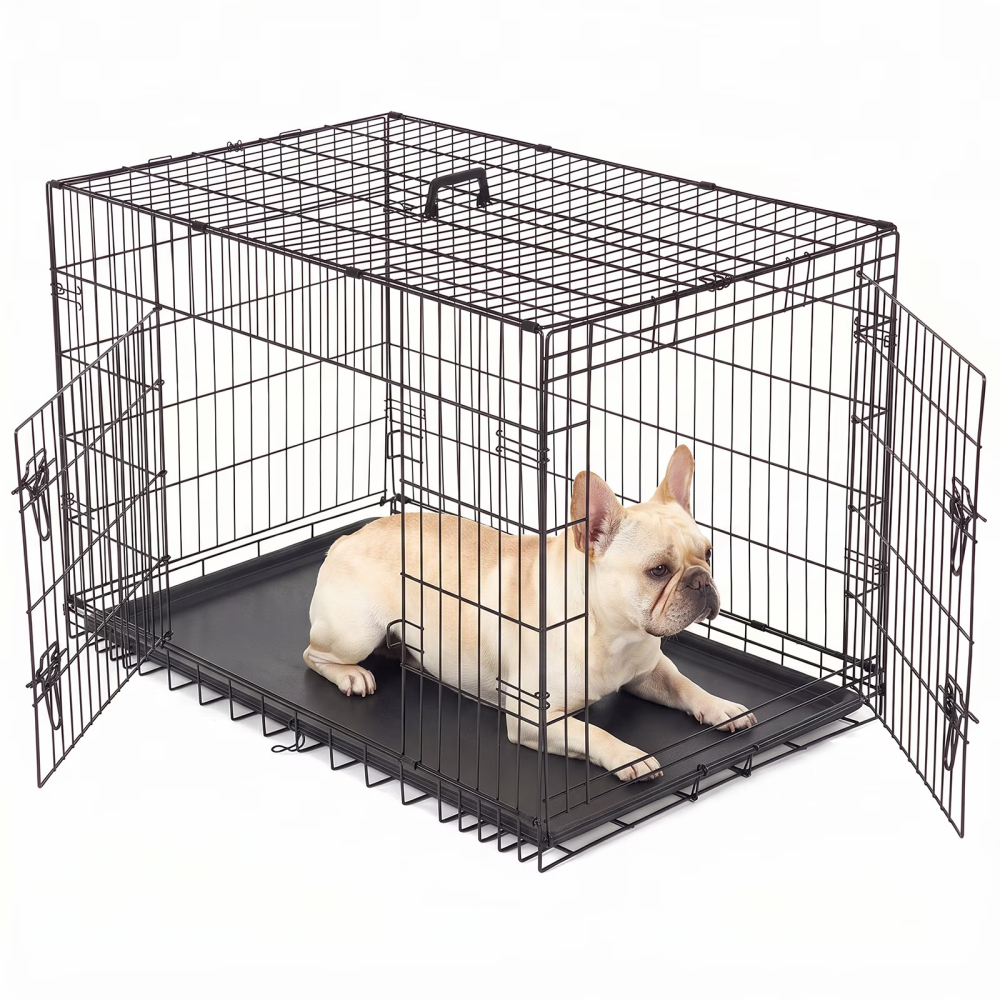 36 Inch Double Door Dog Crate - Heavy Duty Foldable Metal Cage with Divider, Removable Tray & Enhanced Safety Design for Large Dogs, Black$106.99View on Mallflare
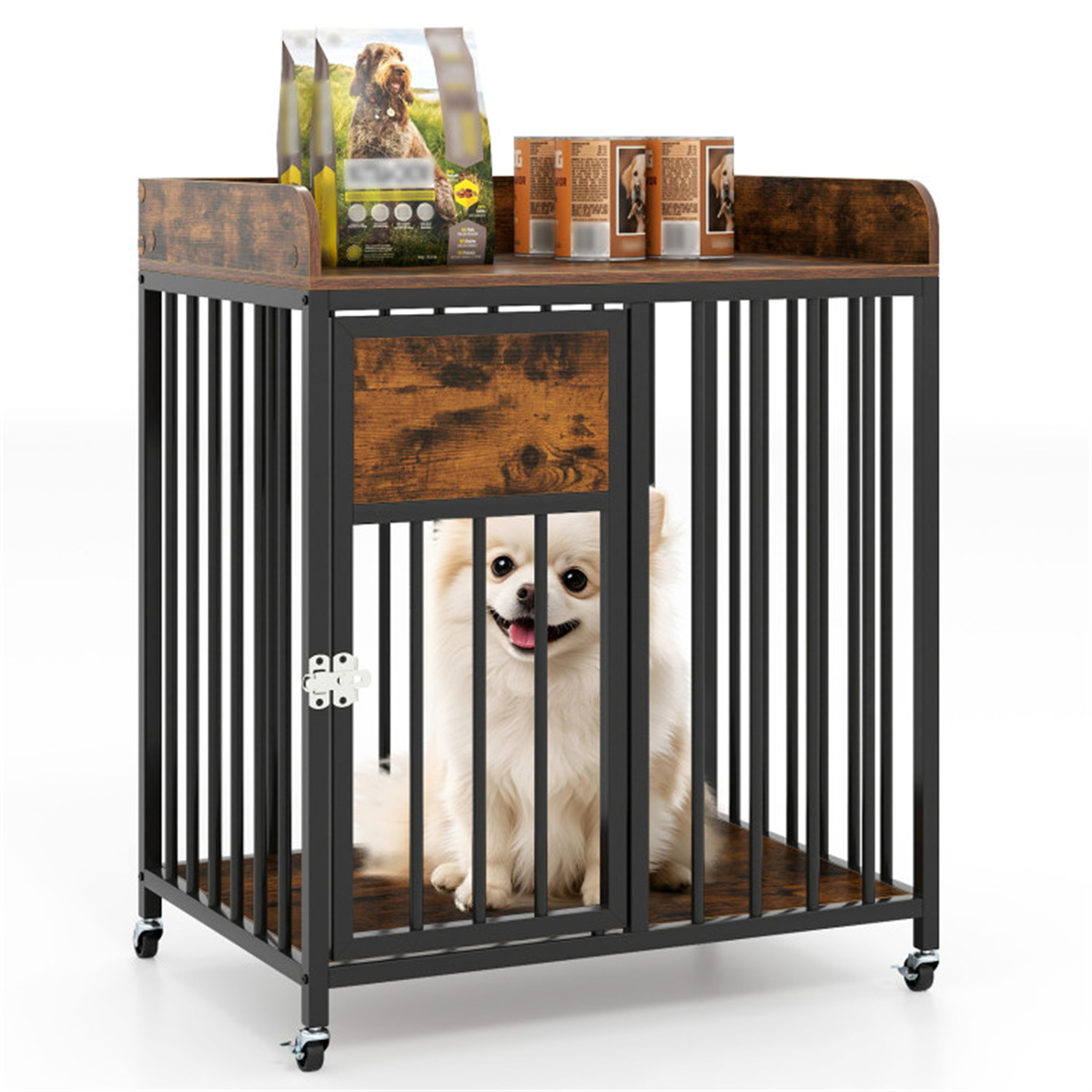 2-in-1 Dog Crate Furniture with Thickened Metal Tubes, Lockable Wheels Pet Kennel for Small Dogs$155.99View on Mallflare
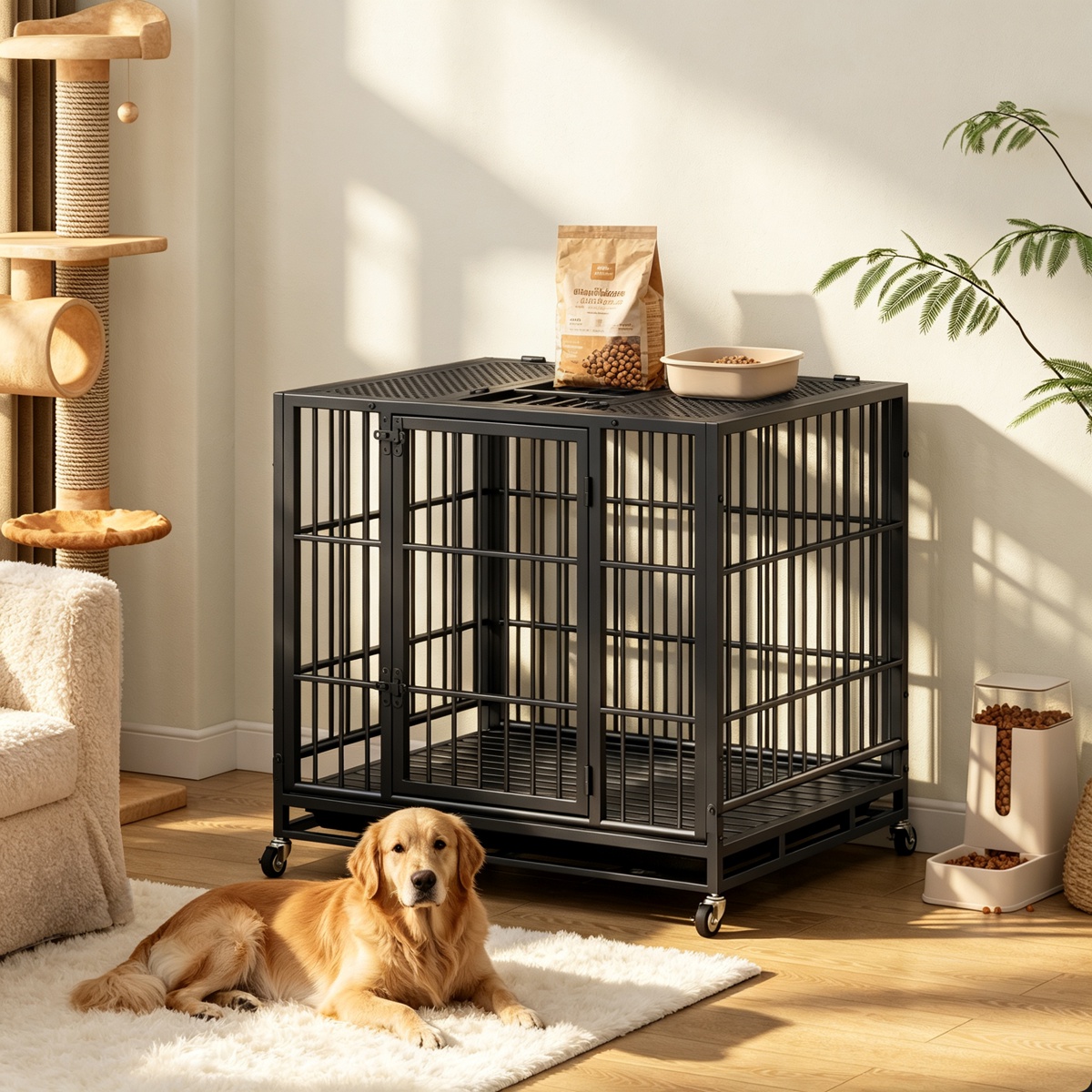 Heavy Duty Dog Crate , Mobile Pet Kennel with Lockable Wheels & Rotary Twist-Latch, Indoor Outdoor Metal Cage Perforated Top$174.99View on Mallflare
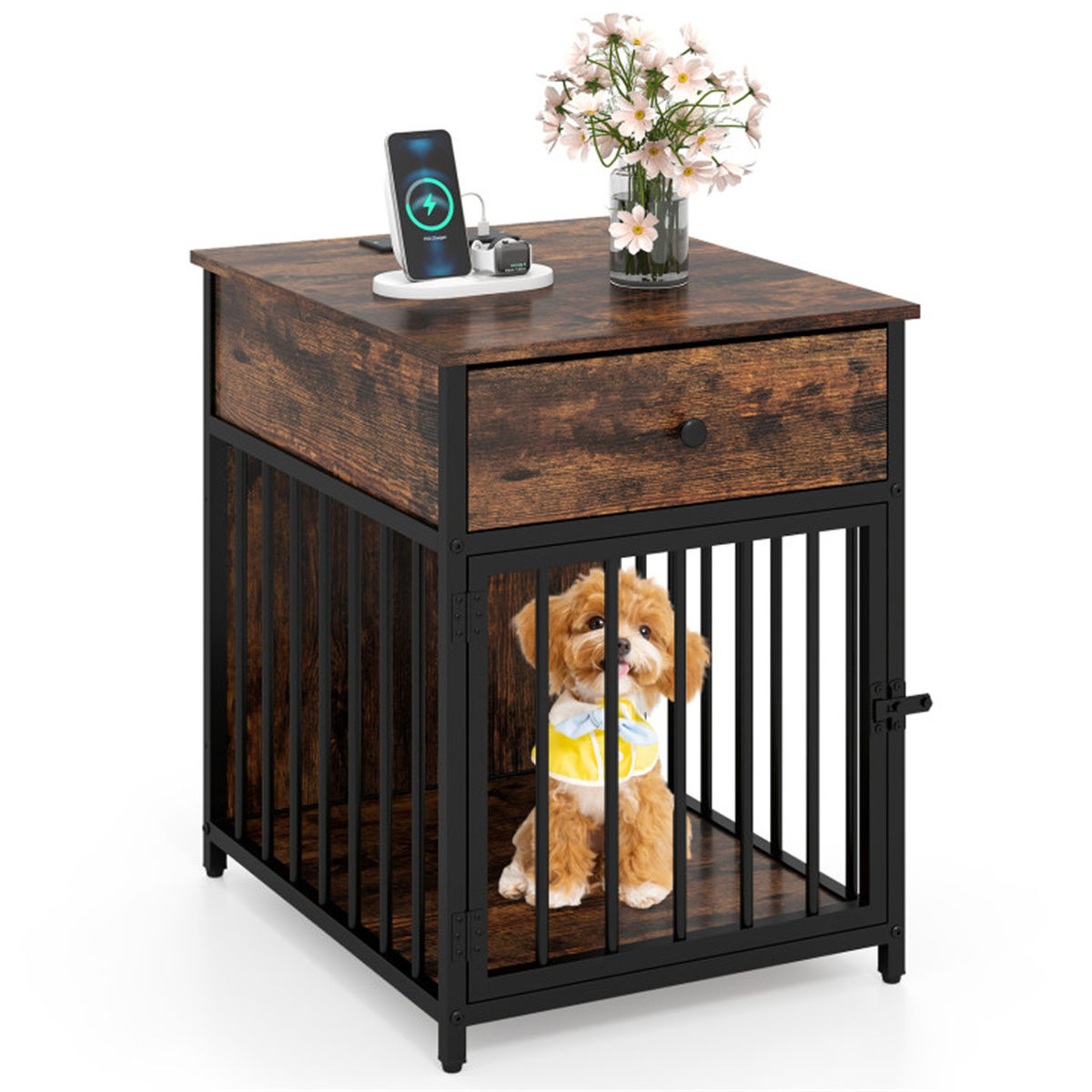 Black+Brown 2-in-1 Dog Crate End Table with Charging Station, Chew-Resistant Metal Tube Pet Furniture for Small Dogs Under 25 lbs$216.99View on Mallflare
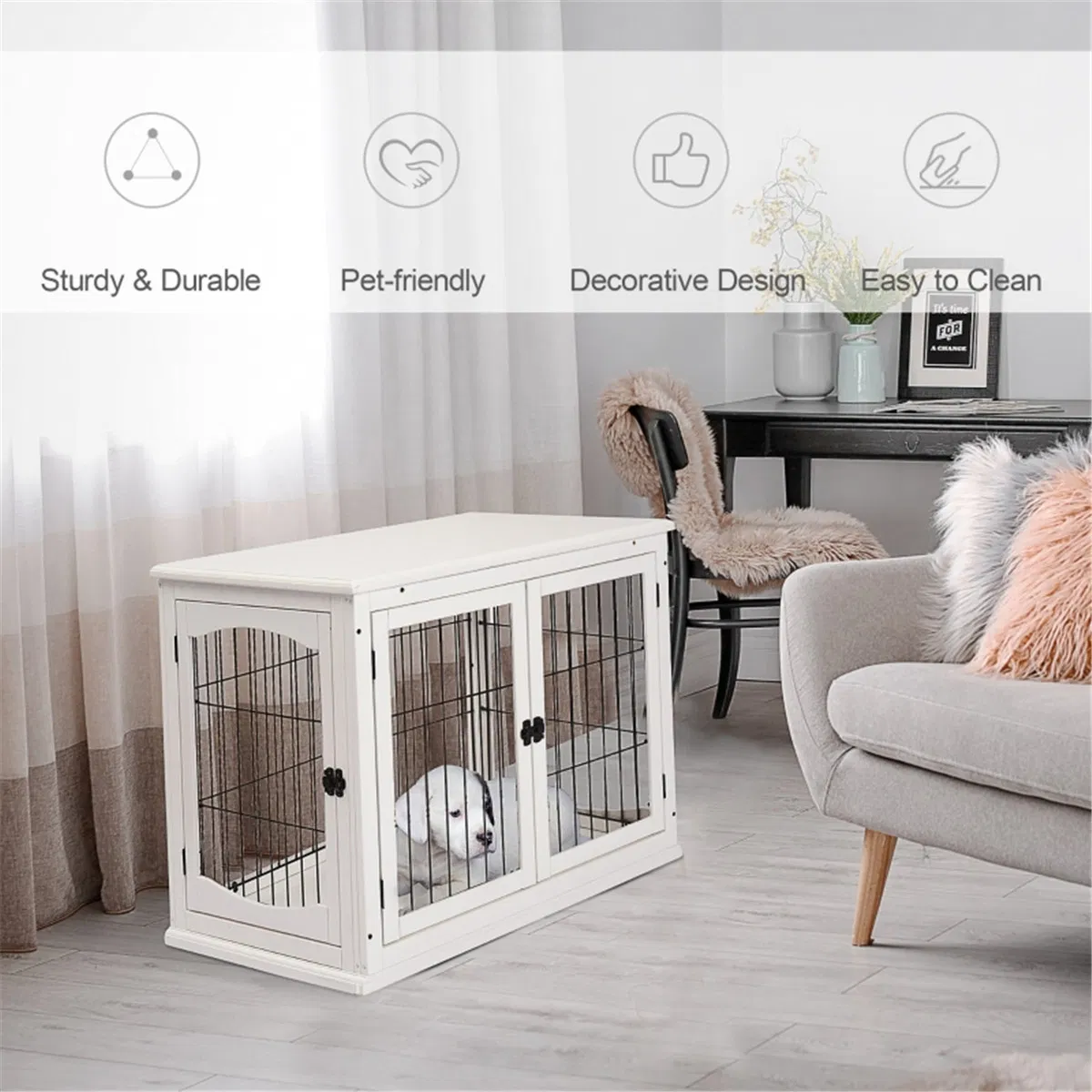 Dog Crate/Pet Cage, 2-in-1 End Table Dog House with French and Single Doors, MDF and Metal, Pure White, for Small and Medium Dogs up to 44 lbs$231.99View on Mallflare
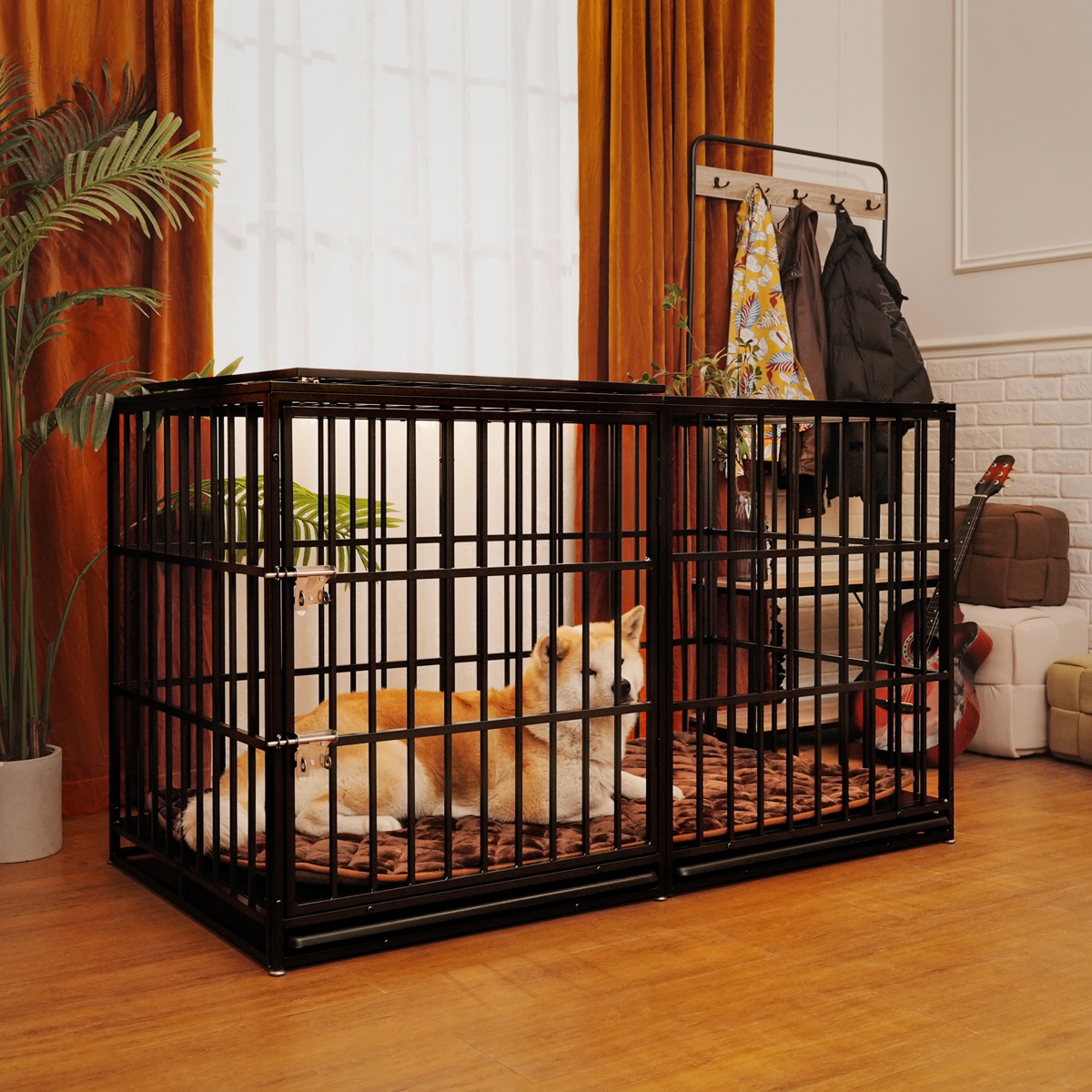 61 Extra Large Heavy Duty Dog Crate Dog Cage Strong Metal Dog Kennels And Pens Crates For Dogs$292.99View on Mallflare
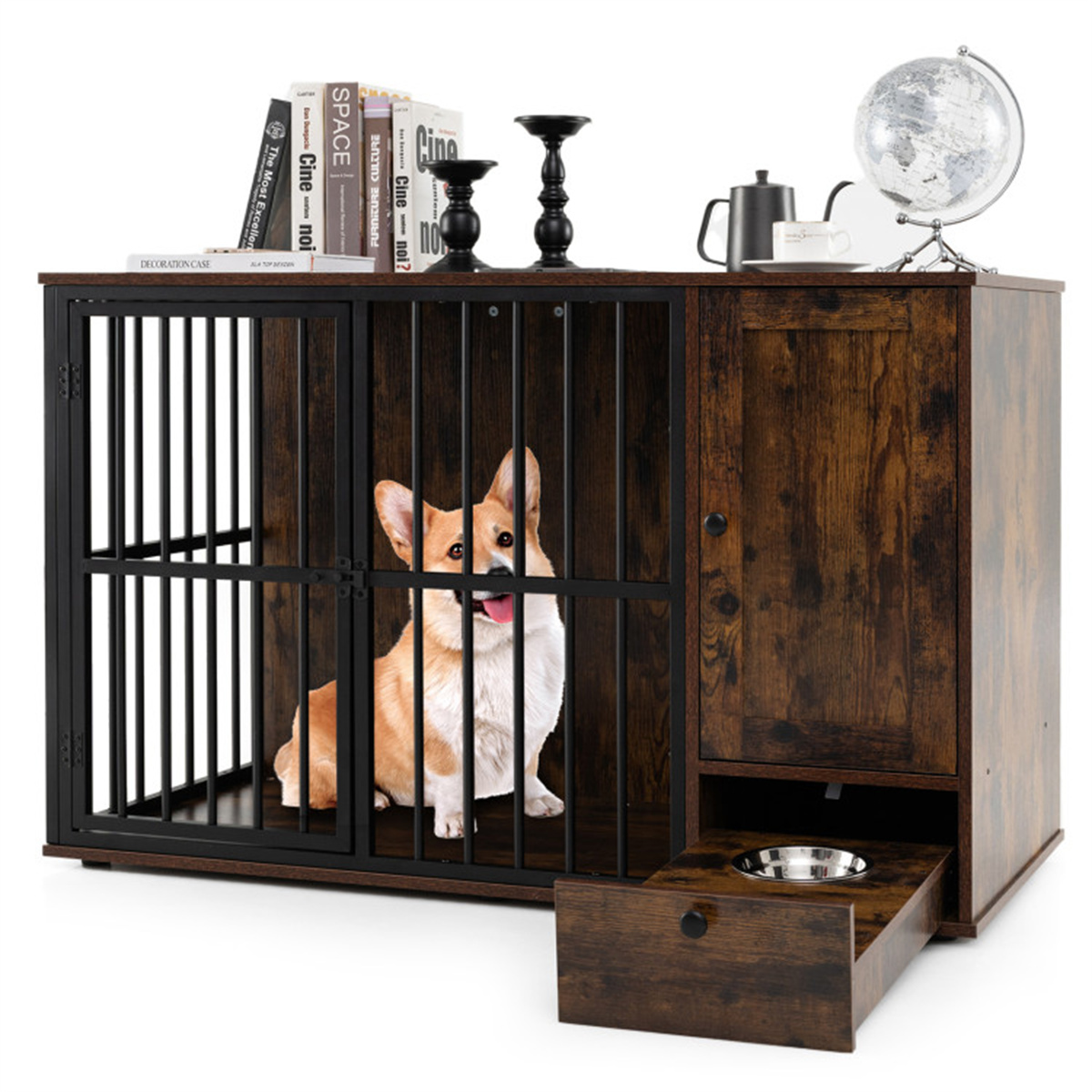 Coffee 2-in-1 Dog Crate End Table with Pull-Out Feeder, Chew-Resistant Metal Tube Pet Furniture for Small & Medium Dogs$401.99View on Mallflare
Highlights
- Wire gauge determines durability: heavy-duty crates use 6–8 gauge (4–4.8 mm) wire versus 8–10 gauge (3.2–4 mm) on standard crates—thicker wire resists bending under 80+ lb dogs.
- Weld type separates tiers: full perimeter welds at every wire intersection outperform spot-welded crates that pop apart at stress points near latches and corners.
- Latch mechanism is the escape point: rotary twist-latches or dual paddle latches with lock holes are escape-resistant, while single slide-bolt latches on thin wire fail under pawing and chewing.
- Playpen panels are not crates: 8–16 panel exercise pens at 24–40 inch heights are modular fences for supervised containment, not escape-proof kennels for strong dogs.
Best use cases
- Best fit: large or strong dogs (50+ lb) that have bent standard crates—choose a fully welded 6–8 gauge single-piece crate with rotary latch and lockable wheels; skip foldable playpens, which a determined dog can collapse or climb.
- Best fit: indoor apartment or crate-training use for calm small-to-medium dogs—a 24–32 inch wire crate with removable tray and double doors works; skip heavy-duty 6-gauge models, which are unnecessarily heavy and hard to move.
- Best fit: RV, camping, or yard temporary containment for supervised use—an 8-panel 24–40 inch metal playpen with top cover and bottom pad is portable and modular; do not use as an unattended escape-proof kennel for strong chewers.
- Wrong fit: dogs with severe separation anxiety that chew wire—no wire crate is chew-proof; a heavy-duty crate with 6-gauge wire and reinforced welds reduces injury risk, but a furniture-style wooden-and-metal crate with double doors is the better indoor option for anxious dogs.
Buying tips
- Size the crate by interior dimensions, not exterior: the dog must stand without ducking and turn around fully—add 2–4 inches to the dog's standing height and 4–6 inches to body length for the minimum interior size.
- Choose 6–8 gauge wire and full welds for dogs over 50 lb or any dog that has escaped a crate; 8–10 gauge spot-welded crates are for calm dogs under 40 lb.
- Pick a rotary twist-latch or dual paddle latch with a lock hole; single slide-bolt latches on thin wire are the most common escape point on standard crates.
- For playpens, match panel height to dog size: 24 inch panels suit small dogs under 15 lb, 32–40 inch panels suit medium dogs, and 40 inch+ panels are needed for dogs that jump—add a top cover for climbers.
Specs
| Wire Gauge | 6–8 ga heavy-duty vs 8–10 ga standard |
|---|---|
| Weld Type | Full perimeter welds vs spot welds |
| Latch Type | Rotary twist / dual paddle vs slide-bolt |
| Crate Type | Single-piece welded vs foldable playpen panels |
Related searches
What to check before buying
- Measure your dog's standing height and body length, then add 2–4 inches height and 4–6 inches length—this interior size must match the crate's listed interior dimensions, not exterior.
- Measure your doorway and room clearance: heavy-duty single-piece crates often do not fold, so confirm the assembled crate fits through doors and fits the intended floor space.
- Check floor type and crate feet: lockable casters protect hard floors and prevent sliding, but on thick carpet choose flat feet or a tray base to avoid wobble.
- Confirm the latch and door configuration matches your dog's escape style—double doors need two latches, and anxious dogs benefit from a crate with a feeding door and removable tray for cleaning.
FAQ
Data sources: eBay / Amazon listings and product attribute feeds. Updated Nov 28, 2026.
Some links on this page are affiliate links. If you buy after clicking one, we may earn a commission at no extra cost to you. This does not change which products appear here or their order. Affiliate disclosure.