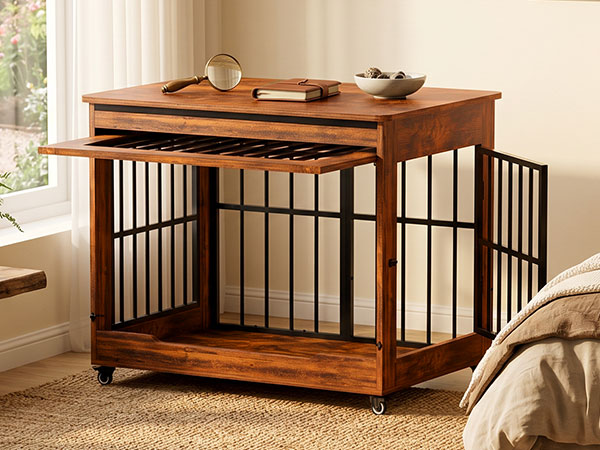

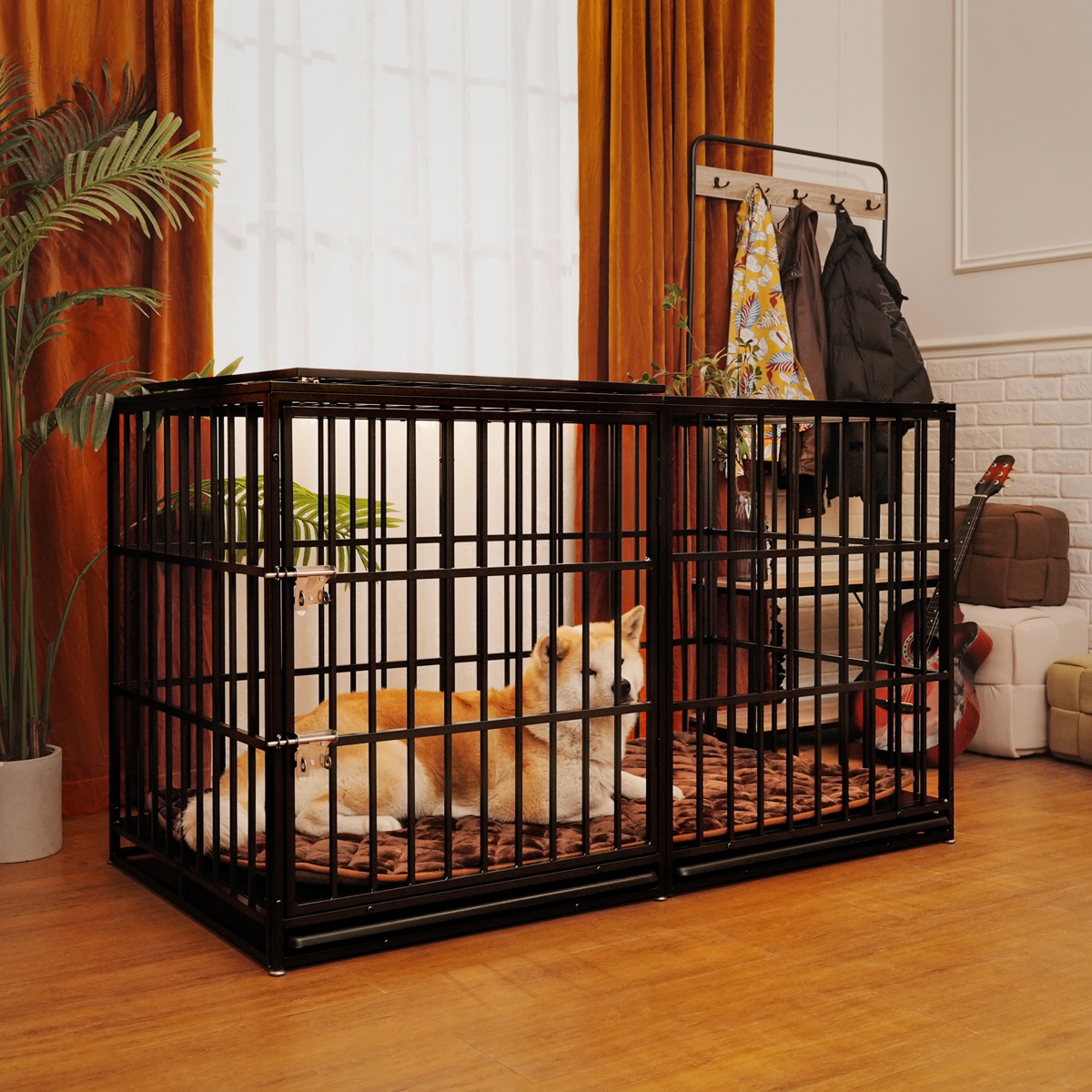
Photos from current listings. Actual item, color, and included accessories may vary.
Heavy Duty Extra Large Dog Crate Buying Guide
Heavy-duty extra-large dog crates are built for dogs over 90 lb or 26 in tall at the shoulder that bend or break standard wire crates. The core trade-off is 22-gauge wire versus 18-gauge or 16-gauge welded steel: thinner wire flexes under a lunging dog, while heavier gauge with reinforced corner welds and dual slide-bolt latches holds. The decision rule is to skip any crate marketed by 'XL' label alone and buy only crates that list wire gauge, bar spacing, and a welded (not crimped) frame.
Median $217.99
Key takeaways
- Wire gauge separates real heavy-duty from decorative: 16-gauge (0.0625 in) or 18-gauge (0.048 in) welded steel resists a 120 lb dog's lunging; 20-22 gauge flexes and snaps at welds.
- Bar spacing of 1.5 in or less prevents a determined dog from working a jaw or paw between bars; spacing over 2 in lets large dogs bow the panel outward.
- Dual slide-bolt latches on top and bottom of the door plus a center latch bar defeat nose-pushing and paw-scooping escapes that single snap latches allow.
At a glance
- Category
- Pet Crates, Kennels & Playpens
- Last updated
- Nov 28, 2026
Current offers
Highlights
- Wire gauge separates real heavy-duty from decorative: 16-gauge (0.0625 in) or 18-gauge (0.048 in) welded steel resists a 120 lb dog's lunging; 20-22 gauge flexes and snaps at welds.
- Bar spacing of 1.5 in or less prevents a determined dog from working a jaw or paw between bars; spacing over 2 in lets large dogs bow the panel outward.
- Dual slide-bolt latches on top and bottom of the door plus a center latch bar defeat nose-pushing and paw-scooping escapes that single snap latches allow.
- E-coat or powder-coat over fully welded seams outperforms spot-welded zinc plating: rust starts at unsealed weld points and is the top cause of panel failure in outdoor or humid kennels.
Best use cases
- Best fit: a 100-140 lb German Shepherd or Rottweiler with separation anxiety needs a 16-gauge welded steel crate with 1.5 in bar spacing and dual slide-bolt latches; skip any pop-up nylon or 22-gauge wire crate.
- Best fit: a 90 lb dog that has bent one standard crate door should move to an 18-gauge welded crate with a reinforced door frame and center latch bar; skip crates that only add thicker wire without latch upgrades.
- Wrong fit: a calm 70 lb senior dog does not need 16-gauge steel; a 20-gauge wire crate with 1.5 in spacing saves weight and cost and is easier to move between rooms.
- Wrong fit: outdoor or garage use in humid climates rules out zinc-plated spot-welded crates; choose powder-coated fully welded panels or the welds will rust through within a season.
Buying tips
- Size by interior height: dog should stand without head touching, so add 4 in to shoulder height; a 27 in shoulder dog needs a 31-32 in interior height crate.
- Floor footprint rule: crate length should be 1.5x the dog's nose-to-tail-base length; a 36 in long dog needs a 54 in long crate, not a 48 in.
- Insist on 16- or 18-gauge welded wire; 20-gauge and lighter is standard-duty and will not survive a 100 lb dog's escape attempts.
- Look for dual slide-bolt latches and a center latch bar; single snap latches are the first failure point on heavy-duty crates.
Specs
| Wire Gauge | 16-18 ga heavy-duty vs 20-22 ga standard |
|---|---|
| Bar Spacing | ≤1.5 in for large breeds; >2 in escape risk |
| Latch Type | Dual slide-bolt + center bar vs single snap |
| Frame Construction | Fully welded + powder-coat vs spot-welded zinc |
Related searches
What to check before buying
- Measure your dog standing: shoulder height plus 4 in equals minimum interior height; nose-to-tail-base length times 1.5 equals minimum interior length.
- Measure your doorways and vehicle cargo opening: a 48 in or 54 in assembled steel crate often will not fit through a 30 in door; confirm panel disassembly or a folding frame.
- Confirm floor type: plastic trays crack under 120 lb dogs; choose a metal pan or reinforced ABS tray with a center support.
- Check indoor climate and flooring: powder-coated steel is required in humid rooms or on concrete; bare zinc will rust and stain floors.
FAQ
Data sources: eBay / Amazon listings and product attribute feeds. Updated Nov 28, 2026.
Some links on this page are affiliate links. If you buy after clicking one, we may earn a commission at no extra cost to you. This does not change which products appear here or their order. Affiliate disclosure.