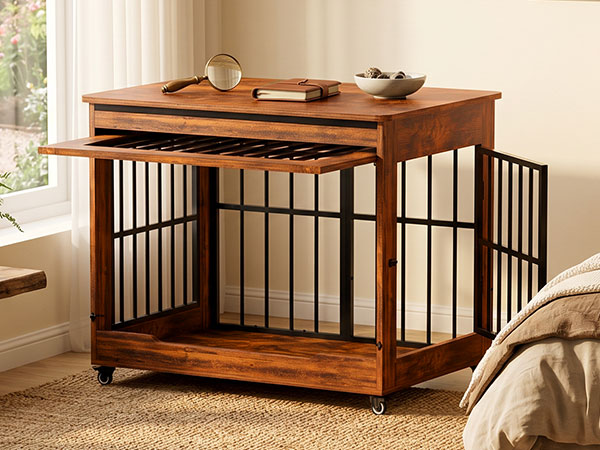

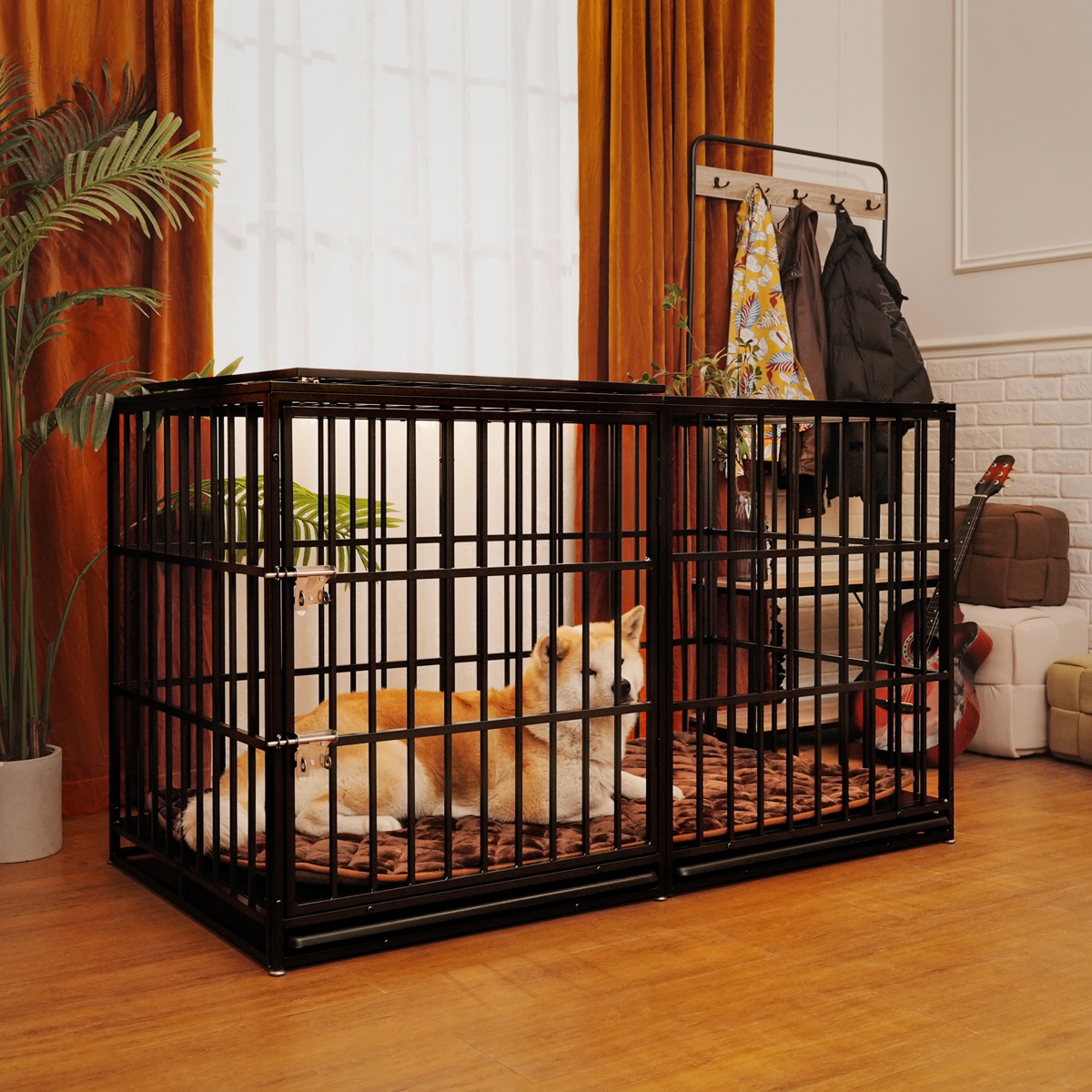
Photos from current listings. Actual item, color, and included accessories may vary.
Heavy Duty Extra Large Dog Cage Buying Guide
Extra-large heavy-duty dog cages are built for strong, anxious, or escape-prone dogs that can bend wire and pop welds on standard crates. The real buying decision is frame gauge and bar spacing versus assembly complexity and indoor footprint—not just the 'XL' label on the box.
Frame Gauge:0.8–1.2 mm steel vs 0.5–0.6 mm wireBar Spacing:1.5–2 in (XL) / 1–1.5 in (chewer)Interior Footprint:42–54 in L x 28–35 in HLatch Type:Dual deadbolt vs single slide bolt
Typical price range$142.99 – $292.99
Median $217.99
Key takeaways
- Heavy-duty crates typically use 0.8–1.2 mm steel tubing with reinforced corners and dual latches, versus 0.5–0.6 mm wire on standard crates.
- Bar spacing of 1.5–2 inches suits dogs over 50 lb; tighter spacing (1–1.5 inches) prevents paw and jaw entrapment for determined chewers.
- Extra-large footprints generally run 42–54 inches long and 28–35 inches tall; measure your dog nose-to-tail and add 4–6 inches for turning room.
At a glance
- Category
- Pet Crates, Kennels & Playpens
- Last updated
- Nov 28, 2026
Current offers
Highlights
- Heavy-duty crates typically use 0.8–1.2 mm steel tubing with reinforced corners and dual latches, versus 0.5–0.6 mm wire on standard crates.
- Bar spacing of 1.5–2 inches suits dogs over 50 lb; tighter spacing (1–1.5 inches) prevents paw and jaw entrapment for determined chewers.
- Extra-large footprints generally run 42–54 inches long and 28–35 inches tall; measure your dog nose-to-tail and add 4–6 inches for turning room.
- Drop-pin or fold-flat panel construction trades portability for rigidity—welded full-frame cages resist bending but weigh significantly more.
Best use cases
- Best fit: a 70–110 lb dog with separation anxiety that has bent wire or escaped a standard crate—choose a welded steel frame with dual deadbolt latches and 1.5-inch bar spacing.
- Best fit: indoor containment in a dedicated room where the crate stays assembled—pick a heavier gauge cage with floor protection and skip fold-flat travel models.
- Wrong fit: a puppy still in house-training—start with a smaller, lighter crate with a divider; an XL heavy-duty cage gives too much space and encourages accidents.
- Wrong fit: frequent car travel or apartment stair hauling—a 40–60 lb steel cage is impractical; use a crash-tested travel crate instead.
Buying tips
- Check the steel gauge: 0.8–1.2 mm wall thickness with welded joints resists bending better than thin wire panels joined by crimps.
- Prioritize dual latching mechanisms—two independent locks per door stop a dog that has learned to nose open a single slide bolt.
- Size by standing height and nose-to-tail length, not by the 'XL' label; add 4–6 inches of turning clearance in each direction.
- Avoid crates with exposed wire ends or sharp welds inside the enclosure—these cause paw and muzzle injuries in escape attempts.
Specs
| Frame Gauge | 0.8–1.2 mm steel vs 0.5–0.6 mm wire |
|---|---|
| Bar Spacing | 1.5–2 in (XL) / 1–1.5 in (chewer) |
| Interior Footprint | 42–54 in L x 28–35 in H |
| Latch Type | Dual deadbolt vs single slide bolt |
Related searches
What to check before buying
- Measure your dog standing and lying down, then confirm the crate's interior height is at least 2–4 inches above the head.
- Verify door width and clearance against your home's hallways and doorways—XL cages often exceed 30 inches in width.
- Check floor type: heavy steel cages can scratch hardwood; use a rubber mat or place on carpet.
- Confirm the crate includes a removable floor tray and that replacement trays are available for cleanup and odor control.
FAQ
Data sources: eBay / Amazon listings and product attribute feeds. Updated Nov 28, 2026.
Some links on this page are affiliate links. If you buy after clicking one, we may earn a commission at no extra cost to you. This does not change which products appear here or their order. Affiliate disclosure.