
Photos from current listings. Actual item, color, and included accessories may vary.
Hamster Cage Buying Guide
Hamster cages are small-animal enclosures where the primary trade-off is between compact multi-tier tube systems that look fun but limit floor area, and single-level or modular habitats that provide the continuous unbroken floor space hamsters actually need. The decision rule: prioritize unbroken floor area over vertical tiers, and treat any cage with a footprint under 24 by 12 inches as a temporary or travel enclosure, not a permanent habitat.
Median $109.99
Key takeaways
- Unbroken floor area drives hamster welfare more than tier count: a 5-tier 18.5-inch cage still offers a base footprint of only about 18.5 by 11.5 inches, below the 24 by 12 inch minimum for dwarf hamsters.
- Wire spacing is the critical safety metric: 0.4 inch (1 cm) or tighter bar spacing is required for dwarf hamsters and robovorskis, while 0.5 inch suits Syrians; wider spacing lets dwarfs escape.
- Tube diameter determines species fit: 1.75 to 2 inch internal diameter tubes work for dwarfs, but Syrians need 2.5 inch or wider or they will wedge and injure themselves.
At a glance
- Category
- Pet Crates, Kennels & Playpens
- Last updated
- Nov 25, 2026
Current offers
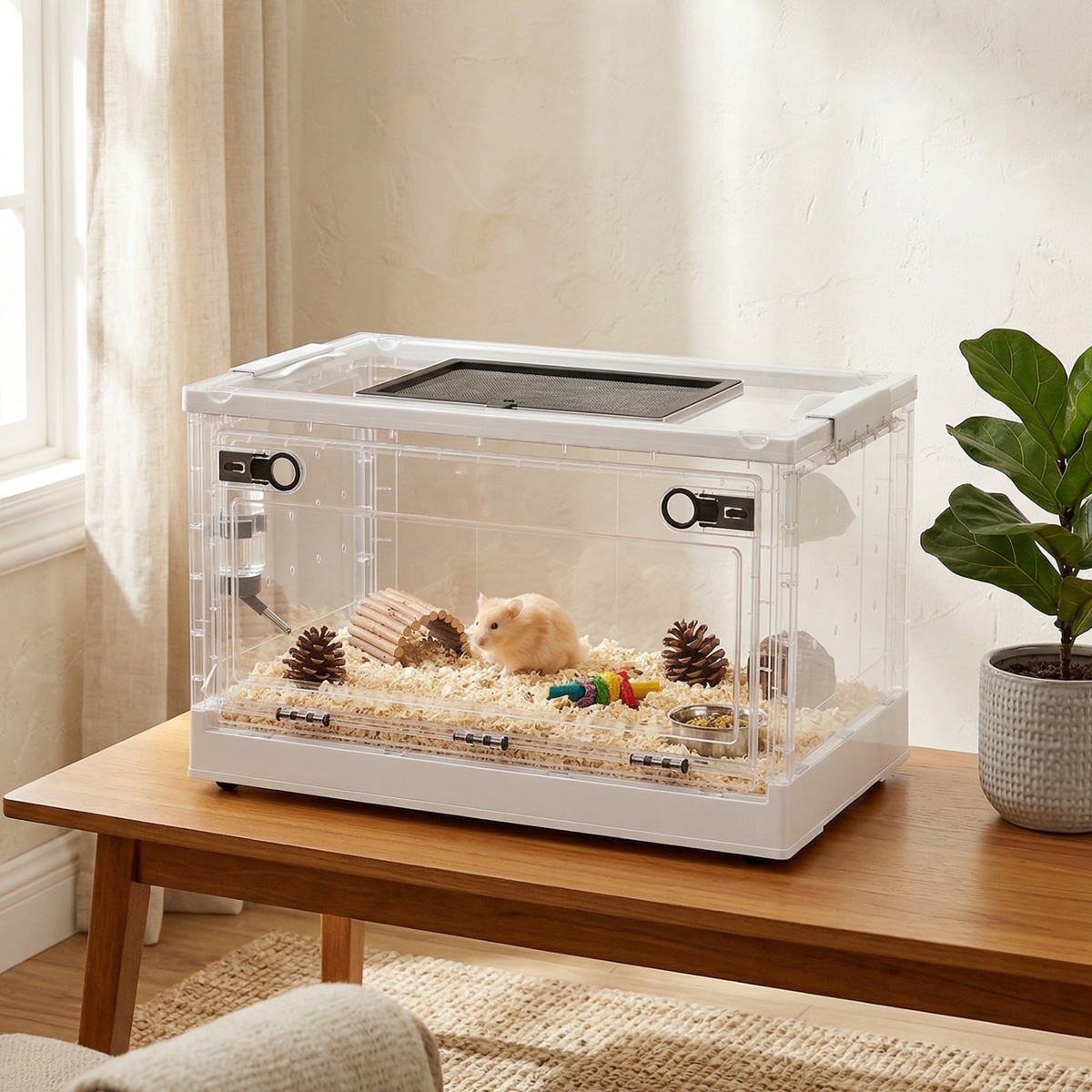 Hamster Cage, Stackable Gebril with Front Door, Ventilated Small Animal Habitat for Dwarf Hamsters, Gerbils, Mice$45.99View on Mallflare
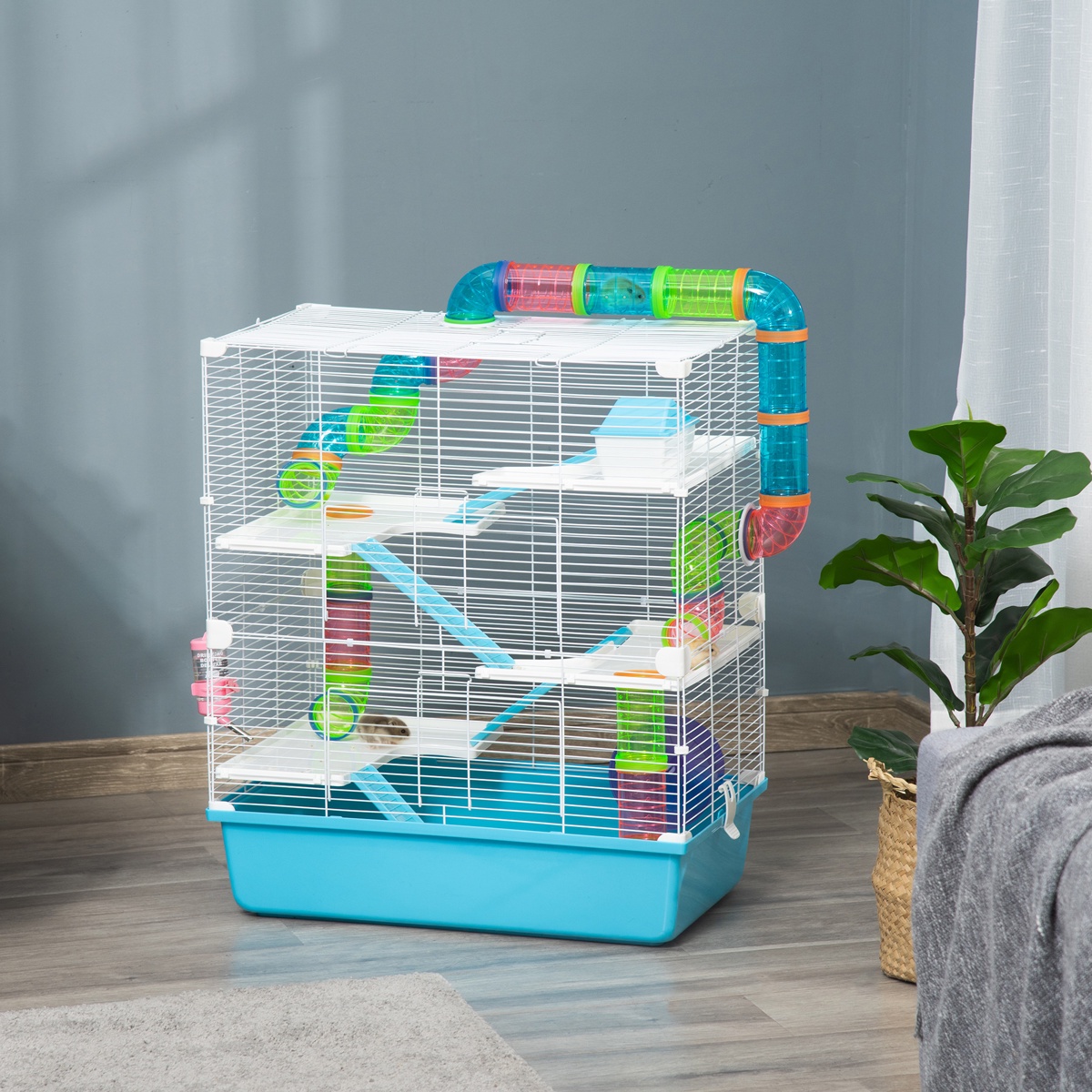 Extra Large 23" Hamster Cage with Tubes and Tunnels, Portable Carry Handles, Rat House and Habitats Big 5-Tier Design, Mouse Includes Exercise Wheel, Water Bottle, Food Dish, Light Blue$63.99View on Mallflare
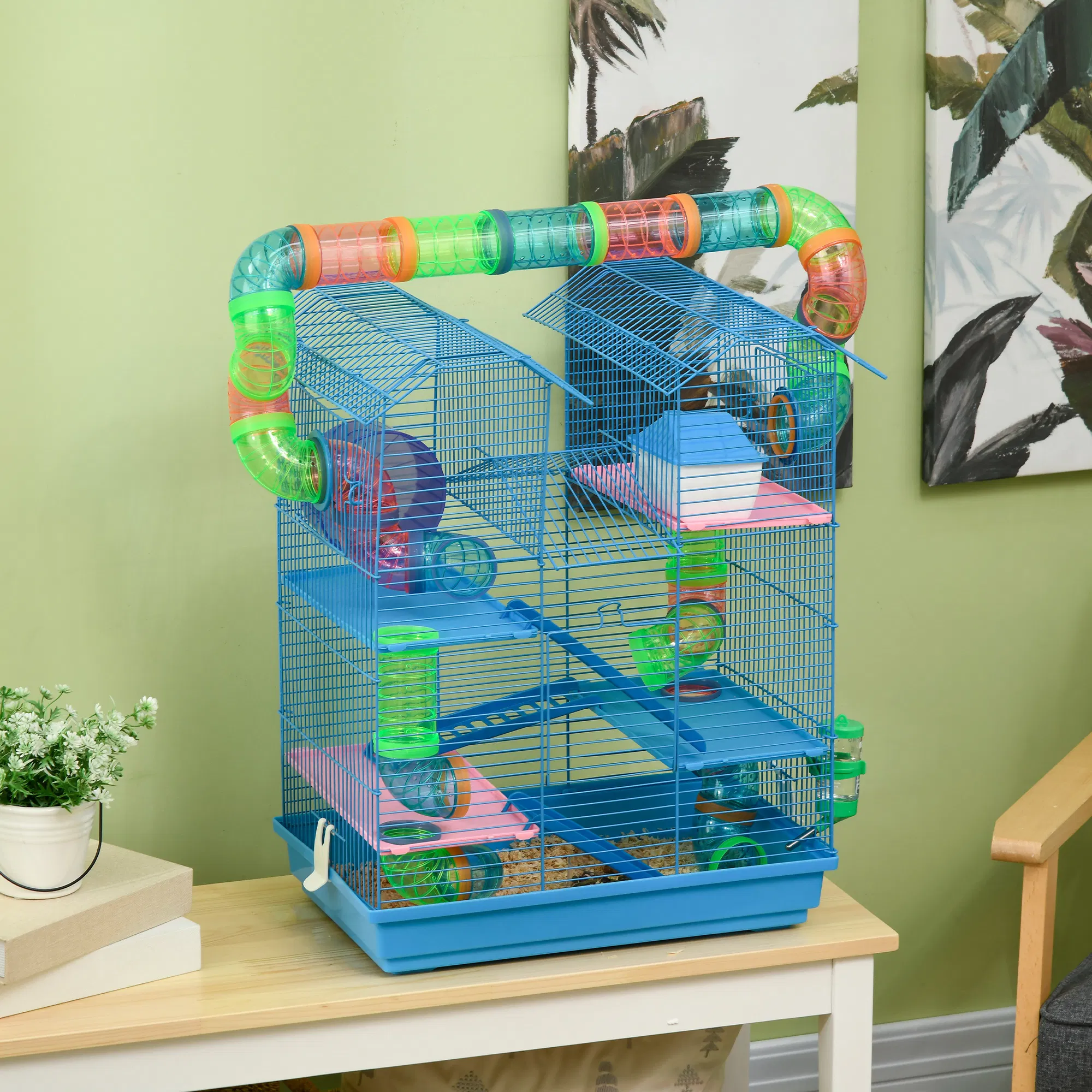 18.5" 5 Tier Hamster Cage with Tubes and Tunnels, Small Animal Rat Gerbil Water Bottle, Food Dish, Exercise Wheel, Blue$83.99View on Mallflare
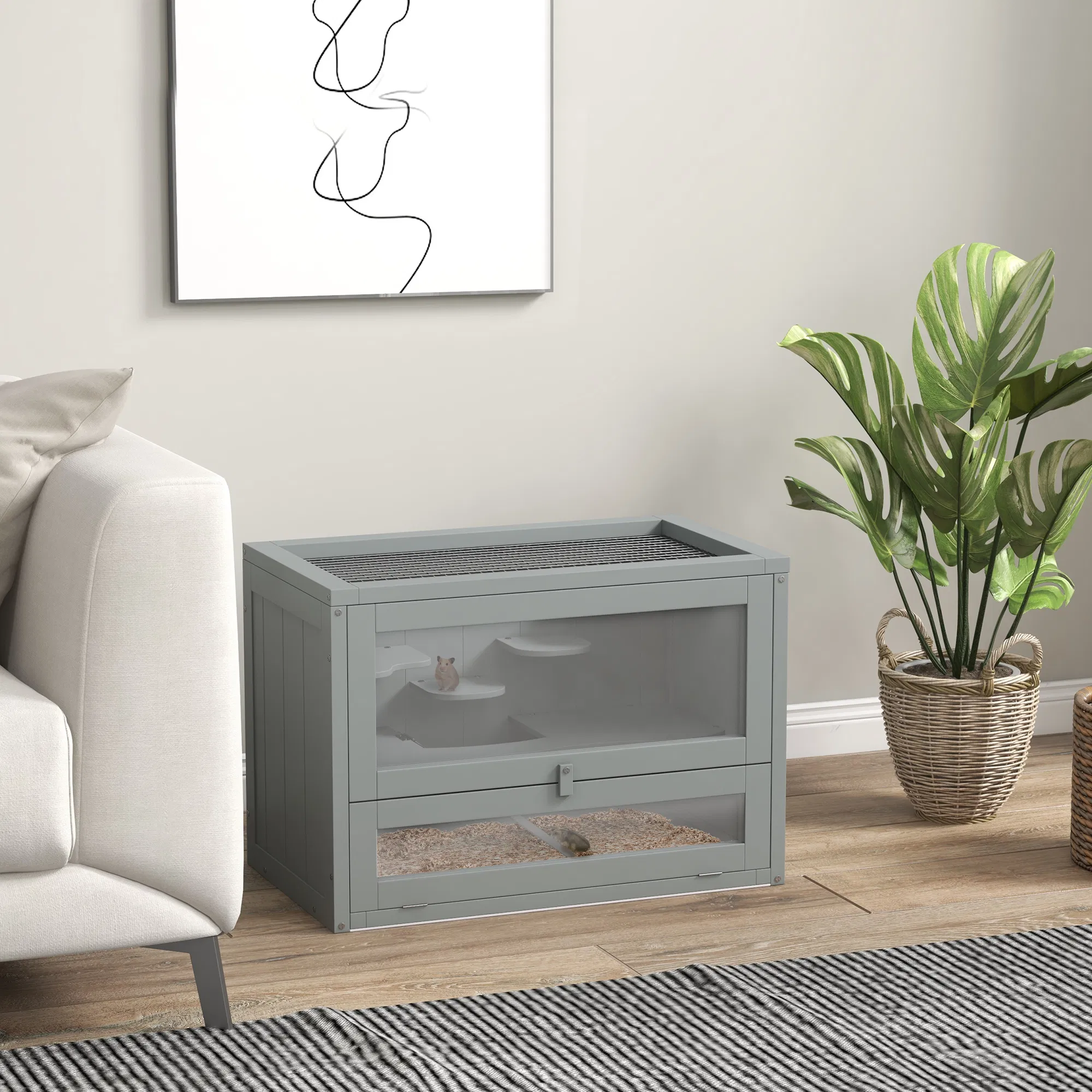 2-Level Hamster Cage with Openable Top, Door, Shelf, Ladder, Gray$91.99View on Mallflare
 23" 5-Tier Hamster Cage with Exercise Wheel, Small Pet Habitat for Dwarf Hamsters & Gerbils, Blue$102.99View on Mallflare
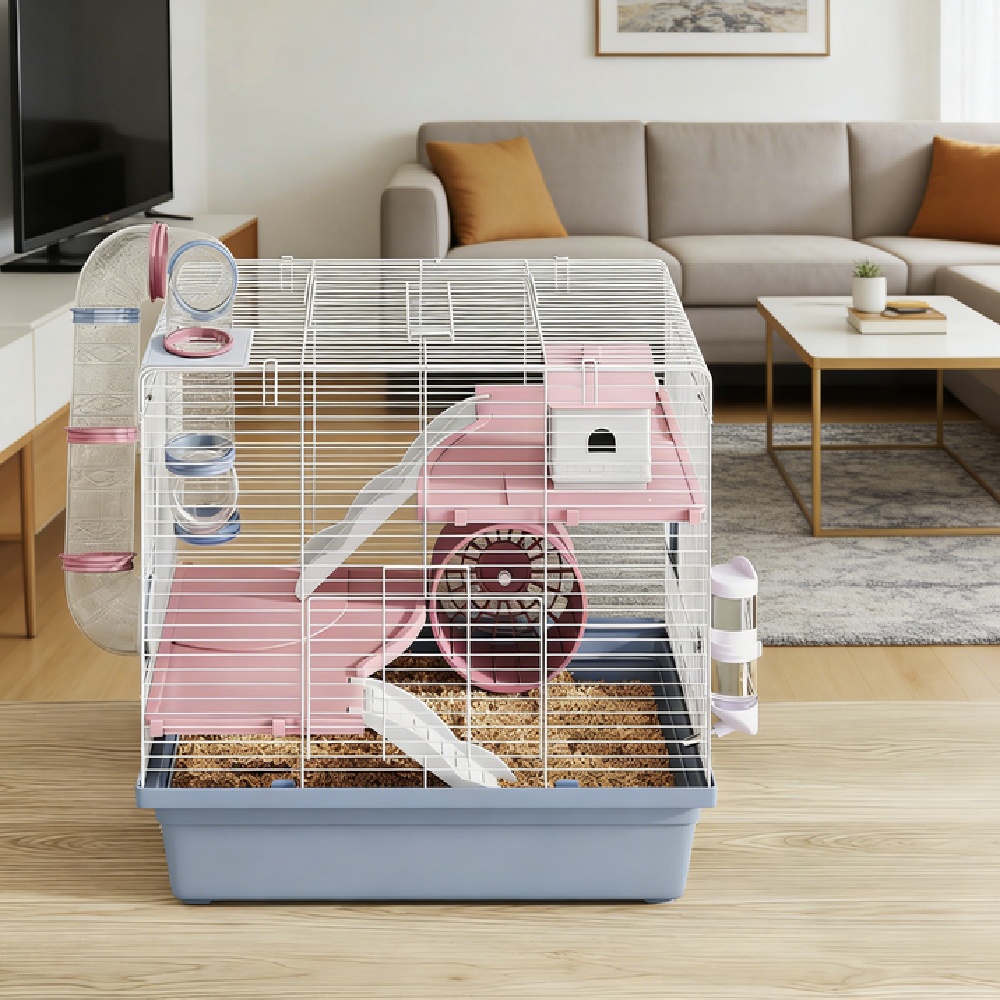 Hamster Cage/Pet Cage$105.99View on Mallflare
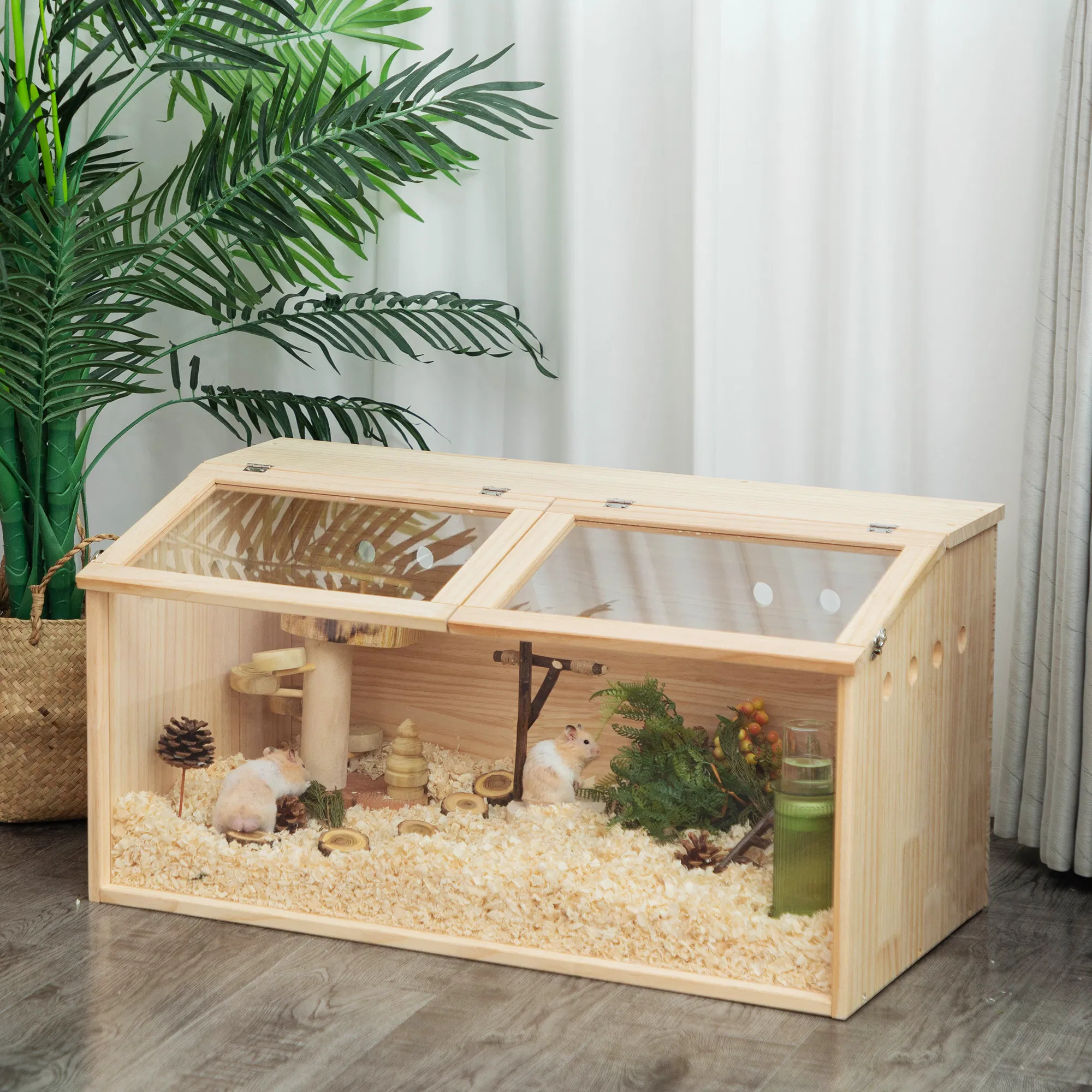 Middle Transparent Wooden Hamster Cage; Small Animal Habitat Hutch for Large Siberian Gerbils; Little Rabbits; Natural$113.99View on Mallflare
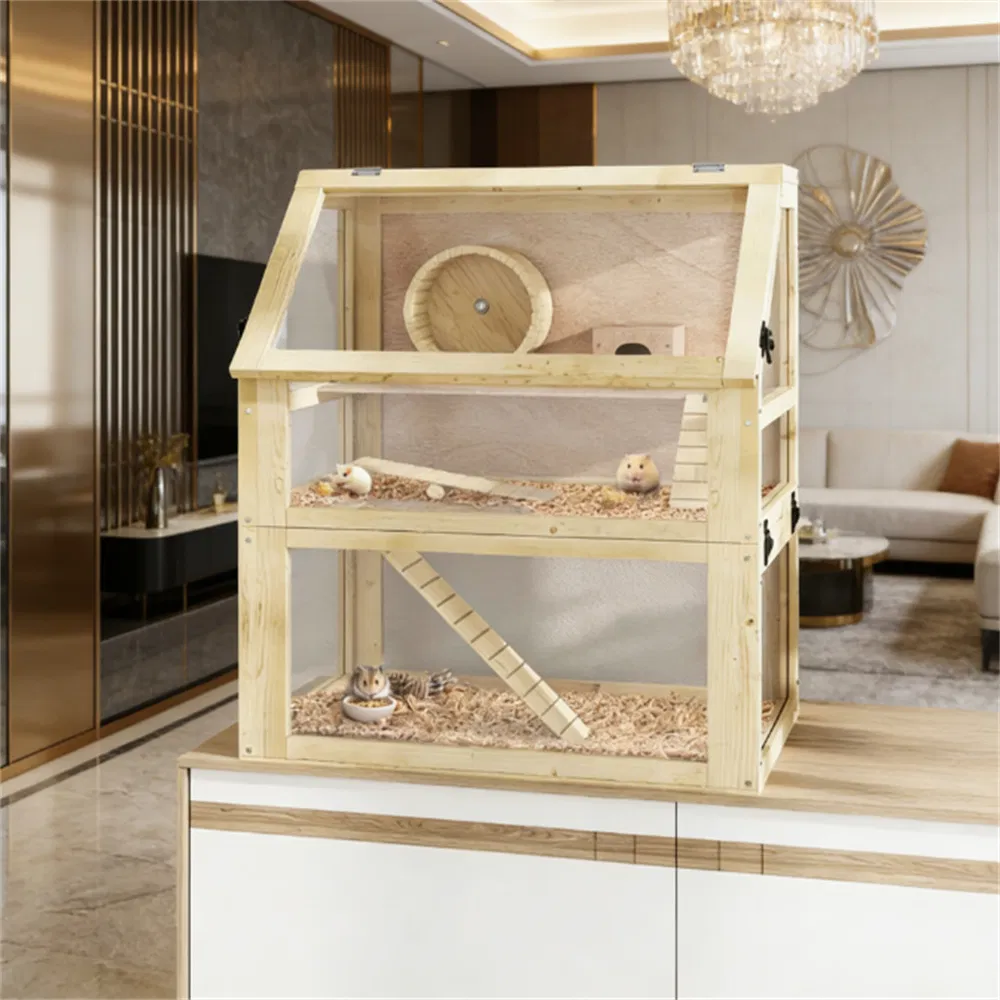 Hamster cage, small animal$139.99View on Mallflare
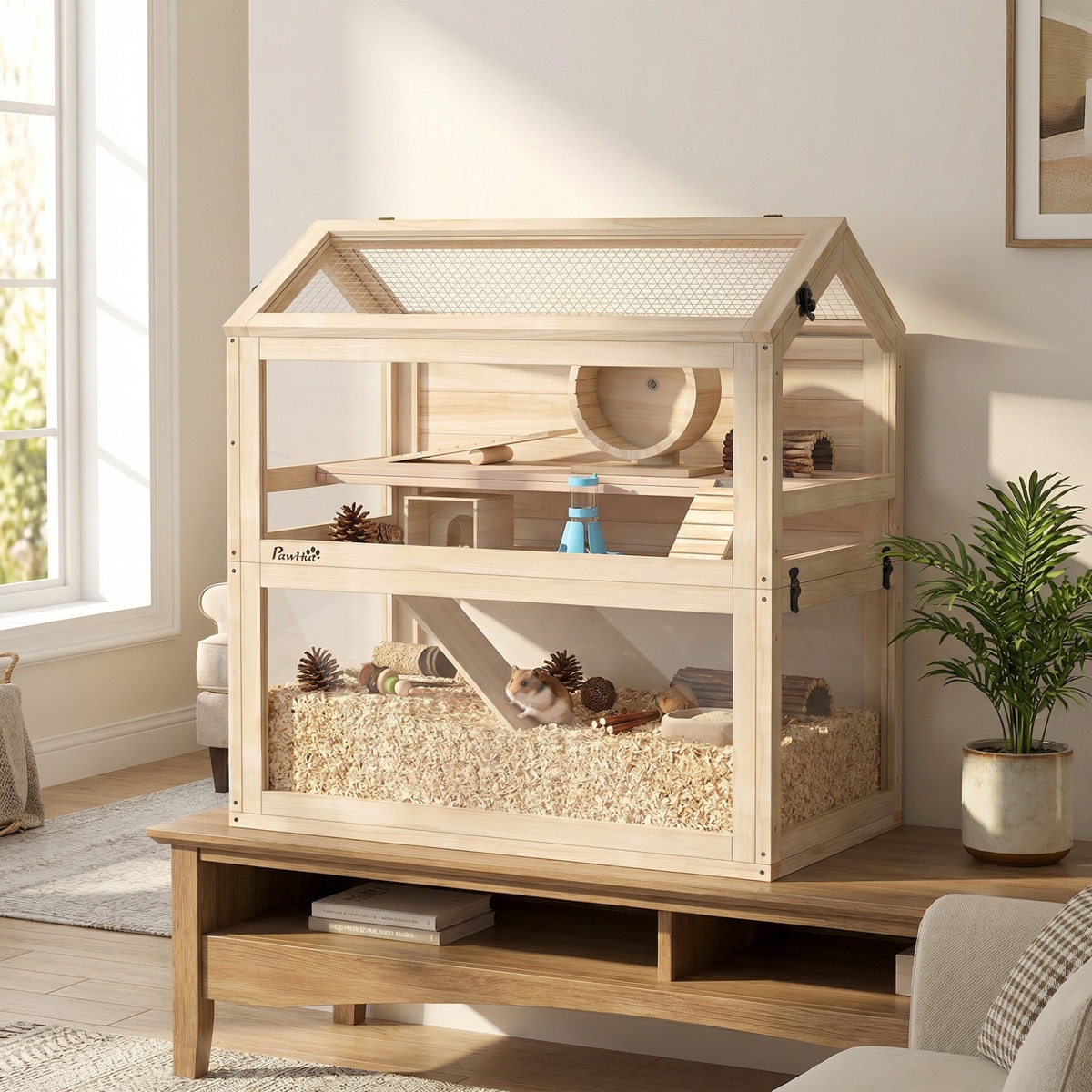 Wooden Hamster Cage, 3-Tier Small Animal with Hut, Seesaw, Ramps, Exercise Wheel, Acrylic Panel and Bottom Tray$143.99View on Mallflare
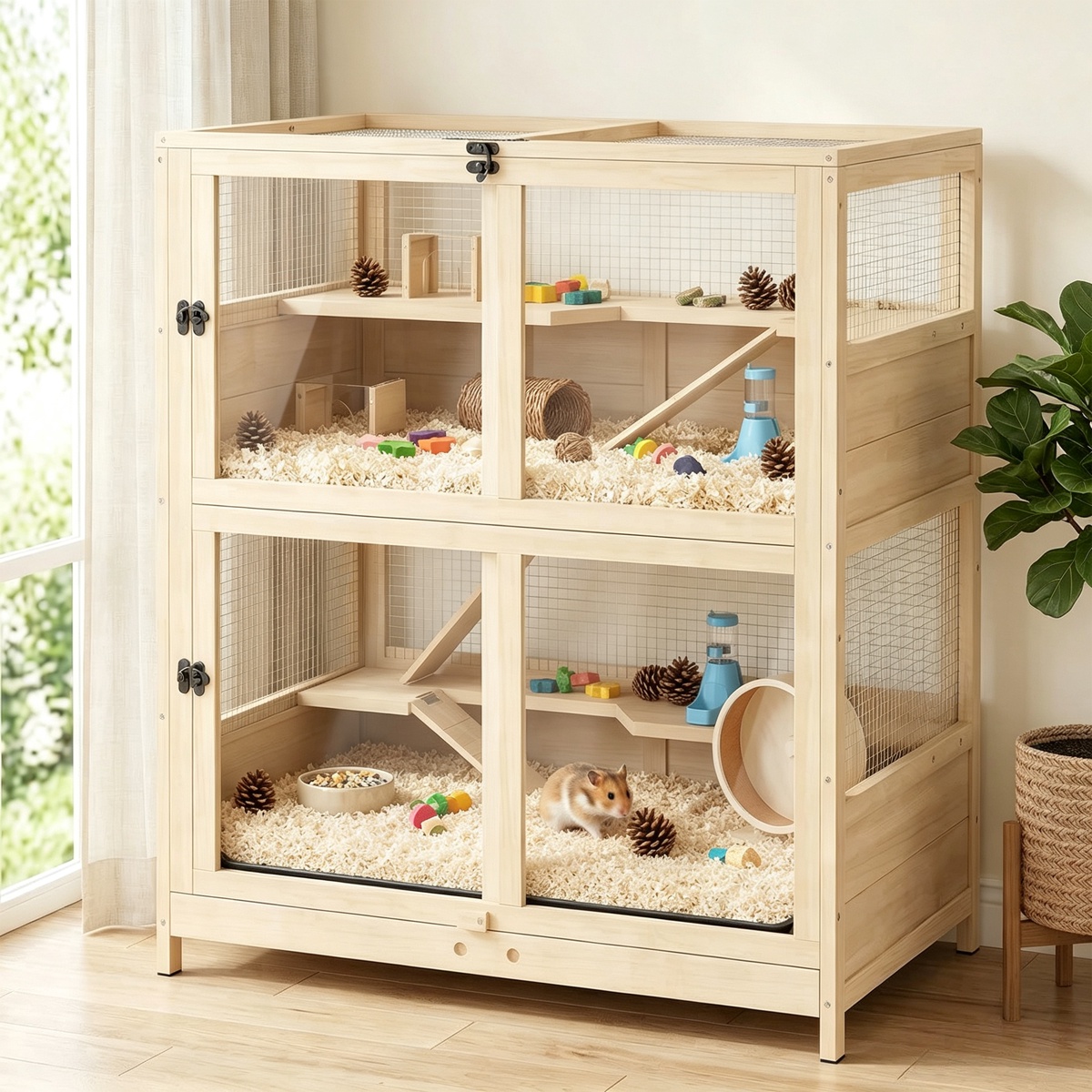 Wooden Hamster Cage, 4 Tier Small Animal with Mesh Flip Roof, Pull-Out Tray, Huts, Seesaws, Ramps and Water Bottles$156.99View on Mallflare
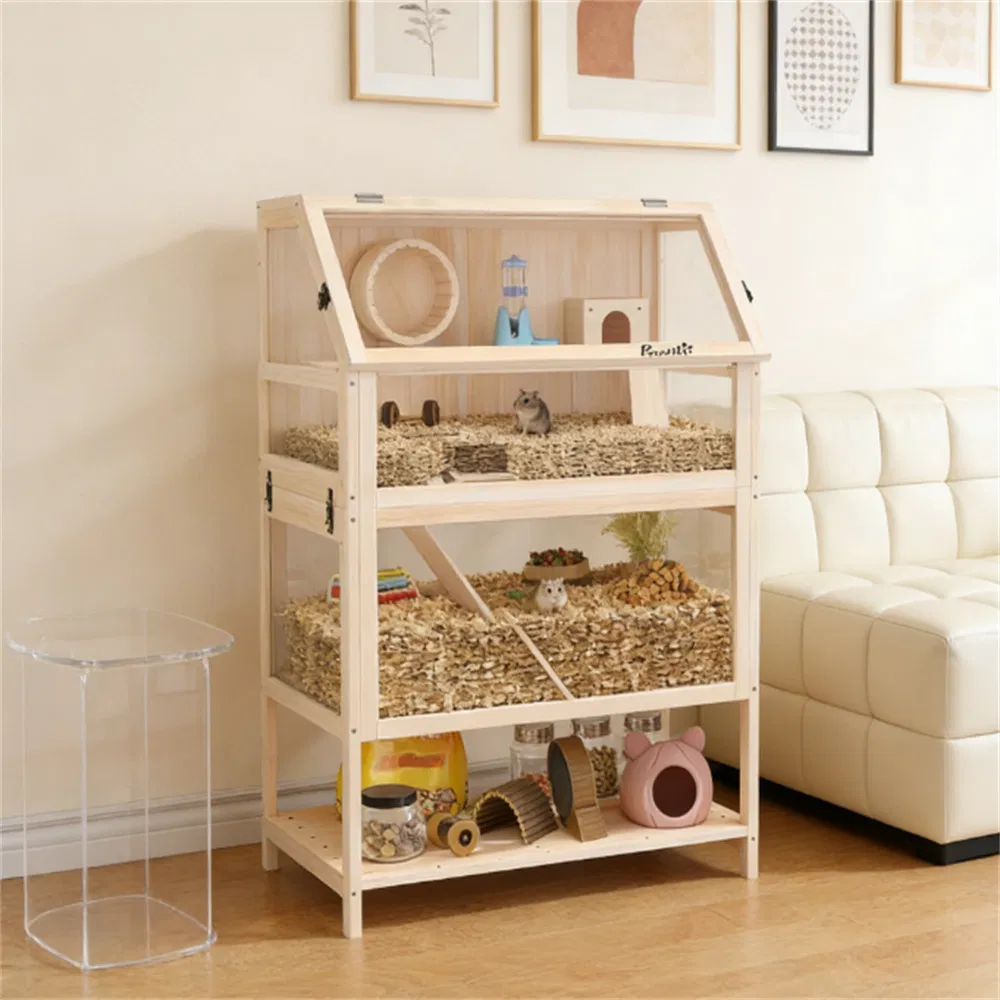 Wooden hamster cage with storage rack, small animal$277.99View on Mallflare
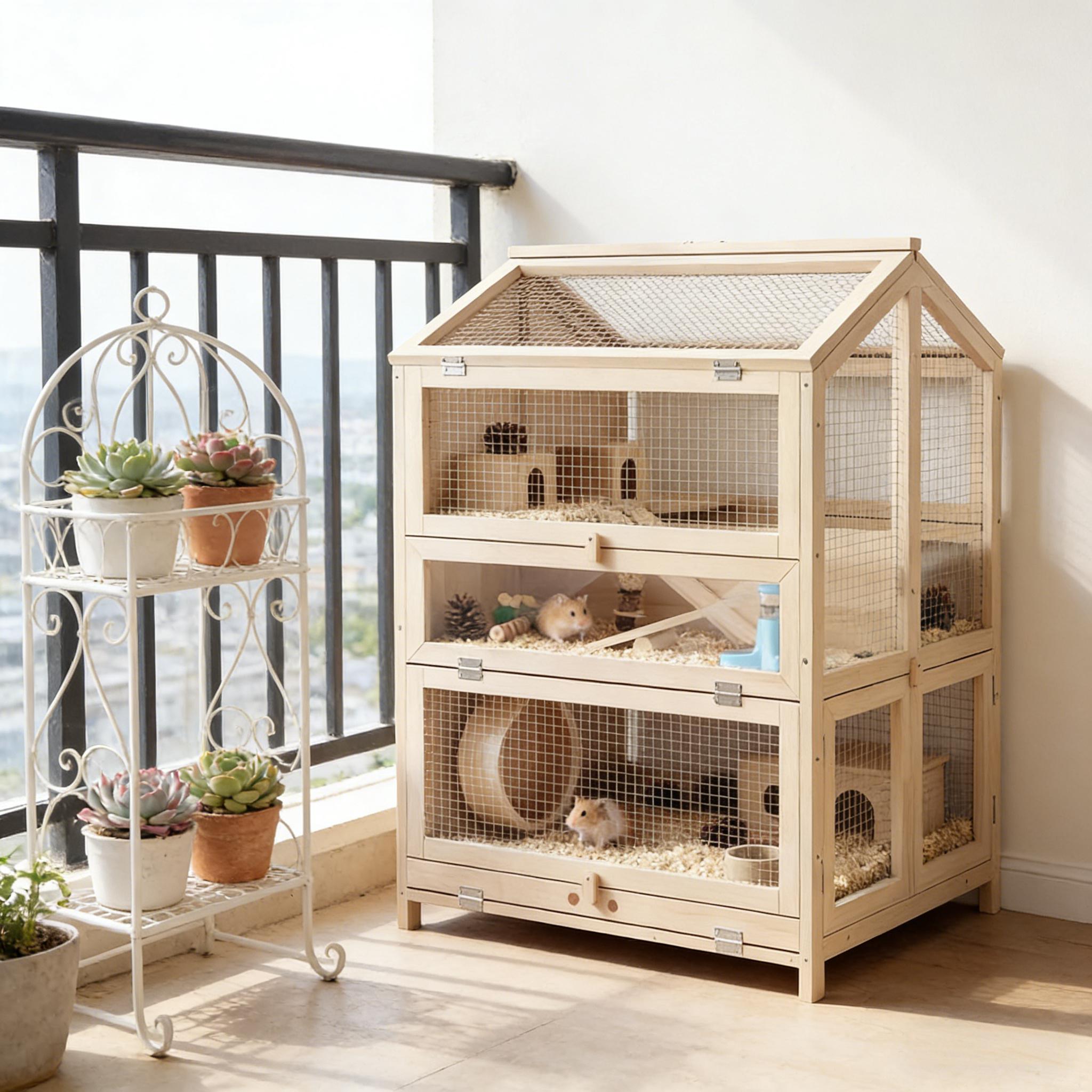 Small Animals Cage,3 Tier Pet Cage,Wooden Hamster Cage$295.99View on Mallflare
Highlights
- Unbroken floor area drives hamster welfare more than tier count: a 5-tier 18.5-inch cage still offers a base footprint of only about 18.5 by 11.5 inches, below the 24 by 12 inch minimum for dwarf hamsters.
- Wire spacing is the critical safety metric: 0.4 inch (1 cm) or tighter bar spacing is required for dwarf hamsters and robovorskis, while 0.5 inch suits Syrians; wider spacing lets dwarfs escape.
- Tube diameter determines species fit: 1.75 to 2 inch internal diameter tubes work for dwarfs, but Syrians need 2.5 inch or wider or they will wedge and injure themselves.
- Base pan depth matters for bedding: a 2 to 3 inch deep pan supports only spot cleaning, while 5 to 6 inches of bedding for burrowing requires a base pan of at least 5 inches or a bin-style cage.
Best use cases
- Best fit: dwarf hamster (Roborovski, Campbell's, winter white) in a single-level cage with at least 24 by 12 inches of unbroken floor and 0.4 inch bar spacing — skip multi-tier tube cages that fragment the floor.
- Best fit: Syrian hamster needs a single-level enclosure with 0.5 inch bar spacing and at least 30 by 15 inches of floor; skip 18.5-inch 5-tier cages because Syrians outgrow tubes and the base is too small.
- Best fit: temporary or travel use — a 2-level 18.5-inch cage with carry handle works for vet trips and introductions; skip it as a permanent home for any species.
- Best fit: gerbils and mice tolerate multi-tier tube systems better than hamsters; choose a 5-tier unit only if tube diameter is at least 2 inches and bar spacing is 0.4 inch or tighter.
Buying tips
- Measure the base pan before buying: for dwarfs, base should be at least 24 by 12 inches (288 sq in); for Syrians, at least 30 by 15 inches (450 sq in); tier count does not add floor area.
- Check bar spacing: 0.4 inch (1 cm) or less for dwarfs and robovorskis, 0.5 inch for Syrians; anything over 0.5 inch fails as a hamster cage regardless of height.
- Match tube internal diameter: 1.75 to 2 inch for dwarfs, 2.5 inch or more for Syrians; narrow tubes cause wedging and are a common injury source.
- Prefer metal wire with powder coating and a solid plastic base over all-plastic modular tubes: metal bars give ventilation and chew resistance, while solid bases hold 5 to 6 inches of bedding for burrowing.
Specs
| Bar Spacing | 0.4 in (dwarf) / 0.5 in (Syrian) |
|---|---|
| Min Floor Area | 288 sq in dwarf / 450 sq in Syrian |
| Tube Diameter | 1.75-2 in dwarf / 2.5 in+ Syrian |
| Base Pan Depth | 5-6 in for burrowing bedding |
Related searches
What to check before buying
- Measure your table or stand footprint: a 5-tier 18.5-inch cage needs roughly 19 by 12 inches of surface, while a 23-inch extra-large model needs about 23 by 14 inches.
- Set a bedding depth target first: for 5 to 6 inches of burrowable bedding, choose a base pan at least 5 inches deep or a bin cage; shallow 2-inch pans limit enrichment.
- Confirm wheel size fits the species: dwarfs need an 8-inch wheel, Syrians need 11 inches or larger; a wheel that bends the spine is a welfare failure even if it fits the cage.
- Check the room's ambient temperature and drafts: hamsters need 65 to 75 degrees Fahrenheit; avoid placing cages near radiators, air conditioners, or direct sun, which multi-tier plastic cages amplify.
FAQ
Data sources: eBay / Amazon listings and product attribute feeds. Updated Nov 25, 2026.
Some links on this page are affiliate links. If you buy after clicking one, we may earn a commission at no extra cost to you. This does not change which products appear here or their order. Affiliate disclosure.