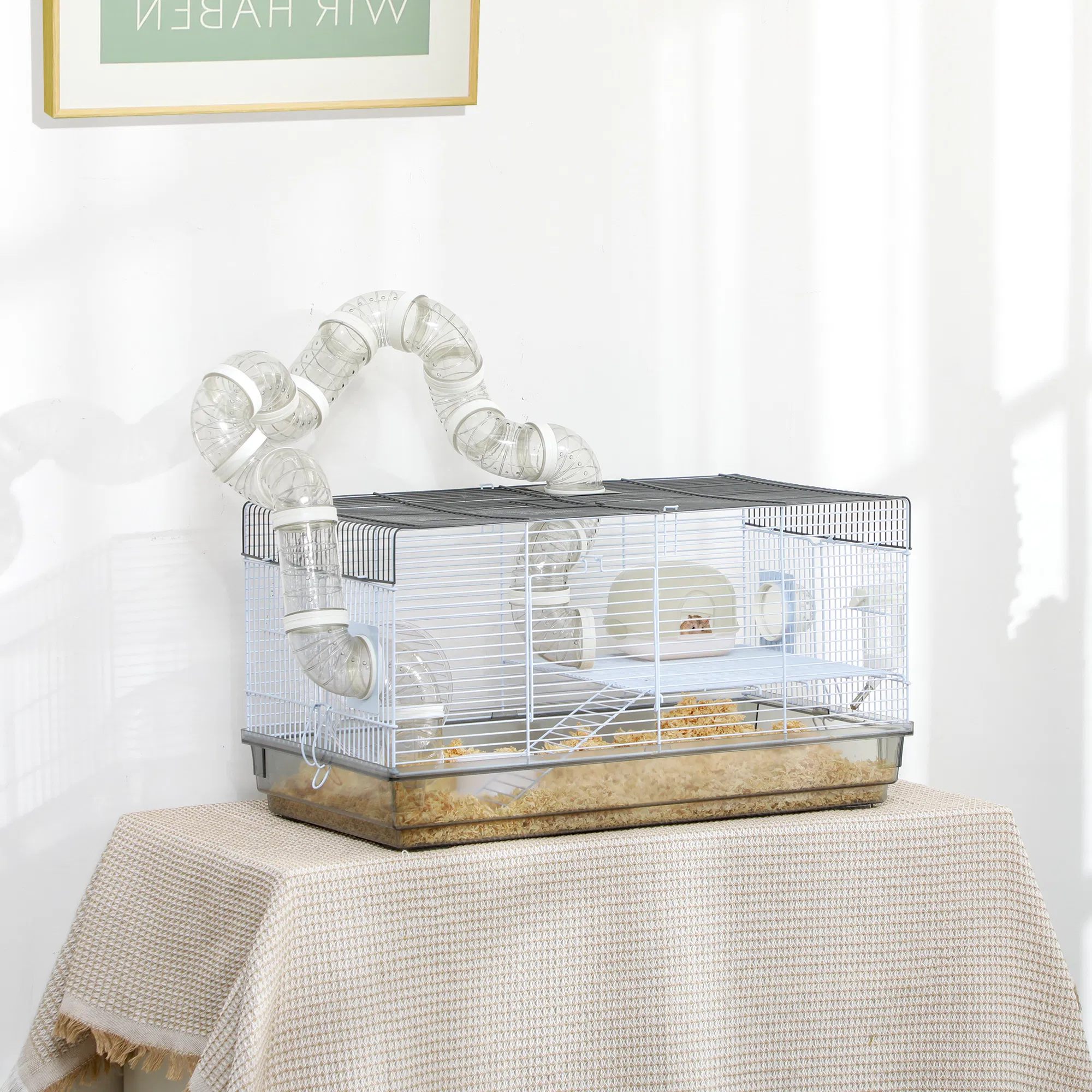

Photos from current listings. Actual item, color, and included accessories may vary.
Gerbil Cage Buying Guide
Gerbil cages are small-animal habitats where wire spacing and floor area determine whether gerbils stay contained and whether they can express natural digging and burrowing behavior. The core trade-off is between open wire-bar cages that maximize ventilation but limit deep bedding, and solid-walled or wooden enclosures that support deep substrate but require careful ventilation planning. Choose a cage with bar spacing of 0.5 inch or less and a footprint of at least 24 by 12 inches per pair; anything smaller is a temporary carrier, not a permanent home.
Key takeaways
- Bar spacing of 0.5 inch (12.7 mm) or less is the containment threshold for adult gerbils; 0.75-inch spacing lets juveniles squeeze through and adults escape.
- Minimum permanent floor area for a pair is 24 by 12 inches (288 sq in); multi-tier tube cages add vertical exercise but do not replace horizontal running space.
- Solid-wall or wooden enclosures support 6-8 inches of bedding for burrowing, but need mesh ventilation panels covering at least 30% of the wall area.
At a glance
- Category
- Pet Crates, Kennels & Playpens
- Last updated
- Nov 28, 2026
Current offers
Highlights
- Bar spacing of 0.5 inch (12.7 mm) or less is the containment threshold for adult gerbils; 0.75-inch spacing lets juveniles squeeze through and adults escape.
- Minimum permanent floor area for a pair is 24 by 12 inches (288 sq in); multi-tier tube cages add vertical exercise but do not replace horizontal running space.
- Solid-wall or wooden enclosures support 6-8 inches of bedding for burrowing, but need mesh ventilation panels covering at least 30% of the wall area.
- Gerbil-safe construction uses powder-coated wire (non-toxic, rust-resistant) and untreated kiln-dried wood; galvanized mesh without coating can corrode from urine.
Best use cases
- Best fit: a pair of adult gerbils in a 24-by-12-inch wire cage with 0.5-inch spacing and a solid base tray for 4-6 inches of bedding; skip multi-tier tube cages as the sole habitat because tubes cannot hold deep substrate.
- Best fit: a wooden or solid-wall enclosure with a mesh top and side vents for owners who want deep burrowing substrate; pair it with an external playpen for out-of-cage exercise, and skip open wire cages if the room drops below 60°F.
- Wrong fit: 18.5-inch five-tier tube cages sold as gerbil habitats; these are below the 288 sq in floor-area minimum and suit dwarf hamsters or temporary transport only.
- Wrong fit: aquariums without a mesh lid; gerbils jump and need cross-ventilation, so a solid glass tank traps ammonia and humidity unless fitted with a wire topper.
Buying tips
- Measure the base tray, not the roof: a cage advertised as 23 by 13 inches often has a 22-by-11-inch tray, which drops below the 288 sq in pair minimum.
- Match bar spacing to gerbil age: 0.4-inch (10 mm) spacing contains pups, 0.5-inch contains adults; never exceed 0.5 inch for any gerbil life stage.
- Choose powder-coated wire over bare galvanized mesh; urine accelerates zinc corrosion, and flaking coatings expose sharp edges.
- For wooden enclosures, specify kiln-dried pine or aspen, not cedar or treated lumber; cedar oils and pressure-treatment chemicals are respiratory irritants.
Specs
| Bar Spacing | 0.5 in max (0.4 in for pups) |
|---|---|
| Min Floor Area (pair) | 288 sq in (24 x 12 in) |
| Substrate Depth | 4-6 in solid-base bedding |
| Ventilation | Wire mesh or mesh-topped solid walls |
Related searches
What to check before buying
- Floor footprint: confirm the interior base measures at least 24 by 12 inches (288 sq in) for a pair; single gerbils need at least 180 sq in.
- Bar spacing: verify 0.5 inch or less on all sides, including the top, before introducing gerbils.
- Substrate depth: confirm the base tray holds 4-6 inches of bedding without spilling through bars; solid trays or deep pans are required.
- Room environment: place the cage away from drafts and direct sun, with ambient temperature between 65-75°F and low humidity; gerbils are prone to heat stress above 80°F.
FAQ
Data sources: eBay / Amazon listings and product attribute feeds. Updated Nov 28, 2026.
Some links on this page are affiliate links. If you buy after clicking one, we may earn a commission at no extra cost to you. This does not change which products appear here or their order. Affiliate disclosure.