
Photos from current listings. Actual item, color, and included accessories may vary.
Durable Dog Crate Buying Guide
A durable dog crate is a containment and safety enclosure built to withstand pawing, chewing, and repeated setup/teardown without warping, bending, or failing latches. The core trade-off is material and weld quality versus portability: heavy-gauge welded steel and reinforced door frames outlast thin wire and plastic, but cost more and weigh more. The decision rule is simple: choose welded steel or aluminum with dual locking latches and a chew-resistant pan for daily or escape-artist use; reserve wire mesh or soft-sided crates for calm, crate-trained dogs and travel.
Median $51.99
Key takeaways
- Welded steel wire crates with 8-10 gauge frames resist bending and chewing far better than spot-welded 12-gauge wire or plastic-shell crates.
- Dual-point door latches (top and bottom) prevent nose-push and paw-lift escapes; single slide latches are the most common failure point on budget crates.
- Aluminum crates weigh roughly 40-50% less than steel of equal strength but cost more and dent rather than bend under impact.
At a glance
- Category
- Pet Crates, Kennels & Playpens
- Last updated
- Nov 28, 2026
Current offers
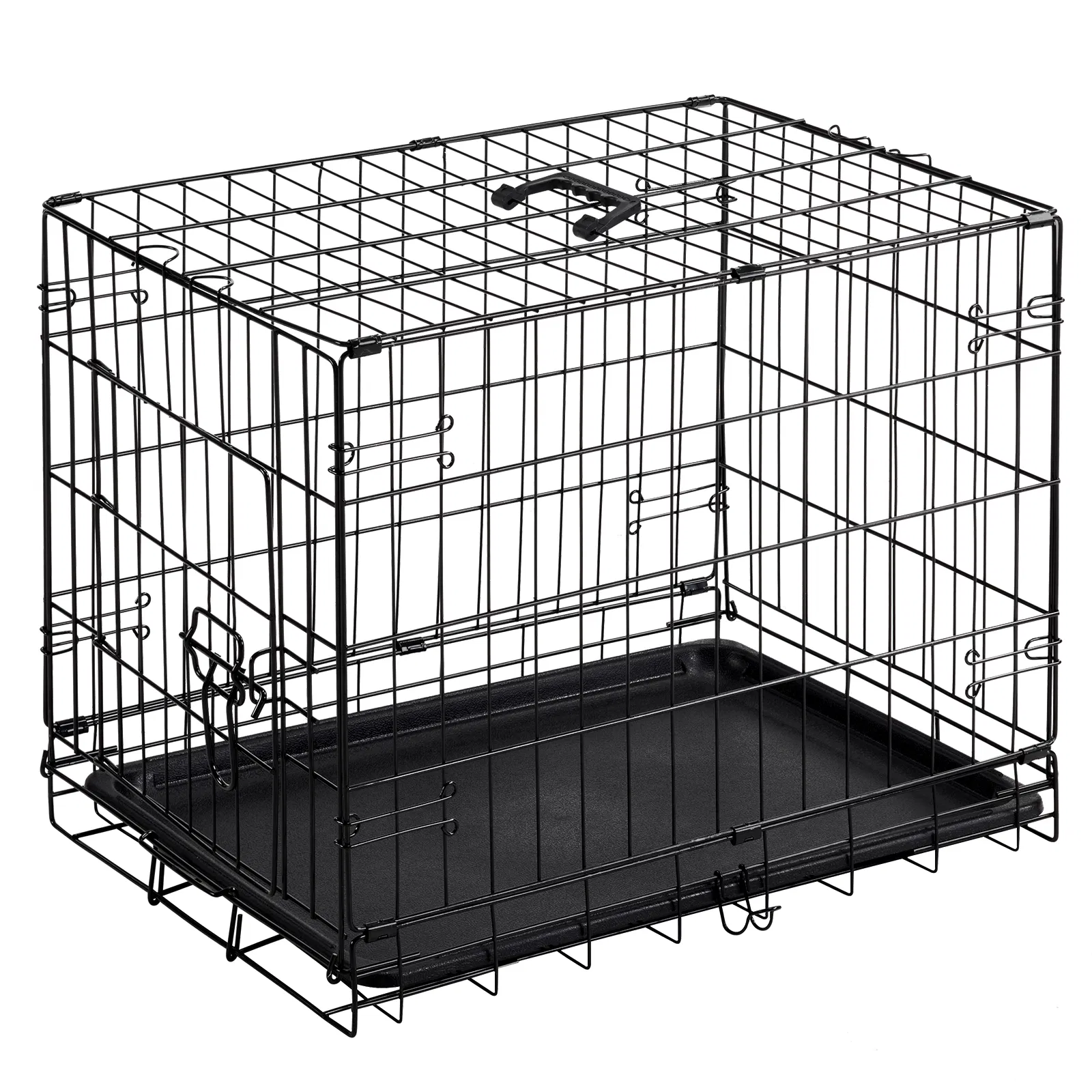 24 inch Single door Dog Cage - durable metal pet kennel, secure lock, collapsible design, removable tray for easy cleaning, portable puppy$45.99View on Mallflare
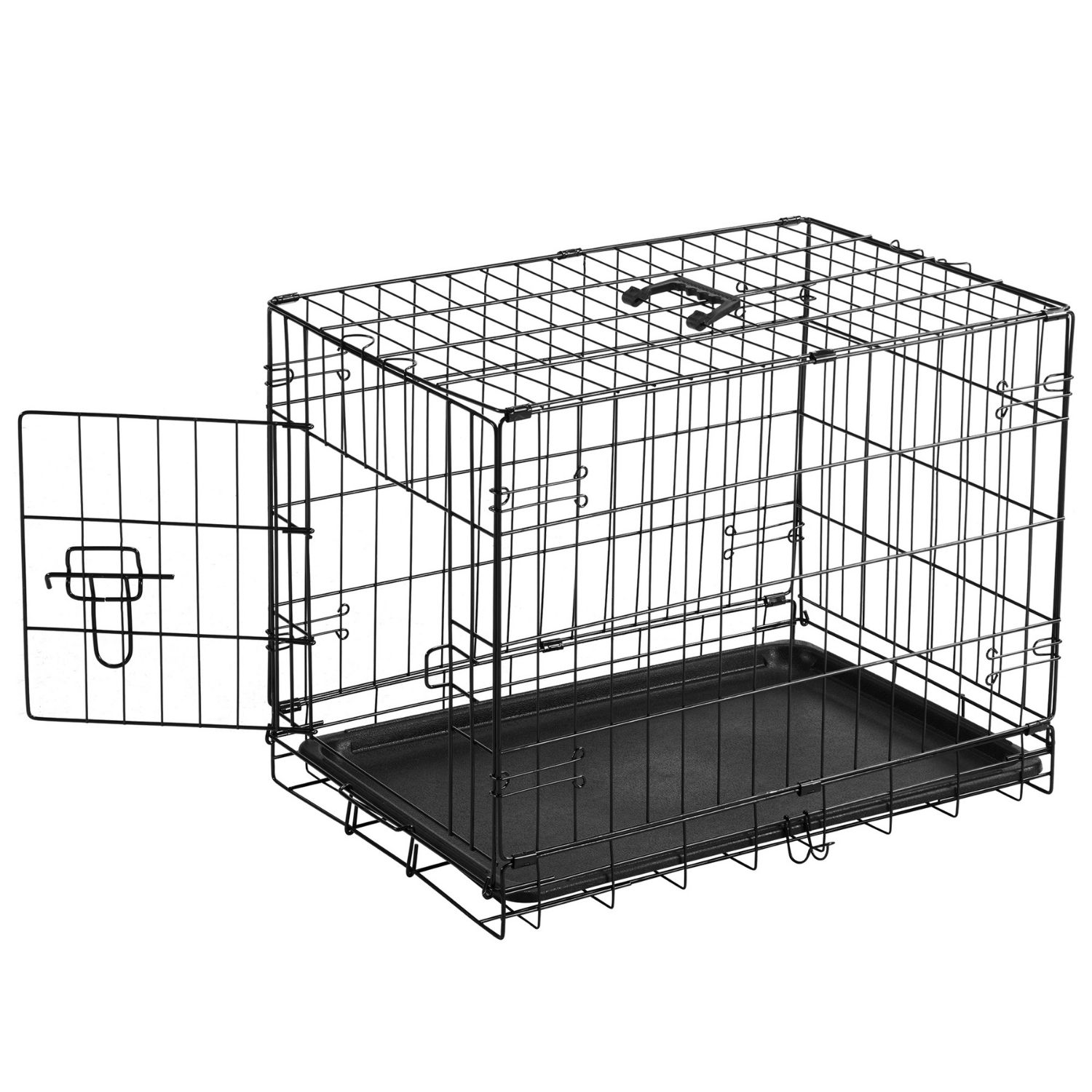 Single Door Dog Cage - Durable Metal Pet Kennel, Secure Lock, Collapsible Design, Removable Tray For Easy Cleaning, Portable Puppy$51.99View on Mallflare
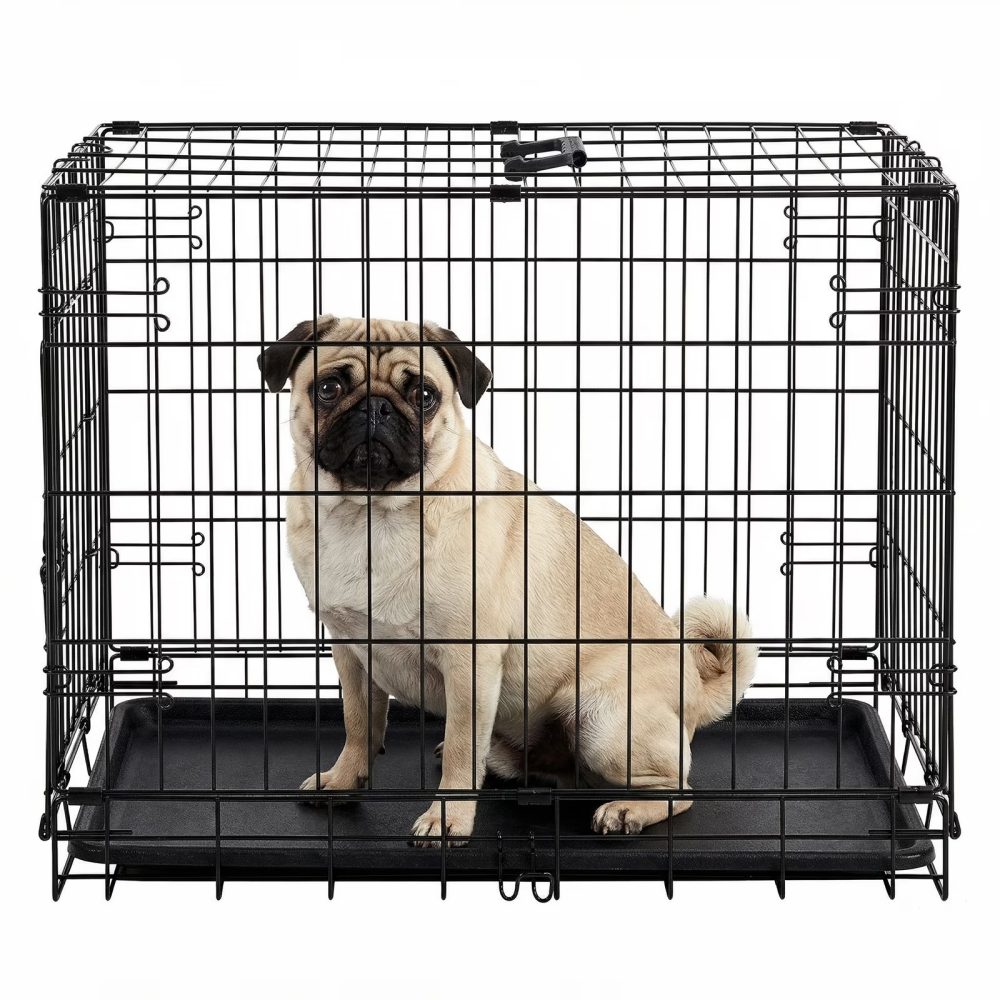 24/30 Inch Dog Crate, Black - Durable Metal Puppy Cage with Removable Tray, Collapsible Kennel for Small Medium Dogs, Easy Clean$79.99View on Mallflare
Highlights
- Welded steel wire crates with 8-10 gauge frames resist bending and chewing far better than spot-welded 12-gauge wire or plastic-shell crates.
- Dual-point door latches (top and bottom) prevent nose-push and paw-lift escapes; single slide latches are the most common failure point on budget crates.
- Aluminum crates weigh roughly 40-50% less than steel of equal strength but cost more and dent rather than bend under impact.
- Chew-resistant pans are metal or heavy-gauge ABS; thin plastic pans crack under diggers and are not a durability feature.
Best use cases
- Best fit: high-energy or escape-prone dogs (Husky, Shepherd, Malinois) need a welded steel crate with dual latches and metal pan — skip soft-sided and plastic crates entirely.
- Best fit: daily home containment for crate-trained dogs — a 10-gauge welded wire crate with divider panel and 1-2 inch bar spacing suits most medium-to-large breeds.
- Wrong fit: car travel or airline use — durable home crates are not crash-tested; choose a crash-tested travel crate or carrier instead of a heavy steel home crate.
- Best fit: apartment or frequent reconfiguration — aluminum or fold-flat steel crates with drop-pin assembly save space and setup time versus bolt-together steel.
Buying tips
- Measure your dog's length nose-to-tail-base plus 2-4 inches and height at head plus 2-4 inches; crate length should let the dog stand, turn, and lie flat.
- Bar spacing must be 1-1.5 inches for small dogs, 1.5-2 inches for medium, and 2-2.5 inches for large breeds to prevent head trapping and jaw getting stuck.
- Look for 8-10 gauge wire and full perimeter welds at every intersection; spot welds at corners only are the first failure point under pawing.
- Choose stainless or powder-coated steel over chrome-plated wire; chrome flakes and rusts at weld points, while powder coat hides minor corrosion and is chew-resistant.
Specs
| Frame Material | Welded steel / aluminum / plastic shell |
|---|---|
| Wire Gauge | 8-10 ga durable; 12+ ga light-duty |
| Door Latch | Dual-point latch vs single slide |
| Bar Spacing | 1-1.5 in small / 2-2.5 in large |
Related searches
What to check before buying
- Measure crate footprint against room or vehicle space and confirm door swing clearance — a 48-inch crate needs at least 52 inches of wall space plus door arc.
- Verify floor type: metal pans need a mat or bedding to prevent slipping, and wire floors require a solid tray insert for paw comfort and hygiene.
- Confirm assembly method (fold-flat, drop-pin, or bolt-together) and that all tools or pins are included; bolt-together crates need a wrench and are not quick to move.
- Check latch style and bar spacing against your dog's size and escape history; dual latches and 1.5-inch spacing are the minimum for medium chewers.
FAQ
Data sources: eBay / Amazon listings and product attribute feeds. Updated Nov 28, 2026.
Some links on this page are affiliate links. If you buy after clicking one, we may earn a commission at no extra cost to you. This does not change which products appear here or their order. Affiliate disclosure.