
Photos from current listings. Actual item, color, and included accessories may vary.
Durable Dog Cage Buying Guide
A durable dog cage is a metal containment system defined by wire gauge, weld quality, latch security, and frame rigidity—the trade-off is between thin, collapsible wire that flexes and sags versus heavier-gauge steel with reinforced joints that resists escape and deformation. The clear decision rule: buy 8- to 10-gauge wire with full-perimeter welds and a two-point latch for strong or anxious dogs; accept 11- to 12-gauge single-door collapsible crates only for calm, small-to-medium breeds.
Median $51.99
Key takeaways
- Wire gauge is the primary durability metric: 8- to 10-gauge steel resists bending from 50+ lb dogs, while 11- to 12-gauge is common on light-duty collapsible crates and deforms under sustained pressure.
- Weld quality separates tiers: full-perimeter spot welds at every wire intersection prevent joint failure, whereas partial or tack welds on budget cages are the first point of breakage.
- Latch design determines escape resistance: a two-point or slide-bolt latch with a secondary locking clip holds against pawing and nose-pushing; single friction latches are the weakest link on entry-level cages.
At a glance
- Category
- Pet Crates, Kennels & Playpens
- Last updated
- Nov 28, 2026
Current offers
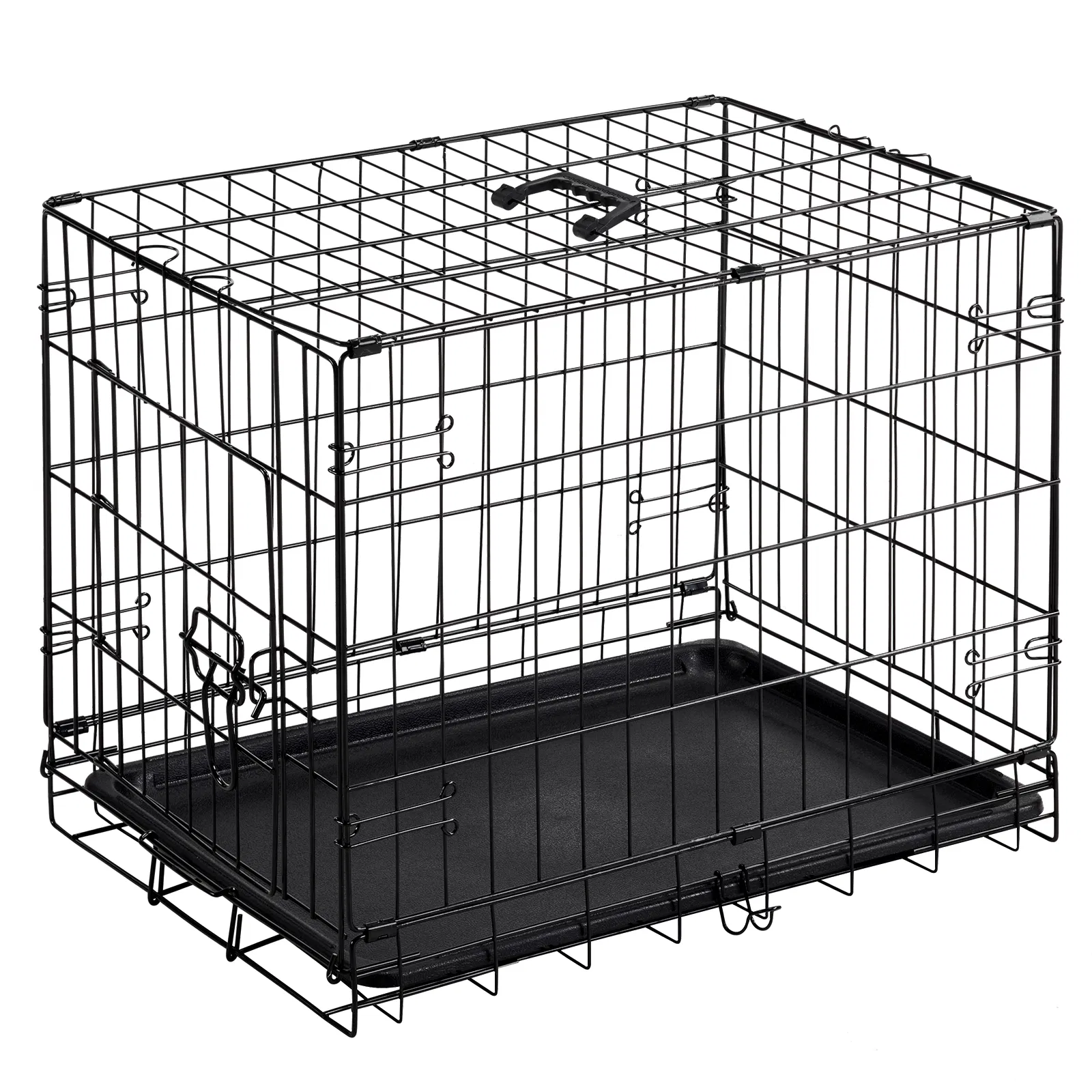 24 inch Single door Dog Cage - durable metal pet kennel, secure lock, collapsible design, removable tray for easy cleaning, portable puppy$45.99View on Mallflare
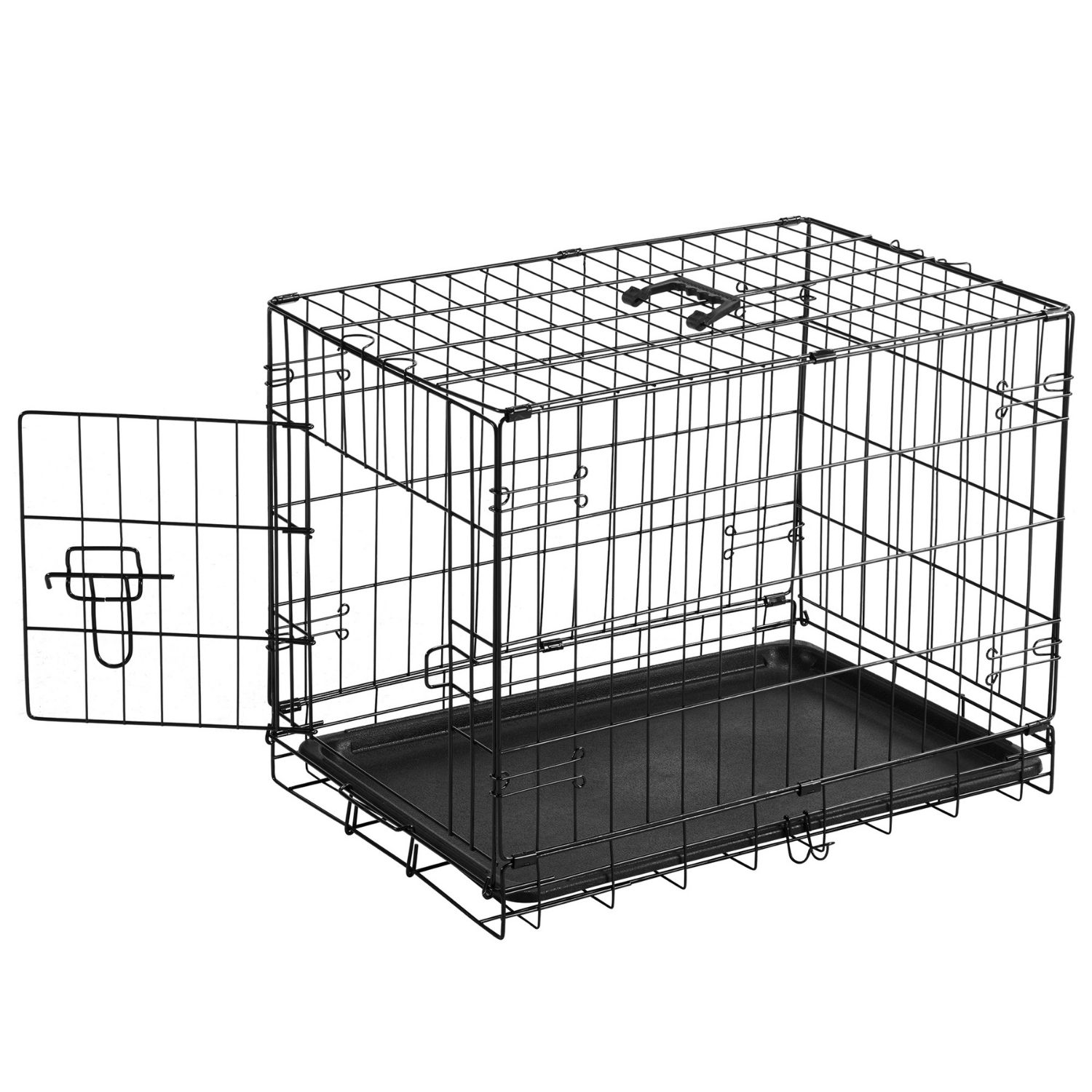 Single Door Dog Cage - Durable Metal Pet Kennel, Secure Lock, Collapsible Design, Removable Tray For Easy Cleaning, Portable Puppy$51.99View on Mallflare
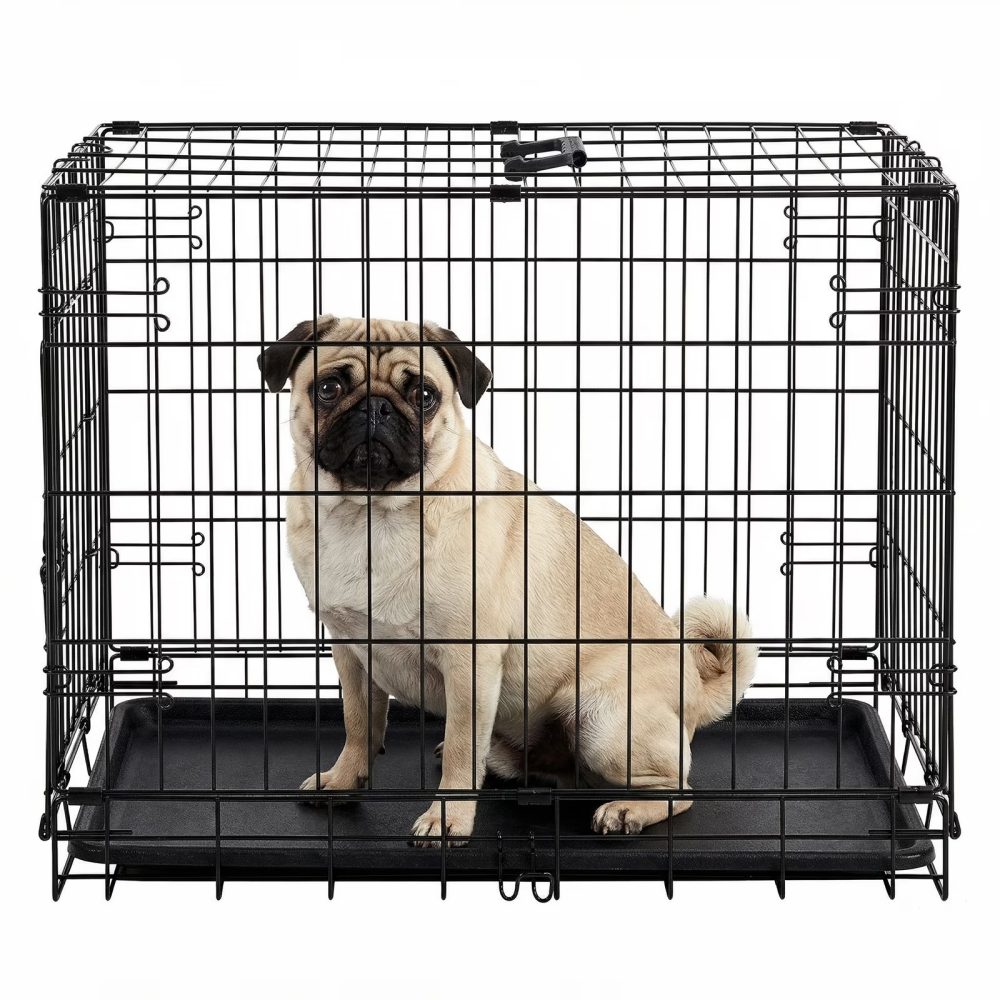 24/30 Inch Dog Crate, Black - Durable Metal Puppy Cage with Removable Tray, Collapsible Kennel for Small Medium Dogs, Easy Clean$79.99View on Mallflare
Highlights
- Wire gauge is the primary durability metric: 8- to 10-gauge steel resists bending from 50+ lb dogs, while 11- to 12-gauge is common on light-duty collapsible crates and deforms under sustained pressure.
- Weld quality separates tiers: full-perimeter spot welds at every wire intersection prevent joint failure, whereas partial or tack welds on budget cages are the first point of breakage.
- Latch design determines escape resistance: a two-point or slide-bolt latch with a secondary locking clip holds against pawing and nose-pushing; single friction latches are the weakest link on entry-level cages.
- Collapsible vs. fixed-weld frames: collapsible models use hinge pins and folded wire panels for portability but introduce play at joints; fixed-weld cages are more rigid and better for permanent indoor or outdoor setups.
Best use cases
- Best fit: strong chewers or escape artists (Husky, Shepherd, Pit-mix) — choose a fixed-weld 8- to 10-gauge cage with two-point latch and no plastic tray edges exposed to teeth; skip thin collapsible 12-gauge crates.
- Best fit: apartment or travel use with a calm small-to-medium dog — a collapsible 11- to 12-gauge single-door cage with removable tray is adequate and portable; skip heavy fixed-weld models that are hard to move.
- Best fit: outdoor or garage kennel for medium breeds — pick a galvanized or powder-coated fixed-weld cage rated for the dog's adult weight; wrong fit is an indoor collapsible crate with bare welds that rusts and flexes outdoors.
Buying tips
- Size by adult height and length, not weight alone: cage length should be 1.5× the dog's nose-to-tail-base length, and height 3–4 inches above standing head height, or the dog will be cramped and push at welds.
- Match wire gauge to dog strength: 8- to 10-gauge for dogs over 50 lb or known chewers, 11- to 12-gauge only for calm dogs under 30 lb; thinner wire flexes and fatigues at welds.
- Choose powder-coated or galvanized steel over bare zinc-plated wire for outdoor or humid environments; coating thickness and coverage at weld joints determines rust resistance.
- Prefer cages with a removable metal or reinforced plastic tray that locks in place; loose trays become chew targets and allow bedding to be pulled through the floor wire.
Specs
| Wire Gauge | 8–10 ga heavy-duty / 11–12 ga light-duty |
|---|---|
| Frame Type | Fixed-weld rigid vs collapsible hinged |
| Latch System | Two-point slide-bolt vs single friction |
| Finish | Powder-coated / galvanized vs bare wire |
Related searches
What to check before buying
- Measure your dog's standing height and nose-to-tail-base length, then add 3–4 inches to height and compare against the cage's interior dimensions—not exterior footprint.
- Confirm door latch type and count: look for two-point or slide-bolt latches with a secondary clip; single friction latches are a known escape point.
- For outdoor placement, verify powder-coated or galvanized finish and that floor wire spacing is under 1.5 inches to prevent paw trapping.
- Check that the tray is removable and secured, and that the cage ships with floor protection or rubber feet for indoor floor types (hardwood, tile).
FAQ
Data sources: eBay / Amazon listings and product attribute feeds. Updated Nov 28, 2026.
Some links on this page are affiliate links. If you buy after clicking one, we may earn a commission at no extra cost to you. This does not change which products appear here or their order. Affiliate disclosure.