
Photos from current listings. Actual item, color, and included accessories may vary.
Cat Cage With Litter Box Buying Guide
A cat cage with litter box is a multi-tier wire enclosure that integrates a dedicated litter station, letting you contain cats or kittens for convalescence, introductions, or safe outdoor time without litter scatter. The decisive trade-off is tier height versus footprint: taller multi-level cages add vertical exercise but demand stable, anchored frames and tight bar spacing to prevent escapes. Buy the largest bar-spacing-safe cage your floor plan allows, or choose a solid-panel or playpen-hybrid design for anxious cats who need visual cover.
Median $88.49
Key takeaways
- Wire bar spacing of 1–1.5 inches is the escape threshold: kittens and small breeds squeeze through wider gaps, so verify spacing before tier count.
- Three- and four-tier models trade footprint for height: a 28x18-inch base at 41 inches tall suits one to two cats; a 14x41-inch base at 55 inches tall maximizes vertical run in narrow rooms.
- Detachable modular panels allow the enclosure to be reconfigured as a playpen or split into a crate plus litter annex, extending usable life past kittenhood.
At a glance
- Category
- Pet Crates, Kennels & Playpens
- Last updated
- Nov 28, 2026
Current offers
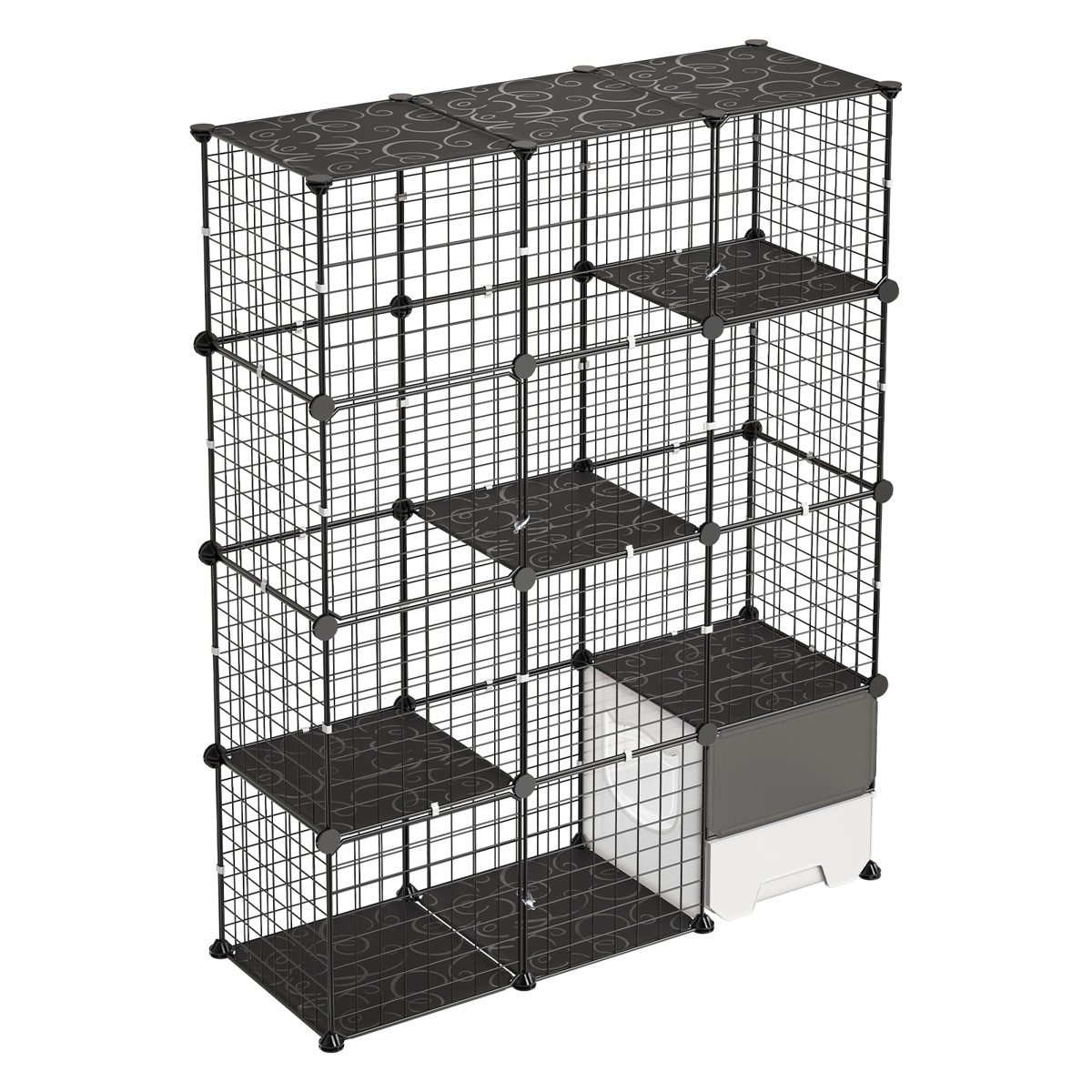 Cat Cage 4-Tier 40.98"x13.98"x55" DIY Cat Playpen With Litter Box, Indoor Enclosure Detachable Metal Wire Kennel Crate, Large Exercise Place For 1-2 Cats, Kittens, Ferret, Small Animals, Black$84.99View on Mallflare
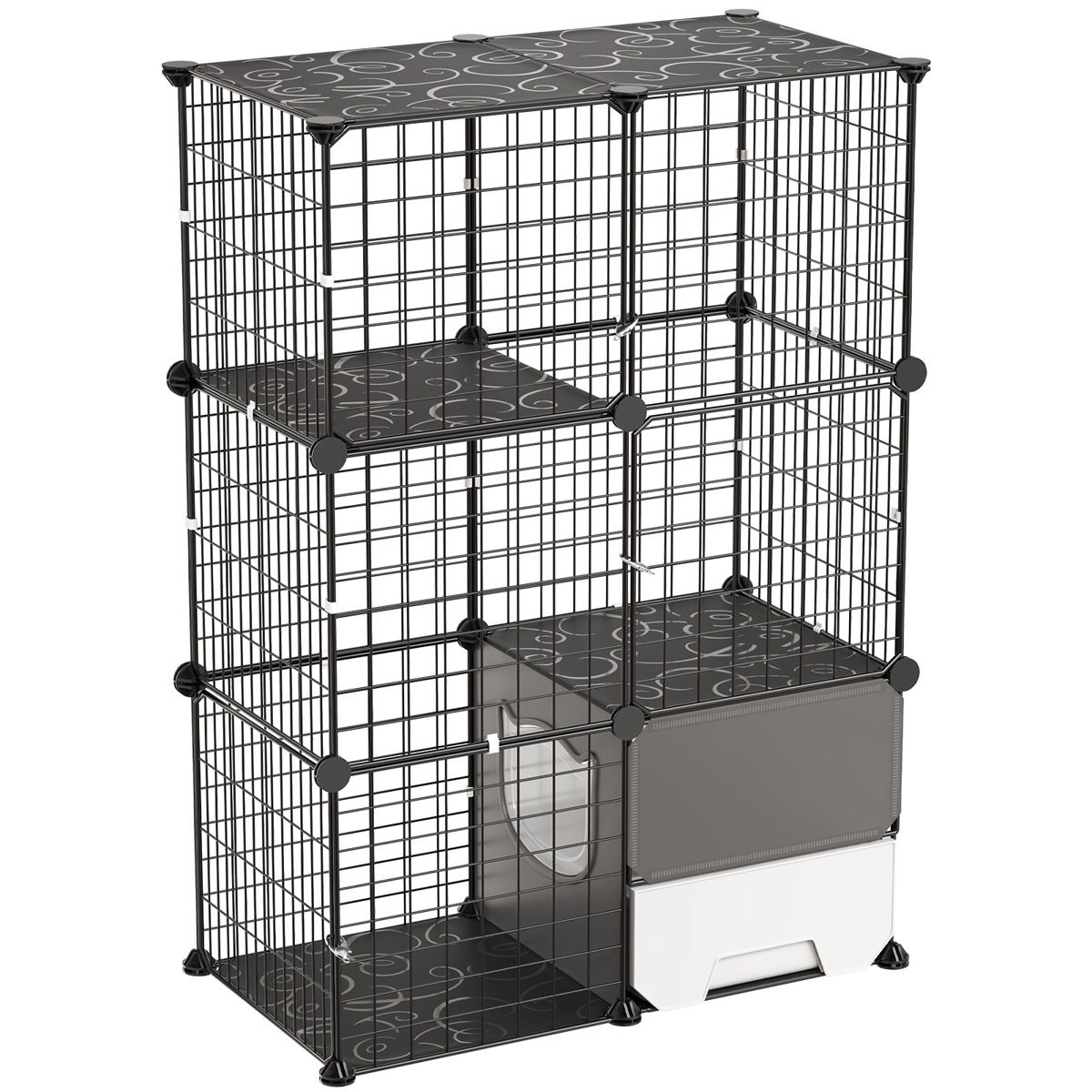 Cat Cage 3-Tier 28"x17.91"x40.98" DIY Cat Playpen With Litter Box, Indoor Enclosure Detachable Metal Wire Kennel Crate, Large Exercise Place Ideal For 1-2 Cats, Kittens & Small Animals, Black$91.99View on Mallflare
Highlights
- Wire bar spacing of 1–1.5 inches is the escape threshold: kittens and small breeds squeeze through wider gaps, so verify spacing before tier count.
- Three- and four-tier models trade footprint for height: a 28x18-inch base at 41 inches tall suits one to two cats; a 14x41-inch base at 55 inches tall maximizes vertical run in narrow rooms.
- Detachable modular panels allow the enclosure to be reconfigured as a playpen or split into a crate plus litter annex, extending usable life past kittenhood.
- Powder-coated steel wire resists urine corrosion better than painted or zinc-plated finishes, and shelf-style litter platforms must be secured to prevent tipping under a jumping cat.
Best use cases
- Pick a 3-tier 28x18-inch-base cage for a single kitten or a pair of small cats in an apartment corner; skip 4-tier towers if ceiling height or narrow doorways block assembly.
- Choose a 4-tier 14x41-inch-base model for a narrow hallway or balcony run where vertical climbing matters more than floor area; skip it for senior or arthritic cats who need ramps, not shelves.
- Use a detachable-panel cage as a temporary introduction pen for a new cat; skip permanent containment for adult cats with free-roam needs beyond recovery or quarantine.
Buying tips
- Match bar spacing to cat size: under 1 inch for kittens under 4 months, 1–1.5 inches for adults; gaps over 1.5 inches allow head and shoulder escape.
- Size the base to the litter box: a standard 24x18-inch box needs a 28x18-inch or larger cage floor, or a shelf-mounted box with a 12-inch clearance above.
- Confirm the litter platform is weight-rated and fixed: a 15-pound cat jumping onto an unsupported wire shelf can tip a light-gauge frame.
- Choose powder-coated steel over chrome or zinc wire for urine resistance, and check that door latches are spring-loaded or double-bolt, not simple hooks.
Specs
| Tier Count | 3-tier vs 4-tier vertical layouts |
|---|---|
| Bar Spacing | 1–1.5 in (kitten-safe under 1 in) |
| Base Footprint | 28x18 in vs 14x41 in narrow |
| Wire Finish | Powder-coated steel vs zinc/chrome |
Related searches
What to check before buying
- Measure the room footprint and ceiling clearance: a 55-inch-tall cage needs assembly space plus 12 inches of overhead clearance for cleaning access.
- Confirm door width fits your litter box: the litter pan must pass through the largest door opening, typically 12–16 inches on tiered wire cages.
- Check floor type: wire cages on hardwood need rubber feet or a mat to prevent scratching and urine staining; carpeted floors need a waterproof tray under the cage.
- Verify the cage ships with a litter tray, ramp, and shelf clips; missing ramps force kittens to jump between tiers and increase fall risk.
FAQ
Data sources: eBay / Amazon listings and product attribute feeds. Updated Nov 28, 2026.
Some links on this page are affiliate links. If you buy after clicking one, we may earn a commission at no extra cost to you. This does not change which products appear here or their order. Affiliate disclosure.