
Photos from current listings. Actual item, color, and included accessories may vary.
Wooden Cat Tree Buying Guide
A wooden cat tree replaces flimsy carpet-wrapped particleboard with solid wood or plywood platforms that resist wobble and scratching over years. The core trade-off is engineered wood (cheap, heavy, swells when wet) versus solid hardwood or birch plywood (stable, repairable, higher cost). Buy solid-wood or void-free plywood structures with through-bolted joints if you want a decade of use; skip MDF-core towers with staples and paper veneer.
Median $179.99
Key takeaways
- Solid rubberwood or birch plywood platforms outlast MDF-core towers because they resist screw pull-out and moisture swelling at seams.
- Through-bolted or cam-lock joints with metal brackets hold multi-level towers rigid; stapled or glued dowel joints loosen under cat jumps.
- Sisal rope wrapped at 6-8 mm diameter on posts provides durable scratching surfaces; thin 3-4 mm twine shreds quickly.
At a glance
- Category
- Pet Beds & Cat Trees
- Last updated
- Nov 27, 2026
Current offers
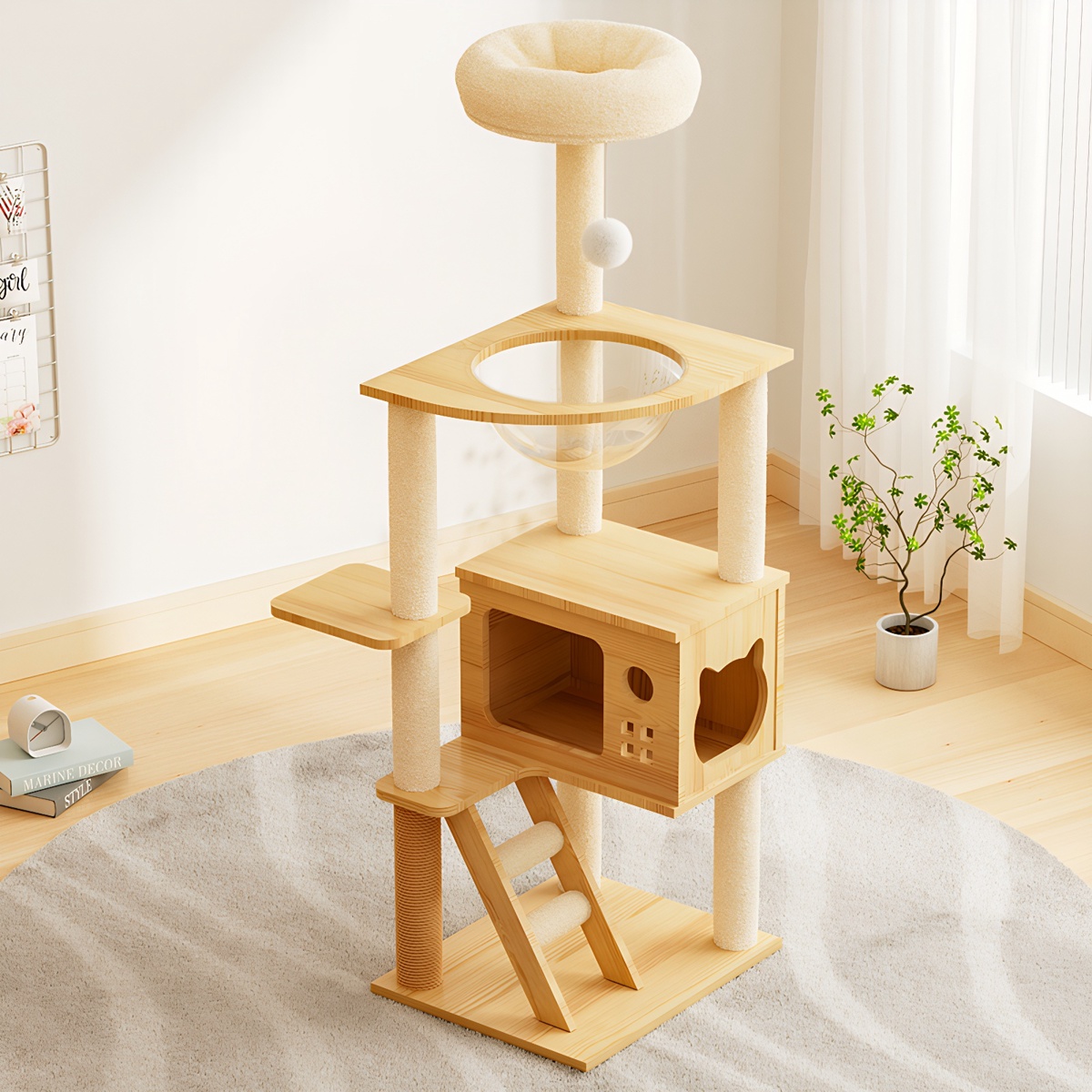 48.8" Modern Cat Tower, Wood Cat Tree for Indoor Cats, Cat Treewith Sisal-Covered Scratching Posts and Top Perch, Cat Condo with Acrylic Hammock for Small Large$84.99View on Mallflare
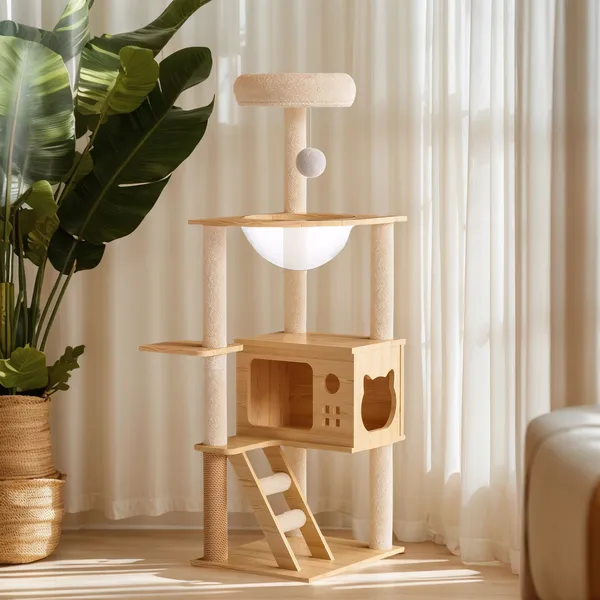 48.8' Modern Cat Tower, Wood Cat Tree For Indoor Cats, Cat Treewith Sisal-Covered Scratching Posts And Top Perch, Cat Condo With Acrylic Hammock For Small Large$93.99View on Mallflare
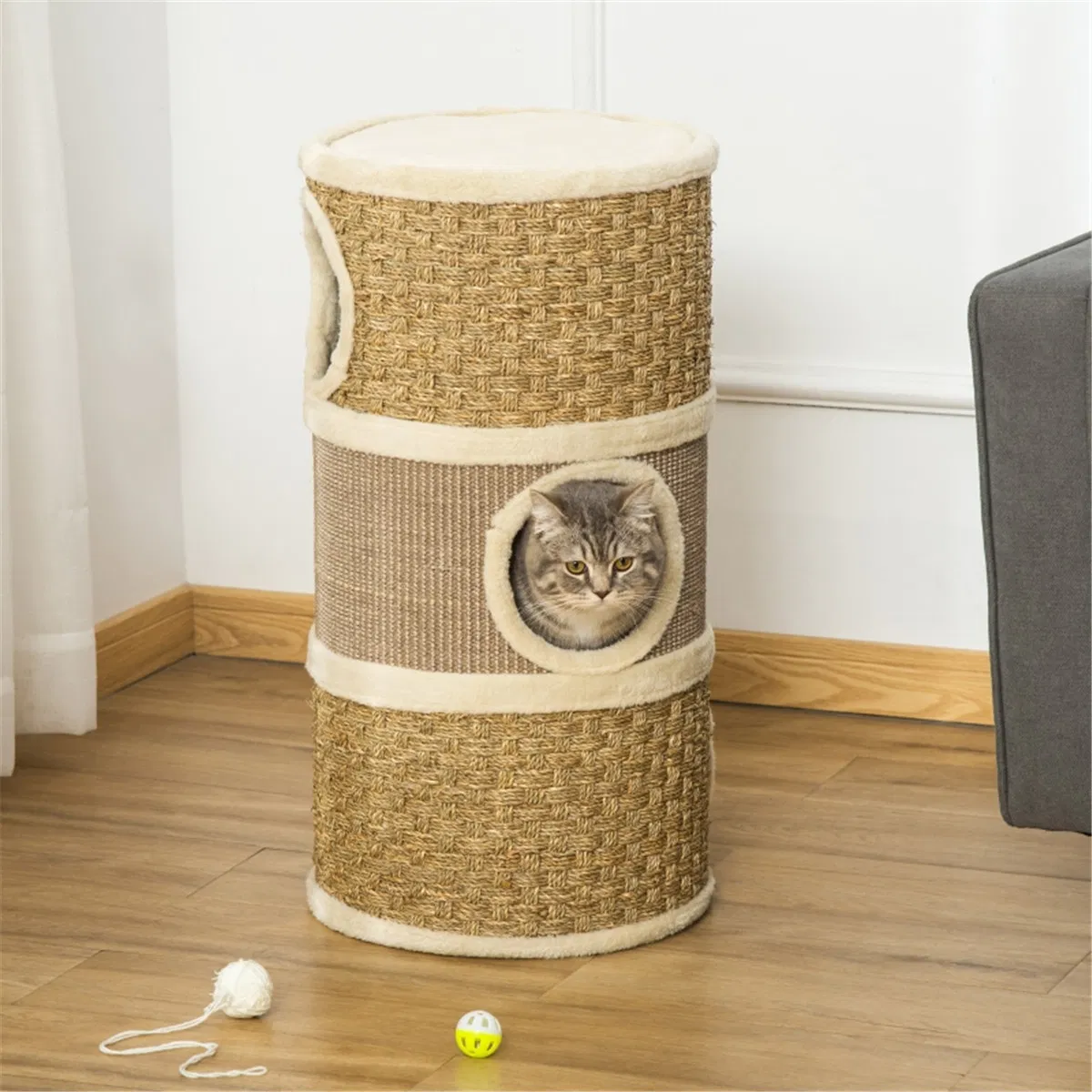 Wooden Cat House/Cat Trees /Cat Climbing Tower$112.99View on Mallflare
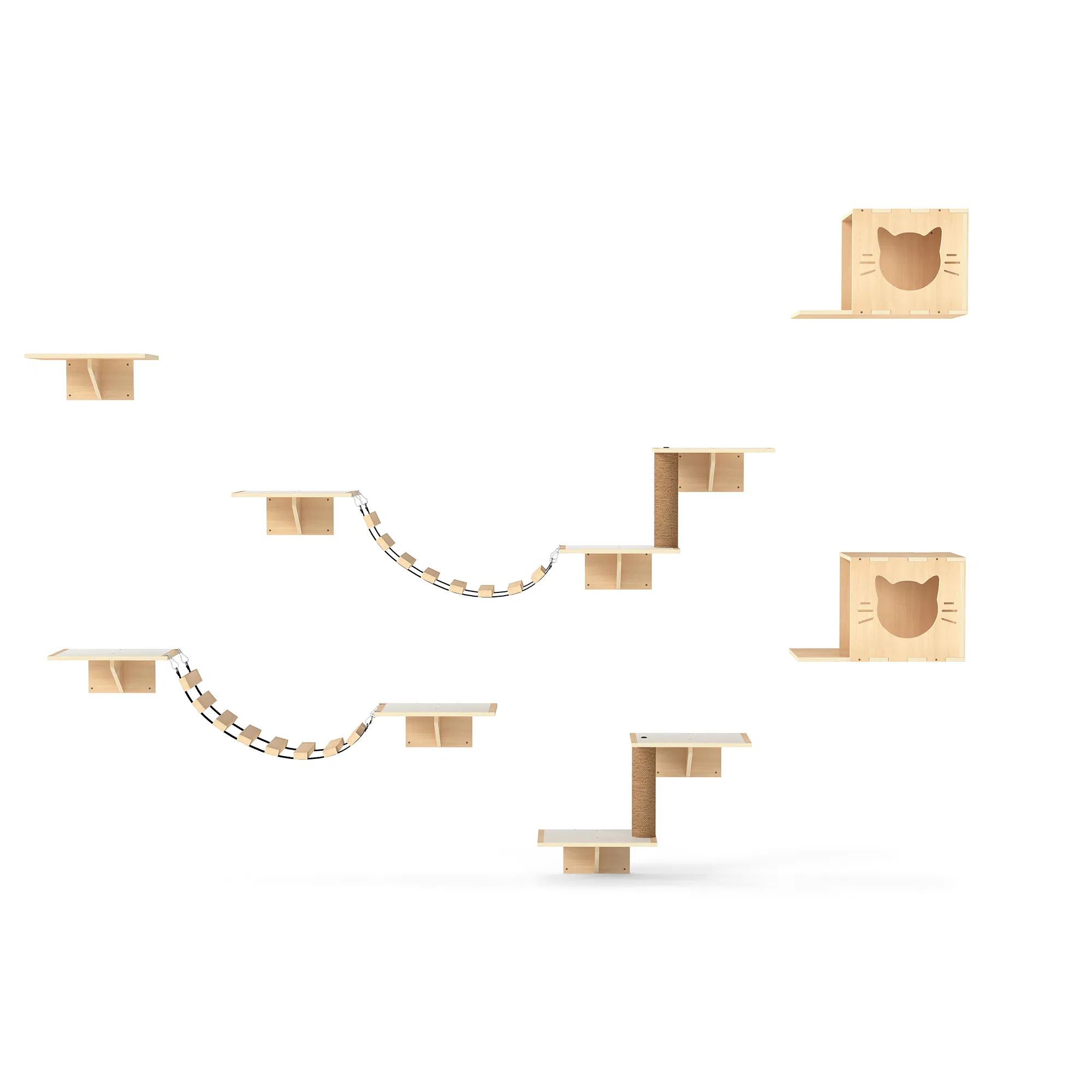 Plywood Cat Tree, 18.9"L x 11.8"W x 11.8"H, Natural Wood$125.99View on Mallflare
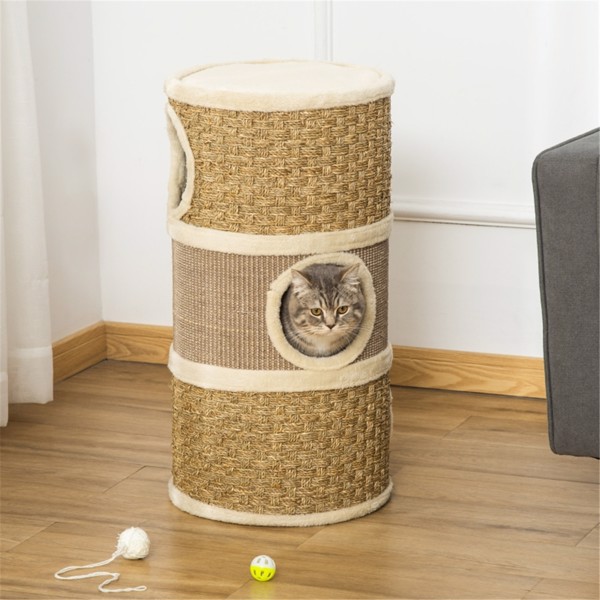 Wooden Cat House Cat Trees Cat Climbing Tower$150.99View on Mallflare
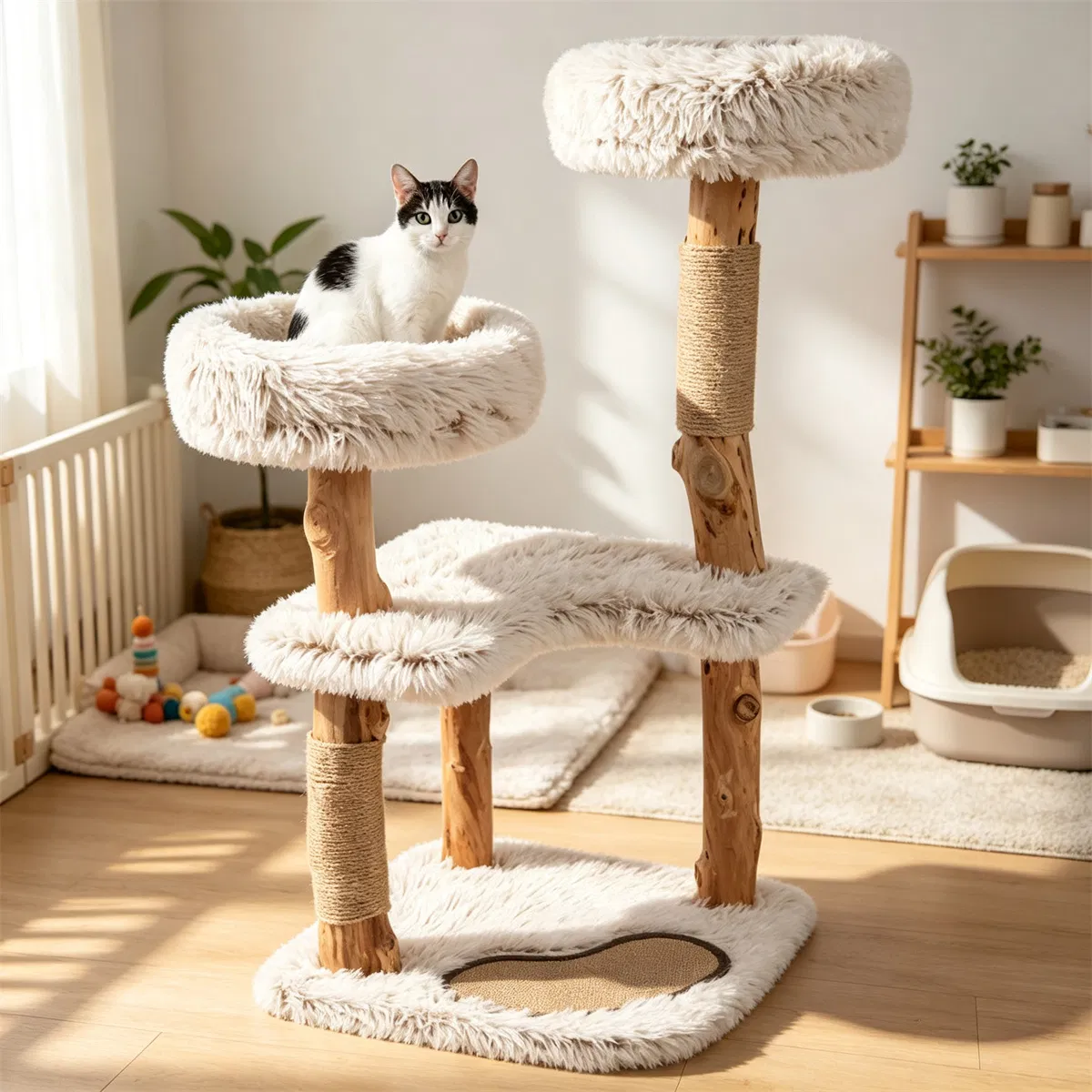 40" Natural Solid Wood Cat Tree Tower, Boho Style Cat Condo with Washable Plush Cushions & Jute Scratching Post for Indoor Cats$208.99View on Mallflare
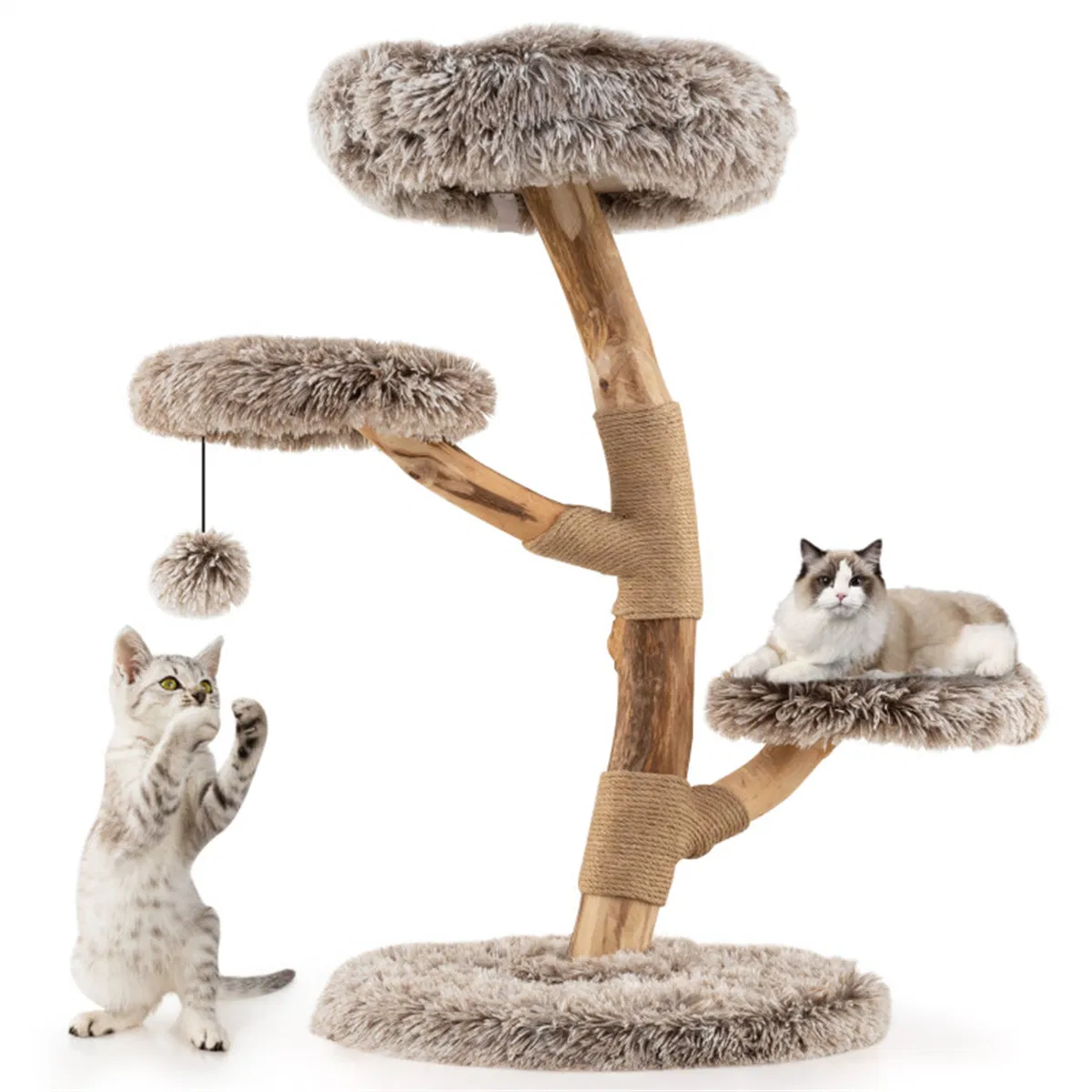 4-Level Natural Pear Wood Cat Tree - 19.5"x35.5", Jute Scratch Posts + Plush Ball, Long$219.99View on Mallflare
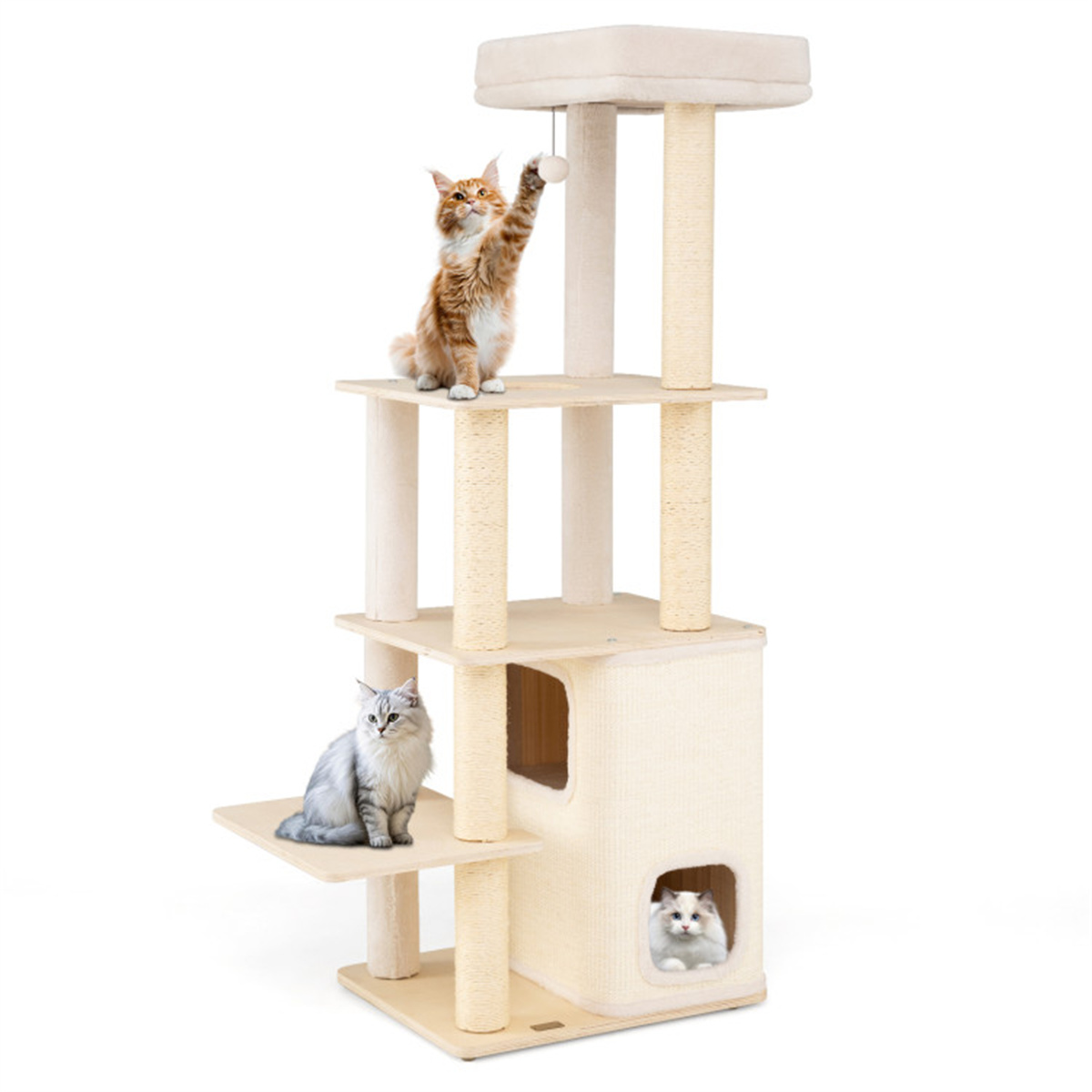 63" Wooden Cat Tree - 2-Story Condo with Bamboo Interior, 5 Sisal Scratching Posts, 44 lbs Per Layer Capacity$244.99View on Mallflare
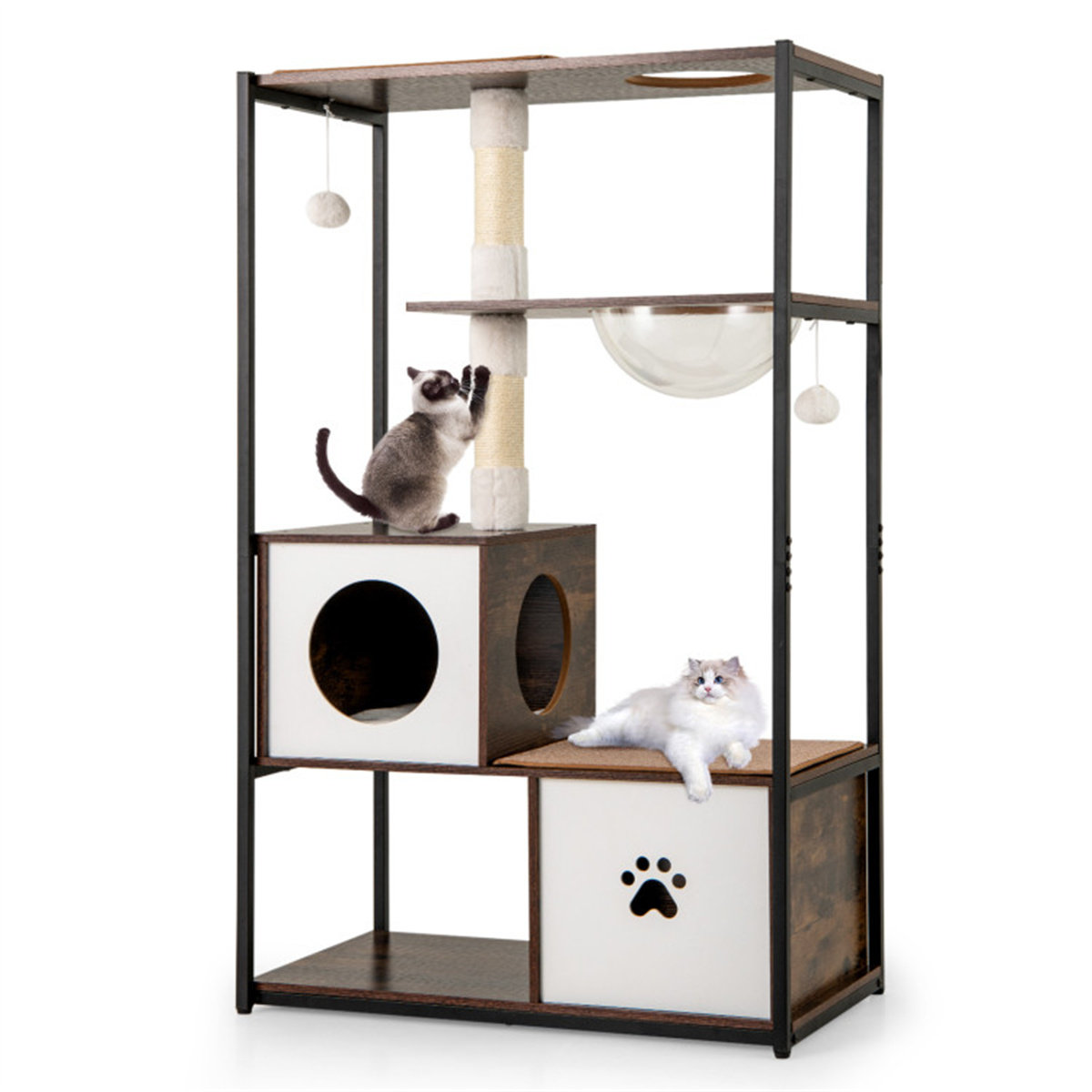 Stylish Wood-Metal Cat Tree - 33 lbs Per Layer Capacity, 2 Private Condos + 2 Relaxation Platforms, Complements Room Decor$244.99View on Mallflare
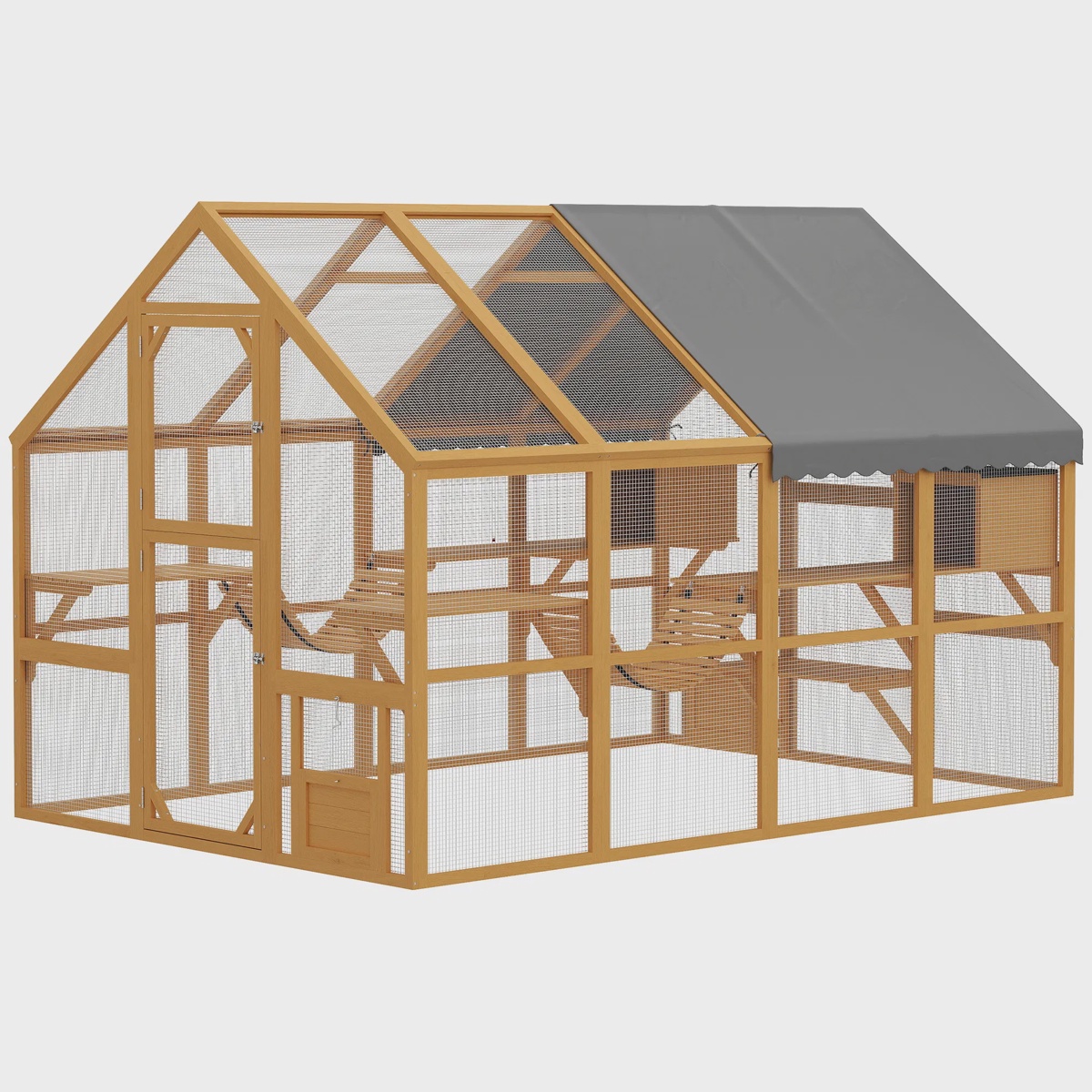 Cat Tree House for 3-6 Cats, Fir Wood with 2 Condos and 6 Platforms, Waterproof Cover, Yellow$959.99View on Mallflare
Highlights
- Solid rubberwood or birch plywood platforms outlast MDF-core towers because they resist screw pull-out and moisture swelling at seams.
- Through-bolted or cam-lock joints with metal brackets hold multi-level towers rigid; stapled or glued dowel joints loosen under cat jumps.
- Sisal rope wrapped at 6-8 mm diameter on posts provides durable scratching surfaces; thin 3-4 mm twine shreds quickly.
- Platform depth of at least 40 cm and perches 30-35 cm wide fit average adult cats; smaller ledges force unstable landings.
Best use cases
- Best fit: multi-cat households needing a floor-to-ceiling tower—choose solid-wood or plywood frame with bolted wall anchor and 8 mm sisal posts.
- Best fit: design-conscious living rooms—pick birch plywood with hidden hardware and replaceable sisal sleeves instead of glued carpet.
- Wrong fit: kittens or senior cats needing low, wide steps—skip tall narrow towers; choose 3-4 low platforms with 25 cm step spacing.
- Wrong fit: humid bathrooms or covered balconies—avoid MDF-core units; specify sealed solid wood or marine-grade plywood only.
Buying tips
- Match total height to ceiling: leave 5-10 cm clearance for a tension anchor, or choose a freestanding tower under 180 cm for rooms with sloped ceilings.
- Check post diameter: 9-10 cm posts suit large cats and resist flex; 6 cm posts flex visibly under cats over 5 kg.
- Verify platform thickness: 1.5-1.8 cm plywood or 2 cm solid wood prevents sagging; 1.2 cm MDF bows between supports.
- Count resting spots: one perch per cat plus one, with at least two perches above 120 cm for climbing cats.
Specs
| Frame Material | Solid hardwood / birch plywood vs MDF |
|---|---|
| Post Wrap | 6-8 mm sisal vs 3-4 mm twine |
| Platform Thickness | 1.5-2 cm wood / 1.2 cm MDF |
| Joint Type | Through-bolt / cam-lock vs staple |
Related searches
What to check before buying
- Measure ceiling height and floor footprint: a 60x60 cm base needs 10 cm clearance from walls for stability.
- Check floor type: hard floors need rubber feet or a wall anchor strap; carpet needs wide flat base plates.
- Confirm wall material for anchoring: drywall requires toggle bolts; concrete or studs take lag screws.
- Verify replacement parts availability: sisal sleeves and platform brackets should be orderable separately for long-term repair.
FAQ
Data sources: eBay / Amazon listings and product attribute feeds. Updated Nov 27, 2026.
Some links on this page are affiliate links. If you buy after clicking one, we may earn a commission at no extra cost to you. This does not change which products appear here or their order. Affiliate disclosure.