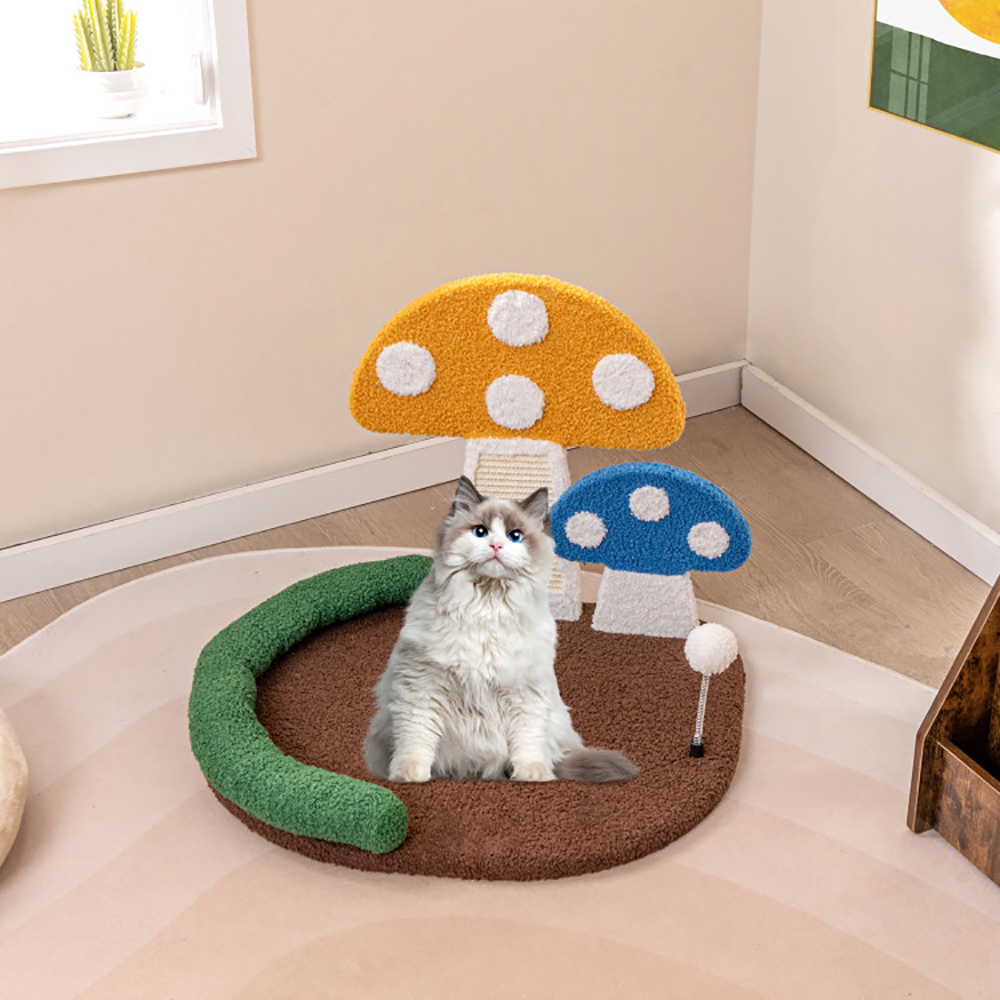

Photos from current listings. Actual item, color, and included accessories may vary.
Mushroom Cat Tree Buying Guide
A mushroom cat tree is a decorative climbing structure where the canopy serves as a bed or platform and the stem typically doubles as a sisal-wrapped scratching post. The core trade-off is between whimsical form and feline function: cute silhouettes often hide undersized platforms, unstable bases, or non-replaceable sisal. Durable mushroom trees combine a weighted or floor-anchored base, full-height sisal wrapping on the stem, and a top bed wide enough for a curled adult cat.
Key takeaways
- Stem construction splits into solid wood (stable, heavy, repairable) versus particleboard with veneer (lighter, prone to wobble at the joint).
- Sisal coverage matters more than total height: full 360-degree wrapping on the main stem outlasts partial scratch panels in multi-cat homes.
- Stability is determined by base footprint and center of gravity—a wide, low base prevents tipping when a cat launches onto the canopy.
At a glance
- Category
- Pet Beds & Cat Trees
- Last updated
- Nov 28, 2026
Current offers
Highlights
- Stem construction splits into solid wood (stable, heavy, repairable) versus particleboard with veneer (lighter, prone to wobble at the joint).
- Sisal coverage matters more than total height: full 360-degree wrapping on the main stem outlasts partial scratch panels in multi-cat homes.
- Stability is determined by base footprint and center of gravity—a wide, low base prevents tipping when a cat launches onto the canopy.
- Canopy bed depth and diameter dictate comfort: shallow caps suit kittens, deep dish cups hold adult cats through REM sleep.
Best use cases
- Best fit: a single indoor cat in a small apartment—pick a compact mushroom tree with a full-sisal stem and a 16-inch canopy bed to save floor space.
- Best fit: a multi-cat home—choose a taller mushroom tree with a weighted base and replaceable sisal sleeve, since shared scratching destroys partial panels fast.
- Wrong fit: a large Maine Coon or heavy senior cat—skip the classic thin-stem mushroom silhouette and choose a reinforced wide-platform design instead.
- Wrong fit: a home with limited wall clearance—skip floor-anchored units that require wall brackets unless the canopy height fits under the ceiling.
Buying tips
- Match canopy bed diameter to cat size: 14–16 inches suits most adults, while 12 inches or less is kitten-only territory.
- Check the base footprint: it should be at least half the total height in diameter; a 40-inch tree needs roughly a 20-inch base.
- Sisal grade matters: natural sisal rope holds up far better than paper-cord or carpet-wrapped stems under daily scratching.
- For wall stability, choose a model with an anti-tip strap or a base heavy enough that the tree stays put without wall drilling.
Specs
| Frame Material | Solid wood vs particleboard |
|---|---|
| Sisal Coverage | Full-stem wrap vs partial panel |
| Base Ratio | Base ≥ half of total height |
| Canopy Bed Size | 14–16 in diameter, 4+ in deep |
Related searches
What to check before buying
- Measure the floor footprint against your room layout—leave at least 12 inches of clearance around the base for a cat to circle and jump.
- Verify the assembled height clears ceilings and any low-hanging fixtures at the intended placement spot.
- Confirm the platform and canopy weight ratings exceed your cat's adult weight with margin for jumping impact.
- Check whether replacement sisal sleeves or canopy cushions are available before committing to the design.
FAQ
Data sources: eBay / Amazon listings and product attribute feeds. Updated Nov 28, 2026.
Some links on this page are affiliate links. If you buy after clicking one, we may earn a commission at no extra cost to you. This does not change which products appear here or their order. Affiliate disclosure.