
Photos from current listings. Actual item, color, and included accessories may vary.
Large Outdoor Cat House Buying Guide
A large outdoor cat house is a weatherproof, insulated wooden shelter sized for one to three cats, where the critical trade-off is between thermal retention (foam insulation, heated pads, vestibules) and weatherproof durability (asphalt roofs, raised floors, treated lumber). The decision rule is simple: choose an insulated, elevated house with an asphalt or metal roof and a raised floor if cats live outdoors year-round; choose an uninsulated wooden shelter with a transparent canopy only for mild climates or supervised patio use.
Median $152.99
Key takeaways
- Insulated models use foam-panel walls and floors plus an asphalt-shingle roof; uninsulated decorative models rely on wood thickness alone and lose heat rapidly below freezing.
- Elevated floor clearance of at least 4-6 inches prevents ground moisture and snowmelt wicking into the sleeping compartment; flat-on-ground houses rot faster.
- Double-door or escape-hatch designs prevent single-exit trapping, while PVC strip curtains and openable roofs enable cleaning and winter draft control.
At a glance
- Category
- Pet Beds & Cat Trees
- Last updated
- Nov 27, 2026
Current offers
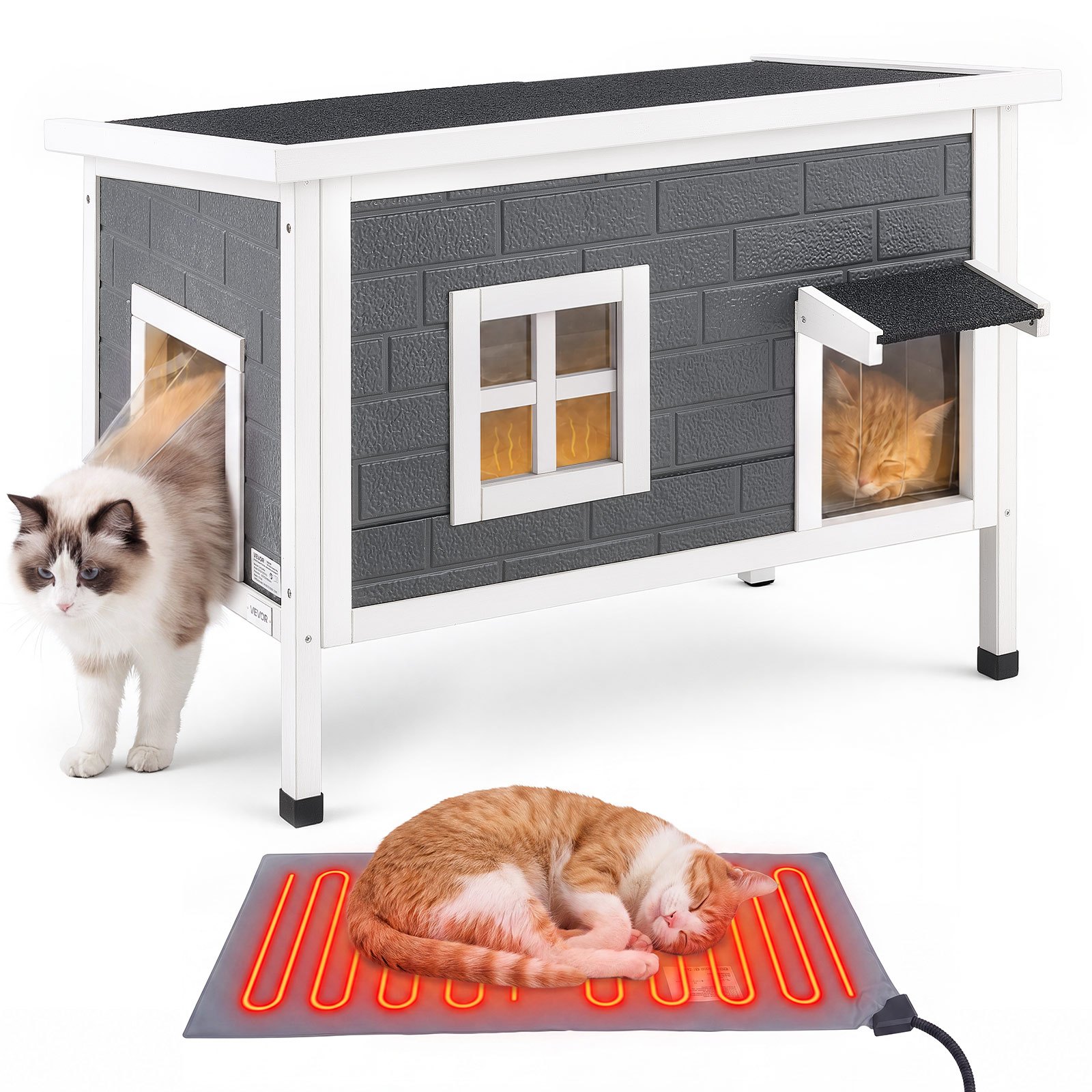 Heated Outdoor Cat House for 1-3 Cats Feral Shelter with Heating Pad, for Outside Winter, Large Weatherproof Windproof Insulated Wooden Home, Waterproof Asphalt Roof, Escape Door & PVC Curtain$123.99View on Mallflare
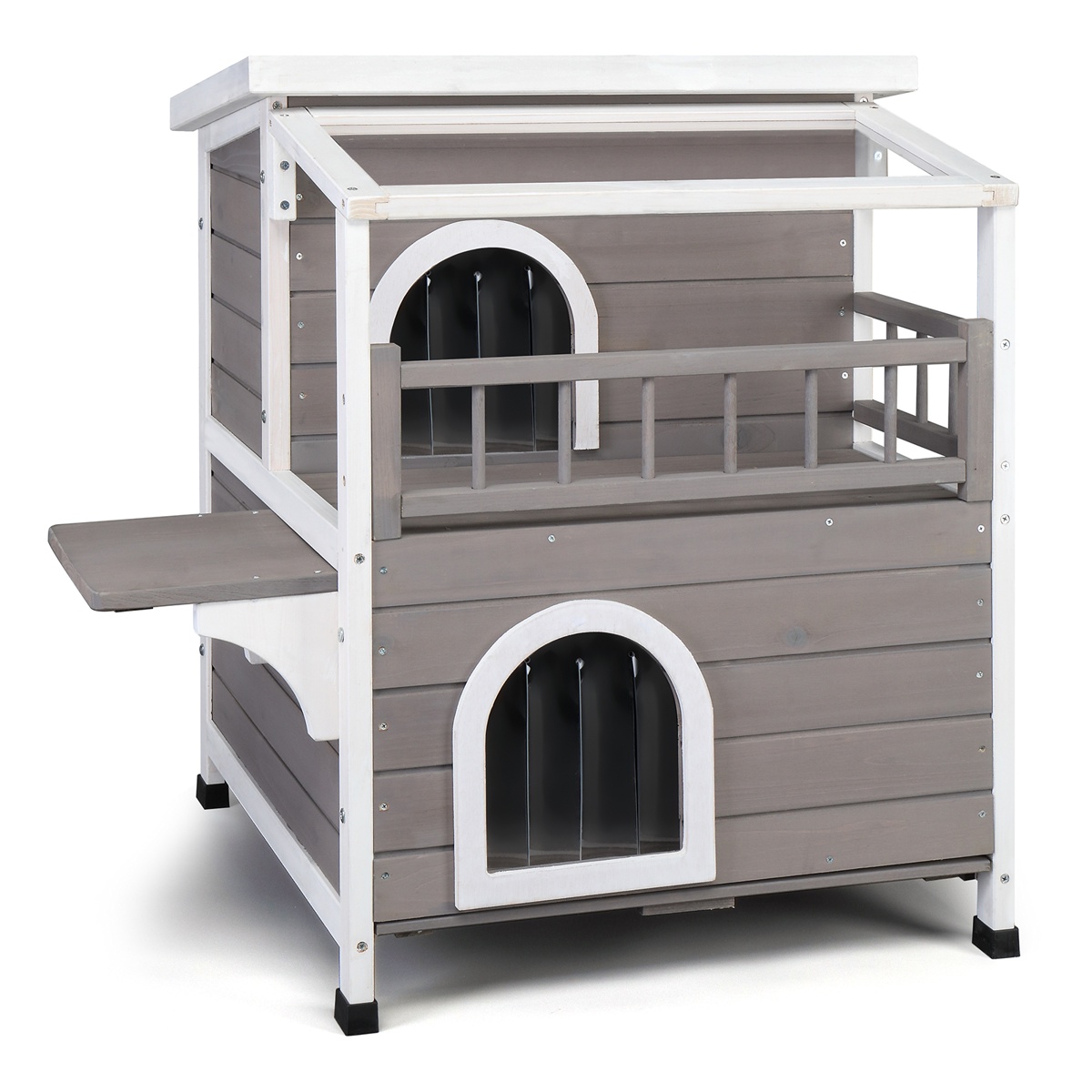 Wooden Cat house 2-Story Indoor Outdoor Luxurious Cat Shelter with Transparent Canopy, Large Balcony, Openable Weatherproof Roof,Double escape door, Grey&White$152.99View on Mallflare
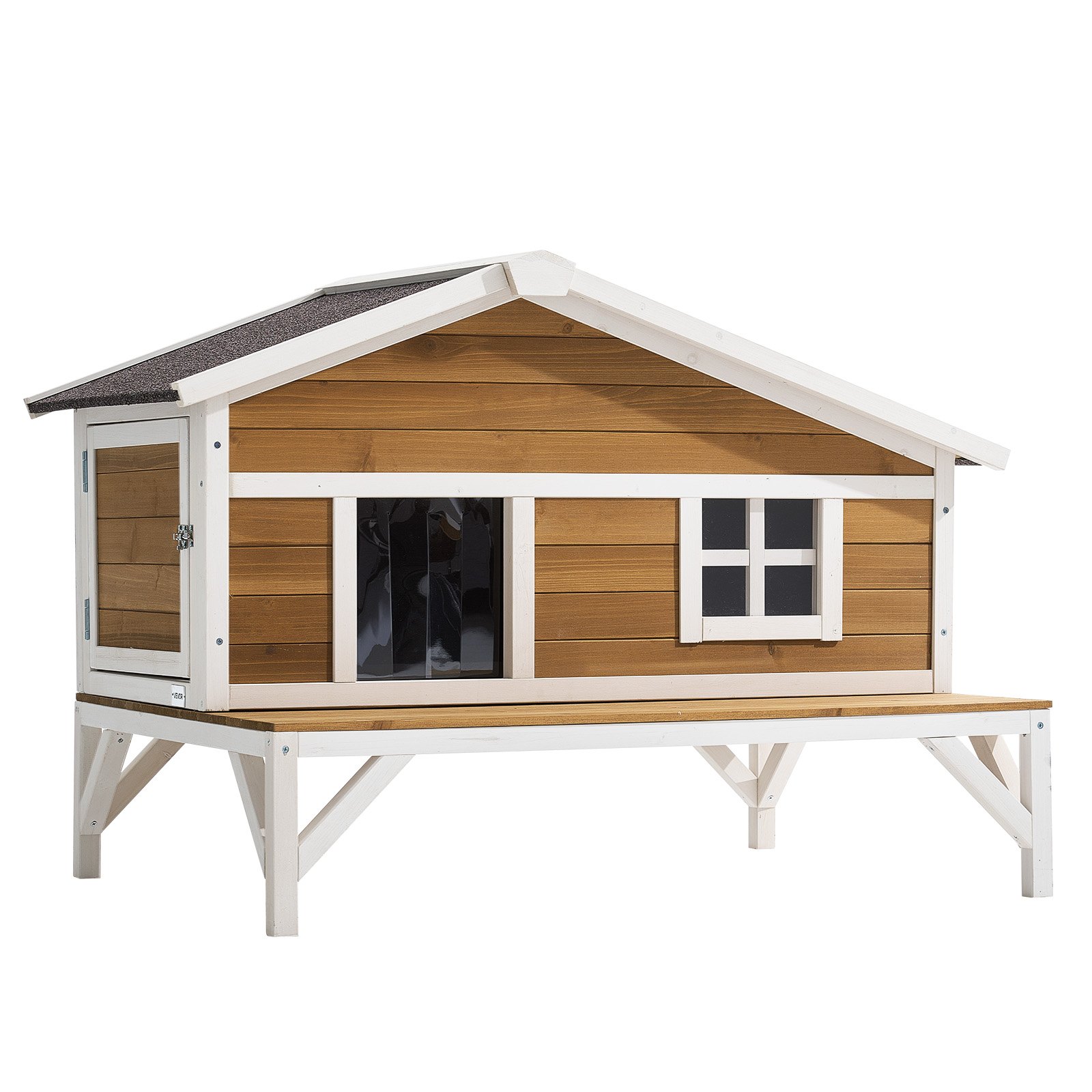 Insulated Cat House, All-Around Foam Insulation Elevated Cat Shelter, Wooden Feral Kitty With Large Platform, Waterproof Cats Condos For Indoor & Outdoor In Winter 43.5x33.5x31 In$153.99View on Mallflare
Highlights
- Insulated models use foam-panel walls and floors plus an asphalt-shingle roof; uninsulated decorative models rely on wood thickness alone and lose heat rapidly below freezing.
- Elevated floor clearance of at least 4-6 inches prevents ground moisture and snowmelt wicking into the sleeping compartment; flat-on-ground houses rot faster.
- Double-door or escape-hatch designs prevent single-exit trapping, while PVC strip curtains and openable roofs enable cleaning and winter draft control.
- Heated variants pair a low-wattage heating pad (typically 20-40 W) with insulation; a pad without foam insulation wastes energy and cannot hold temperature in sub-zero wind.
Best use cases
- Best fit: feral or outdoor cats in freezing climates — pick a fully foam-insulated, elevated wooden house with asphalt roof, PVC curtain, and optional heating pad rated for 1-3 cats.
- Best fit: mild-winter patios or porches — pick a two-story wooden shelter with transparent canopy and openable roof for ventilation and easy cleaning, skipping heating elements.
- Wrong fit: unsupervised outdoor use in heavy rain — skip houses with flat or single-slope roofs lacking shingle or metal overhang; water pools and leaks into the sleeping loft.
- Wrong fit: multi-cat households in extreme cold — a single small compartment without a second escape door causes crowding and stress; choose a dual-exit insulated model sized 43x33x31 in or larger.
Buying tips
- Match interior floor area to cat count: allow roughly 2-3 sq ft per adult cat; a 43.5x33.5 in footprint supports 2-3 cats only if the loft is separate from the entry vestibule.
- Demand asphalt shingle or corrugated metal roofing over plywood; untreated MDF or thin pine roofs fail within two seasons of freeze-thaw cycling.
- Insulation should be rigid foam board at least 0.5-1 inch thick in walls, floor, and ceiling; bare wood walls offer negligible R-value.
- Heating pads must be outdoor-rated, chew-resistant, and low-wattage (20-40 W); pair with insulation and a dry interior or the pad cannot keep up with wind chill.
Specs
| Insulation Type | Foam board vs uninsulated wood |
|---|---|
| Roof Material | Asphalt shingle / metal / polycarbonate |
| Floor Elevation | Raised 4-6 in vs ground-level |
| Cat Capacity | 1-3 cats (2-3 sq ft per cat) |
Related searches
What to check before buying
- Measure the intended placement footprint and confirm at least 43x33 in of level ground plus clearance for the roof overhang and door swing.
- Confirm the house sits off the ground on legs or a platform; check that the raised floor height clears snow accumulation and standing water.
- Verify the roof style matches local rainfall and snow load — asphalt shingle for rain, steep pitch or metal for heavy snow.
- Check that the entry door includes a PVC curtain or wind baffle and that a second escape door exists if more than one cat will use it.
FAQ
Data sources: eBay / Amazon listings and product attribute feeds. Updated Nov 27, 2026.
Some links on this page are affiliate links. If you buy after clicking one, we may earn a commission at no extra cost to you. This does not change which products appear here or their order. Affiliate disclosure.