
Photos from current listings. Actual item, color, and included accessories may vary.
Insulated Heated Outdoor Cat House Buying Guide
An insulated heated outdoor cat house is a weatherproof shelter with a built-in heating pad and thermal insulation, designed to keep a cat warm in winter while blocking wind, rain, and drafts. The core trade-off is between thin fabric-shell shelters that rely almost entirely on the pad and rigid wooden or insulated-panel houses that hold heat but cost more and need assembly. The decision rule: a shelter rated for sub-freezing use needs rigid insulated walls, a raised floor, and an anti-chew power cord — a soft fabric box with a pad is only a mild-weather or porch-season option.
Median $117.99
Key takeaways
- Heating pads for outdoor cat houses typically draw 20-40W from a standard 120V outlet; 25.4W is a common single-cat pad size, and larger multi-cat houses need a proportionally larger pad or two pads.
- Fabric-shell shelters use a waterproof Oxford or PVC outer layer over thin batting; rigid wooden houses use plywood walls with foam or rigid insulation and an asphalt-shingle roof for true weatherproofing.
- Anti-chew cord construction is a safety requirement outdoors — the pad's power lead must be armored or metal-braided, not standard thin appliance wire.
At a glance
- Category
- Pet Beds & Cat Trees
- Last updated
- Nov 27, 2026
Current offers
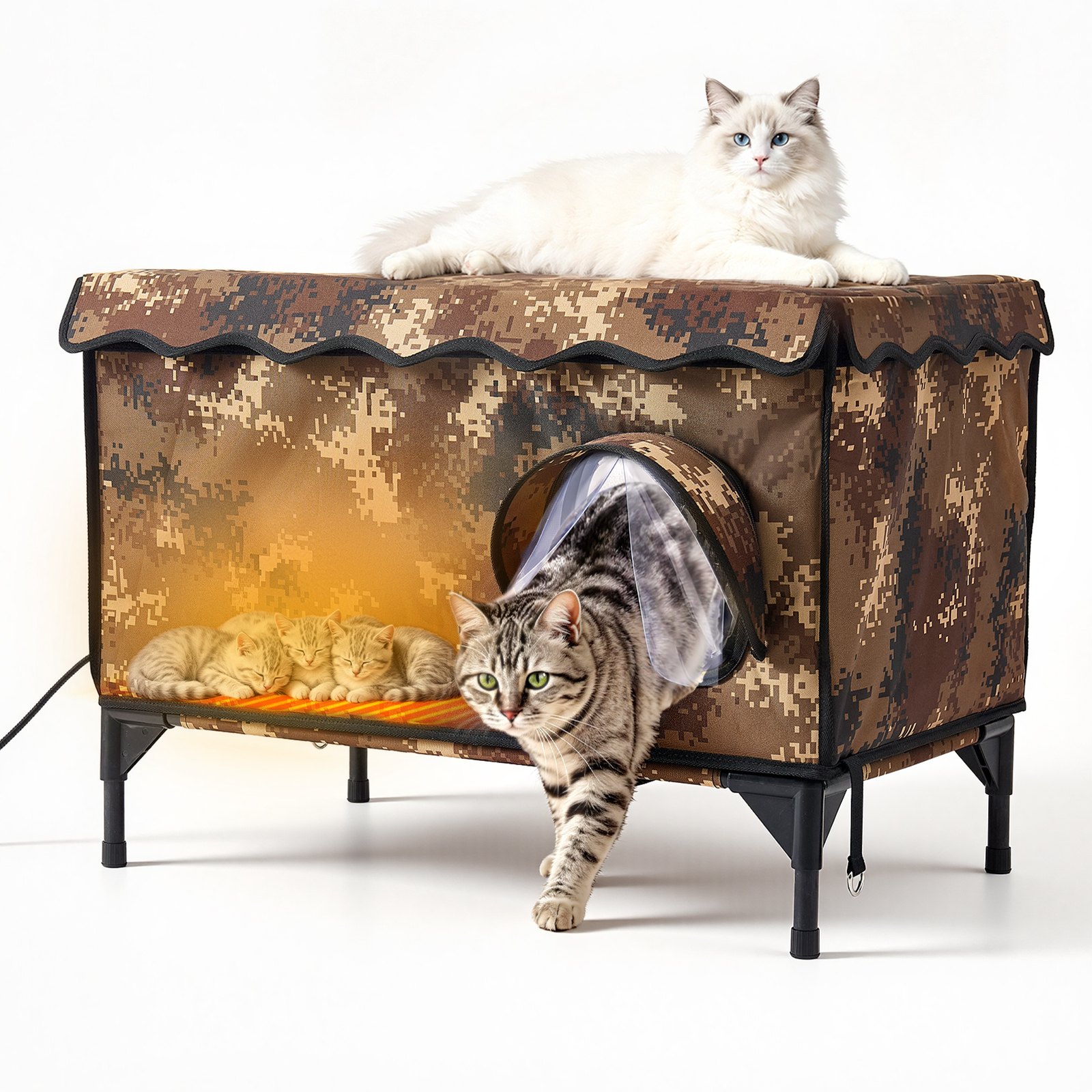 Elevated Heated Cat House 25.4W Insulated Shelter with Pad, for Indoor Outdoor Winter Use, 2-Door & Private Side Curtain, Waterproof Weatherproof Stray Feral Kitty for Outside$92.99View on Mallflare
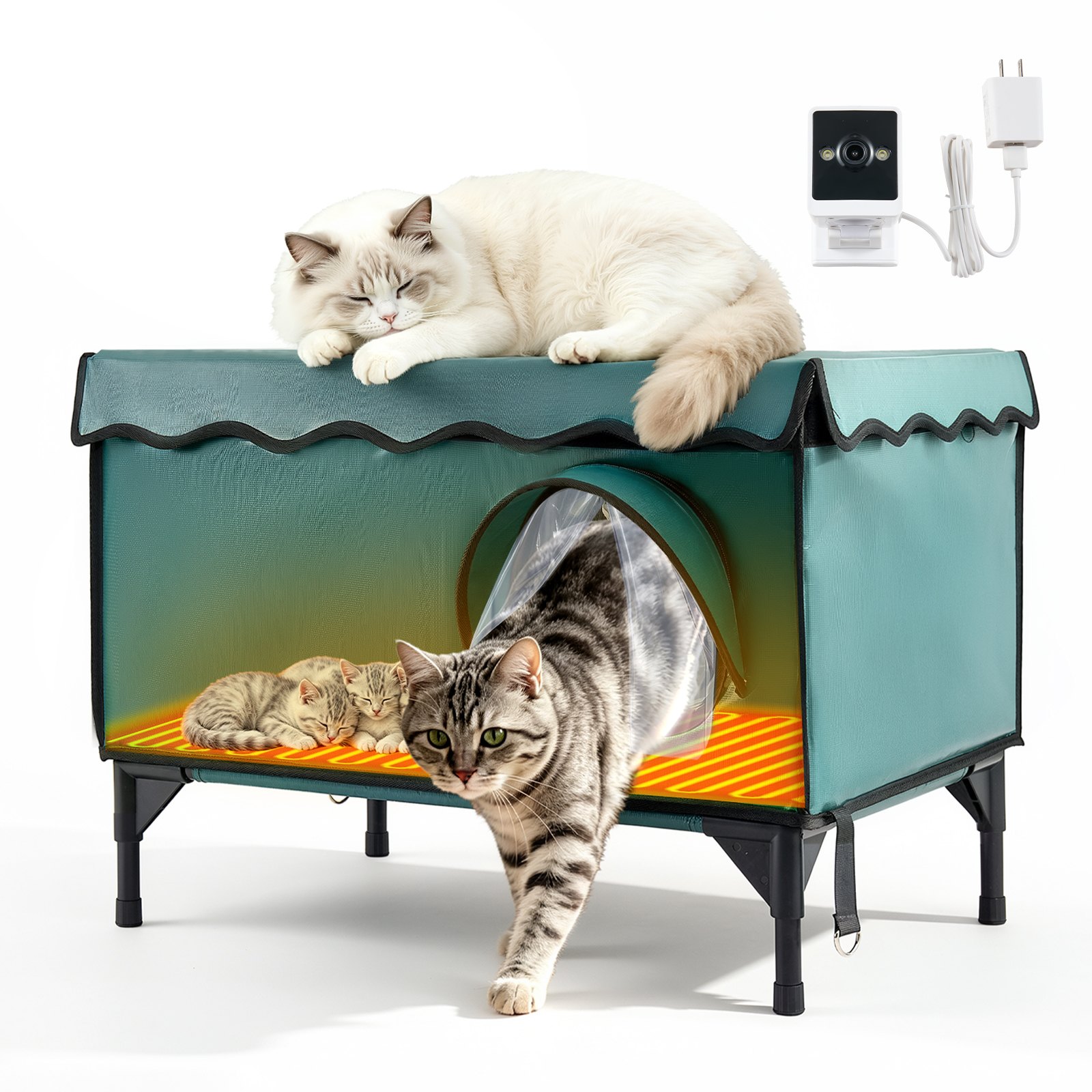 Elevated Heated Cat House 25.4W Insulated Kitty Shelter with Camera, for Indoor Outdoor Winter Use, 2-Door & Private Side Curtain, Weatherproof Stray Feral Pad for Outside$114.99View on Mallflare
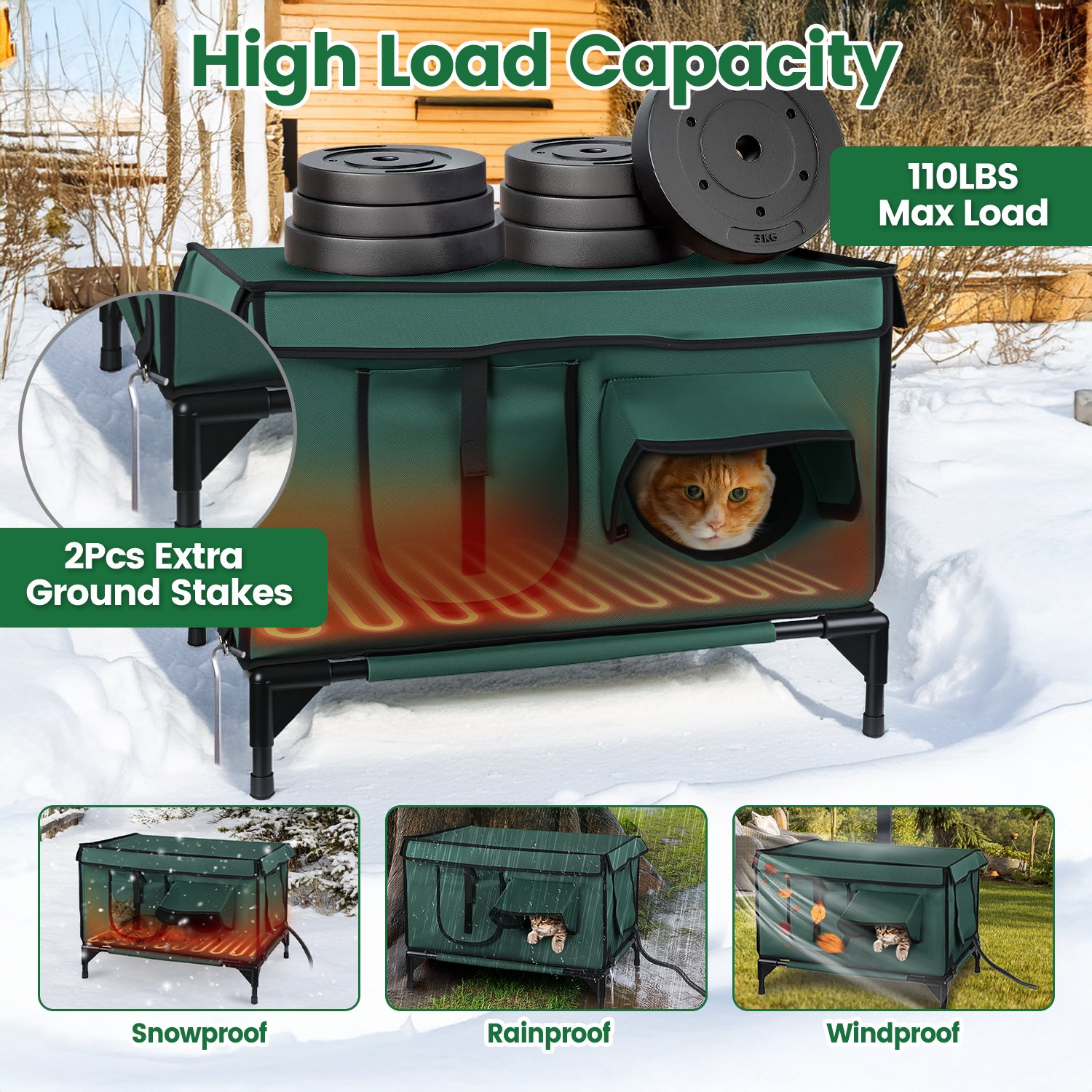 1Pc Waterproof Heated Cat House Outdoor Weatherproof Insulated Kitty Shelter Feral Cat Heating Bed With Pad Anti-Chew Cord 2 Doors 3 Windows For Indoors Outdoors Winter Summer$117.99View on Mallflare
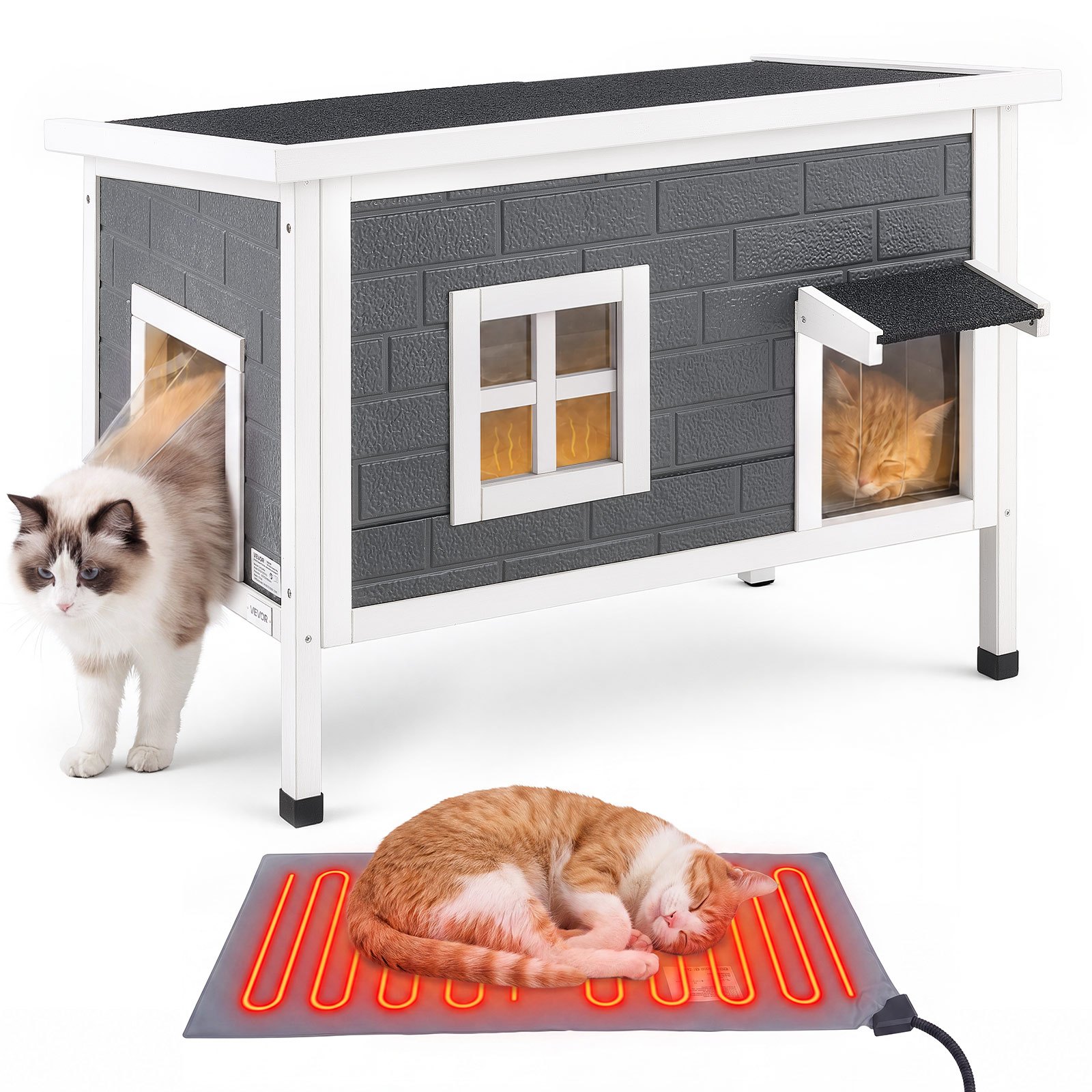 Heated Outdoor Cat House for 1-3 Cats Feral Shelter with Heating Pad, for Outside Winter, Large Weatherproof Windproof Insulated Wooden Home, Waterproof Asphalt Roof, Escape Door & PVC Curtain$123.99View on Mallflare
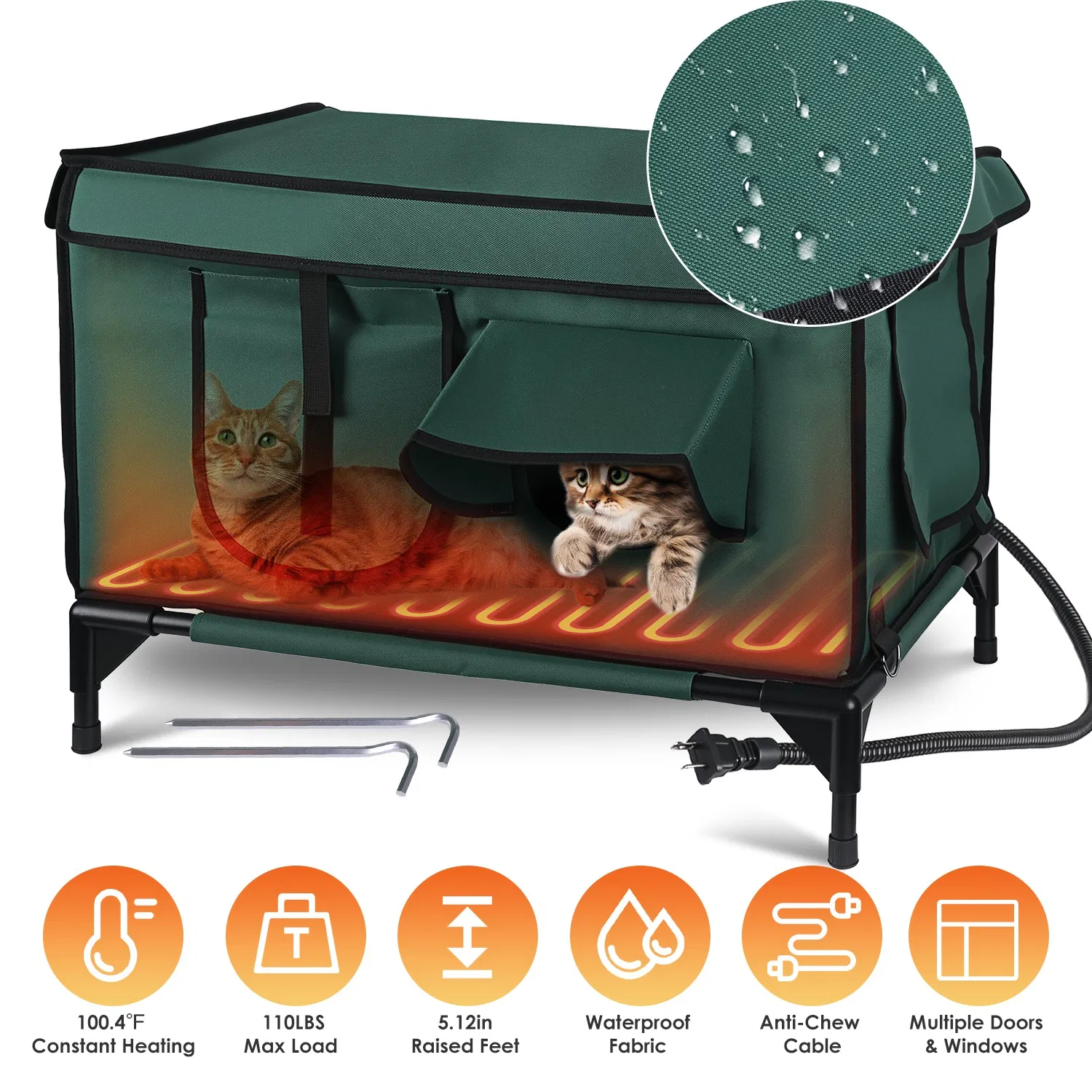 Waterproof Heated Cat House Outdoor Weatherproof Insulated Kitty Shelter Feral Cat Heating Bed with Pad Anti-Chew Cord 2 Doors 3 Windows for Indoors Outdoors Winter Summer$126.99View on Mallflare
Highlights
- Heating pads for outdoor cat houses typically draw 20-40W from a standard 120V outlet; 25.4W is a common single-cat pad size, and larger multi-cat houses need a proportionally larger pad or two pads.
- Fabric-shell shelters use a waterproof Oxford or PVC outer layer over thin batting; rigid wooden houses use plywood walls with foam or rigid insulation and an asphalt-shingle roof for true weatherproofing.
- Anti-chew cord construction is a safety requirement outdoors — the pad's power lead must be armored or metal-braided, not standard thin appliance wire.
- Two-door designs with PVC or fabric curtains create an escape route and reduce heat loss; single-door houses trap cats if a predator blocks the entrance.
Best use cases
- Best fit: a feral or outdoor cat in a freezing-winter climate (sustained below 20°F) — pick a rigid wooden or insulated-panel house with an asphalt roof, raised floor, and heated pad rated for outdoor use.
- Best fit: a porch, garage, or mild-winter climate (rarely below freezing) — a fabric-shell heated shelter with a waterproof outer layer and 25W pad is sufficient and far cheaper.
- Wrong fit: multiple cats (2-3) in a fabric single-cat shelter — choose a large wooden house sized for 1-3 cats with a wider pad or dual pads, since body heat alone won't fill a thin shell.
- Wrong fit: an unheated garage or shed where the cat cannot leave — avoid fully enclosed single-door designs; an escape door and curtained second opening are non-negotiable.
Buying tips
- Match house interior floor area to cat count: one adult cat needs roughly 18x18 in of floor; two cats need about 24x24 in, and three need 30x30 in or a two-room layout.
- For winter use below freezing, require 1-2 in of rigid foam or equivalent insulation in walls and roof; fabric-shell houses with only batting are 3-season shelters, not winter shelters.
- Check the heating pad's cord exit and chew guard: outdoor pads must have a metal-braided or armored cord and a UL-listed outdoor rating; a standard indoor pad cord fails in wet cold.
- Pick a raised-floor design at least 2-3 in off the ground with a sloped asphalt or metal roof — ground contact and flat roofs are the two biggest heat-loss and moisture failures.
Specs
| Shell Construction | Fabric Oxford vs Rigid Wood/Panel |
|---|---|
| Insulation Grade | Batting (3-season) vs Foam 1-2 in (winter) |
| Heating Pad Power | 20-40W single / 40-80W multi-cat |
| Door & Ventilation | 1-door vs 2-door + PVC curtains |
Related searches
What to check before buying
- Measure the intended placement footprint and doorway clearance — a large wooden 1-3 cat house typically needs about 24x24 in of floor space and 20+ in of height clearance.
- Confirm an outdoor-rated 120V GFCI-protected outlet is within cord reach; most heated pads have 5-6 ft cords and should not be run through standing water or snow.
- Verify the shelter's roof overhang and door orientation face away from prevailing wind and rain, and that the house sits on a dry raised surface, not bare ground.
- For multi-cat or feral use, confirm two exits and curtained doors plus an anti-chew cord — these are safety requirements, not upgrades.
FAQ
Data sources: eBay / Amazon listings and product attribute feeds. Updated Nov 27, 2026.
Some links on this page are affiliate links. If you buy after clicking one, we may earn a commission at no extra cost to you. This does not change which products appear here or their order. Affiliate disclosure.