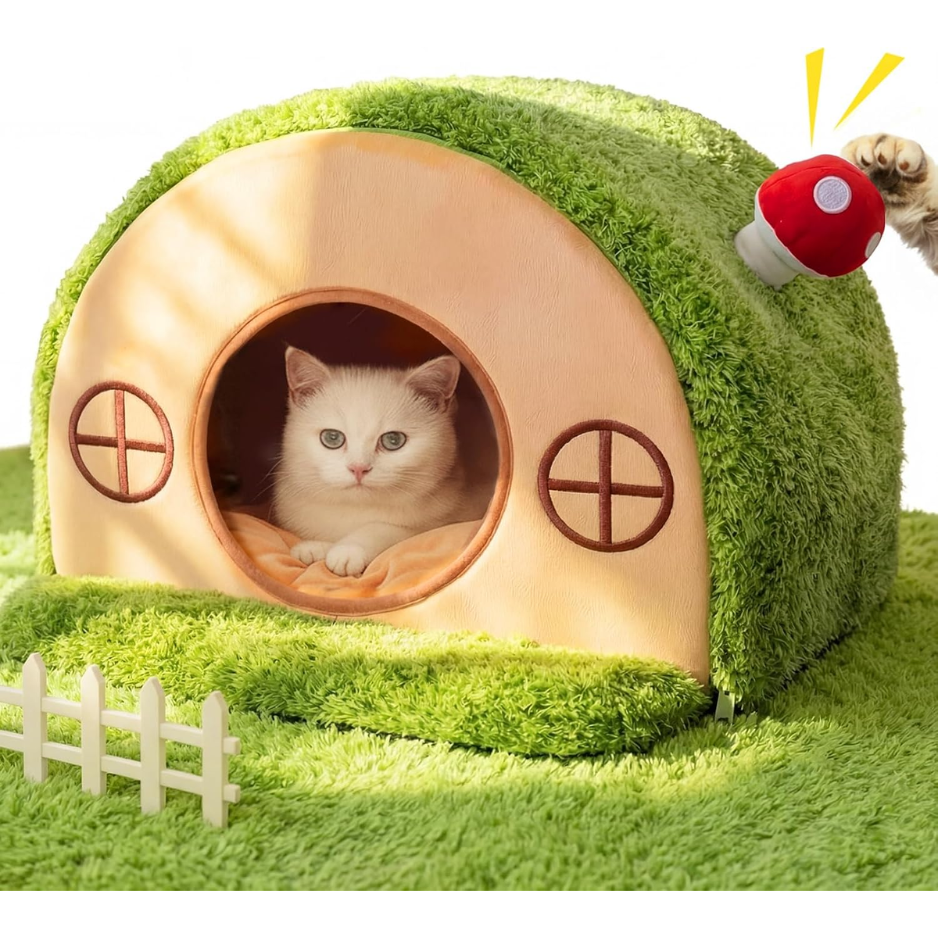

Photos from current listings. Actual item, color, and included accessories may vary.
Enclosed Cat Bed Buying Guide
An enclosed cat bed is a cave-style hideaway—usually a felt, plush, or woven shell—that gives cats the covered, den-like security they instinctively seek. The core trade-off is between structural rigidity (walls that won't collapse) and breathability/ease of cleaning: cheap foam shells sag and trap odor, while dense felt or rigid-frame construction holds shape and washes clean. The decision rule: pick a bed with a removable, machine-washable cushion and a wall thick enough to self-support; skip thin foam cubes that flatten within weeks.
Key takeaways
- Felt density of 3–5 mm wool-blend or 2–3 mm polyester felt determines whether the cave holds its dome shape or slumps after a few uses.
- Removable zippered cushion with a water-resistant liner is the difference between a washable bed and a disposable one—non-removable pads trap dander and odor.
- Entry diameter of 18–22 cm suits average adult cats; large-breed or senior cats need 25 cm+ openings and a lower sill to step over.
At a glance
- Category
- Pet Beds & Cat Trees
- Last updated
- Nov 28, 2026
Current offers
Highlights
- Felt density of 3–5 mm wool-blend or 2–3 mm polyester felt determines whether the cave holds its dome shape or slumps after a few uses.
- Removable zippered cushion with a water-resistant liner is the difference between a washable bed and a disposable one—non-removable pads trap dander and odor.
- Entry diameter of 18–22 cm suits average adult cats; large-breed or senior cats need 25 cm+ openings and a lower sill to step over.
- Rigid internal frame (wire or high-density foam) versus unsupported fabric: framed shells stay open for cats that dislike pushing through collapsed walls.
Best use cases
- Best fit: anxious or newly adopted cats needing a covered den—choose a felt cave with a small entry and washable cushion for instant security.
- Best fit: cold-room or drafty-home cats—pick a plush-lined enclosed bed with a thick base pad for insulation; skip open baskets.
- Wrong fit: cats that refuse to enter covered spaces—choose an open-top bolster bed or a cave with a removable roof instead.
- Wrong fit: destructive scratchers—felt caves shred; select a woven or wood-frame hideaway with replaceable pads.
Buying tips
- Measure your cat nose-to-tail base: bed interior length should be at least 1.2× body length; a 45 cm cat needs a 55 cm+ interior.
- Check wall thickness: 3 mm+ felt or a wire frame resists collapse; 1–2 mm foam cubes flatten within weeks.
- Prioritize a zippered, machine-washable cushion and a machine-washable shell; non-removable pads make the whole bed disposable.
- For multi-cat homes, buy one cave per cat plus one extra—enclosed beds become contested territory.
Specs
| Shell Material | Wool-blend felt / polyester / plush |
|---|---|
| Wall Thickness | 3-5 mm felt / framed foam |
| Cushion | Removable, machine-washable |
| Entry Size | 18-25 cm diameter |
Related searches
What to check before buying
- Measure the intended spot: footprint plus 10 cm clearance for entry; caves need a wall or corner to feel secure.
- Confirm the bed's base is non-slip or has a grippy underside for hardwood and tile floors.
- Check cushion fill: high-loft polyester or memory foam holds shape; loose fiberfill clumps after washing.
- Verify the shell is machine-washable or spot-cleanable and that the entry height suits kittens, seniors, or large cats.
FAQ
Data sources: eBay / Amazon listings and product attribute feeds. Updated Nov 28, 2026.
Some links on this page are affiliate links. If you buy after clicking one, we may earn a commission at no extra cost to you. This does not change which products appear here or their order. Affiliate disclosure.