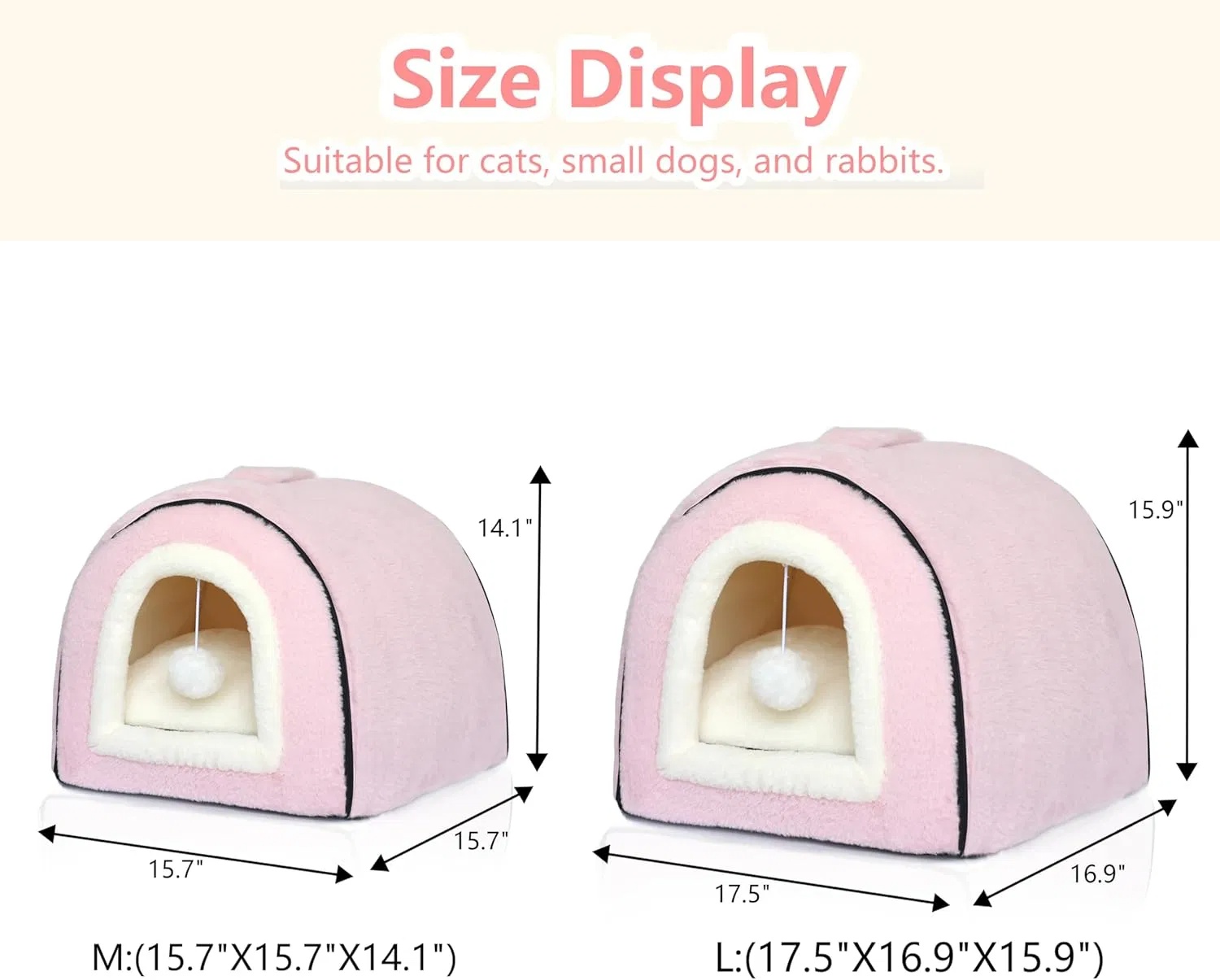

Photos from current listings. Actual item, color, and included accessories may vary.
Dog Cave Bed Buying Guide
A dog cave bed is a semi-enclosed pet bed with a raised rim or hood that satisfies a dog's natural denning instinct, offering warmth and security. The core trade-off is between structural support (foam density and rim rigidity) and washability/ease of entry. Choose a cave bed with a rigid foam base and removable cover for durability; skip floppy, fiberfill-only beds that collapse and mat after washing.
Median $107.49
Key takeaways
- Foam density determines support: 1.5–2 lb/ft³ (24–32 kg/m³) high-density foam resists compression, while low-density fiberfill mats flat within weeks.
- Rim construction separates quality tiers: a foam-filled or rigid bolted hoop maintains the cave opening; loose polyfill rims collapse and block entry.
- Fabric grade affects longevity: 300D+ oxford or microsuede with reinforced stitching outlasts thin plush that tears at stress points.
At a glance
- Category
- Pet Beds & Cat Trees
- Last updated
- Nov 28, 2026
Current offers
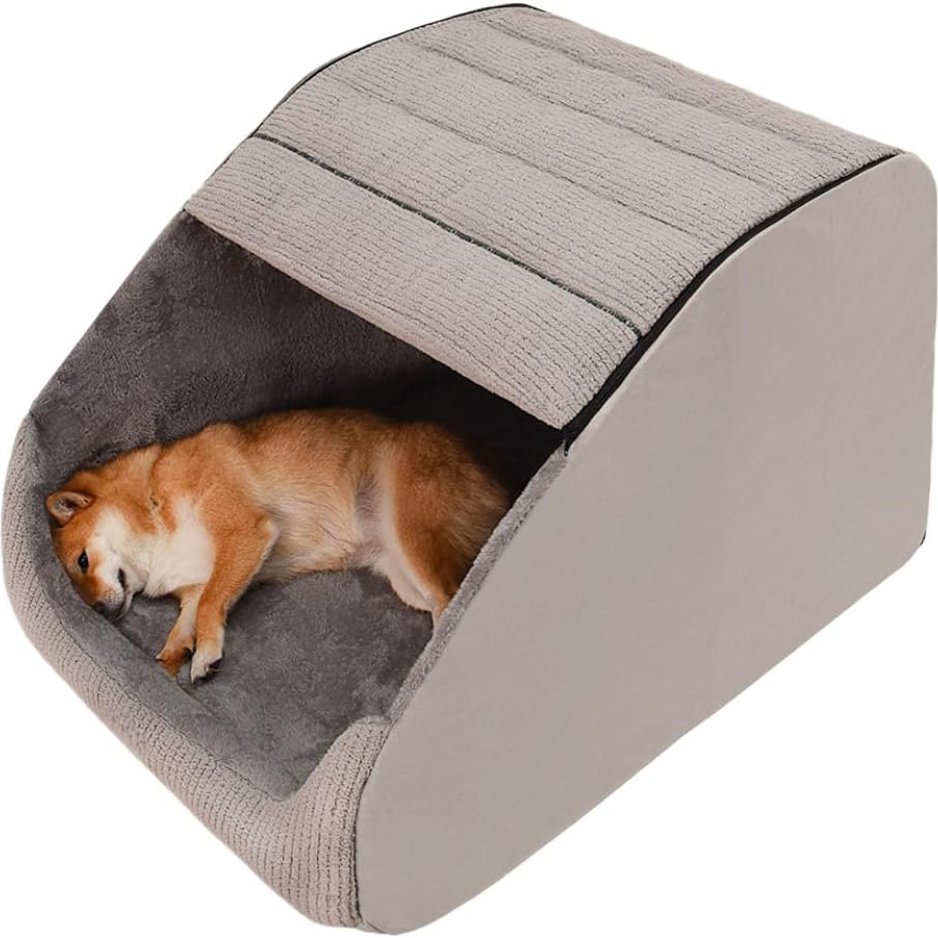
Highlights
- Foam density determines support: 1.5–2 lb/ft³ (24–32 kg/m³) high-density foam resists compression, while low-density fiberfill mats flat within weeks.
- Rim construction separates quality tiers: a foam-filled or rigid bolted hoop maintains the cave opening; loose polyfill rims collapse and block entry.
- Fabric grade affects longevity: 300D+ oxford or microsuede with reinforced stitching outlasts thin plush that tears at stress points.
- Non-slip bottoms use TPU or silicone dots; a plain woven base slides on hardwood and tile, creating a fall risk for senior dogs.
Best use cases
- Best fit: anxious or senior dogs needing joint support—pick a cave bed with 2 lb/ft³ memory foam base and a low-entry front opening.
- Best fit: cold rooms or drafty floors—choose a bed with a full hood and insulated base; skip open-top cushions that lose heat.
- Wrong fit: heavy chewers—fabric caves offer no chew resistance; select a reinforced ballistic-nylon cave or a hard-sided den instead.
- Wrong fit: dogs over 50 lb (23 kg)—most cave beds max out at 36 in (91 cm) outer length; large breeds need XL cave beds with 40+ in length or a different style.
Buying tips
- Measure your dog nose-to-tail-base and add 6–8 in (15–20 cm) for the interior; the cave opening should be at least shoulder height plus 2 in.
- Select foam density 1.5 lb/ft³ or higher for dogs over 30 lb (14 kg); lower-density foam bottoms out under point loads.
- Choose removable, machine-washable covers with zippers; beds without removable covers become odorous and are hard to sanitize.
- Match the bed's footprint to your floor space: a 30 in (76 cm) cave bed needs about 3 ft² (0.28 m²) of clearance for entry and turning.
Specs
| Foam Density | 1.5–2 lb/ft³ high-density vs fiberfill |
|---|---|
| Rim Structure | Foam-filled rigid rim vs polyfill |
| Cover Washability | Removable zippered cover vs spot-clean |
| Base Grip | TPU/silicone non-slip vs plain woven |
Related searches
What to check before buying
- Measure your dog's length and shoulder height; confirm the bed's interior dimensions exceed both by at least 4 in (10 cm).
- Check the cave opening height—senior or arthritic dogs need an opening at or below shoulder height for easy stepping in.
- Verify the base is non-slip (TPU or silicone dots) if placing on hardwood, tile, or laminate.
- Confirm the cover is removable and machine-washable; check zipper placement for easy reassembly.
FAQ
Data sources: eBay / Amazon listings and product attribute feeds. Updated Nov 28, 2026.
Some links on this page are affiliate links. If you buy after clicking one, we may earn a commission at no extra cost to you. This does not change which products appear here or their order. Affiliate disclosure.