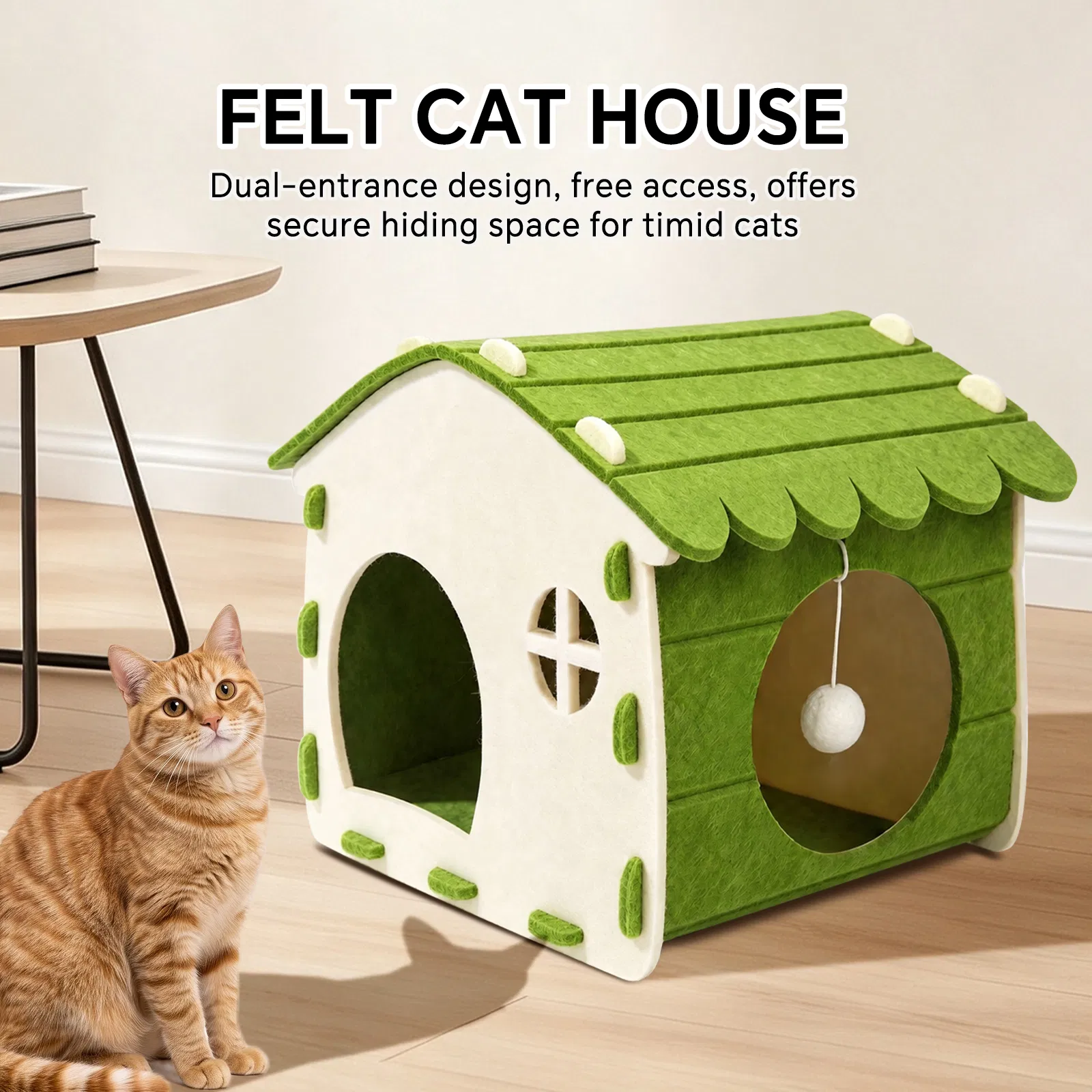

Photos from current listings. Actual item, color, and included accessories may vary.
Cute Cat Bed Buying Guide
Cute cat beds are enclosed hideouts, baskets, and stair-shaped climbing furniture that trade whimsical design for feline security and scratch durability. The core trade-off is between felt or fabric shells that offer warmth and privacy but sag over time, and wood or sisal-reinforced frames that hold shape and withstand clawing. Choose a felt hideout only if your cat is a burrower and you accept periodic reshaping; choose sisal-post or wood-frame designs if scratching and structural longevity are priorities.
Key takeaways
- Felt hideouts rely on dense wool-blend felt (typically 3-5mm) for shape retention; thin craft felt under 2mm collapses and pills within months of daily use.
- Sisal-wrapped posts determine scratch life: tightly wound natural sisal on a rigid core lasts years, while loose or glued-on sisal strips shed and expose cardboard cores.
- Dual-entrance hideouts reduce feline stress by preventing single-exit trapping; single-door designs suit confident cats but cause avoidance in multi-cat homes.
At a glance
- Category
- Pet Beds & Cat Trees
- Last updated
- Nov 28, 2026
Current offers
Highlights
- Felt hideouts rely on dense wool-blend felt (typically 3-5mm) for shape retention; thin craft felt under 2mm collapses and pills within months of daily use.
- Sisal-wrapped posts determine scratch life: tightly wound natural sisal on a rigid core lasts years, while loose or glued-on sisal strips shed and expose cardboard cores.
- Dual-entrance hideouts reduce feline stress by preventing single-exit trapping; single-door designs suit confident cats but cause avoidance in multi-cat homes.
- Elevated baskets and stair trees require a base footprint wider than the top platform; a top perch overhanging its base by more than a third becomes tip-prone for jumping cats.
Best use cases
- Best fit: a shy or new cat needing a covered retreat — pick a dual-entrance felt cottage with a hanging toy for enrichment and a removable, washable cushion.
- Best fit: a scratcher-destroyer household — choose a sisal-post basket or stair tree with fully wrapped posts and replaceable scratch surfaces rather than a plain fabric bed.
- Wrong fit: a large or arthritic cat — skip elevated baskets and stair trees; a low-entry, wide-base hideout with a firm foam pad is safer and easier to enter.
- Wrong fit: a chewer or heavy shedder — avoid glued felt seams and dangling cords; choose tight-woven fabric covers and solid wood or metal frame joints.
Buying tips
- Match entry width to cat girth: a doorway at least 6-7 inches wide and 8 inches tall fits average adults; under 6 inches suits kittens only and traps larger cats.
- For elevated beds, pick a base at least 60-70% of the top platform width; stair trees with 4 steps need roughly 20-24 inches of run to be climbable, not decorative.
- Felt grade rule: 100% wool or wool-blend felt at 3mm+ resists pilling and holds shape; polyester craft felt under 2mm is a disposable tier, not a durable one.
- Scratch post rule: natural sisal rope wrapped on wood or PVC cores outlasts carpet-covered posts; carpet posts shed fibers and mat down within a season.
Specs
| Shell Material | Wool-blend felt / Wood / Fabric |
|---|---|
| Entrance Count | Single-door vs Dual-entrance hideout |
| Scratch Post Wrap | Natural sisal vs Carpet vs None |
| Base Stability | Wide-base platform vs Overhung perch |
Related searches
What to check before buying
- Measure your cat nose-to-tail-base and add 2-3 inches each way; the interior floor must exceed body length for the cat to curl without pressing against walls.
- Confirm the doorway clears your cat's shoulder height and that a second exit exists if you have dogs or multiple cats.
- Check the footprint against your floor plan: stair trees and elevated baskets need 1-2 feet of clearance on all sides for jump landings and wall clearance.
- Verify the frame material and joint hardware — wood or metal frames with bolted joints stay rigid; stapled or glued cardboard cores wobble and fail.
FAQ
Data sources: eBay / Amazon listings and product attribute feeds. Updated Nov 28, 2026.
Some links on this page are affiliate links. If you buy after clicking one, we may earn a commission at no extra cost to you. This does not change which products appear here or their order. Affiliate disclosure.