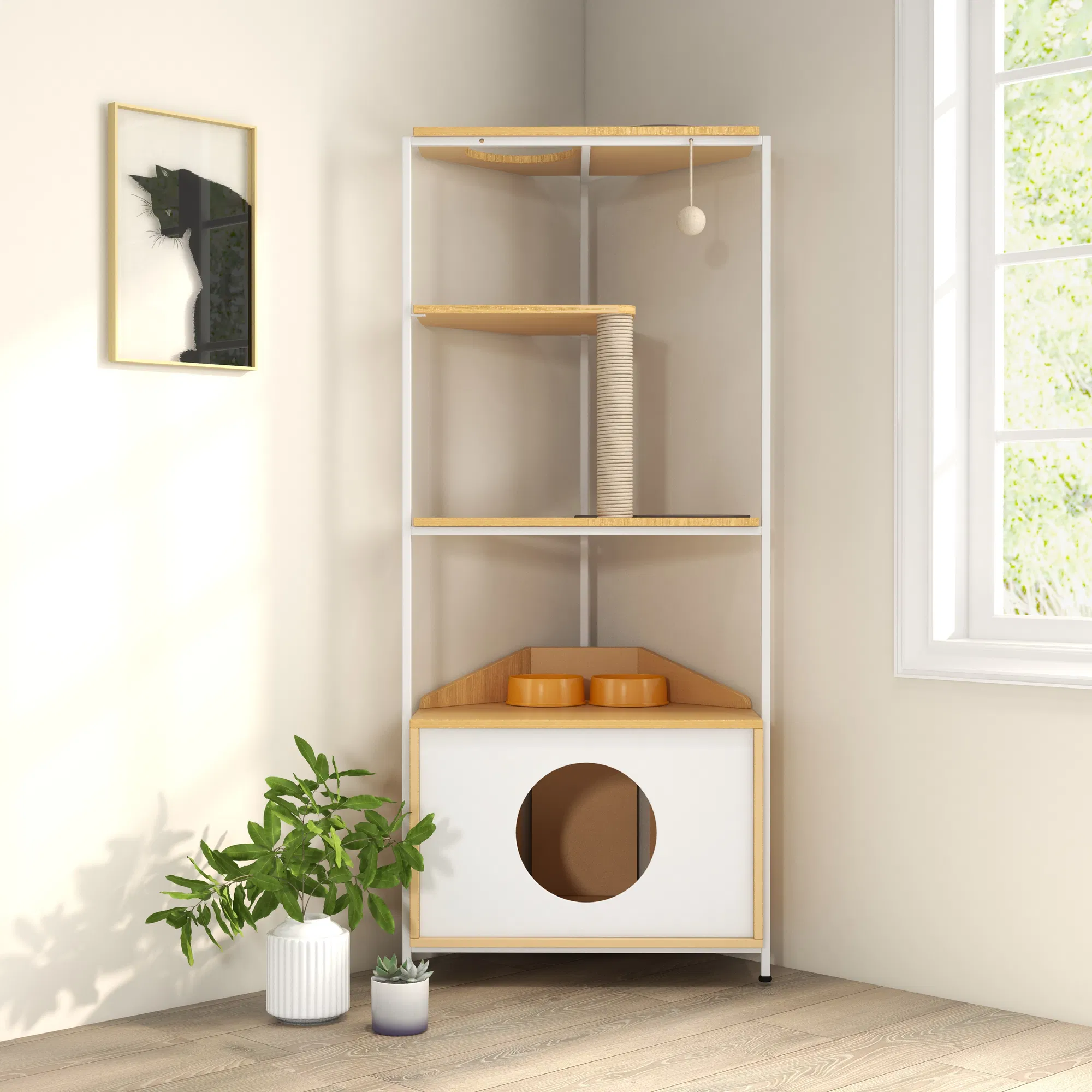

Photos from current listings. Actual item, color, and included accessories may vary.
Corner Cat Tree Buying Guide
A corner cat tree is a space-efficient climbing structure that uses a 90° footprint to fit into room corners, typically combining scratching posts, platforms, and a condo. The primary trade-off is between footprint efficiency and stability—corner models save floor space but must anchor securely or they wobble and tip. Buyers should prioritize a wide base or wall-anchoring hardware and sisal-wrapped posts over tall, narrow towers with small platforms.
Key takeaways
- Sisal rope wrapping of 6–8 mm thickness on posts provides durable scratching surfaces; thinner rope or carpet-only posts wear through quickly and fail to satisfy cats' scratching needs.
- Platform load ratings should support at least 15–20 lb per level for large cats; platforms under 12×12 inches are too small for adult cats to lie on comfortably.
- Corner-specific designs use a triangular or L-shaped base to maximize stability in a 90° wall junction; round or square bases in corners waste space and reduce anchor contact.
At a glance
- Category
- Pet Beds & Cat Trees
- Last updated
- Nov 28, 2026
Current offers
Highlights
- Sisal rope wrapping of 6–8 mm thickness on posts provides durable scratching surfaces; thinner rope or carpet-only posts wear through quickly and fail to satisfy cats' scratching needs.
- Platform load ratings should support at least 15–20 lb per level for large cats; platforms under 12×12 inches are too small for adult cats to lie on comfortably.
- Corner-specific designs use a triangular or L-shaped base to maximize stability in a 90° wall junction; round or square bases in corners waste space and reduce anchor contact.
- Wall-anchoring straps or brackets are critical for towers over 40 inches tall—freestanding corner trees without anchors are a tipping hazard for active cats.
Best use cases
- Best fit: small apartments or rooms with unused corners—choose a corner tree with a footprint under 24×24 inches and at least two wall-anchor points to secure stability without floor space sacrifice.
- Best fit: multi-cat households—select a model with two or more condos or large platforms (16×16 inches or bigger) and posts spaced at least 12 inches apart to prevent traffic jams.
- Wrong fit: homes with senior or arthritic cats—skip tall multi-level corner towers with steep jumps; instead pick a low-profile corner tree with ramps or steps and platforms no more than 12 inches apart vertically.
- Wrong fit: renters who cannot drill walls—avoid tall corner trees that require wall anchoring; choose a low center-of-gravity model under 30 inches tall with a weighted base instead.
Buying tips
- Measure the corner's available floor space: the tree's base must sit flush against both walls. Allow at least 2 inches of clearance from any baseboard or molding to avoid gaps that destabilize the unit.
- Check post diameter: 3–4 inch diameter sisal posts are standard for stability and scratching; posts under 2.5 inches flex and wobble under a cat's weight.
- Match platform height to cat age and agility: active adults do well with 3–5 levels up to 60 inches; kittens and seniors need levels spaced no more than 10–12 inches apart.
- Verify the base material: engineered wood or plywood bases at least 0.5 inch thick resist tipping better than particleboard under 0.4 inch, which can crack at anchor points.
Specs
| Post Material | Sisal rope vs carpet-wrapped |
|---|---|
| Base Shape | Triangular / L-shaped corner base |
| Height Range | 30–70 in (anchored above 40 in) |
| Platform Size | 12×12 in min; 16×16 in large cats |
Related searches
What to check before buying
- Measure the corner's floor-to-ceiling height and available width along both walls; ensure the tree's tallest platform leaves at least 6 inches of headroom for a standing cat.
- Confirm wall type and anchoring: drywall requires toggle bolts or heavy-duty anchors included with the tree; brick or concrete needs appropriate masonry fasteners not typically supplied.
- Check ceiling height and platform clearance: the top platform should be at least 12 inches below the ceiling to prevent a cat from launching off and hitting its head.
- Verify the base footprint fits the corner without blocking vents, outlets, or door swings—allow 6 inches of clearance on any open side for cat entry and exit.
FAQ
Data sources: eBay / Amazon listings and product attribute feeds. Updated Nov 28, 2026.
Some links on this page are affiliate links. If you buy after clicking one, we may earn a commission at no extra cost to you. This does not change which products appear here or their order. Affiliate disclosure.