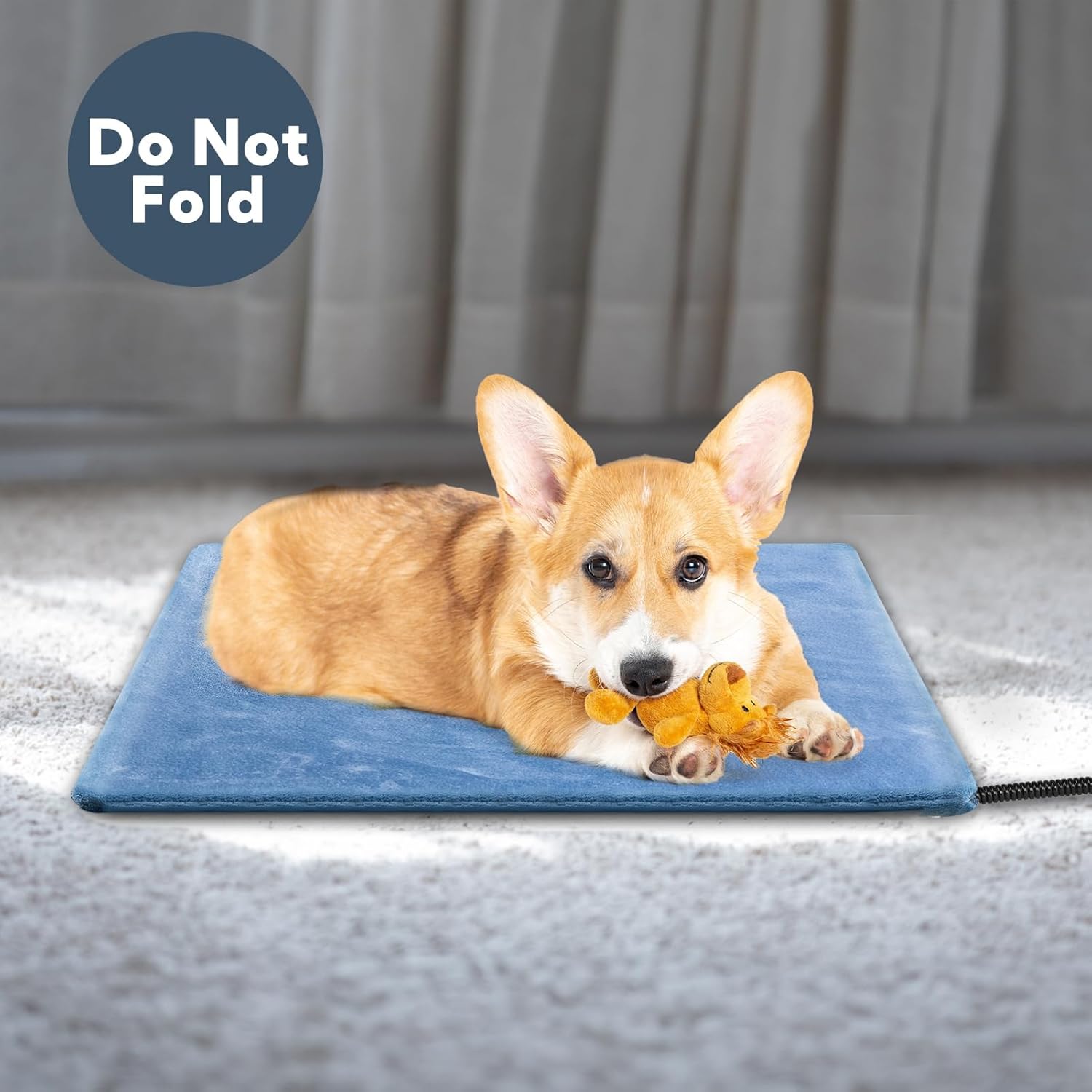

Photos from current listings. Actual item, color, and included accessories may vary.
Cat Heating Pad Buying Guide
A cat heating pad is a low-voltage warming surface that provides therapeutic heat for indoor cats, and the core trade-off is between chew-resistant, temperature-regulated safety and cheap unregulated resistive pads. Durable options use dual-thermostat or self-regulating heating wire with a fused anti-chew cord and a removable washable cover; compromises skimp on thermal cutoff, use thin PVC that a determined chewer can breach, and lack a waterproof membrane. The decision rule is simple: buy only a pad with an independent thermal cutoff and a UL/ETL-listed adapter, and skip any pad sold without a chew-resistant cord rating or a stated surface temperature ceiling.
Key takeaways
- Surface temperature ceiling: safe indoor cat pads hold 95-102°F (35-39°C), which is warm to the touch but below the 113°F (45°C) threshold where feline skin burn risk rises.
- Chew-resistant cord construction uses a braided metal or reinforced PVC jacket with a fused plug; standard unbraided two-wire cords are the leading failure point on outdoor and kitten use.
- Heat element types: self-regulating carbon-film or positive-temperature-coefficient (PTC) wire throttles output as it warms, while simple nichrome resistive wire runs at constant wattage and needs an external thermostat.
At a glance
- Category
- Pet Beds & Cat Trees
- Last updated
- Nov 28, 2026
Current offers
Highlights
- Surface temperature ceiling: safe indoor cat pads hold 95-102°F (35-39°C), which is warm to the touch but below the 113°F (45°C) threshold where feline skin burn risk rises.
- Chew-resistant cord construction uses a braided metal or reinforced PVC jacket with a fused plug; standard unbraided two-wire cords are the leading failure point on outdoor and kitten use.
- Heat element types: self-regulating carbon-film or positive-temperature-coefficient (PTC) wire throttles output as it warms, while simple nichrome resistive wire runs at constant wattage and needs an external thermostat.
- Cover and shell materials separate washable tiers: removable plush or fleece covers over a waterproof TPU/PVC inner liner are cleanable, while sealed vinyl-only pads wipe clean but cannot be machine washed.
Best use cases
- Indoor senior or arthritic cat: pick a 95-102°F pad with a removable fleece cover and 2-4 hour auto-off, sized at least 1.5x the cat's stretched body length so the cat can shift off the warm zone.
- Outdoor or garage/barn shelter: choose a pad rated for the enclosure's ambient low with a waterproof membrane, braided anti-chew cord, and an elevated or insulated base; skip indoor-only thin vinyl pads that crack below freezing.
- Multi-cat household: select a larger pad sized for the number of cats that will share it (roughly 12x12 in per cat minimum) with a single thermostat, and skip stacked pads or daisy-chained extension cords, which defeat thermal cutoff.
- Wrong fit to skip: kittens under 8 weeks, cats that chew cords, or cats with limited mobility should not use an unattended pad without a chew-proof cord and a low-temperature cutoff.
Buying tips
- Match wattage to size: small pads (12x16 in) typically run 4-8 W, medium (16x24 in) 10-20 W, and large (24x36 in) 20-40 W; a pad drawing far more wattage for its size runs hotter and needs stricter thermostat control.
- Sizing math: measure the cat nose-to-tail-base while stretched and add 4-6 in on each axis; a pad shorter than the cat's body forces the cat to hang off the warm zone and defeats the purpose.
- Require a listed safety mark (UL, ETL, or equivalent) on the power adapter, plus a built-in thermal cutoff independent of the user thermostat; a single thermostat is a single point of failure.
- For outdoor use, confirm the pad's stated ambient operating range and IP rating of the cover, and choose a braided anti-chew cord over a standard cord; a heated pad inside an unheated shelter needs a pad rated below the local winter low.
Specs
| Heat Element | Self-regulating PTC vs nichrome wire |
|---|---|
| Surface Temp | 95-102°F (35-39°C) safe ceiling |
| Cord Safety | Braided anti-chew + fused plug |
| Cover Type | Removable washable vs sealed vinyl |
Related searches
What to check before buying
- Measure the bed or cat-tree platform and the cat's stretched length; the pad must fit flat without folding, since folded heating elements overheat.
- Confirm the outlet or USB power source and cord length reach the pad location without an extension cord, and that the adapter carries a UL/ETL mark.
- For outdoor shelters, check the enclosure's ambient winter low against the pad's operating range and confirm the pad has a waterproof liner and braided cord.
- Verify the cover is removable and machine washable, and that the cat is not a known cord chewer before leaving any powered pad unattended.
FAQ
Data sources: eBay / Amazon listings and product attribute feeds. Updated Nov 28, 2026.
Some links on this page are affiliate links. If you buy after clicking one, we may earn a commission at no extra cost to you. This does not change which products appear here or their order. Affiliate disclosure.