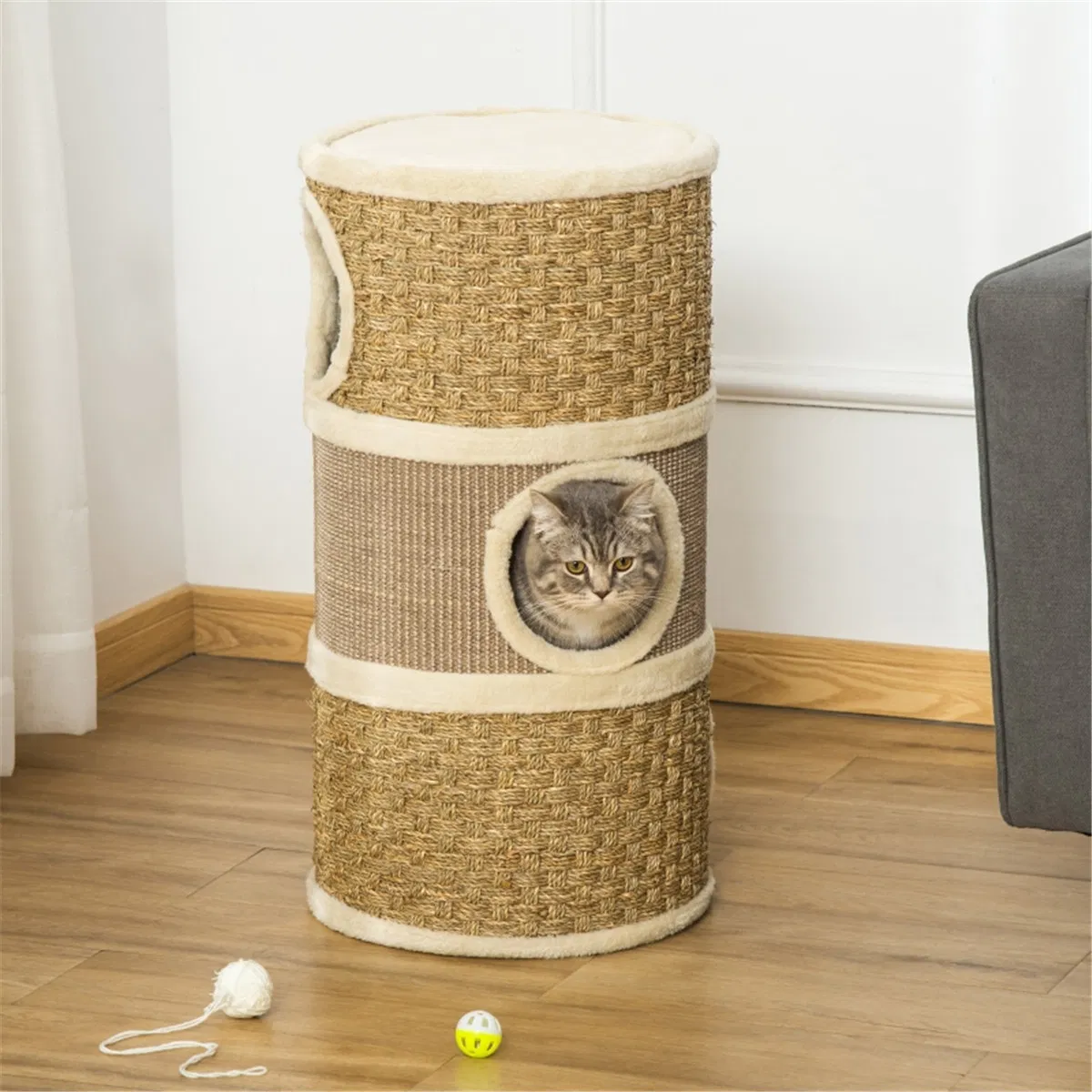

Photos from current listings. Actual item, color, and included accessories may vary.
Cat Climbing Tower Buying Guide
A cat climbing tower is a vertical activity structure—freestanding or tension-mounted floor-to-ceiling—that combines scratching posts, perches, and hiding spots to satisfy a cat's need to climb, scratch, and survey. The core trade-off is stability versus footprint: taller towers demand either a wide weighted base or a tension rod that grips the ceiling, while shorter condo-style towers trade height for floor space. The decision rule is simple: if you have a standard 8–9 ft ceiling and a cat that climbs aggressively, buy a tension-mounted floor-to-ceiling tower with sisal posts and a top platform rated for dynamic load; if you have low ceilings, sloped ceilings, or a renter who cannot mark walls, choose a wide-base freestanding tower under 60 inches with anti-tip straps.
Median $150.99
Key takeaways
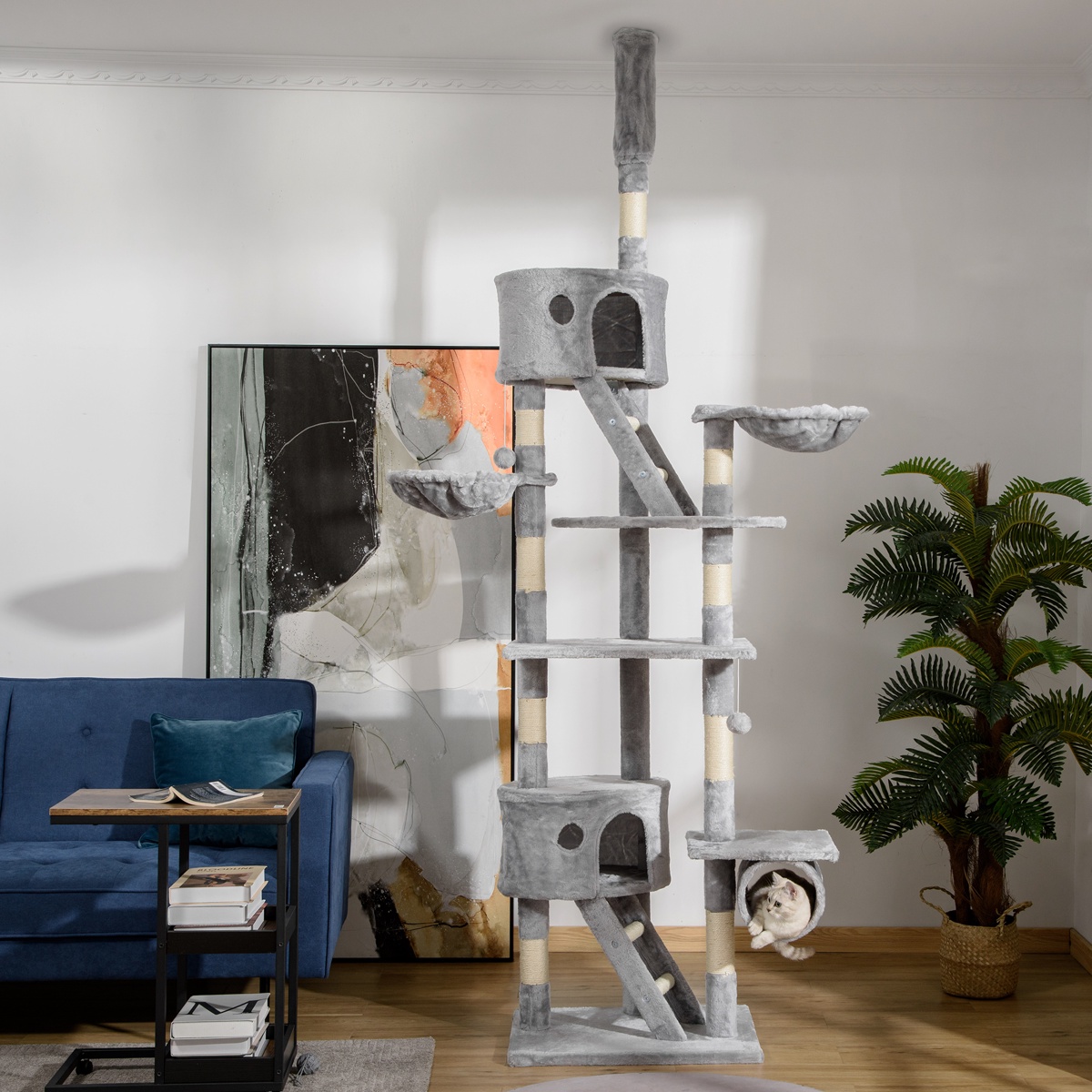
- Floor-to-ceiling towers rely on a spring or threaded tension rod that compresses against the ceiling; usable height range is typically 90–102 inches, so measure ceiling height before buying.
- Sisal rope wrapping on scratching posts is the durability standard—look for tightly wound 3–4 mm sisal over a solid wood or PVC core, not cardboard or carpet, which shreds within months.
- Stability comes from base area and mass: a freestanding tower taller than 50 inches needs a base at least 16×16 inches and 15–20 lb of weighted mass, or wall-anchoring hardware included.
At a glance
- Category
- Pet Beds & Cat Trees
- Last updated
- Nov 27, 2026
Current offers
Highlights
- Floor-to-ceiling towers rely on a spring or threaded tension rod that compresses against the ceiling; usable height range is typically 90–102 inches, so measure ceiling height before buying.
- Sisal rope wrapping on scratching posts is the durability standard—look for tightly wound 3–4 mm sisal over a solid wood or PVC core, not cardboard or carpet, which shreds within months.
- Stability comes from base area and mass: a freestanding tower taller than 50 inches needs a base at least 16×16 inches and 15–20 lb of weighted mass, or wall-anchoring hardware included.
- Wood-frame construction (solid pine or MDF) outperforms particleboard in load-bearing platforms; MDF is acceptable for perches but should be at least 0.5 inch thick to resist sagging under a jumping cat.
Best use cases
- Best fit: multi-cat households with active climbers and standard 8–9 ft flat ceilings—choose a tension-mounted floor-to-ceiling tower with 3-rod support and at least 5 levels.
- Best fit: apartments or renters with low or sloped ceilings—choose a freestanding tower under 60 inches with a wide base and anti-tip strap, skipping tension rods entirely.
- Wrong fit: senior cats or kittens under 6 months—skip tall towers above 60 inches and choose a low 3-level condo with ramps to prevent falls.
- Wrong fit: homes with popcorn or drop ceilings—tension rods can crack or compress these surfaces; use a wall-anchored freestanding tower instead.
Buying tips
- Measure ceiling height at the installation spot; tension towers adjust in ranges like 90.6–102.4 inches, so buy only if your ceiling falls inside the stated range.
- Match tower height to cat age and energy: kittens and seniors do best under 50 inches, while active adults benefit from 70–100 inch vertical runs with staggered perches.
- Check platform diameter: perches should be at least 12–14 inches across for average cats, and 16 inches for Maine Coons or other large breeds.
- Confirm scratching post material is sisal rope over a solid core; carpet-wrapped posts offer little scratching satisfaction and wear out faster.
Specs
| Mounting Type | Freestanding base vs tension rod |
|---|---|
| Height Range | 50–102 in adjustable |
| Scratch Material | Sisal rope vs carpet wrap |
| Frame Material | Solid wood / MDF / particleboard |
Related searches
What to check before buying
- Ceiling height and type: measure floor-to-ceiling distance and confirm it is flat and structurally solid (drywall over studs or concrete) before choosing a tension tower.
- Floor space and base footprint: ensure the base (typically 16×16 to 24×24 inches) fits without blocking walkways, and that the tower sits on level flooring.
- Cat size and count: verify perch diameter and level spacing suit your heaviest cat; multi-cat homes need at least two perches and two scratching surfaces.
- Wall-anchoring permission: freestanding towers above 50 inches should include or accept anti-tip straps—confirm you can anchor to wall studs if required.
FAQ
Data sources: eBay / Amazon listings and product attribute feeds. Updated Nov 27, 2026.
Some links on this page are affiliate links. If you buy after clicking one, we may earn a commission at no extra cost to you. This does not change which products appear here or their order. Affiliate disclosure.