
Photos from current listings. Actual item, color, and included accessories may vary.
Cat Bed With Heating Pad Buying Guide
A cat bed with heating pad combines a powered heat source with a resting enclosure, and the deciding trade-off is whether the bed is an indoor-only comfort pad or a weatherproof outdoor shelter with insulated walls. Durable options use removable, chew-resistant covers, thermostat or self-regulating heat, and a defined wattage; compromises are thin fabric shells and unregulated pads with exposed cords.
Median $117.99
Key takeaways
- Outdoor heated cat houses typically pair a 20–40 W pad with insulated walls and a waterproof shell; indoor pads are often 4–20 W with machine-washable fleece covers.
- Chew resistance is specified by cord construction: anti-chew stainless-steel or braided conduit with a strain-relief grommet survives gnawing better than standard PVC lamp cord.
- Self-regulating or thermostat-controlled pads cap surface temperature around 100–102°F; unregulated resistive pads can spike and are not safe for unsupervised use.
At a glance
- Category
- Pet Beds & Cat Trees
- Last updated
- Nov 27, 2026
Current offers
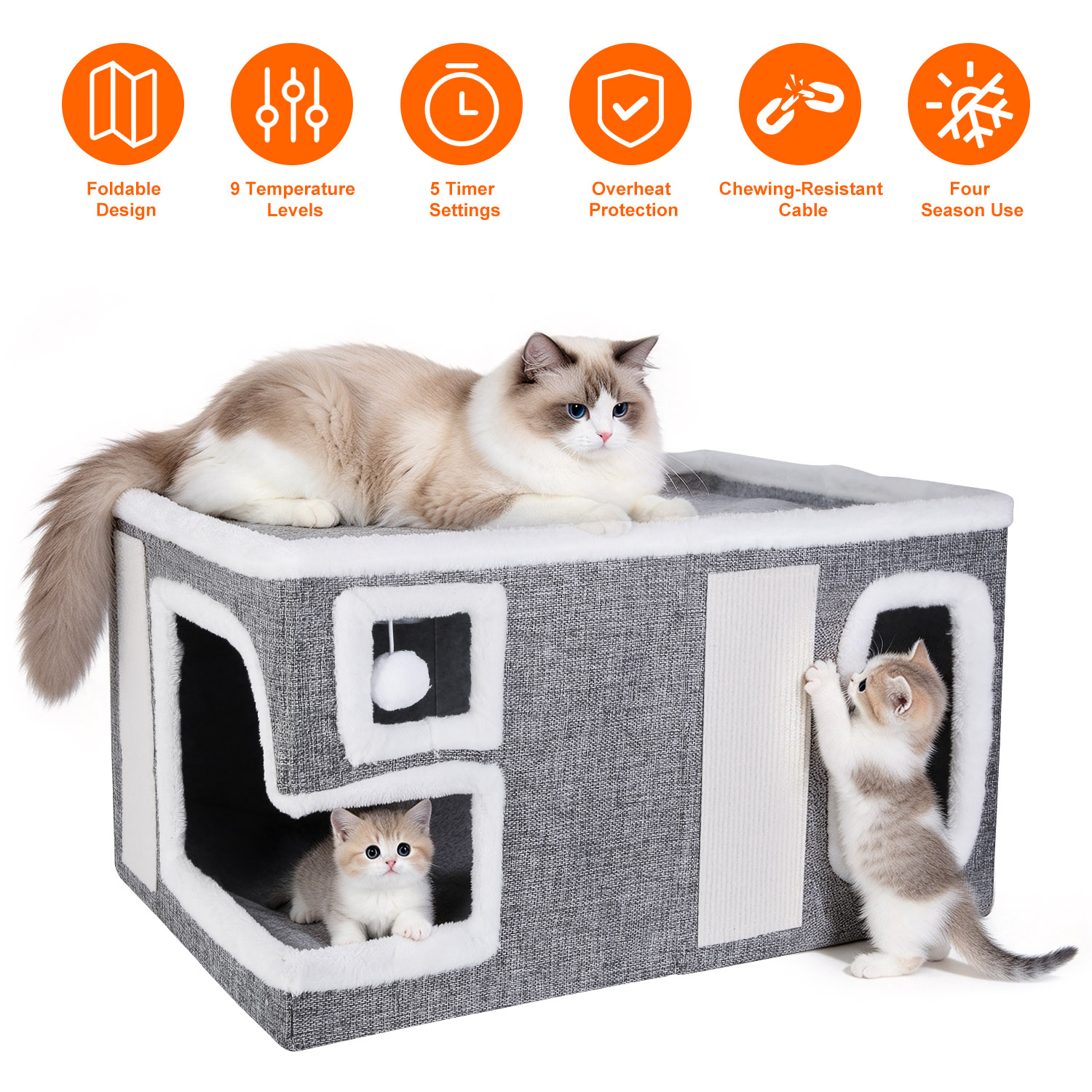 Heated Cat House Indoor Foldable Cat Cave Bed With Adjustable Heating Pad 9 Temperature Levels 5 Timers Sisal Scratcher Reversible Cushions For Cats Up To 22lbs$75.99View on Mallflare
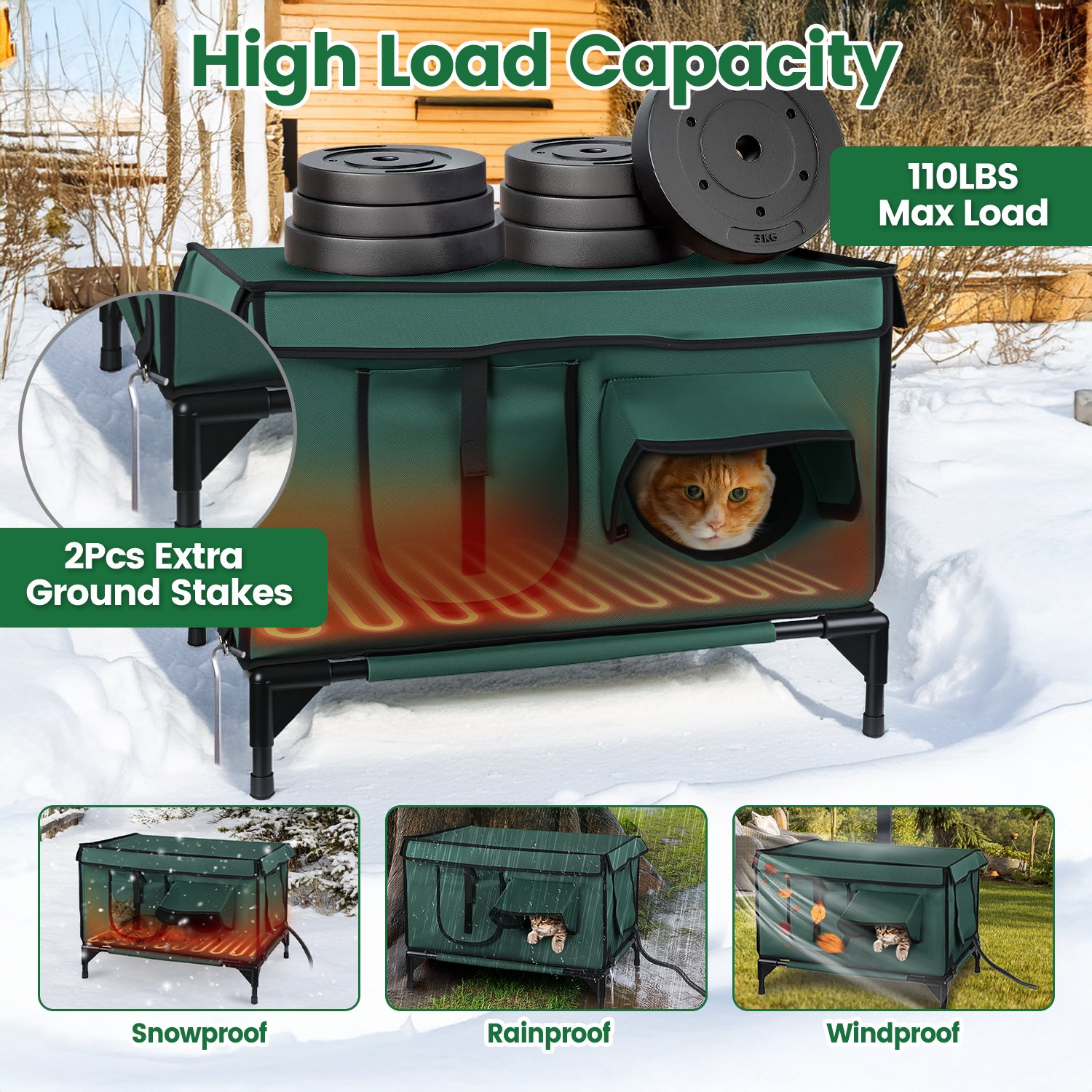 1Pc Waterproof Heated Cat House Outdoor Weatherproof Insulated Kitty Shelter Feral Cat Heating Bed With Pad Anti-Chew Cord 2 Doors 3 Windows For Indoors Outdoors Winter Summer$117.99View on Mallflare
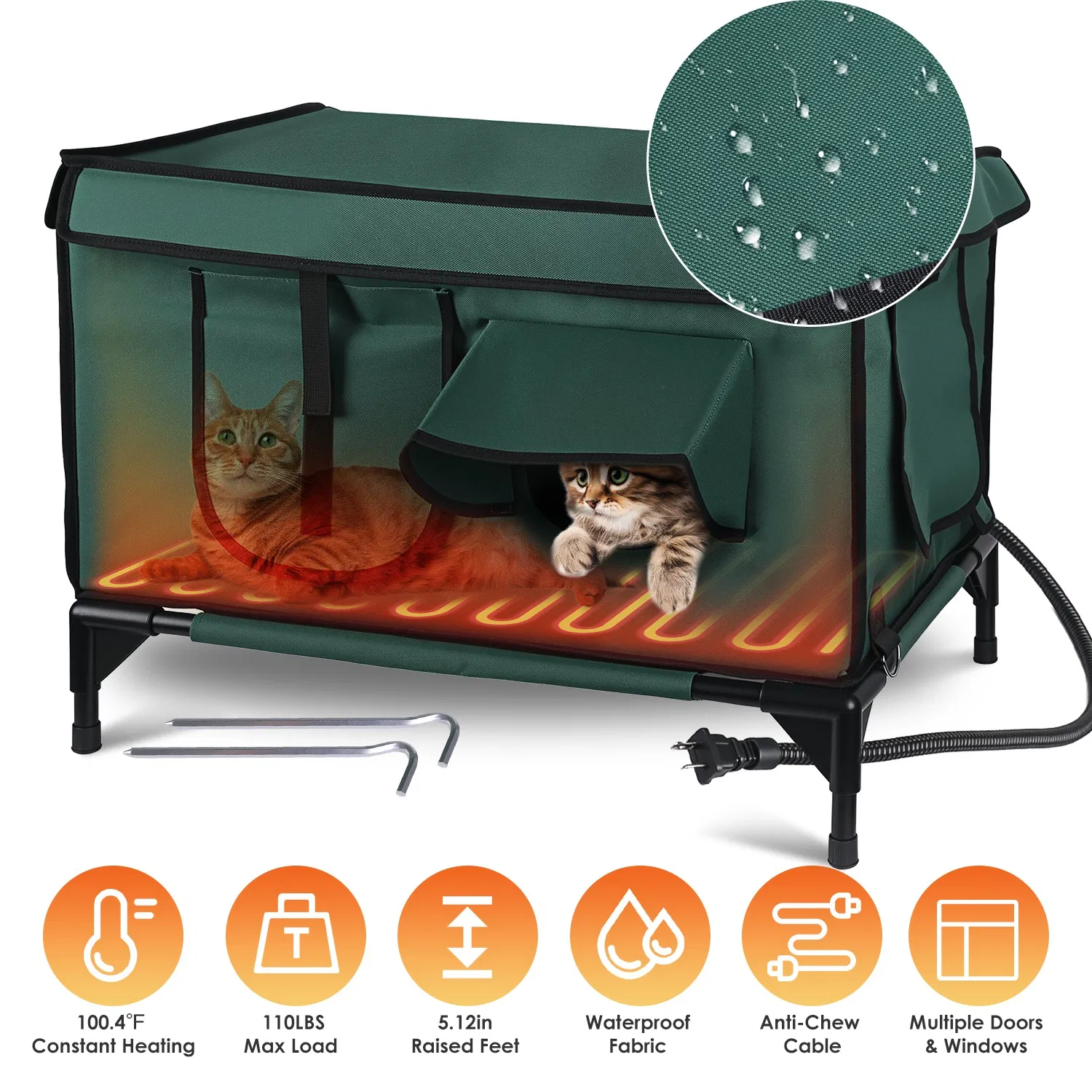 Waterproof Heated Cat House Outdoor Weatherproof Insulated Kitty Shelter Feral Cat Heating Bed with Pad Anti-Chew Cord 2 Doors 3 Windows for Indoors Outdoors Winter Summer$126.99View on Mallflare
Highlights
- Outdoor heated cat houses typically pair a 20–40 W pad with insulated walls and a waterproof shell; indoor pads are often 4–20 W with machine-washable fleece covers.
- Chew resistance is specified by cord construction: anti-chew stainless-steel or braided conduit with a strain-relief grommet survives gnawing better than standard PVC lamp cord.
- Self-regulating or thermostat-controlled pads cap surface temperature around 100–102°F; unregulated resistive pads can spike and are not safe for unsupervised use.
- Two-door, three-window shelters improve ventilation and escape routes, while a raised floor and removable pad base simplify cleaning and keep bedding dry.
Best use cases
- Best fit: feral or outdoor cats in winter — pick an insulated weatherproof house with a 20–40 W pad, anti-chew cord, and two doors so the cat cannot be cornered.
- Best fit: senior or arthritic indoor cats — choose a low-wattage (4–20 W) thermostat-controlled pad with a washable cover that fits inside an existing bed or tree cubby.
- Wrong fit: kittens, pregnant queens, or cats that chew cords — skip heated beds entirely; use unheated bedding until the cat is past chewing and can move away from heat independently.
- Wrong fit: unheated garages below freezing — standard outdoor shelters are not climate-controlled; skip fabric-only units and choose an insulated house rated for the expected low temperature with a self-regulating pad.
Buying tips
- Match pad wattage to enclosure volume: 4–20 W for indoor beds and cubbies, 20–40 W for insulated outdoor houses; oversized wattage in a small bed overheats the cat.
- Choose a pad with a removable, machine-washable cover and a waterproof inner liner; fabric-only shells absorb urine and odor and cannot be sanitized.
- Confirm the cord exits through a metal grommet with strain relief and is rated anti-chew; standard lamp cord is the most common failure point in outdoor heated beds.
- For outdoor use, select a shelter with insulated walls, a raised floor, and a waterproof roof; a heating pad alone does not protect against wind or rain.
Specs
| Heat Source | Thermostat vs self-regulating pad |
|---|---|
| Pad Wattage | 4–20 W indoor / 20–40 W outdoor |
| Cord Safety | Anti-chew conduit + metal grommet |
| Shell Rating | Insulated waterproof vs fabric indoor |
Related searches
What to check before buying
- Measure the cat's resting length and the bed's interior dimensions; a heated bed should allow the cat to lie fully stretched and to move off the pad if too warm.
- Check the power source: outdoor houses need a covered, GFCI-protected outlet within cord reach; indoor pads need a nearby outlet and a cord path away from chewing pets.
- Verify climate compatibility: outdoor shelters work best in dry, sheltered locations; in sustained freezing or wet exposure, insulation and waterproofing matter more than pad wattage.
- Confirm the bed fits the intended spot — inside a cat tree cubby, on a windowsill, or under a porch — and that the pad is removable for washing and replacement.
FAQ
Data sources: eBay / Amazon listings and product attribute feeds. Updated Nov 27, 2026.
Some links on this page are affiliate links. If you buy after clicking one, we may earn a commission at no extra cost to you. This does not change which products appear here or their order. Affiliate disclosure.