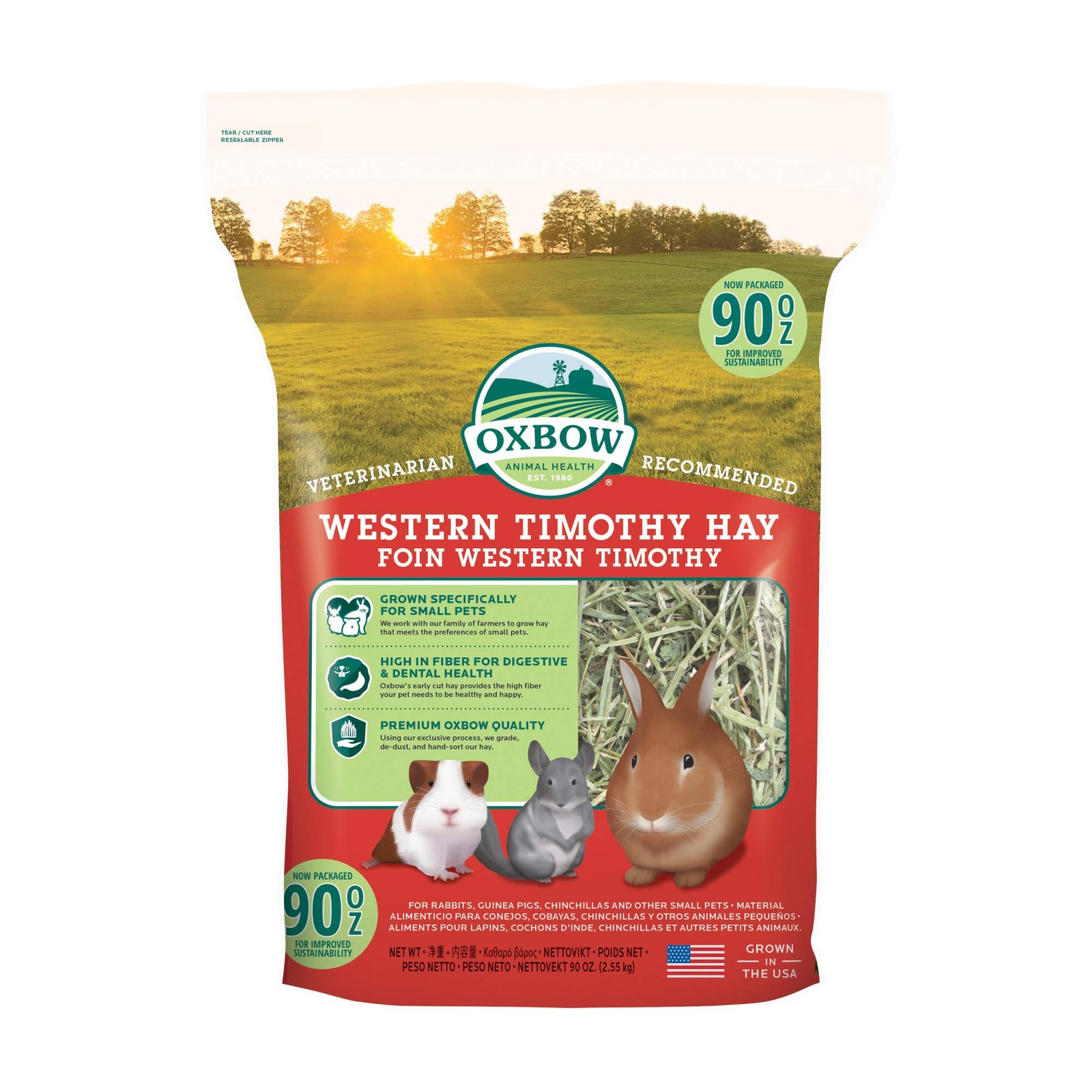

Photos from current listings. Actual item, color, and included accessories may vary.
Oxbow Western Timothy Hay Buying Guide
Oxbow Western Timothy Hay is a premium grass hay for small herbivores, defined by first-cutting versus second-cutting harvests and hand-sorted quality. The primary trade-off is stem vs leaf ratio: first cutting offers coarse high-fiber stems for dental wear and digestion, while second cutting provides softer leaf-heavy forage for picky eaters. Choose first cutting for adult rabbits and guinea pigs needing grinding fiber, second for young or finicky animals; avoid dusty or brown-baled hay that signals poor storage.
Key takeaways
- First-cutting Timothy has thick stems and seed heads for maximum dental abrasion; second-cutting is leafier and softer with lower fiber.
- Oxbow hay is hand-sorted and sun-cured; Western Timothy is grown in the Pacific Northwest and graded for consistent color and aroma.
- Guinea pigs require a minimum 15% crude fiber diet; Timothy hay delivers 30-35% fiber, supporting gut motility and preventing obesity.
At a glance
- Category
- Bird & Small Animal Supplies
- Status
- Listings available
- Last updated
- Nov 27, 2026
Current offers
Highlights
- First-cutting Timothy has thick stems and seed heads for maximum dental abrasion; second-cutting is leafier and softer with lower fiber.
- Oxbow hay is hand-sorted and sun-cured; Western Timothy is grown in the Pacific Northwest and graded for consistent color and aroma.
- Guinea pigs require a minimum 15% crude fiber diet; Timothy hay delivers 30-35% fiber, supporting gut motility and preventing obesity.
- Packaging uses breathable bags to prevent mold; 90-ounce bags suit single small pets for 2-3 weeks, while 5-pound boxes last a month.
Best use cases
- Best for adult rabbits (over 7 months) and guinea pigs: choose first-cutting Western Timothy as the daily staple to wear down molars and maintain weight.
- Best for young rabbits (under 7 months), nursing mothers, or picky guinea pigs: use second-cutting Timothy for softer texture and higher palatability.
- Wrong for pets with dental disease or obesity: do not rely on second-cutting alone; mix in first-cutting or orchard grass for more chew.
- Skip for bedding: hay is food, not litter; use paper bedding or fleece liners underneath to avoid soiling edible hay.
Buying tips
- Match cutting to life stage: first cutting for adults and dental health, second cutting for weaning rabbits and guinea pigs under 6 months.
- Check bag weight: a 90-ounce bag feeds one guinea pig for about 2 weeks; two rabbits consume a 5-pound box in 3-4 weeks.
- Inspect for green color and sweet smell; brown or musty hay indicates aged stock with reduced vitamin A and palatability.
- Store in a cool, dry place with airflow; never seal hay in plastic, which traps moisture and promotes mold.
Specs
| Hay Type | Western Timothy grass |
|---|---|
| Cutting Grade | First (stem) / Second (leaf) |
| Crude Fiber | 30-35% |
| Package Size | 90 oz bag / 5 lb box |
Alternatives to compare
Related searches
What to check before buying
- Measure feeder capacity: a hay rack should hold at least a 3-day supply for your pet count to reduce refill frequency.
- Confirm pet species and age: rabbits and guinea pigs need grass hay; chinchillas also thrive on Timothy but require a pellet ration.
- Check storage space: 90-ounce bags require about 1 cubic foot; 5-pound boxes need 2 cubic feet of dry storage.
- Verify allergy tolerance: Timothy pollen can trigger reactions; consider orchard grass if household members are sensitive.
FAQ
Data sources: eBay / Amazon listings and product attribute feeds. Updated Nov 27, 2026.
Some links on this page are affiliate links. If you buy after clicking one, we may earn a commission at no extra cost to you. This does not change which products appear here or their order. Affiliate disclosure.