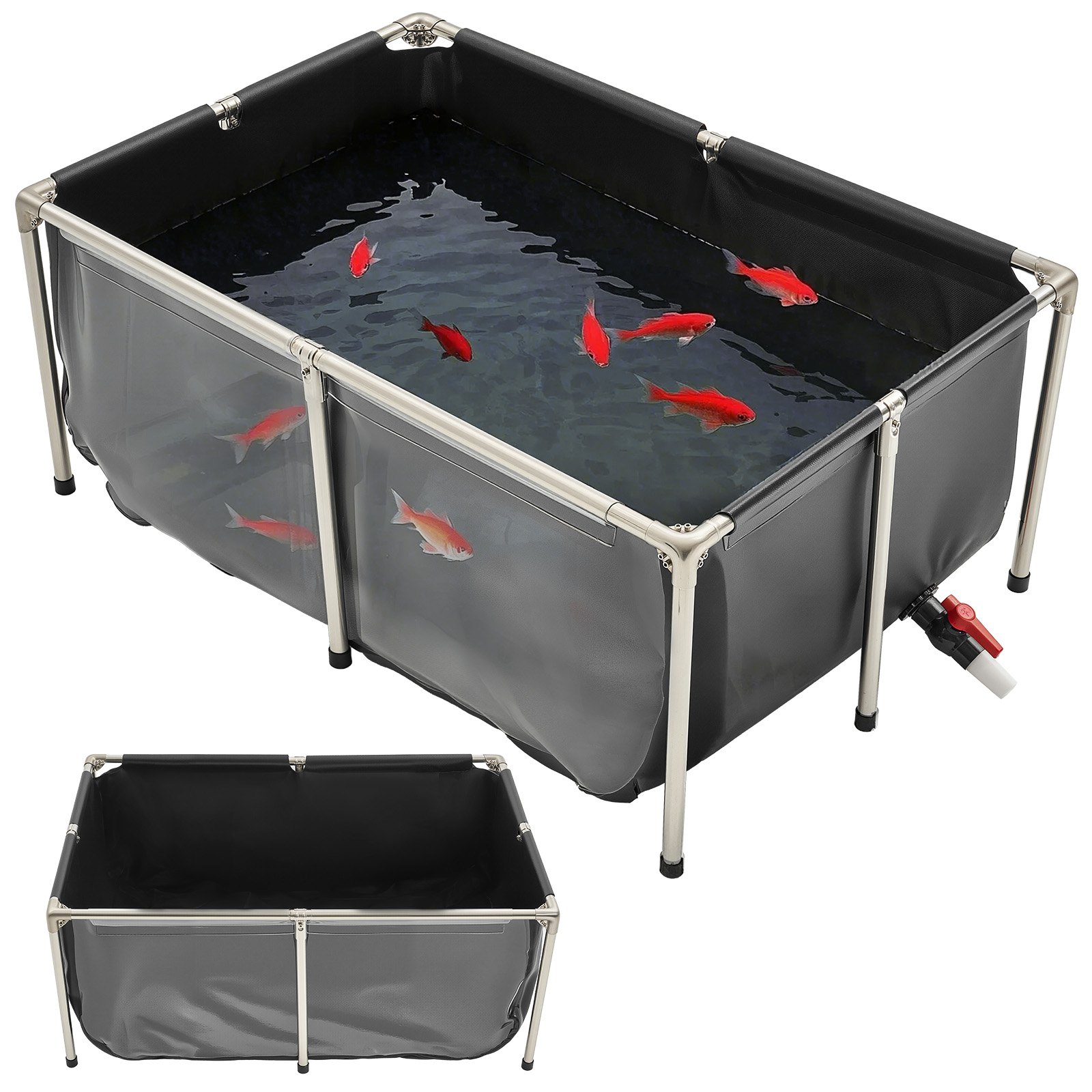

Photos from current listings. Actual item, color, and included accessories may vary.
Koi Tank Buying Guide
A koi tank is a high-volume, high-bioload aquatic system — either a rigid indoor aquarium or an above-ground canvas/PVC pond — built to handle the waste output and growth curve of koi, which reach 24-36 inches and require far more water than tropical fish. The core trade-off is water volume and filtration surface versus footprint and structural support: koi need 250+ gallons for the first fish and 100+ gallons per additional koi, so small glass tanks and decorative bowls are non-starters. The decision rule is simple: buy the largest volume your floor/frame can structurally support with a filtration turnover of at least 2x the tank volume per hour, or skip koi entirely.
Median $131.99
Key takeaways
- Koi growth math: juveniles outgrow a 10-20 gallon tank within one season; adult koi need 250+ gallons for the first fish and 100+ gallons per additional fish to dilute ammonia.
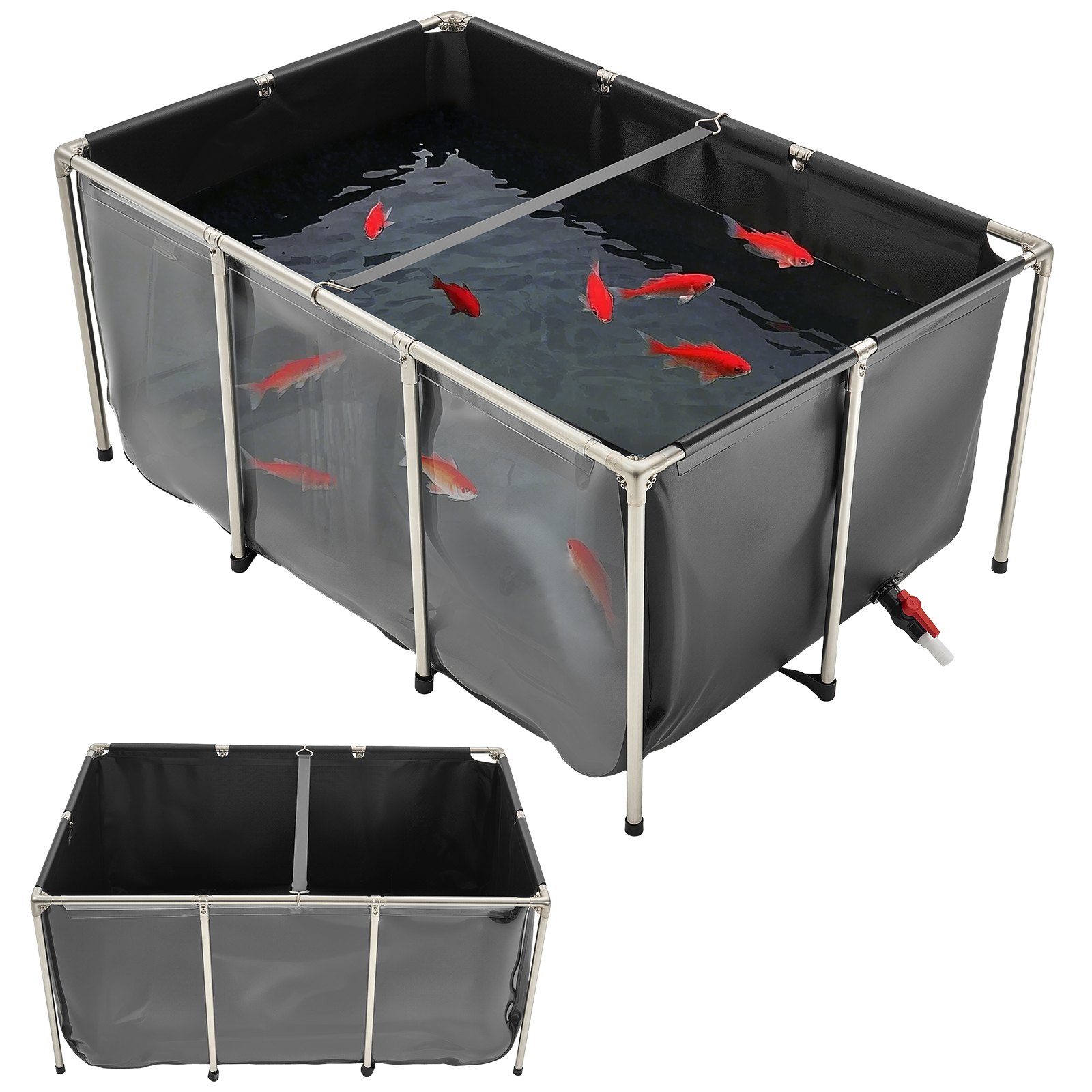
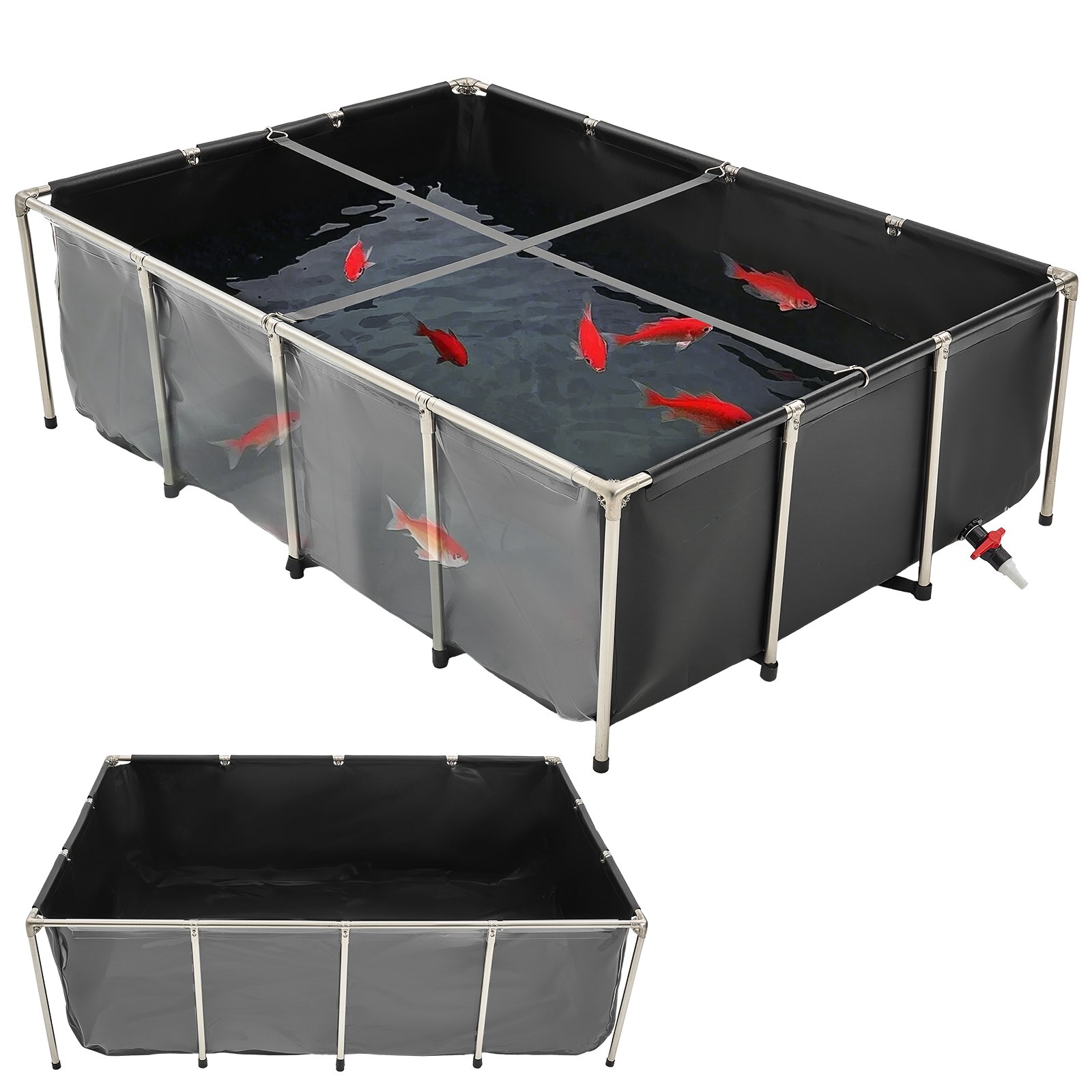
- Above-ground canvas/PVC ponds in the 126-470 gallon range use supported side walls and a clear viewing panel; they require a level, load-rated base and a pump rated for 2x turnover per hour.
- Rigid glass/acrylic tanks above 125 gallons demand a level stand rated for water weight (8.34 lb/gal) plus substrate and rock — a 180-gallon system weighs over 1,800 lb loaded.
At a glance
- Category
- Aquarium Tanks & Stands
- Last updated
- Nov 27, 2026
Current offers
Highlights
- Koi growth math: juveniles outgrow a 10-20 gallon tank within one season; adult koi need 250+ gallons for the first fish and 100+ gallons per additional fish to dilute ammonia.
- Above-ground canvas/PVC ponds in the 126-470 gallon range use supported side walls and a clear viewing panel; they require a level, load-rated base and a pump rated for 2x turnover per hour.
- Rigid glass/acrylic tanks above 125 gallons demand a level stand rated for water weight (8.34 lb/gal) plus substrate and rock — a 180-gallon system weighs over 1,800 lb loaded.
- Filtration is the real limiter: koi produce heavy waste, so a biofilter sized for 2-3x the pond volume and a solids prefilter outperform any tank upgrade of the same cost.
Best use cases
- Indoor overwintering or display: choose a rigid 125-180 gallon glass/acrylic tank on a steel or hardwood stand rated for the loaded weight; skip canvas ponds indoors unless a floor drain and liner protection are in place.
- Patio or garage above-ground koi tank: pick a 270-470 gallon canvas/PVC pond with a clear viewing panel and a 1,000+ GPH pump; skip the 126-gallon tier for more than one adult koi.
- Quarantine or grow-out: use a 100-150 gallon rigid tub or canvas tank with a sponge/box filter; skip 10-20 gallon tanks entirely — they are hospital tanks for small fish, not koi housing.
- Backyard in-ground build: a 1,000+ gallon lined pond with bottom drain and external biofilter is the correct tier; skip above-ground canvas units beyond 470 gallons because side-wall support and insulation become the failure point.
Buying tips
- Size by fish count, not by tank label: first koi 250 gallons, each additional adult 100+ gallons, so a 270-gallon canvas pond fits two adults at most with heavy filtration.
- Match pump turnover to 2x volume per hour: a 270-gallon pond needs 540+ GPH actual flow at head height, and a 470-gallon pond needs 940+ GPH — verify pump curves, not just box ratings.
- Choose canvas/PVC ponds with reinforced seams, UV-stabilized PVC (500+ gsm) and a rigid frame; thin liners and unsupported walls bulge and fail within a season.
- For rigid tanks, confirm the stand is rated for loaded weight: water alone is 8.34 lb/gal, so a 180-gallon tank is 1,500 lb of water before substrate and rock.
Specs
| Minimum Volume | 250 gal first koi; +100 gal each |
|---|---|
| Pump Turnover | 2x volume per hour at head height |
| Pond Liner Grade | UV-stabilized PVC 500+ gsm |
| Loaded Weight | 8.34 lb/gal water + substrate |
Related searches
What to check before buying
- Measure the footprint and confirm the floor or deck holds the loaded weight — a 470-gallon pond is over 3,900 lb of water plus frame and substrate.
- Check the base is perfectly level within 1/8 inch across the frame; canvas ponds on uneven ground stress seams and viewing panels.
- Confirm electrical access for a GFCI-protected outdoor outlet within cord reach of the pump and any heater or UV clarifier.
- Plan biofiltration and a solids prefilter sized for 2-3x pond volume, plus a test kit for ammonia, nitrite, and pH before adding koi.
FAQ
Data sources: eBay / Amazon listings and product attribute feeds. Updated Nov 27, 2026.
Some links on this page are affiliate links. If you buy after clicking one, we may earn a commission at no extra cost to you. This does not change which products appear here or their order. Affiliate disclosure.