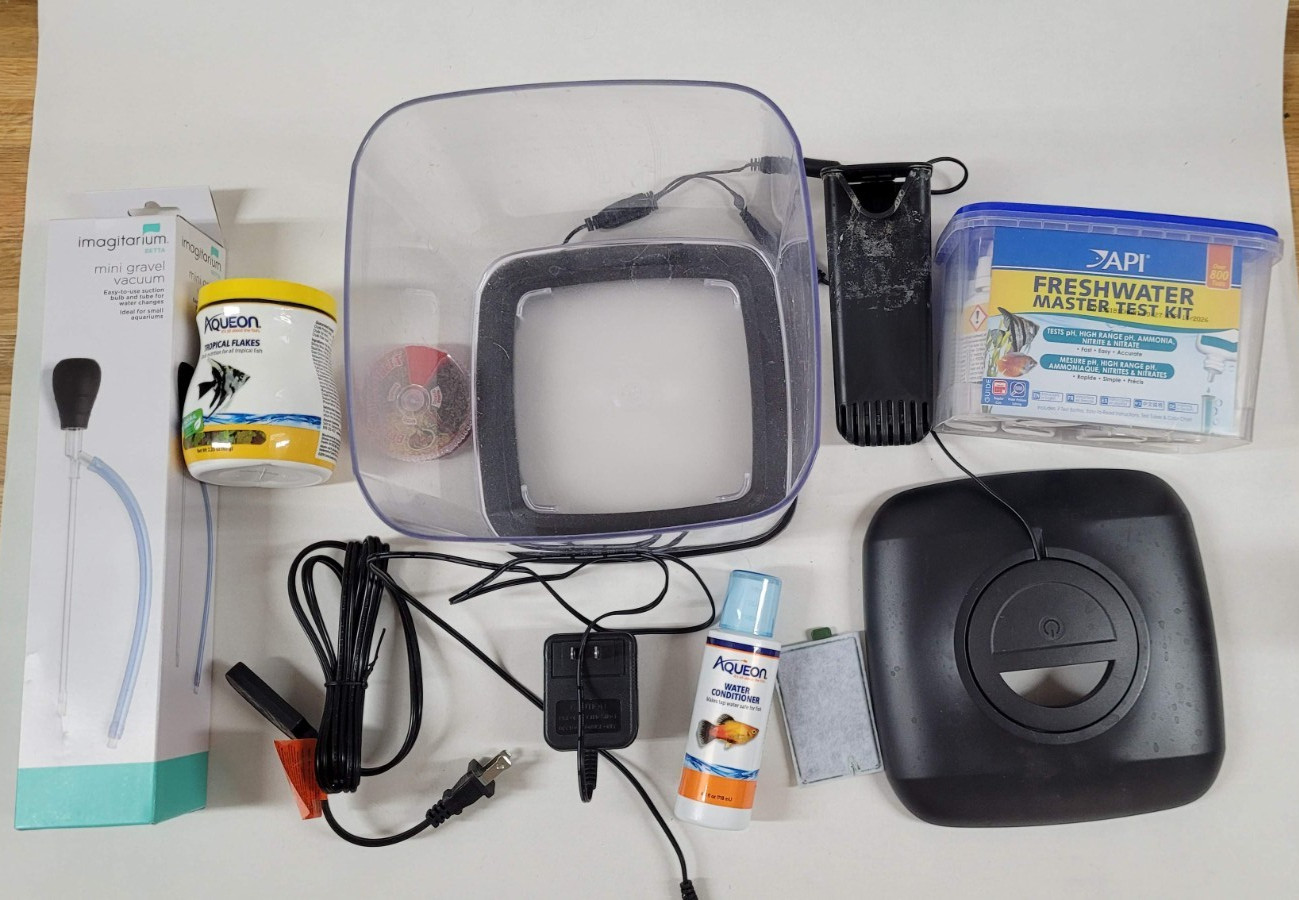

Photos from current listings. Actual item, color, and included accessories may vary.
Filter Buying Guide
Aquarium filters are the life-support engine of any tank, and the core trade-off is between the high biological capacity of canister filters and the simplicity of hang-on-back or internal units. The decision rule: match filter media volume (in liters) to your tank's bioload and turnover rate (GPH), not to the box's gallon rating—durable setups use modular media trays and serviceable impellers, while compromises rely on sealed cartridges.
Key takeaways
- Canister filters deliver 4-6x the media volume of equivalently rated hang-on-back units, enabling denser biomedia stacks and longer service intervals.
- Turnover should hit 4-6x tank volume per hour for community tanks; turtle and goldfish setups need 8-10x plus a secondary mechanical stage.
- Modular tray canisters accept custom filter floss, ceramic rings, and Purigen; sealed-cartridge internals force recurring proprietary replacements.
At a glance
- Category
- Aquarium Tanks & Stands
- Last updated
- Nov 28, 2026
Current offers
Highlights
- Canister filters deliver 4-6x the media volume of equivalently rated hang-on-back units, enabling denser biomedia stacks and longer service intervals.
- Turnover should hit 4-6x tank volume per hour for community tanks; turtle and goldfish setups need 8-10x plus a secondary mechanical stage.
- Modular tray canisters accept custom filter floss, ceramic rings, and Purigen; sealed-cartridge internals force recurring proprietary replacements.
- Self-priming canisters with quick-disconnect valves reduce maintenance downtime; cheap units often require manual siphon starts and leak at the O-ring seal.
Best use cases
- Best fit: 40-75 gallon community or cichlid tank—choose a canister with 2-3 stacked media trays and 250-350 GPH, not a single-cartridge HOB.
- Best fit: turtle tank with high waste output—pick an oversized canister (rated 2x tank gallons) plus a prefilter sponge to trap solids before the biomedia.
- Wrong fit: nano or betta tanks under 5 gallons—a small internal power filter or sponge filter driven by an air pump is quieter and avoids current stress.
Buying tips
- Size canister media volume at roughly 0.5-1 liter per 10 gallons of tank volume; below 0.3 L/10 gal the filter cannot hold enough biomedia for stable cycling.
- Match GPH to livestock: 4-6x turnover for tropical community, 8-10x for goldfish/turtles, and 10x+ for saltwater reef sump returns.
- Choose canisters with standard 5/8-inch or 1/2-inch ID tubing and replaceable impeller assemblies; proprietary hose sizes limit future upgrades.
- Prefer filters with a separate mechanical prefilter stage (sponge or floss) ahead of biological media—it extends cleaning intervals and protects the biofilter.
Specs
| Filter Type | Canister / HOB / Internal / Sponge |
|---|---|
| Turnover Rate | 4-6x tank volume per hour |
| Media Volume | 0.5-1 L per 10 gallons |
| Tubing Standard | 1/2 or 5/8 in ID |
Related searches
What to check before buying
- Measure cabinet interior height and width: canisters need 2-4 inches of clearance above the unit for hose routing and lid removal during service.
- Confirm tank rim type—rimless tanks require clamp-style HOB mounts or inline canisters, since standard HOB hangers may not fit.
- Check floor load: a filled 75-gallon tank plus stand and canister weighs over 800 lbs; verify joist direction and use a leveling mat.
- Verify electrical: canister pumps draw 10-30W; ensure the outlet is GFCI-protected and the cord reaches without an extension across wet floors.
FAQ
Data sources: eBay / Amazon listings and product attribute feeds. Updated Nov 28, 2026.
Some links on this page are affiliate links. If you buy after clicking one, we may earn a commission at no extra cost to you. This does not change which products appear here or their order. Affiliate disclosure.