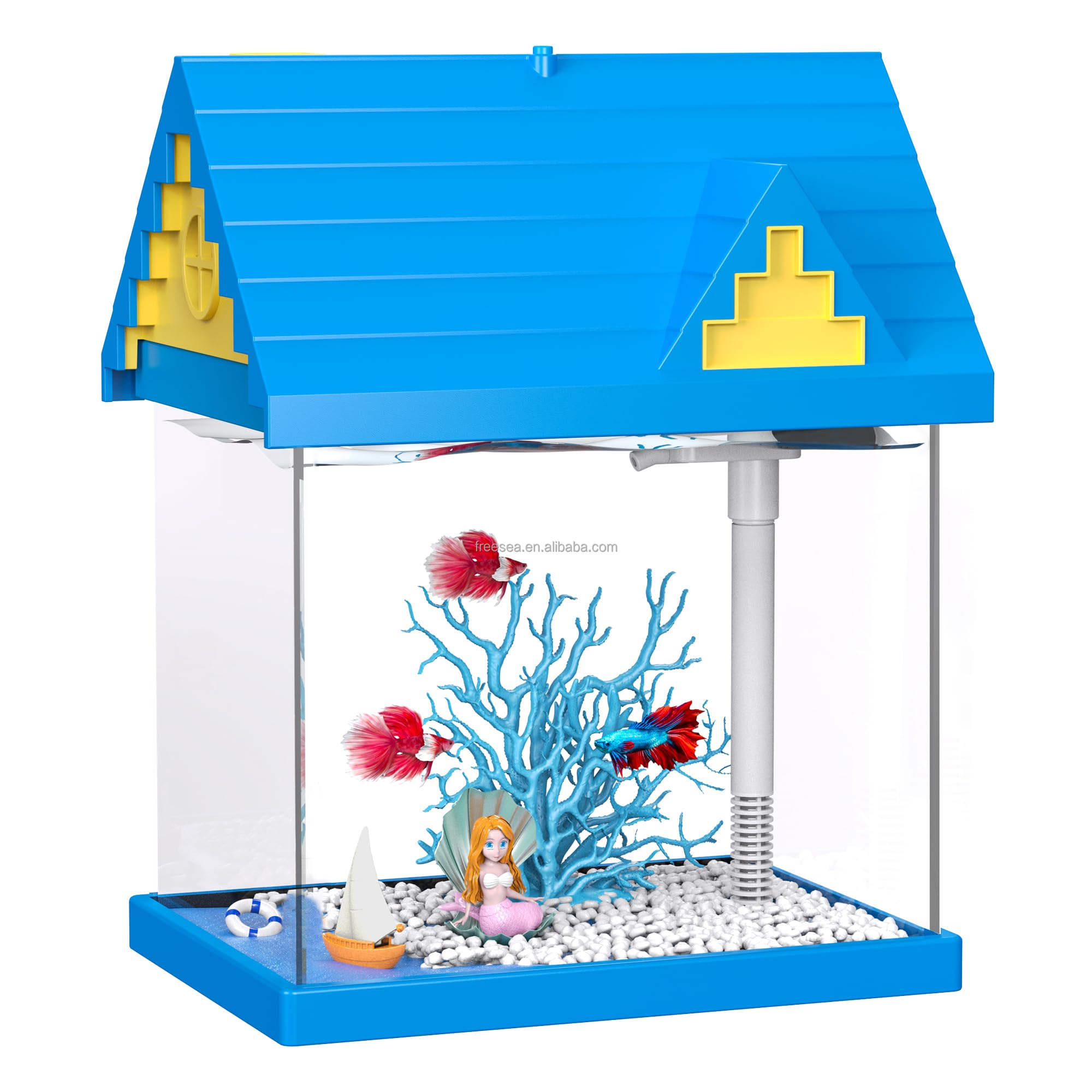

Photos from current listings. Actual item, color, and included accessories may vary.
Acrylic Fish Tank Buying Guide
Acrylic fish tanks are extruded or cell-cast clear plastic aquariums that deliver superior impact resistance, seamless bent corners, and up to 17% clearer light transmission than glass. The core trade-off is scratch resistance versus durability: acrylic scratches easily but can be polished, while glass resists scuffs but shatters and is far heavier. The decision rule is simple: choose cast acrylic for tanks above 40 gallons or any high-clarity display, and buy standard extruded acrylic only for small quarantine or breeding setups where weight and safety matter more than scratch-free longevity.
Key takeaways
- Cell-cast acrylic sheet (e.g., Polycast, Acrylite GP) resists crazing and stress cracks far better than extruded acrylic, which is softer and more prone to hazing over time.
- Bent-corner seamless construction eliminates silicone seams—the primary failure point in glass tanks—and allows true front-to-side visibility with no metal frame.
- Acrylic thickness must scale with height: 3/8 in for 24 in tall tanks, 1/2 in for 30 in, and 3/4 in for 36 in or taller; thinner sheet bows and fails under hydrostatic load.
At a glance
- Category
- Aquarium Tanks & Stands
- Last updated
- Nov 28, 2026
Current offers
Highlights
- Cell-cast acrylic sheet (e.g., Polycast, Acrylite GP) resists crazing and stress cracks far better than extruded acrylic, which is softer and more prone to hazing over time.
- Bent-corner seamless construction eliminates silicone seams—the primary failure point in glass tanks—and allows true front-to-side visibility with no metal frame.
- Acrylic thickness must scale with height: 3/8 in for 24 in tall tanks, 1/2 in for 30 in, and 3/4 in for 36 in or taller; thinner sheet bows and fails under hydrostatic load.
- Acrylic weighs roughly 50% less than glass per gallon, cutting stand load and making 100+ gallon tanks feasible on upper floors without structural reinforcement.
Best use cases
- Best fit: 75–300 gallon display tanks in living spaces—pick cell-cast 1/2 in or thicker with a seamless bent front; skip extruded sheet, which hazes and bows at this height.
- Best fit: quarantine, breeding, or sump tanks where impact safety and light weight matter—standard 1/4 in extruded acrylic is adequate; do not pay cast-acrylic premiums for utility tanks.
- Wrong fit: high-traffic households with rough handling or abrasive cleaning routines—glass or rimless low-iron glass resists scratching better; acrylic demands plastic scrapers and polishable scratch repair.
- Wrong fit: budget nano tanks under 10 gallons—standard glass or low-iron glass delivers better scratch resistance at lower cost; acrylic’s impact advantage rarely justifies the premium at small sizes.
Buying tips
- Match thickness to height, not volume: 1/4 in for up to 16 in tall, 3/8 in up to 24 in, 1/2 in up to 30 in, 3/4 in for 36 in and taller—anything thinner will bow.
- Demand cell-cast acrylic (Polycast, Acrylite GP, Plexiglas G) over extruded sheet; cast resists crazing and takes a polished edge without stress whitening.
- Verify bent-corner construction with a continuous seamless front—silicone-seamed acrylic panels are weaker and defeat the leak-safety advantage of acrylic.
- Require a top brace or euro-bracing on any tank over 24 in tall or 48 in long; unsupported open tops bow outward and stress the seams.
Specs
| Material Grade | Cell-cast vs extruded acrylic |
|---|---|
| Panel Thickness | 1/4–3/4 in by tank height |
| Corner Construction | Seamless bent vs silicone-seamed |
| Top Bracing | Euro-brace / open-top cutout |
Related searches
What to check before buying
- Measure the stand footprint and doorway path: acrylic tanks need 2–3 in clearance on all sides for plumbing and bowing, and large tanks often ship fully assembled.
- Confirm floor load capacity: acrylic weighs about 8.5 lb per gallon of water plus tank weight—a 150 gallon setup exceeds 1,400 lb and may need joist reinforcement.
- Check the tank top bracing and cutout dimensions against your filter, skimmer, and light mount; acrylic tops are often custom-cut and not standardized.
- Verify the manufacturer’s scratch-repair and warranty policy—cell-cast acrylic tanks typically carry multi-year seam warranties, while extruded tanks often carry one year or less.
FAQ
Data sources: eBay / Amazon listings and product attribute feeds. Updated Nov 28, 2026.
Some links on this page are affiliate links. If you buy after clicking one, we may earn a commission at no extra cost to you. This does not change which products appear here or their order. Affiliate disclosure.